
消费性价比

Search documents
春运开始,顺风车在五环外疾驰
远川研究所· 2026-02-11 13:48
Core Viewpoint - The ride-sharing market in China, particularly the "顺风车" (carpooling) segment, is experiencing rapid growth, with a compound annual growth rate of approximately 40% over the past seven years, significantly outpacing the 10% growth rate of traditional ride-hailing services [3][5]. Group 1: Market Dynamics - The total transaction volume of the carpooling industry is expected to exceed 100 billion RMB by 2027, making it the only segment outside of ride-hailing to reach this milestone in the transportation sector [4]. - The market for carpooling began to take shape around 2019, transitioning from a low-cost ride-hailing alternative to a distinct segment focused on intercity travel [5][8]. - The shift in order structure from urban to intercity travel has led to a significant influx of non-professional drivers, with nearly 30 million registered drivers on platforms like 哈啰 (Hello) [8][11]. Group 2: Consumer Behavior - Consumer preferences have evolved, with a growing demand for door-to-door services that carpooling can provide, addressing needs that traditional public transport cannot meet [9][10]. - The carpooling model has become a cost-effective option for long-distance travel, appealing to price-sensitive users and transforming it into a viable business model outside urban centers [9][10]. Group 3: Supply Side Changes - The rapid increase in car ownership in China over the past decade has created a vast pool of potential carpool drivers, with a younger demographic more open to the sharing economy [11][13]. - 哈啰 has distributed over 100 billion RMB in earnings to drivers, maintaining a lower service fee compared to traditional ride-hailing platforms, which enhances its attractiveness to drivers [16]. Group 4: Operational Strategies - 哈啰 has adapted its operational model to accommodate the unique characteristics of non-professional drivers, implementing a "select order" system to improve matching efficiency and reduce cancellations [15]. - The platform has introduced a membership system for active drivers to ensure a stable supply of drivers, addressing the challenges posed by the high proportion of non-professional drivers [16]. Group 5: Future Outlook - During the 2026 Spring Festival, 哈啰 is projected to handle 50-60 million orders, capturing about 50% of the market demand for carpooling during this peak travel period [20].


折扣羽绒服走红,如今的中产怎么了?
Sou Hu Cai Jing· 2026-02-04 15:06
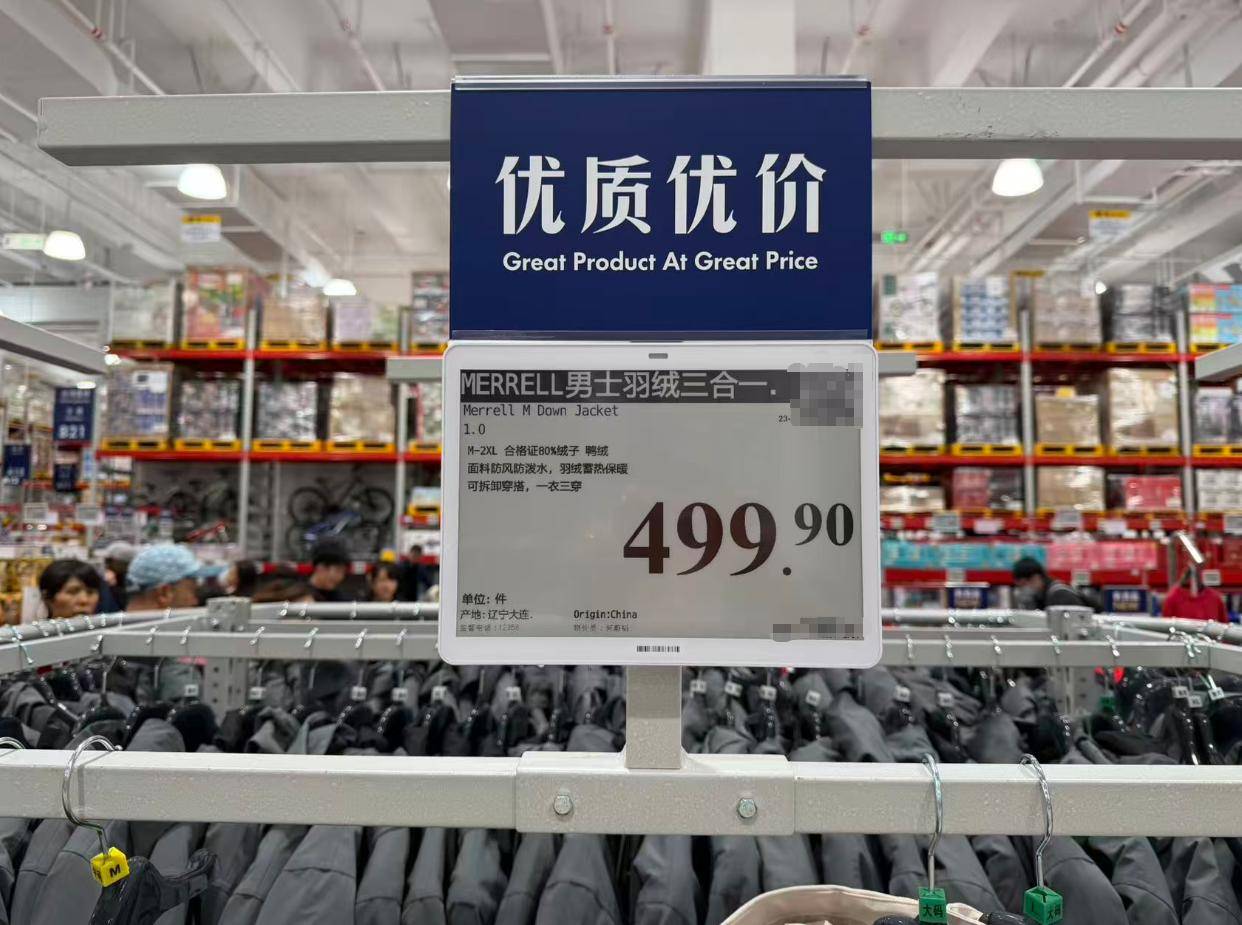
Core Viewpoint - The middle class is shifting its purchasing behavior towards more affordable and practical down jackets, moving away from high-priced luxury brands to options available in supermarkets and discount platforms [1][3][5] Group 1: Changing Consumer Behavior - Middle-class consumers are increasingly purchasing down jackets priced between 100-400 yuan, with popular items selling out quickly in stores like Sam's Club [1] - There is a noticeable trend of middle-class consumers discussing the practicality and warmth of down jackets, indicating a shift towards value-driven purchasing [3] - High-net-worth individuals are actively seeking high-cost performance down jackets, indicating a broader trend of consumers prioritizing functionality over brand prestige [5] Group 2: Value and Quality Perception - The core value of down jackets is recognized as warmth and durability rather than brand logos, leading to a change in consumer perception [5][10] - Discount platforms like Vipshop are attracting consumers by offering branded down jackets at significantly reduced prices, making high-quality options more accessible [5] - The purchasing experience on these platforms is seen as transparent and reliable, allowing consumers to make informed decisions based on clear product specifications [10]

海欣食品:公司感受到大众消费追求性价比的趋势依然明显
Zheng Quan Ri Bao Wang· 2026-01-28 12:40
Group 1 - The core viewpoint is that Hai Xin Food (002702) recognizes a clear trend among consumers prioritizing cost-effectiveness, with stable demand for certain low-priced products [1] - The overall consumption recovery is described as a gradual process, indicating that the company is adapting to changing market conditions [1] - The company plans to closely monitor changes in the dining and retail sectors, adjusting its product and channel strategies flexibly to align with market dynamics [1]

贾国龙的“我不认”与诺基亚的“我们没做错什么”
Sou Hu Cai Jing· 2026-01-17 00:17
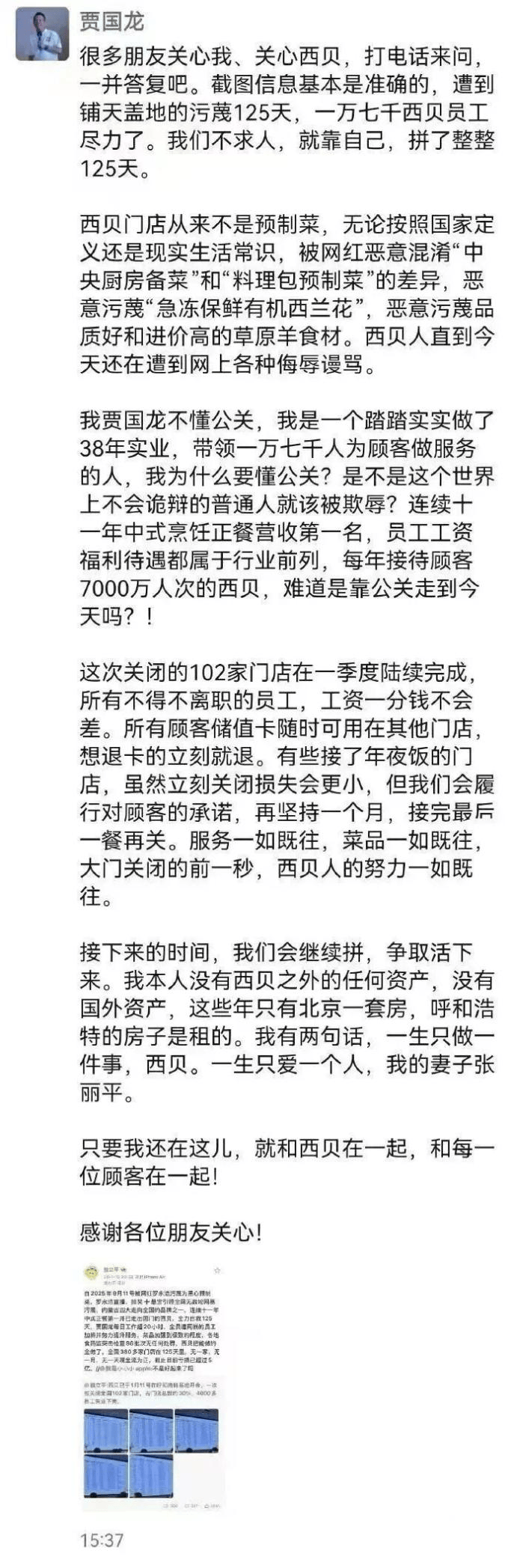
Core Viewpoint - The recent turmoil surrounding Xibei's prepared dishes has been reignited by CEO Jia Guolong's emotional response, revealing the company's dire situation as it plans to close 102 stores, accounting for 30% of its total, and faces a 50% year-on-year decline in business [1][6][12] Group 1: Company Situation - Xibei is planning to close 102 stores in the first quarter of 2026, affecting approximately 4,000 employees, which represents 30% of its total store count [6] - The company has experienced a significant drop in profits, with a 50% year-on-year decline in store business as of January 2026 [5][12] - Despite efforts to adapt, including a nearly 20% price reduction on over 30 dishes and an average salary increase of 500 yuan for frontline employees, consumer response has not improved [5][8] Group 2: Public Relations and Consumer Perception - Jia Guolong's insistence that Xibei has not made mistakes and his emotional outbursts have not garnered public sympathy, leading to widespread criticism on social media [10][12] - The initial criticism from a consumer regarding the taste of prepared dishes escalated into a brand trust crisis due to Jia's aggressive response, which was perceived as a failure to engage in effective public relations [11][12] - The core issue is not the concept of prepared dishes itself but rather the mismatch between high pricing and consumer expectations for value, highlighting a disconnect between Xibei's positioning and market trends [16][17]
消费者的行为始终自相矛盾,这对2026年意味着什么?
Xin Lang Cai Jing· 2025-12-26 10:33
Core Insights - The holiday shopping season has produced mixed conclusions among retail experts and economists, heavily influenced by product categories, brands, and consumer demographics [1][3] - Despite a decline in consumer confidence, spending remains robust, with 2025 projected to set a record high in consumer expenditure, although inflation impacts these figures [3][13] - There is no consensus among analysts regarding the sustainability of consumer spending into 2026, with various indicators showing conflicting trends [3][4] Consumer Behavior - The consumer sentiment index from the University of Michigan has dropped for five consecutive months, reaching its lowest point since April [3][13] - Consumers are increasingly cautious, with a significant disconnect between their subjective feelings about the economy and actual spending behaviors [3][5] - High-income consumers are gravitating towards discount retailers for better value, contributing to increased sales for companies like TJX [5][14] Economic Indicators - The unemployment rate is gradually rising, but the job market remains relatively stable, with wage growth outpacing inflation [3][13] - Economic forecasts suggest that tax refunds and ongoing promotional activities will support consumer spending into early 2026 [4][14] - The Supreme Court's upcoming decision on tariffs could significantly impact retail and import costs, with estimates suggesting an additional $1,800 annual burden per American due to tariffs [5][15] Spending Trends - Record consumer participation during the holiday shopping weekend reached 202.9 million, with online sales hitting $44.2 billion, a 7.7% increase year-over-year [6][16] - Actual spending growth, when adjusted for inflation, is weaker than reported, with a 4% increase noted compared to last year's 4.3% [6][16] - Consumers are prioritizing practical purchases, with significant increases in sales for household essentials and items like vacuum cleaners and cookware [6][16][17] Wealth Disparity - High-income households (earning $250,000 or more) accounted for nearly 50% of U.S. consumer spending, a significant increase from 35% in the early 1990s [9][20] - The economic landscape shows a clear divide, with high-income groups maintaining healthy financial conditions while low-income groups face increasing economic pressures [9][20] - Low-income consumers are resorting to cost-cutting measures, including purchasing second-hand items and utilizing buy-now-pay-later services, which saw a 9% increase this holiday season [20][21]
