
物价回升

Search documents
2026年2月物价数据点评:物价回升的确定性增强
Ping An Securities· 2026-03-11 05:29
Group 1: CPI Analysis - In February 2026, the CPI increased by 1.3% year-on-year, an increase of 1.1 percentage points from the previous month, primarily driven by concentrated consumer demand during the extended Spring Festival holiday[2] - Food prices rose by 1.7% in February, reversing a 0.7% decline from the previous month, contributing approximately 0.3 percentage points to the CPI increase[2] - Service prices increased by 1.6%, a rise of 1.5 percentage points from the previous month, contributing about 0.75 percentage points to the CPI[2] - The core CPI rose by 1 percentage point to 1.8%, supported by significant increases in service prices, particularly in travel and household services[2] Group 2: PPI Analysis - The PPI decreased by 0.9% year-on-year in February 2026, with the decline narrowing by 0.5 percentage points from the previous month[2] - The PPI increased by 0.4% month-on-month, marking the fifth consecutive month of growth, maintaining the same growth rate as the previous month[2] - Prices in the mining and processing of non-ferrous metals contributed 0.3 percentage points to the month-on-month PPI increase, driven by rising international prices[2] - The rise in international crude oil prices led to increases in the prices of oil and gas extraction, refined petroleum products, and organic chemical raw materials, contributing a total of 0.15 percentage points to the PPI[2]
物价温和回升,货币降息降准
泽平宏观· 2026-03-10 04:07
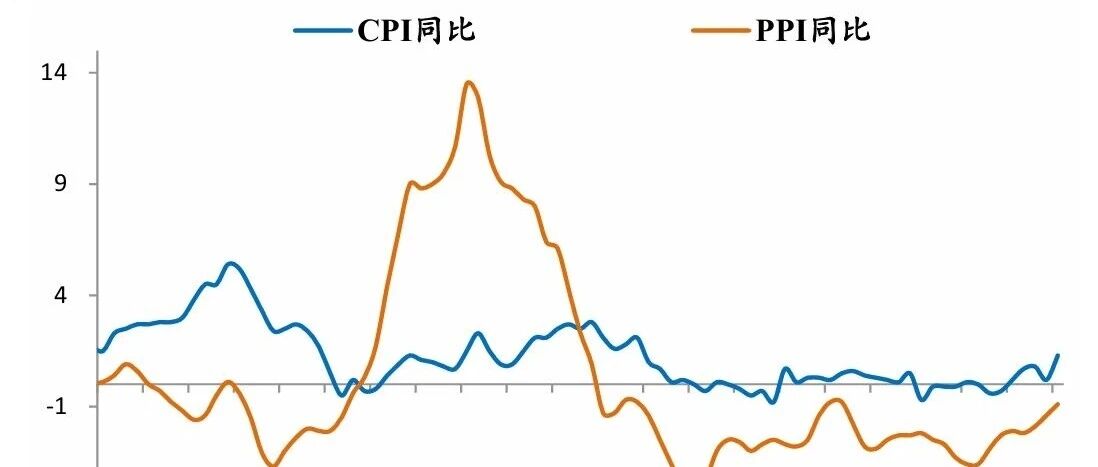
Core Viewpoint - The article discusses the moderate recovery of prices in February, driven primarily by input costs rather than demand, indicating a need for monetary policy adjustments and proactive fiscal measures [1][2]. Group 1: Price Trends - February CPI increased by 1.3% year-on-year, marking a rise of 1.1 percentage points from the previous month, reaching a three-year high [1][7]. - PPI decreased by 0.9% year-on-year, with the decline narrowing by 0.5 percentage points compared to the previous month, continuing a trend of narrowing for three consecutive months [1][22]. Group 2: Factors Influencing Prices - The increase in food prices by 1.7% year-on-year and service prices by 1.1% is attributed to the timing of the Spring Festival [2][9]. - Rising international oil prices and metal prices have intensified input cost pressures, with Brent crude oil futures averaging a 20.7% increase month-on-month [4][22]. - Despite weak overall demand, sectors related to new productive forces, such as semiconductor materials, are experiencing high demand and price increases [2][22]. Group 3: CPI and Core CPI Insights - Core CPI, excluding food and energy, rose by 1.8% year-on-year, reflecting a slight recovery in consumer demand [10][11]. - Service prices saw significant increases, with airfares and accommodation prices rising by 29.1% and 5.4% respectively [10]. Group 4: Pork Price Cycle - The pork price decline is slowing, with a year-on-year decrease of 8.6% in February, but the decline is less severe than in previous months [14][15]. - The current "pig cycle" is still in a downtrend, with production capacity adjustments beginning but not yet sufficient to drive a significant price recovery [14][16]. Group 5: PPI Improvement - PPI's decline is narrowing due to input inflation and strong demand in certain tech sectors, with a year-on-year decrease of 0.9% in February [22]. - Prices in the non-ferrous metal mining and processing sectors increased by over 20% year-on-year, reflecting rising international prices [22][23].

光大证券晨会速递-20260310
EBSCN· 2026-03-10 01:09
Group 1: Macro Insights - In February, CPI increased significantly due to the Spring Festival, expanded service demand, and rising international oil and gold prices, reaching a recent high [2] - PPI's decline is narrowing, influenced by resource nationalism and the US-Iran conflict, with expectations of a potential positive shift in March if oil prices remain high [2] Group 2: Industry Strategy - The March industry allocation perspective emphasizes growth and balanced styles, with high-scoring sectors including electric equipment, defense, electronics, and machinery, which are recommended for investor focus [3] Group 3: Real Estate Sector - As of March 8, 2026, new home transactions in 20 cities totaled 83,000 units, down 32.7% year-on-year; major cities like Beijing, Shanghai, and Shenzhen saw declines of 29%, 15%, and 60% respectively [4] - Second-hand home transactions in 10 cities reached 151,000 units, a decrease of 7.8% year-on-year, with Beijing, Shanghai, and Shenzhen experiencing declines of 7%, 4%, and 12% respectively [4] Group 4: Company Research - The company plans to raise up to 5.8 billion yuan through a private placement to fund the construction of a cogeneration project and to supplement working capital and repay bank loans [5] - Expected net profits for the company from 2025 to 2027 are projected at -3.084 billion, 1.539 billion, and 2.318 billion yuan respectively, maintaining an "accumulate" rating [5]

【光大研究每日速递】20260310
光大证券研究· 2026-03-09 23:07
Macro - In February, CPI increased significantly due to the impact of the Spring Festival, expanded service demand, and rising international oil and gold prices, reaching a new high in recent years [5] - PPI's decline is narrowing due to rising prices of non-ferrous metals and crude oil, driven by resource nationalism and the US-Iran conflict, with expectations of PPI turning positive in March [5] Fund Market - Industry theme funds experienced a net value decline, while financial and real estate theme funds performed relatively well; 12 new funds were launched this week, totaling 13.464 billion shares [5] - Stock ETFs saw significant net inflows, particularly in cyclical theme ETFs, which attracted 38.12 billion yuan, while mid and large-cap broad-based ETFs faced notable reductions [5] Copper Industry - COMEX copper inventory decreased for the first time since April 2025, with tight spot supply of copper concentrate; cable manufacturers' operating rates improved, and inventory reduction is expected in mid to late March [6] Metal New Materials - Prices of various new materials showed mixed trends: rough indium prices increased by 9.0%, while prices of lithium hydroxide, polysilicon, and electrolytic cobalt decreased [7] Company Insights - Yasheng's CFO indicated stable overall performance in Q1, with core indicators meeting expectations; receivables from related parties reduced to 3.553 billion yuan, suggesting the company has passed the peak of impairment pressure [8] - China National Offshore Oil Corporation (CNOOC) is expected to benefit from geopolitical uncertainties driving oil prices higher, enhancing its strategic value as it focuses on energy security and accelerating its transition to renewable energy [8] - Hosheng Silicon Industry plans to raise up to 5.8 billion yuan through a private placement to fund a new thermal power cogeneration project and replenish working capital [8]
——2026年2月价格数据点评:国内物价缘何超预期上行?
EBSCN· 2026-03-09 10:58
Price Data Overview - In February 2026, the CPI increased by 1.3% year-on-year, surpassing the previous value of 0.2% and market expectations of 0.9%[2] - The core CPI rose to 1.8% year-on-year, up from 0.8% in the previous month, marking the highest level since 2020[2] - The PPI decreased by 0.9% year-on-year, an improvement from the previous decline of 1.4%, and was better than the market expectation of -1.2%[2] Factors Influencing CPI - The CPI increase was driven by the Spring Festival effect, expanded service demand, and rising international oil and gold prices[3] - Service prices rose by 1.1% month-on-month, significantly higher than the seasonal average of 0.8%, contributing approximately 0.54 percentage points to the CPI increase[5] - Food prices increased by 1.9% month-on-month, but this was below the seasonal average increase of 3.1% due to sufficient supply of fresh vegetables[5] PPI Trends - The PPI maintained a month-on-month increase of 0.4%, with a year-on-year decline narrowing to -0.9%[6] - International prices for non-ferrous metals and crude oil rose, contributing to input inflation pressures[6] - The prices in the non-ferrous metal mining and smelting industries increased by 7.1% and 4.6% month-on-month, respectively[6] Future Outlook - The government aims to stabilize price levels and promote a reasonable recovery in consumer prices, as indicated in the 2026 work report[8] - The expected recovery in service prices and pig prices is anticipated to support CPI growth in the coming months[8] - The ongoing geopolitical tensions, particularly in the Middle East, are expected to keep oil prices elevated, potentially leading to a positive PPI in March[8]
煤焦:能化板块强势带动煤焦跟随上涨
Hua Bao Qi Huo· 2026-03-09 02:42
Group 1: Report Industry Investment Rating - Not provided Group 2: Core Viewpoints - The coking coal and coke fundamentals temporarily maintain a pattern of strong supply and weak demand, but the continuous strength of the energy - chemical sector recently has increased the bullish sentiment in the coking coal market, and the prices will follow the upward trend in the short term [3] Group 3: Summary by Relevant Content Market Performance - Last week, the coking coal and coke futures prices mainly showed a wide - range volatile trend, and the prices rebounded rapidly in the night session on Friday. The continuous strong rise of the energy - chemical sector provided some emotional support to the coking coal market. On the spot side, steel mills' first - round reduction of coke prices has been gradually implemented, and the coking coal prices in production areas have been reduced by 20 - 70 yuan/ton [2] Policy Impact - Currently, important meetings are being held, and the report mentions "promoting a reasonable recovery of prices". As coal is the energy foundation and has a great impact on industrial product prices, the policy orientation may promote the stability or even a moderate increase in coal prices [2] Environmental Protection and Production Restrictions - Some regional steel mills have implemented phased production restrictions, and the molten iron output has decreased significantly. The impact of environmental protection and production restriction policies will still exist this week and is expected to gradually recover next week [2][3] Supply - Side Situation - Last week, coal mines continued the resumption process. After the Lantern Festival, coal mines in the main production areas were basically fully resumed. Last week, the daily production of raw coal and clean coal was 1.829 million tons and 748,000 tons respectively, an increase of 313,000 tons and 99,000 tons compared with the previous week. At the import end, the daily customs clearance volume of Mongolian coal at the Ganqimaodu Port has returned to a relatively high level after the festival, and the inventory in the port supervision area has increased again [3] Demand - Side Situation - Last week, the average daily molten iron output of steel mills' blast furnaces was 2.276 million tons, and downstream enterprises mainly consumed the raw material inventory in the factory [3]
【光大研究每日速递】20260306
光大证券研究· 2026-03-05 23:07
Group 1: Economic Indicators and Policies - The traditional method of evaluating PMI is based on whether it exceeds 50%, indicating economic expansion or contraction compared to the previous month. Investors may also focus on the change from the previous period for sensitivity to new data [5] - Since Q4 2025, positive factors have accumulated to drive price recovery, with December CPI showing a year-on-year increase of 0.8%, up 1.2 percentage points from August. The expectation of a 2% increase in consumer prices is deemed achievable through coordinated policy measures [5] Group 2: Government Work Report Insights - The 2026 Government Work Report emphasizes the cultivation of emerging industries and the development of a green low-carbon economy, with a target to reduce carbon emissions per unit of GDP by approximately 3.8% in 2026 [5] - The automotive industry policies continue to focus on consumption stimulation and industrial upgrading, with expectations that the "trade-in" policy will persist and high-level intelligent driving may reach a commercialization turning point [7] - In the food and beverage sector, the report suggests investment opportunities in the liquor sector due to improved wealth effects from stable real estate prices and a focus on frozen food products under inflationary conditions [7] - The healthcare sector is highlighted for its focus on emerging industries such as biomedicine and brain-computer interfaces, with initiatives to enhance healthcare services and insurance coverage for long-term care [7] Group 3: Company-Specific Developments - Haidilao's operational data during the 2026 Spring Festival exceeded expectations, demonstrating its resilience and market leadership. The management changes have led to efficiency improvements and growth potential from new product categories, reinforcing both short-term performance and long-term strategies [8]

2026物价展望:CPI有望温和回升 PPI或将转正
Zhong Guo Jing Ji Wang· 2026-02-18 08:56
Group 1 - In 2025, consumer prices (CPI) remained stable year-on-year, while industrial producer prices (PPI) decreased by 2.6% [1][2] - Food prices fell by 1.5% in 2025, with pork prices shifting from a 7.7% increase to a 6.1% decrease, impacting CPI by approximately 0.08 percentage points [2] - Energy prices saw a significant decline of 3.3%, influenced by international oil price fluctuations, with gasoline and diesel prices dropping by 7.2% and 7.8% respectively [2] Group 2 - The PPI showed a narrowing decline in the second half of 2025, with a decrease of only 1.9% by December, the smallest drop since September 2024 [3] - Factors contributing to the PPI's performance included improved domestic market competition and varying impacts from external factors, such as rising prices in the non-ferrous metals sector and declining oil prices [3] - The low price environment remains a concern for the Chinese economy, affecting corporate revenues, profits, and government finances [3] Group 3 - For 2026, macroeconomic indicators suggest a potential recovery in both CPI and PPI, supported by policies aimed at expanding domestic demand and addressing supply-side issues [4][5] - The financial outlook for 2026 anticipates CPI to rise by approximately 0.8%, with PPI expected to turn positive around the second quarter [6][5] - Structural characteristics of the PPI recovery will depend on demand strength and the effectiveness of policies aimed at stimulating consumption and investment [6][7]
透视2026物价新局:基期轮换、体感差异与回升之路|宏观经济
清华金融评论· 2026-02-14 07:49
Core Viewpoint - The article discusses the recent release of January CPI and PPI data by the National Bureau of Statistics, highlighting the importance of the five-year base period rotation and the transparency of data publication, which reflects changes in consumer spending patterns and impacts residents' perceptions of prices [5][6]. Group 1: CPI and PPI Data Analysis - In January 2026, the CPI increased by 0.2% year-on-year, a decrease of 0.6 percentage points from the previous month, primarily due to the timing of the Spring Festival [15]. - The PPI in January 2026 was -1.4%, an increase of 0.5 percentage points from the previous month, driven by rising international prices of non-ferrous metals due to investment in emerging industries like artificial intelligence [16]. - The article emphasizes the need for a combined analysis of January and February CPI data due to the Spring Festival's impact on price fluctuations [15]. Group 2: Changes in CPI Weighting - The CPI's weighting system underwent a significant adjustment, with the new base period starting in 2025, reflecting changes in consumer behavior and the introduction of new categories such as internet medical services and elderly products [8][11]. - The weight of food and beverages, clothing, housing, and other categories has been adjusted, with food and beverage weights decreasing while service weights have increased, indicating a shift in consumer spending patterns [8][20]. - The average impact of the base period rotation on monthly CPI year-on-year indices is estimated to be approximately 0.06 percentage points [8]. Group 3: Economic Implications and Policy Recommendations - The article highlights the ongoing issue of low prices in the Chinese economy, with the GDP deflator index negative for 11 consecutive quarters and PPI negative for 40 months, necessitating stronger measures to promote reasonable price recovery [20]. - Current macroeconomic policies are aimed at boosting domestic demand and supporting price recovery through fiscal measures and adjustments in monetary policy [21]. - Long-term price recovery will depend on effectively addressing supply-demand imbalances, including wage growth mechanisms and optimizing income distribution [22].
2026年1月价格数据点评:物价回升将构成债券收益率上行的基本面
KAIYUAN SECURITIES· 2026-02-12 11:43
1. Report Industry Investment Rating No information provided in the content. 2. Core Views of the Report - The recovery of prices will form the fundamental basis for the upward movement of bond yields in 2026. If the PPI month - on - month can maintain 0.15 - 0.2%, it is only a matter of time before the year - on - year price recovery reaches 2%. The "potential inflation 2.0%" will form the lower limit of the 10 - year treasury bond. The 10 - year treasury bond is expected to fluctuate in the range of 2 - 3%, with a central value of 2.5% [1][5]. - The economic recovery falling short of expectations has been disproven. Coupled with possible broad credit and broad fiscal policies at the beginning of 2026, the economic cycle will accelerate its recovery. If there are broad monetary policies, it will be a chance to reduce holdings, similar to 2025. Attention should be paid to whether the PPI month - on - month can remain positive. If inflation rises month - on - month, there is a possibility of tightened funds, and short - term bond yields will also rise. Real estate is a lagging indicator, and it may bottom out after the recovery of various economic indicators and the rise of the stock market [6]. 3. Summary by Relevant Catalogs 3.1 2026 January Price Data - CPI: The year - on - year increase in CPI fell, and the month - on - month increase was the same as the previous value. The year - on - year increase was lower than expected, mainly due to the Spring Festival date difference. The core CPI increased by 0.3% month - on - month, showing a mild recovery [3][4]. - PPI: The PPI increased month - on - month for four consecutive months, and the year - on - year decline further narrowed. It is expected that prices will enter a "positive growth" phase, which is one of the expected differences in 2026 [4]. - Price Index Base Period Rotation: The impact of this base period rotation on the year - on - year indices of CPI and PPI is generally small. The weights of service items in the CPI have increased, while those of consumer goods have decreased [4]. 3.2 Market Conditions - On February 11, the long - term yield fluctuated downward. From the divergence index, funds were the main buyers of bonds. After the release of inflation data, the CPI year - on - year increase was lower than expected, and with the buying of trading desks, the active 10 - year treasury bond broke through the 1.79% mark, reaching a minimum of 1.7840% [6].