特朗普关税措施

Search documents
特朗普关税奏效?10月,美国贸易逆差创16年最低!中国也不再是美国最大的贸易逆差国?
Sou Hu Cai Jing· 2026-01-08 17:45
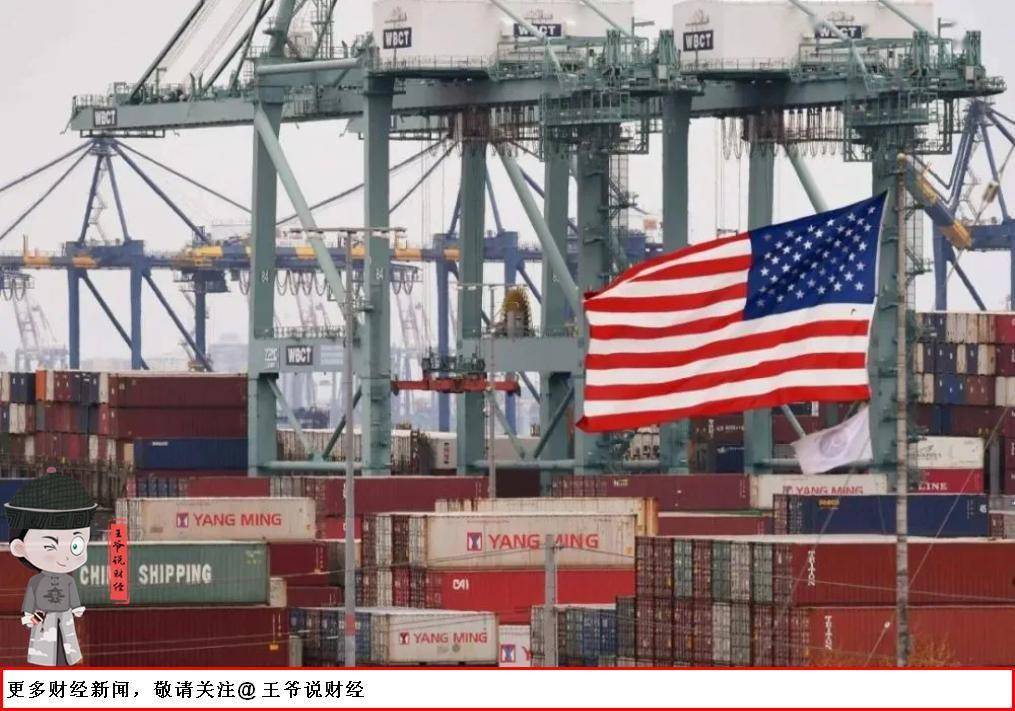
Core Insights - The latest U.S. trade data for October 2025 shows record-high exports and a significant reduction in imports, leading to the lowest trade deficit in 16 years [1][4]. Group 1: Trade Data Overview - In October 2025, U.S. exports (goods + services) reached $302 billion, marking a 2.6% year-over-year increase and the highest value on record [3]. - U.S. goods exports increased by $7.1 billion to $195.9 billion, while service exports rose by $0.7 billion to $106.1 billion [3]. - U.S. imports fell to a 21-month low, decreasing by 3.2% or $11 billion to $331.4 billion, the lowest level since January 2024 [4]. Group 2: Trade Deficit Analysis - The trade deficit narrowed significantly, decreasing nearly 40% month-over-month to $29.4 billion, the lowest monthly level since 2009 [4][6]. - Analysts had previously predicted a trade deficit of $58.4 billion, indicating a substantial deviation from expectations [6]. Group 3: Trade Deficit by Country - In October 2025, Mexico became the largest trade deficit partner for the U.S. at $17.9 billion, followed by Vietnam at $15 billion, and China at $13.7 billion, ranking third [8]. - Other notable trade deficit partners include the European Union ($6.3 billion), Germany ($5.1 billion), and Japan ($4.2 billion) [8]. Group 4: Trade Surplus Partners - The U.S. recorded trade surpluses with several countries, including Switzerland ($7.3 billion), the United Kingdom ($6.8 billion), and the Netherlands ($5.1 billion) [10].

日本央行前首席经济学家称10月利率决策难以预测-美股-金融界
Jin Rong Jie· 2025-09-05 05:29
Core Viewpoint - The market's expectations for a potential interest rate hike by the Bank of Japan in October may underestimate the uncertainties brought about by Trump's tariff measures [1] Group 1: Economic Outlook - Former chief economist of the Bank of Japan, Takahiro Sakane, emphasizes that the uncertainty surrounding the impact of tariffs is greater than what market participants might believe [1] - Some economists have identified October as the most likely time for the Bank of Japan to raise interest rates, given the resilience of the Japanese economy [1] - Sakane does not completely rule out the possibility of a rate hike, as various factors, including exchange rates, will influence the decision [1] Group 2: Policy Considerations - Sakane warns that declaring economic risks fully resolved by October would be challenging [1] - He reflects on the early rate hikes and exit from quantitative easing in the first decade of this century, which were criticized at the time but later revealed that the economy remained in deflation [1] - Current Bank of Japan Governor Kazuo Ueda has committed to closely monitoring the impact of U.S. tariffs [1] Group 3: Market Expectations - The market generally anticipates that the Bank of Japan will maintain the interest rate at 0.5% during the policy meeting that concluded on September 19 [1]
张尧浠:金价反弹目标如期触及、今日关注阻力回撤风险
Sou Hu Cai Jing· 2025-09-01 00:21
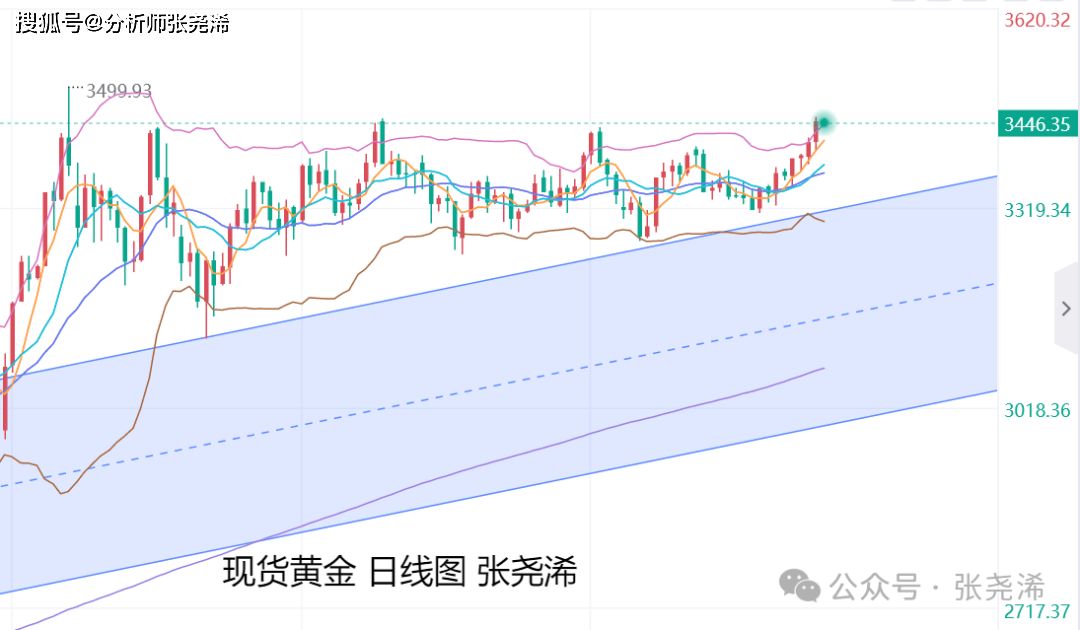
Core Viewpoint - The international gold price has rebounded for the second consecutive week, approaching previous horizontal resistance levels, with a potential target of $3533 in the near term, despite some pullback risks [1][5]. Price Movement - Gold opened at $3371.93 per ounce at the beginning of the week, recorded a low of $3351.20 on Tuesday, and subsequently rebounded to reach a high of $3453.75, closing at $3449.09, marking a weekly increase of $77.16 or 2.29% [3][9]. - The weekly price fluctuation was $102.55, indicating strong volatility in the market [3]. Market Influences - The rebound in gold prices was supported by buying interest at the mid-band and 60-day moving averages, alongside increasing concerns regarding the independence of the Federal Reserve [3][5]. - Federal Reserve Governor Waller's support for a 25 basis point rate cut in September, along with favorable consumer confidence and inflation expectations, contributed to the bullish sentiment in the gold market [3][5]. Future Outlook - The gold market is expected to maintain a bullish outlook, with the potential for further price increases due to ongoing geopolitical uncertainties and the likelihood of a rate cut cycle from the Federal Reserve [5][7]. - The market is currently positioned above several moving averages, indicating a favorable environment for potential bullish entries upon any pullbacks [5][9]. Technical Analysis - The gold price is anticipated to face resistance around $3455 to $3470, while support levels are identified at $3425 and $3400 [10]. - The Bollinger Bands are expanding upwards, suggesting a higher probability of price increases in the near future [5][7].
黄金陷入震荡!特朗普关税措施将有何影响?趋势回踩后能否持续上延?TTPS团队马老师正在直播,立即观看!
news flash· 2025-07-11 06:16
Core Insights - The article discusses the current fluctuations in the gold market and the potential impact of Trump's tariff measures on gold prices [1] - It raises questions about whether the recent trend will continue after a pullback [1] Group 1 - Gold is experiencing volatility, with ongoing analysis regarding its market behavior [1] - The influence of Trump's tariff policies on the gold market is a focal point of discussion [1] - There is a live analysis session being conducted by a team member, indicating active engagement in market trends [1]
中美谈判开始前,万斯对华摊牌了:现在弥补贸易问题已经晚了
Sou Hu Cai Jing· 2025-05-13 14:09
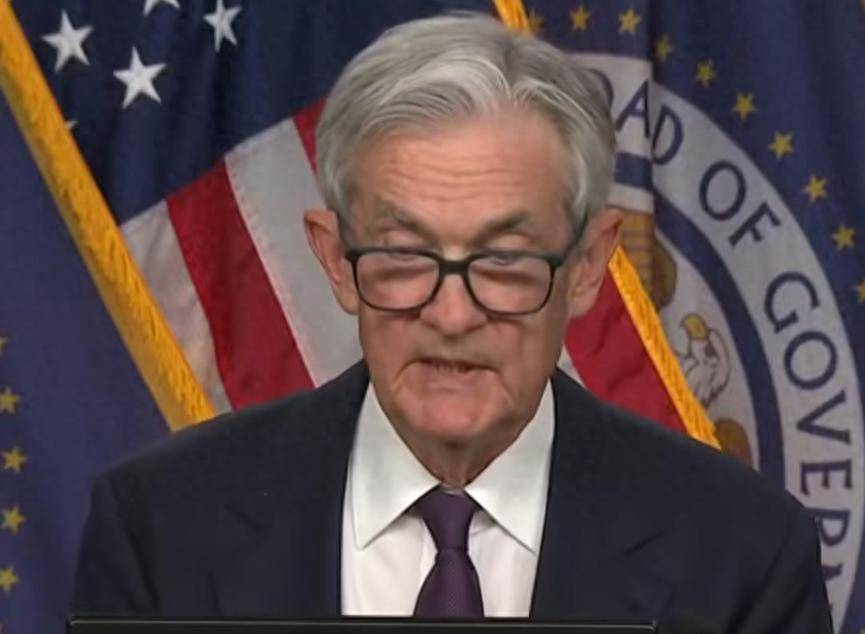
Group 1 - The Vice President of the United States, Vance, criticized Federal Reserve Chairman Jerome Powell, stating that while Powell is a decent person, he has been wrong on almost all matters, particularly in addressing inflation issues caused by former President Biden and responding to trade agreements under the Trump administration [1][3]. - Federal Reserve Governor Waller defended the independence of the Federal Reserve, emphasizing that its structure has withstood the test of time and should be preserved to ensure objective and non-partisan policy-making, which is crucial for economic stability and reducing inflation [3]. - Powell warned that if Trump's tariffs remain at current levels, it could delay the Federal Reserve's ability to achieve its mandated goals, leading to higher inflation risks and increased unemployment [3][5]. Group 2 - Powell, who was nominated by Trump in 2017 and re-nominated by Biden in 2022, has faced criticism from Trump, who has previously urged for interest rate cuts and threatened Powell's position [5]. - The Federal Reserve decided to maintain the federal funds rate target range at 4.25% to 4.50%, marking the third consecutive meeting without a rate cut, reflecting concerns about rising unemployment and inflation risks in the current economic climate [5][6]. - Recent economic data showed that in April, non-farm payrolls increased by 177,000, and the unemployment rate remained steady at 4.2%, while the Consumer Price Index (CPI) rose by 2.4% year-on-year, indicating mixed signals in the economy [6].
小非农大幅不及预期,美国经济又添危险信号?
美股研究社· 2025-03-06 10:32
Core Viewpoint - The recent ADP employment data indicates a slowdown in private sector job growth, raising concerns among economists and investors about the overall economic environment [2][4]. Employment Data Summary - In February, the ADP reported an increase of 77,000 jobs, significantly below the expected 140,000, with the previous month's figure revised up to 186,000, marking the smallest increase since July 2024 [2]. - Job losses were primarily concentrated in the services sector, particularly in trade, transportation, utilities, education, and healthcare [2]. - Employment changes by sector in February: - Trade/Transportation/Utilities: Decreased by 33,000 jobs, following an increase of 56,000 in January [2]. - Construction: Increased by 26,000 jobs, up from 3,000 in January [2]. - Professional/Business Services: Increased by 27,000 jobs, compared to 14,000 in January [2]. - Manufacturing: Increased by 18,000 jobs, reversing a decrease of 13,000 in January [2]. - Financial Services: Increased by 26,000 jobs, up from 13,000 in January [2]. Economic Outlook - ADP's Chief Economist Nela Richardson noted that uncertainty in policy and a slowdown in consumer spending may have contributed to the recent layoffs and hiring hesitance [4]. - The rising number of unemployment claims and concerns about future unemployment rates are indicative of a cooling labor market [4]. - Market attention is focused on the upcoming government non-farm payroll report, which could further confirm fears of an economic slowdown and influence Federal Reserve monetary policy decisions [4][5]. - Economists expect the non-farm payroll report to show an increase of 153,000 jobs, with the unemployment rate remaining at 4% [5].