
短期交易

Search documents
黄金价格震荡上行:普通人该“锁仓十年”还是“快进快出”?
Sou Hu Cai Jing· 2026-01-11 07:13
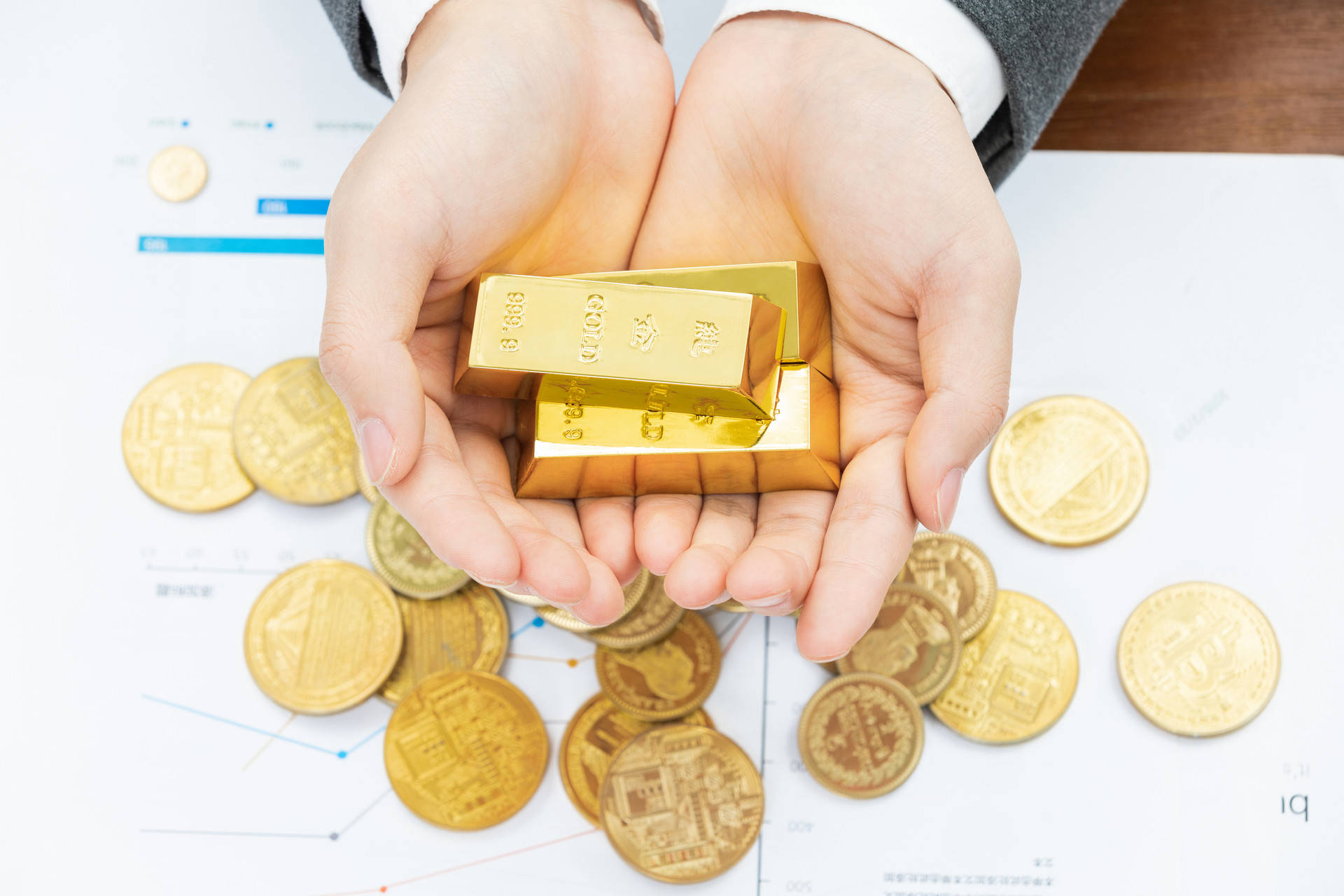
Core Insights - The domestic gold market is experiencing a new wave of price fluctuations, with major brands like Chow Tai Fook and Chow Sang Sang exceeding 1400 RMB per gram, while China Gold maintains a lower price advantage at 1011.5 RMB per gram [2] - There is a significant price differentiation among gold brands, reflecting a dual nature of gold as both a consumer "hard currency" and an investment "safe-haven asset" [2] - Historical data shows that gold has a strong long-term appreciation attribute, making it an essential stabilizer in household asset allocation [3] Price Trends - Major gold brands are priced between 1406-1410 RMB per gram, up over 8% since the beginning of the year, while price-sensitive brands like China Gold are priced between 1011.5-1209 RMB per gram [2] - The average price of gold is projected to remain between 2100-2300 USD per ounce in 2026, supported by ongoing central bank purchases and geopolitical risks [7] Investment Behavior - There is a noticeable increase in inquiries about gold bar investments, particularly among younger consumers who prefer smaller denominations [2] - Analysts recommend allocating 10%-15% of assets to gold, especially for risk-averse investors, as it can effectively hedge against stock and real estate market fluctuations [3] Trading Strategies - Short-term traders are capitalizing on T+0 trading mechanisms and daily fluctuations, with some achieving over 5% profits through intraday operations [4] - However, short-term trading carries significant risks, with 85% of retail investors ultimately losing money [4] Investment Guidance - Experts suggest prioritizing asset allocation by using gold as a safety net, recommending methods like gold ETFs and systematic investment plans to mitigate price volatility [5] - For consumers with gifting needs, participating in "old-for-new" programs can satisfy both consumption and asset preservation [5] - Short-term traders should set strict stop-loss limits and monitor key economic indicators that influence gold prices [5] Cautionary Notes - Investors should verify whether lower-priced brands are members of the Shanghai Gold Exchange to avoid purchasing non-investment products [6]

【财经分析】公募基金销售新规落地 债市迎来政策红利下的结构重塑
Xin Hua Cai Jing· 2026-01-06 08:26
Core Viewpoint - The recently released official version of the "Regulations on the Management of Sales Fees for Publicly Raised Securities Investment Funds" has sparked significant discussion in the industry, with notable optimizations compared to the draft version, indicating a policy direction of "precise relaxation and pressure relief" [1][2] Summary by Relevant Sections Changes in Redemption Fee Structure - The official version allows for different redemption fee agreements for individual investors holding for 7 days or more and institutional investors holding for 30 days or more, contrasting with the draft which imposed uniform fees [2][3] - The redemption fee for bond funds has been significantly relaxed, reducing the previously anticipated redemption pressure on bond markets [3] Transition Period and Market Impact - The adjustment period has been extended to 12 months, providing more time for institutional investors and public funds to adapt, thereby alleviating the concentrated redemption pressure faced by bond funds [3][4] - Following the new regulations, the interbank bond market saw a decline in yield rates, indicating a positive market sentiment [3] Short-term, Medium-term, and Long-term Effects - In the short term, the policy relaxation is expected to repair market sentiment, with potential trading opportunities emerging in the bond market [4][5] - Medium-term structural adjustments in the bond market are anticipated, with a shift towards bond ETFs expected to attract institutional funds [5][6] - Long-term, the new regulations aim to foster a healthy market ecosystem focused on long-term investments, potentially saving investors approximately 51 billion annually in fees [6][8] Investment Strategies and Market Outlook - Despite the positive developments, the overall bond market is expected to remain in a volatile state, with a focus on structural opportunities rather than trend-based movements [7][8] - Recommendations include targeting short-term products and high-grade credit bonds, while being cautious with long-term interest rate bonds due to ongoing supply-demand imbalances [7][8]
黄金又跌价了,25年12月27日金条降价,国内黄金、金条新价格
Sou Hu Cai Jing· 2025-12-28 18:35
Group 1 - The international gold price has retreated to $4508.4 per ounce, with domestic gold jewelry prices varying significantly, reflecting differences in craftsmanship and operational costs [1] - The latest market performance shows that the international precious metals sector remains strong, with gold prices staying above $4500 per ounce, silver prices rising by 4% to $74.67 per ounce, and platinum and palladium experiencing notable increases of over 8% and 5% respectively [2][3] - The current rally in precious metals is not isolated to a single commodity but reflects a broader trend, with both gold and silver attracting sustained investor interest beyond mere safe-haven logic [3] Group 2 - The trading attributes of gold have enhanced, with its price movements showing a correlation with risk assets, while its intrinsic value remains unchanged [4] - The recovery market indicates a stable reference price for high-purity gold at 996 yuan per gram, with minimal brand premium in the recovery phase, emphasizing gold's metal properties [4] - The pricing logic of bank gold bars versus branded gold bars highlights a cost advantage for bank offerings, while branded bars cater more to collectors and gift-giving [5] Group 3 - The overall performance of precious metals indicates a synchronized rise in gold, silver, platinum, and palladium, suggesting systematic capital inflow into this sector [7] - Investors are advised to differentiate between short-term trading opportunities and long-term value in precious metals, especially during high volatility phases [7]
Aramark: Better Upside In Alternatives, But A 'Buy' (Rating Upgrade) (NYSE:ARMK)
Seeking Alpha· 2025-11-17 15:07
Core Viewpoint - The article discusses the expertise of a senior analyst and private portfolio manager with over 10 years of experience in generating value ideas in European and North American markets [1]. Group 1: Analyst Background - The analyst is a contributing author and analyst for the investing group iREIT®+HOYA Capital and Wide Moat Research LLC, covering various European markets including Scandinavia, Germany, France, UK, Italy, Spain, Portugal, and Eastern Europe [1]. - The focus is on identifying reasonably valued stock ideas within these markets [1]. Group 2: Investment Position - The analyst holds a beneficial long position in the shares of SDXAY through stock ownership, options, or other derivatives [1].


Aramark: Better Upside In Alternatives, But A 'Buy' (Rating Upgrade)
Seeking Alpha· 2025-11-17 15:07
Core Insights - The article discusses the expertise of a senior analyst and private portfolio manager with over 10 years of experience in generating value ideas in European and North American markets [1] Group 1: Analyst Background - The analyst is a contributing author and analyst for the investing group iREIT®+HOYA Capital and Wide Moat Research LLC, covering various European markets including Scandinavia, Germany, France, UK, Italy, Spain, Portugal, and Eastern Europe [1] Group 2: Investment Focus - The analyst focuses on identifying reasonably valued stock ideas within the mentioned markets, indicating a strategic approach to investment opportunities [1]

Pullback Risks Increase as S&P 500 Approaches Key Trendline
Schaeffers Investment Research· 2025-10-13 12:42
Market Analysis - The S&P 500 Index (SPX) is currently facing a potential pause or inflection point at the 6,760 level, which is approximately 10% above the previous all-time closing high in February 2025 [1][3] - Recent trading activity has shown a short-term overbought condition as the SPX approached the 6,760 level, leading to profit-taking among bullish investors [3] - A significant sell-off occurred following President Trump's announcement regarding potential tariffs on China, which has reignited tariff uncertainty in the market [4] Volatility and Speculation - The net short position among large speculators on CBOE Volatility Index (VIX) futures is at its highest since August 2022, which historically preceded a 10% decline in the SPX [7] - The VIX surged higher as the SPX sold off, indicating that large speculators were positioned for lower volatility, marking the largest bet on lower volatility in over three years [7][8] - An unwind of the short volatility trade poses a risk, especially with the SPX closing below its 30-day moving average, which could lead to further selling in the stock market [8] Sentiment and Market Dynamics - The VIX has shown two peaks around the late-May closing high, suggesting potential volatility selling opportunities that could temporarily halt the VIX's advance and the equity market's selloff [9] - A close above 22.30 on the VIX could signal further increases in volatility and declines in equity prices in the coming weeks [12] - If short-term traders interpret the recent selloff as a "risk-off" cue, it may lead to reduced exposure from fund managers and increased put buying relative to call buying, indicating potential market weakness [13] Technical Indicators - The SPX's close below its 30-day moving average raises concerns about correction risks, similar to previous instances in July 2024 and February 2025 [14][15] - The 50-day moving average, located only 22 points below the recent SPX close, may provide immediate support if the SPX continues to decline [15]

英国石油(BP.US)CEO揭秘:短期交易成应对油价波动“制胜法宝”
智通财经网· 2025-08-05 11:18
Group 1 - BP demonstrated stronger oil trading performance compared to competitors during market volatility in Q2 [1] - CEO Murray Auchincloss emphasized reliance on internal analysis to track global crude flows rather than macroeconomic news [1] - The company adopted a strategy of shorter trading cycles to manage price fluctuations, typically trading crude oil, diesel, and gasoline over three to nine months [1] Group 2 - BP's core replacement cost profit reached $2.35 billion in Q2, exceeding analyst expectations of $1.81 billion [2] - In contrast, BP's net profit for Q2 last year was $2.76 billion, and $1.38 billion in Q1 2025 [2] - Competitors Shell and Total expressed a more cautious trading approach due to price volatility, with Shell's CEO noting a conservative risk-averse strategy [2]
