
碎片化

Search documents
周期洞察与战略布局 - 2026年全球资产配置展望
2025-12-12 02:19
Summary of Key Points from Conference Call Records Industry Overview - The global economic and political landscape is becoming fragmented, with a focus on technology-driven assets and safe-haven assets due to increasing geopolitical risks. [1][3] - Demand for safe-haven assets, particularly precious metals like gold, has risen significantly, driven by heightened risk aversion. [1][3] Core Insights and Arguments - Since 2022, central banks globally have shown a marked increase in their willingness to allocate more to gold, with the percentage of central banks planning to increase gold holdings rising from 46% to 69% between 2022 and 2024. Conversely, the willingness to hold dollar-denominated assets has decreased from 28% to 20%. This reflects a growing distrust in the dollar credit system. [5] - The current environment suggests a focus on two types of assets: technology-driven capital expenditure assets that are less affected by economic slowdowns, and physical assets represented by precious metals. High-tech innovation stocks and precious metals, especially gold, should be prioritized for investment. [6] - The Federal Reserve's recent interest rate cuts have been perceived as politically pressured, undermining trust in the dollar and the Fed itself. This has implications for the dollar's credibility and market confidence. [7] - Historical patterns indicate that gold price re-evaluations typically occur during severe shocks to dollar credibility, suggesting that gold remains an attractive safe-haven asset in the current fragmented global landscape. [8][9] Additional Important Insights - The aging population is leading to structural changes in the labor market and declining investment returns, with the 10-year U.S. Treasury yield dropping from over 10% in the 1980s to around 4% currently. [2] - The shift in the A-share market from relying on valuation increases to stable profit dividends is a significant development, driven by improved corporate governance and regulatory guidance. [2][11] - The anticipated influx of capital in 2026 is expected to come from the relocation of household deposits and foreign capital, with a focus on higher returns in a low-interest-rate environment. [12][13] - The performance of the A-share market is expected to benefit from the ongoing trend of household deposit migration, as stock valuations remain moderate and attractive compared to real estate. [13] - In terms of global asset allocation, emerging markets like India are recommended for investment, particularly during a rate-cutting cycle, while developed markets are viewed with caution. [18][22] Conclusion - The current investment landscape is characterized by a shift towards safe-haven assets and technology-driven investments, with significant implications for global asset allocation strategies. Investors are advised to remain vigilant about geopolitical risks and the evolving economic environment. [1][6][22]
AI届的“小程序”时刻要来了吗?
Ge Long Hui· 2025-12-10 04:40
Core Insights - The emergence of AI applications like Google's Gemini 3.0 and Ant Group's Lingguang APP highlights a significant shift in application development capabilities, allowing users to create applications using natural language [1][2][4] - Lingguang APP has seen rapid adoption, with users creating 3.3 million "flash applications" within just two weeks of its launch, showcasing the potential for mass creativity when development tools are accessible to the general public [1][4][6] Group 1: Application Development Trends - The simplicity and accessibility of "flash applications" appeal to users, similar to the rise of blogs and short videos, which thrived despite lacking the complexity of traditional media [2][6] - The traditional app market, with approximately 3 million apps available globally, contrasts sharply with the rapid creation of flash applications, indicating a new era of user-driven development [4][6] Group 2: Addressing Fragmented Needs - Many personal needs, such as customized weight loss plans or pet care applications, are difficult to meet with standard commercial apps, highlighting the demand for tailored solutions [3][5] - Lingguang's flash applications can address these fragmented and long-tail needs, providing a platform for users to create highly personalized tools [5][6] Group 3: Future Implications - The potential for a "flash application market" and integration with third-party applications through APIs suggests a transformative future for AI-driven application development [9] - The ongoing evolution of AI applications is expected to significantly enhance productivity and meet the diverse needs of users and businesses alike [6][9]
中美经贸关系新阶段意味着什么
2025-12-04 02:21
Summary of Key Points from the Conference Call Industry or Company Involved - The discussion revolves around the **China-U.S. economic relationship** and its implications for global markets and asset allocation. Core Insights and Arguments 1. **Evolution of China-U.S. Economic Relations**: The relationship has transitioned from a symbiotic win-win model (2005-2016) to competitive confrontation (post-2017), and now to a phase of equal dialogue, characterized by a fragile balance by 2025 [2][3] 2. **Strategic Stalemate**: By 2025, the relationship is expected to enter a strategic stalemate phase, marked by a fragile balance with existing structural contradictions that require risk management [2][3] 3. **Impact on Market and Asset Allocation**: The new phase will lead to a focus on expanding domestic demand in both countries, with potential benefits for risk assets as historical trends show that agreements between the two nations typically boost market confidence [2][9] 4. **Potential for Currency Adjustments**: There may be a scenario of "exchange rate for tariff rate," where the appreciation of the Renminbi could help achieve economic rebalancing and reduce trade friction [3][8] Other Important but Possibly Overlooked Content 1. **Vulnerability from Security Dilemma**: The vulnerability in the relationship stems from a "security dilemma spiral," where the rise of China creates fear in the U.S., leading to increased tensions and misunderstandings [4] 2. **Global Monetary Order Changes**: The global monetary system is shifting towards diversification and fragmentation, with the U.S. dollar's share in global reserves declining from 73% two decades ago to 58% [5][6] 3. **Capital Flow Trends**: There is a notable trend of capital returning to domestic markets, with Chinese holdings of U.S. stocks decreasing from $383 billion to $330 billion, while U.S. funds are withdrawing and Chinese funds are returning [7] 4. **Domestic Policy Focus**: U.S. economic policies are increasingly focusing on domestic issues, with public sentiment indicating a preference for addressing internal problems over external conflicts [8] This summary encapsulates the critical aspects of the conference call, highlighting the evolving dynamics of the China-U.S. economic relationship and its broader implications for markets and investment strategies.
魏建国:非洲价值超5000万美元的基建项目,31%都有中国企业参与
凤凰网财经· 2025-09-24 14:08
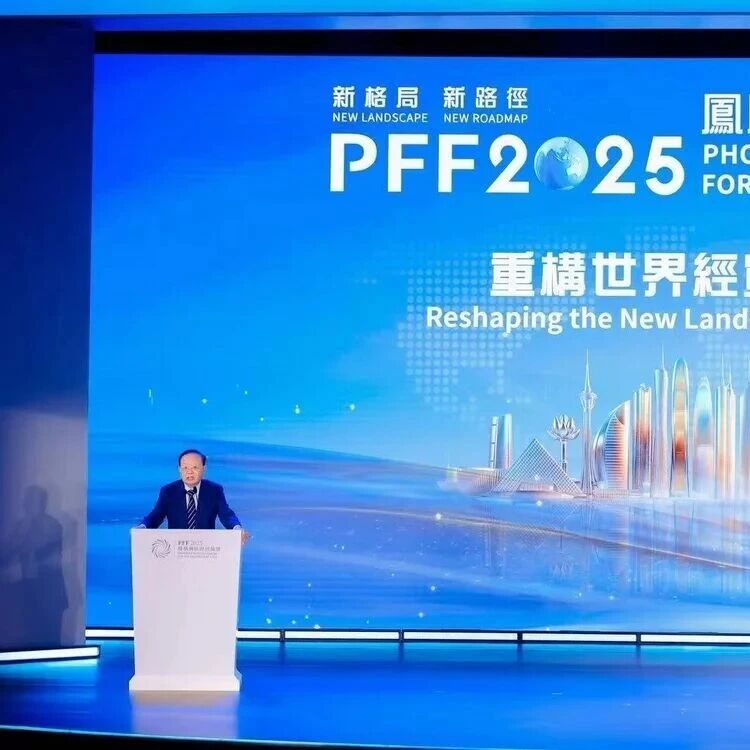
Core Viewpoint - The forum "Phoenix Bay Area Finance Forum 2025" emphasizes the need for a new perspective and courage to embrace the evolving global economic landscape, highlighting the profound changes and opportunities present in the current era [1][3]. Group 1: Global Economic Landscape - The global economic landscape is characterized by a complex coexistence of six trends: 1. Coexistence of group and fragmentation, with regional trade agreements like RCEP covering over 30% of global GDP and reducing tariffs within the region, while exclusive agreements like CPTPP increase trade barriers [4]. 2. Coexistence of multipolarity and bilateralism, with a trend towards a multipolar distribution of economic power and an increase in bilateral trade agreements among major economies [5]. 3. Coexistence of service-oriented and green economies, with global service trade projected to reach $8.6 trillion in 2024, growing at 9%, significantly outpacing global GDP growth [5]. Group 2: Opportunities and Challenges for Chinese Enterprises - The new economic landscape presents vast opportunities for Chinese enterprises, particularly through the rise of emerging markets. China has signed cooperation memorandums with 52 African countries, participating in 31% of infrastructure projects valued over $50 million [6]. - The implementation of multiple free trade agreements has allowed traditional industries like home appliances and textiles to regain market share through tariff reductions and streamlined customs processes [6]. - Chinese cross-border e-commerce reached 2.63 trillion yuan, growing by 10.8%, maintaining its position as the global leader for 15 consecutive years. Platforms like TikTok facilitate direct access for "Made in China" products to global consumers, with exports of green products like electric vehicles and lithium batteries exceeding 1 trillion yuan [6]. - However, challenges such as rising geopolitical tensions and trade protectionism increase operational uncertainties and costs for Chinese enterprises. The trend towards regionalization and shorter supply chains intensifies international competition [6]. - To navigate these challenges, Chinese enterprises are urged to accelerate technological innovation and brand development, reshaping their global strategies to enhance competitiveness [6][7].

中金缪延亮:对等关税后中美经济与市场比较 ——从美元“不升反贬”看宏观范式转换
中金点睛· 2025-09-18 23:37
Core Viewpoint - The article discusses the unexpected depreciation of the US dollar following the implementation of reciprocal tariffs by the US government in April 2025, highlighting a shift in global capital market dynamics and the potential fragmentation of the international monetary order [2][3][27]. Market Impact: Global Capital Rebalancing Under Dollar Credit Reevaluation - The US market experienced a rare "triple hit" of stocks, bonds, and currency depreciation, with the dollar weakening contrary to traditional expectations that tariffs would strengthen the domestic currency [3][4]. - The failure of traditional channels through which tariffs typically influence exchange rates is attributed to inflation expectations suppressing short-term interest rates and increasing policy uncertainty undermining the dollar's safe-haven status [4][5]. - The response of global trade partners to the US tariffs, including retaliatory measures, has further diminished the dollar's appreciation potential, as evidenced by the immediate depreciation of the dollar against major currencies following coordinated responses from other nations [6][22]. US Economic Impact: Policy Inefficiency and Long-term Stagflation Risks - The article notes that the tariff policy has led to significant internal contradictions within US economic policy, contributing to rising inflation and reduced consumer confidence [17][18]. - The uncertainty surrounding the tariff policy has profound implications for both domestic monetary policy effectiveness and international market confidence, potentially transforming supply shocks into demand shocks [18][19]. - Despite short-term support for the US economy from fiscal measures and interest rate cuts, long-term stagflation risks remain due to persistent policy inefficiencies and rising inflation [20][21]. Chinese Market Resilience: Value Reassessment Amid Global Monetary Restructuring - The Chinese stock market has shown strong resilience, with significant gains following the announcement of reciprocal tariffs, outperforming other global markets [12][13]. - The article attributes the strength of the Chinese economy to its adaptability in export markets and the competitive pricing of its goods, which have not seen significant declines despite tariff pressures [23][25]. - The Chinese government’s proactive response to US tariffs, including negotiations to lower tariff rates, has effectively mitigated economic tail risks and bolstered market confidence [22][26]. Global Monetary Order Reconstruction - The depreciation of the dollar reflects a reevaluation of the sustainability of the dollar-centric international monetary system, with increasing diversification and fragmentation of global capital flows [27][28]. - The article highlights a shift in investor behavior towards seeking alternatives to the dollar, as evidenced by rising allocations to gold and other currencies, indicating a potential decline in the dollar's dominance [29][31]. - The ongoing restructuring of the global monetary order suggests that China may play a more significant role in the new financial paradigm, as global capital seeks diversified investment opportunities [36].

暑期预订涨38%,为什么文旅还是不赚钱?
创业邦· 2025-08-10 02:27
Core Insights - The article discusses the evolving trends in summer tourism and cultural consumption in China, highlighting the increasing focus on family-oriented activities and immersive experiences [10][34]. Group 1: Summer Tourism Trends - The overall growth in cultural tourism bookings has increased by nearly 38% year-on-year, with an expected 9.53 billion travelers during the summer, a 5.8% increase [9]. - Family-oriented travel has become the dominant trend, with over 60% of summer trips categorized as family travel, and orders for summer vacation and educational travel increasing by over 70% [10]. - Immersive dining experiences, such as palace banquets, have gained popularity, with average spending reaching 700 yuan per person, and the market for such experiences growing significantly [14][15]. Group 2: Consumer Behavior and Preferences - Parents are increasingly willing to spend on their children, with a focus on educational and experiential travel, such as factory tours and cultural experiences [20][21]. - Young consumers are gravitating towards "laid-back" travel experiences, such as "slow hiking" and "relaxed rafting," reflecting a shift from high-adrenaline activities to more comfortable options [26][30]. - The trend of "immersive slow travel" has become the most favored travel style among young people, accounting for 55.3% of preferences [32]. Group 3: Market Dynamics and Economic Impact - The summer tourism season is characterized by a push for consumption, with over 4,300 cultural and tourism events planned, supported by 5.7 billion yuan in subsidies [35]. - The frequency of travel has increased, with more people planning 3-4 trips compared to previous years, indicating a shift towards more frequent, shorter trips [36][39]. - Despite the increase in travel demand, the hospitality industry is facing challenges, with average hotel revenues declining by 8% during peak travel weeks, highlighting a disconnect between rising visitor numbers and profitability [46][49].

21专访|品浩环球固定收益CIO:碎片化成为市场关键主题
2 1 Shi Ji Jing Ji Bao Dao· 2025-07-14 10:42
Core Viewpoint - The performance of the US stock market has lagged behind major markets such as China, Europe, and South Korea this year, despite recent highs [2] Market Trends - Global investors are likely to reduce their holdings in US assets and reallocate funds to other markets due to varying initial valuations across regions [2] - Emerging markets have shown strong policy responsiveness, with central banks in these regions raising interest rates earlier than G10 countries, indicating potential for better inflation performance [5] Monetary Policy Insights - The Federal Reserve's current target range for the federal funds rate is 4.25% to 4.50%, with expectations of one or two rate cuts this year depending on inflation and employment data [6] - The stability of inflation expectations is crucial, with historical data suggesting that central banks typically act decisively when inflation expectations rise undesirably [4][6] Debt and Fiscal Policy - The US and France have high fiscal deficit levels, with the US having a relatively low tax rate historically, which could be adjusted to reduce the deficit [7] - PIMCO has reduced holdings in 30-year bonds in the US and Europe but increased positions in Japan due to a decrease in the issuance of ultra-long bonds [7] Investment Strategy - In the current environment, high-quality fixed income assets are seen as important risk hedging tools, with potential annual returns of 5% to 7% for dollar-denominated high-quality bond portfolios [10] - The global aggregate bond index currently offers a yield of approximately 5%, while emerging market local currency bond indices yield around 6.6% [9] Future Outlook - The trend towards fragmentation and a multi-polar world is expected to be a key theme in the next three to five years, impacting global trade dynamics [8] - A diversified global investment strategy is deemed practical, with both developed and emerging markets presenting attractive investment opportunities [8]
英国央行行长贝利:碎片化不利于世界经济活动。
news flash· 2025-07-01 14:14
Core Viewpoint - The Governor of the Bank of England, Andrew Bailey, stated that fragmentation is detrimental to global economic activity [1] Group 1 - Fragmentation in the global economy can hinder cooperation and efficiency among nations [1] - The need for a unified approach to address economic challenges was emphasized by Bailey [1] - Bailey highlighted the importance of collaboration in fostering economic growth and stability [1]
欧洲央行管委马赫鲁夫:鉴于碎片化引发的冲击在规模、范围以及持续性方面的影响,以及这些冲击对价格的影响,货币政策的应对措施将需要谨慎调整。
news flash· 2025-05-13 08:10
Core Viewpoint - The European Central Bank's policy response will require careful adjustments due to the impacts of fragmentation, which affect the scale, scope, and persistence of shocks, as well as their influence on prices [1] Group 1 - The fragmentation has significant implications for monetary policy, necessitating a cautious approach to adjustments [1] - The shocks resulting from fragmentation are characterized by their scale, scope, and duration, which complicates the monetary policy landscape [1] - Price impacts from these shocks are a critical consideration for the European Central Bank in formulating its policy response [1]