
社交

Search documents
社交并不是单一目标的沟通过程
Xin Lang Cai Jing· 2026-02-25 03:32
Group 1 - The article emphasizes that any group interaction naturally creates a discourse center and implicit hierarchy, where some individuals are frequently responded to, some summarize viewpoints, some become mediators, and others gradually gain influence [1] - Social atmosphere is shaped more by these relational roles than by the content of the information itself [1] - Social interaction is not a single-goal communication process but a complex system that simultaneously maintains relationships, constructs identities, and regulates order [1] Group 2 - The effectiveness of social interaction should not only be judged by the efficiency of information transmission but also by the continuous realization of these social functions during interactions [1]
人和机器可以社交吗
Di Yi Cai Jing· 2026-02-02 12:02
Core Viewpoint - The article discusses the potential disruptive impact of AI as a social entity on human society, emphasizing that while its effects are not yet significant, they may become a larger issue in the future. Group 1: Importance of Social Interaction - Social interaction is crucial for individual and societal well-being, serving as a medium for personal growth, emotional support, and cultural continuity [1][2]. - Studies indicate that social connections can lead to longer lifespans, with social isolation increasing all-cause mortality risk by 32% [2]. - High-quality relationships act as emotional buffers, helping individuals combat existential anxiety and find a sense of belonging [2]. Group 2: AI as a Social Entity - The question arises whether AI can replace humans as social entities, particularly in forming emotional and intimate relationships [3]. - AI's ability to simulate social interaction is driven by human tendencies to anthropomorphize non-human entities, especially in contexts where real social resources are scarce [4]. Group 3: AI's Capabilities in Social Interaction - AI can meet many social needs through simulated interactions, with advanced models showing strong capabilities in understanding and responding to emotional contexts [5][6]. - AI's lack of emotional experience does not hinder its ability to create a sense of being understood, which is essential for social relationships [6]. Group 4: Advantages of AI in Social Interaction - AI offers a "perfect" social experience, being available 24/7, emotionally stable, and low-cost in terms of time and effort compared to human interactions [7]. - The engagement with AI can be gamified, enhancing user investment and interaction quality, as seen in successful AI social products [7]. Group 5: Risks of AI as a Social Entity - AI's role as a social entity may lead to cognitive biases and emotional dependencies, potentially undermining critical thinking and real-world social skills [8][9]. - The shift towards AI interactions could diminish the quality and quantity of real-life social engagements, particularly affecting youth and socially anxious individuals [9][10]. Group 6: Long-term Implications - AI's emotional support may reduce the motivation for seeking real human partners, impacting social structures and potentially leading to lower birth rates [10][11]. - The evolution of AI capabilities, including long-term memory and multimodal interactions, poses future challenges for human social behavior [12].
腾讯AI社交新品开启公测 “聊天群”里多了个AI
Shang Hai Zheng Quan Bao· 2026-02-01 21:25
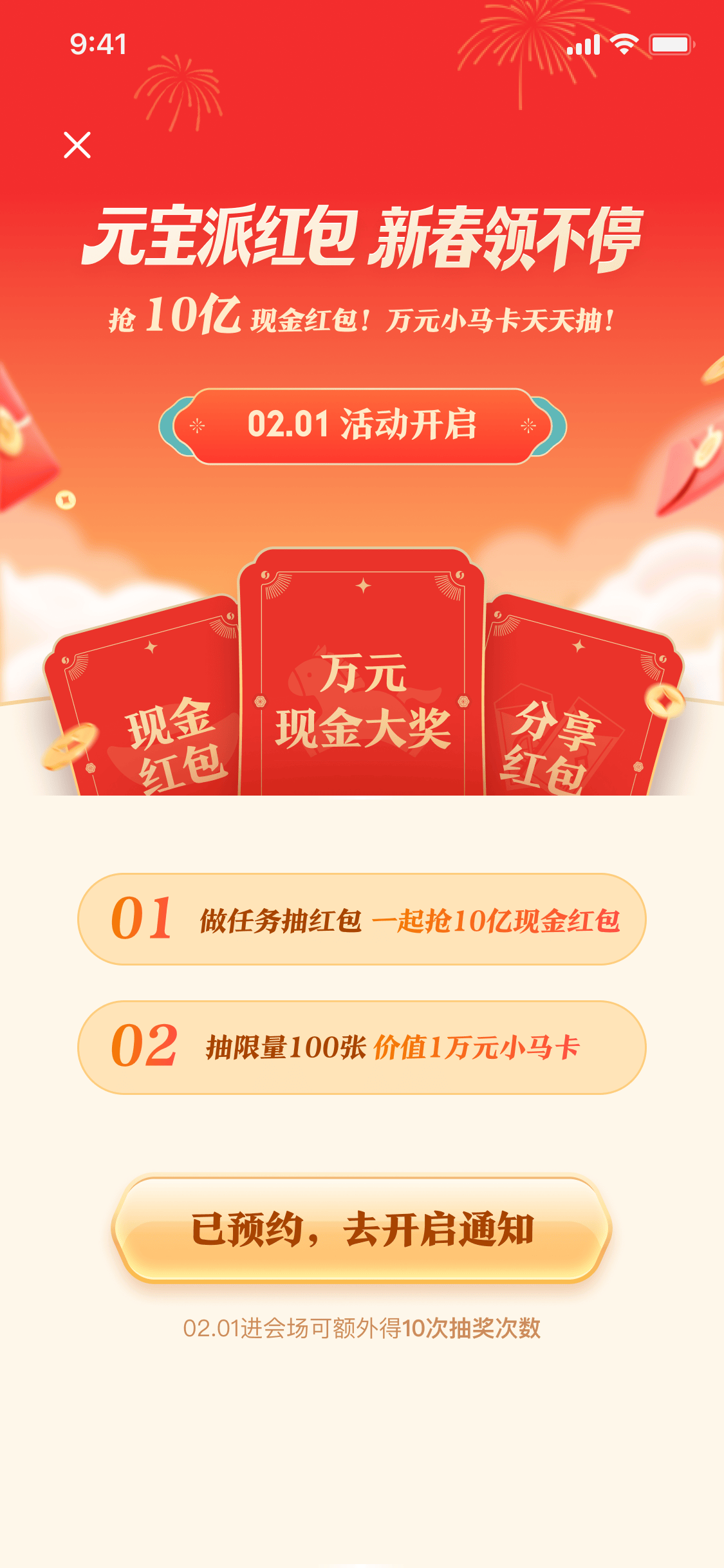
Core Insights - Tencent has launched a new social product called Yuanbao Pai, which features an AI assistant and is currently in public testing with an invitation-only access model [2] - The product has generated significant interest, with users even reselling invitation codes on second-hand trading platforms [2] - Yuanbao Pai expands on previous functionalities by introducing new features such as "抢10亿红包" (grab 1 billion red envelopes) during the Spring Festival [2] Group 1: Product Features - Yuanbao Pai integrates an AI assistant named Yuanbao into group chats, allowing users to interact with it by tagging or quoting its messages [4] - The public version includes enhanced functionalities like "一起看" (watch together) and "一起听" (listen together), which connect to Tencent Video and QQ Music, enabling users to enjoy premium content and vast music libraries simultaneously [4] - The user limit for each Yuanbao Pai group is set at 100 participants [4] Group 2: AI Model and Interaction - Yuanbao Pai utilizes Tencent's self-developed model, the Hongyuan model, which is designed for better integration within Tencent's ecosystem [6] - Users have reported that Yuanbao's responses are more emotionally intelligent and personalized, often providing balanced answers to complex questions [6] - The AI's replies in group settings are more concise compared to one-on-one interactions, with a tendency to decline overly ambitious requests [6] Group 3: Market Context and Competition - Tencent aims to integrate AI into daily life, recognizing that group communication is a frequent and authentic interaction scenario that demands advanced AI capabilities [8] - Competitors like Baidu have also launched similar group chat functionalities, indicating a growing trend in the AI space [8] - The current AI applications are primarily focused on one-on-one interactions, but there is a shift towards exploring more social and collaborative uses of AI [10] Group 4: Strategic Positioning - Tencent has previously integrated Yuanbao with WeChat and QQ, but the decision to create Yuanbao Pai as a separate entity reflects a strategy to decentralize AI features while addressing user privacy and needs [11] - The competitive landscape for AI applications is intensifying, with companies vying for dominance in the AI entry point market [12] - As of now, Yuanbao's monthly active users rank third in the market, with Tencent's app climbing to the top of the free app rankings in the Apple Store [12]



腾讯元宝“春节分10亿”,马化腾:希望重现当年微信红包的盛况
Sou Hu Cai Jing· 2026-01-26 09:11
Core Insights - Tencent is launching a cash giveaway of 1 billion yuan during the Spring Festival, aiming to replicate the success of the WeChat red envelope feature [1][4] - The new feature, "Yuanbao Pai," will allow users to create or join groups where AI can participate in chats and perform tasks, indicating a shift towards integrating AI in social applications [4] Group 1 - Tencent's chairman, Ma Huateng, announced the 1 billion yuan cash activity during the annual meeting, highlighting the goal of reviving the popularity of WeChat red envelopes [1] - The cash giveaway will be available on the Yuanbao app starting February 1, with individual red envelopes potentially reaching up to 10,000 yuan [1] - Yuanbao has been recognized as one of the top three AI-native applications in China, suggesting its strong market position [4] Group 2 - The Yuanbao app is set to introduce a new feature called "Pai," which is currently in internal testing and will soon be publicly available [4] - This new feature aims to enhance user interaction by allowing AI to engage in conversations and manage group dynamics, marking a strategic move for Tencent in the AI and social sectors [4] - The development of "Yuanbao Pai" reflects Tencent's intention to innovate within the AI landscape, potentially leading to new opportunities in social engagement [4]
腾讯系AI杀疯!元宝用 “社交群聊” 硬刚AI入口争夺战
第一财经· 2026-01-26 08:07
Core Insights - Tencent's AI application, Yuanbao, is launching a social feature that allows users to distribute 1 billion cash red envelopes during the Spring Festival, reminiscent of its 2015 WeChat red envelope campaign [3][4] - The new social feature, "Pai," enables users to create groups for chatting, video calls, and AI interactions, marking a shift of social activities from WeChat and QQ to Yuanbao [6][7] - The trend of AI applications penetrating the consumer market is accelerating, with 515 million users reported in China, reflecting a 100% increase in six months [8] Tencent's Yuanbao Developments - Yuanbao will start a Spring Festival activity on February 1, allowing users to share cash red envelopes and potentially win limited cash cards [3] - The "Pai" feature supports text, voice, and video communication, and allows users to invite friends from WeChat and QQ [6] - Yuanbao has undergone significant changes since its launch in May 2024, becoming more independent from Tencent's large model technology team [7] Market Context - The competition for AI application entry points is intensifying, with other companies like Baidu also launching similar Spring Festival activities with significant cash rewards [8] - The demand for AI applications is driven by trends in the semiconductor industry, particularly in storage sectors, with companies like Samsung and Micron reporting increased prices and demand [4]

不追网红店的年轻人,竟在菜市场里解锁社交新潮流?
Sou Hu Wang· 2026-01-22 05:01
Group 1 - The core idea of the articles is that young people are increasingly viewing local markets as new social and recreational spaces, moving away from traditional tourist attractions and online interactions [1] - Local markets are seen as treasure troves filled with fresh produce and local flavors, providing a sense of belonging and cultural connection for young people, even when they are away from home [1][17] - The "wo们开伙啦" community event organized by Woqu aims to create a warm social environment for renters, using food as a medium to foster connections and share cultural experiences [3][5] Group 2 - The event featured interactive activities such as creating a "taste map" of hometown dishes and guessing food items based on photographs, enhancing community engagement and cultural exploration [8][10] - Participants explored the local market, discovering hidden culinary gems and experiencing the vibrant local culture, which helps them integrate into the community [13][17] - The activities included creative exploration tasks that encouraged participants to capture the essence of local life through photography, deepening their understanding of the area's history and culture [19][22] Group 3 - Woqu's "趣社区" concept emphasizes a lifestyle that blends shared and private living experiences, aiming to provide a sense of home for urban youth [24] - The successful execution of the "wo们开伙啦" event exemplifies Woqu's brand characteristics, focusing on local resources and comfortable living to foster enjoyment, friendships, and warmth among renters [24]

ChatGPT开始搞社交了
3 6 Ke· 2025-11-21 10:18
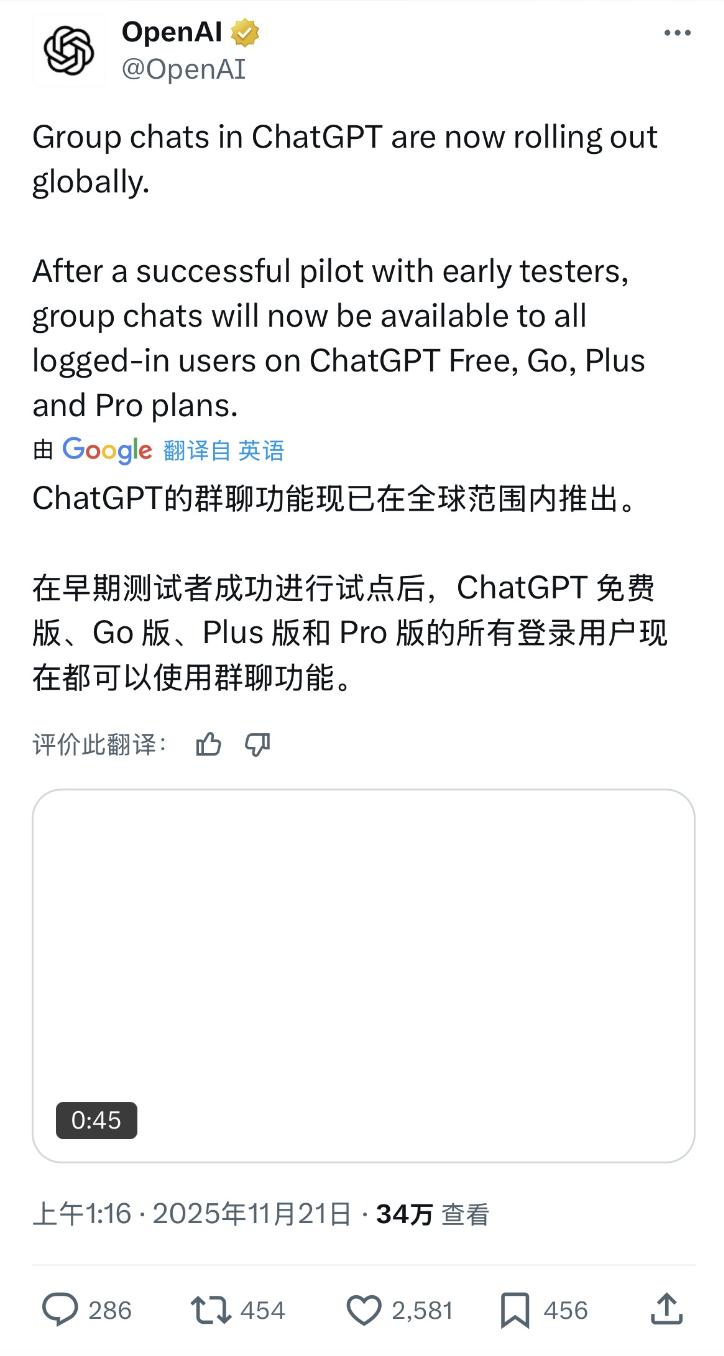
Core Viewpoint - OpenAI has introduced a group chat feature for ChatGPT, which resembles existing group chat functionalities in platforms like WeChat and QQ, but with the added capability of an intelligent chatbot that can gauge group dynamics and decide when to speak or remain silent [1][2][4]. Group 1: Feature Overview - The group chat feature allows users to create groups by clicking an icon and inviting up to 20 participants via a shareable link, with members needing to accept invitations to join [7]. - Users can customize group settings, including changing avatars, nicknames, and managing group interactions such as muting notifications or removing members [7]. - ChatGPT can be programmed with custom instructions for different groups, allowing it to respond in various styles or provide specific information based on the group's context [8]. Group 2: Billing and Usage - Only interactions where ChatGPT speaks will incur charges, which will be billed to the user who initiated the conversation, while member-to-member chats remain free [9][10]. - Users can directly prompt ChatGPT to speak if needed, and the feature is designed for collaborative scenarios such as event planning, document editing, and family discussions [12]. Group 3: Strategic Implications - The introduction of group chat appears to be a reaction to competitive pressures from Google's recent product launches, suggesting a hurried response rather than a well-planned innovation [19]. - OpenAI's previous stance against becoming a social platform raises questions about the strategic direction of the company, as the new feature seems to contradict earlier statements about focusing on AI as a super assistant rather than a social tool [16][17]. - The overall sentiment indicates that while the new feature is not inherently negative, it lacks significant innovation and may be perceived as an attempt to maintain relevance in a rapidly evolving market [19].
独来独往的人,不是兽,就是神
洞见· 2025-11-09 12:35
Core Viewpoint - The article emphasizes the value of solitude over superficial social interactions, suggesting that true maturity comes from being comfortable with one's own company rather than seeking validation through social gatherings [28][30]. Group 1: Social Dynamics - Social interactions often involve insincerity, where individuals engage in superficial conversations and flattery rather than genuine connections [7][8]. - The article highlights that in social settings, people tend to play roles and say what is expected rather than what they truly feel, leading to a lack of authentic relationships [11][12]. - It points out that social status and power dynamics heavily influence how individuals are treated in social gatherings, with those of higher status receiving more respect and attention [18][20]. Group 2: Value of Solitude - Embracing solitude is portrayed as a sign of maturity, where individuals learn to appreciate their own company and focus on personal growth rather than social validation [30][32]. - The article discusses how individuals who choose to be alone often engage in self-reflection and personal development, leading to a richer inner life [23][38]. - It argues that time spent alone can lead to deeper insights about oneself and the world, contrasting it with the distractions of social engagements [38][39]. Group 3: Personal Growth and Reflection - The narrative includes examples of individuals who, after distancing themselves from social circles, achieved significant personal and professional success, illustrating the benefits of solitude [27][36]. - The article suggests that true strength lies in the ability to be alone and to use that time for self-improvement and creativity, rather than conforming to social expectations [21][28]. - It concludes that those who endure loneliness and embrace solitude will ultimately find a more profound and fulfilling existence [40].

社交正在死去,但不是因为社恐
3 6 Ke· 2025-11-07 00:50
Core Insights - The article discusses a noticeable decline in social engagement and communication among individuals, particularly in the U.S., where daily social participation dropped from 38% in 2014 to 30% in 2024, and the average time spent on social interactions decreased from 43 minutes to 35 minutes [3][5]. Group 1: Sources of Social Engagement - Social interactions are deemed "interesting" when they satisfy various human desires, including the desire for knowledge, expression, and comfort [4][5]. - The perceived value of socializing is determined by the balance of "income" (satisfaction from social interactions) versus "cost" (financial, time, energy, and opportunity costs) [5][6]. Group 2: Reasons for Diminished Social Interest - A significant portion of individuals (68%) feel their offline social skills have deteriorated, which contributes to a decrease in the quality of social interactions [7]. - The opportunity cost of socializing has increased, as individuals find more appealing alternatives to social interactions, leading to a decline in engagement [9][11]. Group 3: Age-Related Changes in Social Dynamics - As individuals age, the speed of personal growth tends to decline, which may lead to fewer engaging social interactions with peers [14]. - The expansion of social circles slows down, as individuals become less willing to invest time in forming new relationships, further reducing opportunities for interesting conversations [15][20]. Group 4: Strategies for Enhancing Social Engagement - Continuous reading and building a "meta-knowledge system" can help individuals maintain engaging conversations by providing a solid foundation of knowledge [18]. - Writing and sharing personal insights can facilitate connections with interesting individuals, enhancing the quality of social interactions [21][22].

社交,才是 AI视频ToC 的终局
3 6 Ke· 2025-10-15 11:12
Core Insights - The article emphasizes that the essence of social interaction has evolved with technology, particularly highlighting the shift from direct communication to content-driven interactions facilitated by algorithms [24][25][26]. Group 1: Evolution of Social Interaction - The rise of mobile internet marked a significant change in how people connect, with messaging emerging as the "killer app" [2][3]. - WeChat, as a pivotal platform, transformed social interactions by focusing on maintaining relationships rather than just facilitating communication [4][5]. - The transition from "connection" to "distribution" occurred around 2016, with algorithms reshaping how content is delivered to users [6][7]. Group 2: Algorithmic Influence - The algorithm-driven content distribution model has led to a shift where users engage with content rather than directly with each other, changing the dynamics of social relationships [8][12]. - Emotional engagement metrics, such as likes and shares, have become crucial for content visibility, effectively monetizing user interactions [9][10]. - Relationships have become more superficial and widespread, with interactions among strangers becoming more common due to algorithmic recommendations [10][12]. Group 3: Future of Social Interaction - AI video technology is poised to redefine personal identity and social presence, allowing users to create and project their identities without physical presence [15][16]. - The concept of "existence" is being transformed, as AI can now facilitate social interactions and maintain relationships on behalf of users [19][20]. - The future of social interaction may involve AI systems managing relationships, making social engagement more automated and less reliant on direct human effort [21][22]. Group 4: Implications of AI in Social Media - The proliferation of AI-generated content is changing the landscape of social media, where the ability to "appear" and "exist" digitally becomes a competitive advantage [27][29]. - The shift towards AI-driven interactions suggests a new paradigm where emotional expressions and social connections are quantified and managed by algorithms [18][23].