
系统重构

Search documents
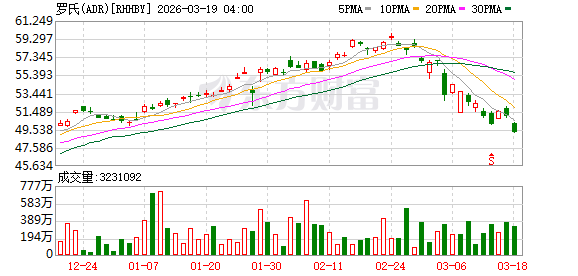
AI制药打响算力竞赛:罗氏布局AI工厂,行业痛点仍存
2 1 Shi Ji Jing Ji Bao Dao· 2026-03-18 23:11
Core Insights - The pharmaceutical giants are investing heavily in AI infrastructure, with Roche and Eli Lilly leading the charge by deploying significant GPU resources to enhance their drug development processes [1][2][3] - AI is transitioning from a supplementary tool to a fundamental infrastructure that supports the entire value chain in drug development, manufacturing, and commercialization [2][4] Investment and Infrastructure - Roche has deployed 2,176 high-performance GPUs, bringing its total GPU capacity to over 3,500 Blackwell GPUs, claiming the largest GPU scale available among pharmaceutical companies [1][3] - Eli Lilly has launched its AI factory "LillyPod," equipped with 1,016 NVIDIA Blackwell Ultra GPUs, achieving a computing power of 9,000 Petaflops [1][3] - The competition among top pharmaceutical companies is intensifying as they build proprietary AI infrastructures to create high data barriers and optimize their drug development processes [4][17] Market Dynamics - The AI pharmaceutical sector is experiencing a paradox of rapid expansion and a return to rational capital investment, with over 350 AI pharmaceutical companies globally, including more than 100 in China [2][6] - The funding landscape is shifting, with a notable trend of companies transitioning from high-risk "gold diggers" to more stable "water sellers" (CRO/technical service models) [20][21] Commercialization Challenges - Despite the increasing efficiency of AI in preclinical research, significant bottlenecks remain in transitioning from preclinical to late-stage clinical trials, with no AI-designed drugs yet approved [21][22] - Investors are becoming more cautious, focusing on companies that can demonstrate cash flow within two to three years, indicating a shift in funding strategies towards firms with tangible deliverables [21][22] Future Directions - Key breakthroughs in AI pharmaceutical development are expected to focus on creating closed-loop systems that integrate algorithm design, automated experiments, and data feedback [22][24] - The industry is predicted to undergo a valuation restructuring by 2026, with leading companies like Crystal Technology and Tempus AI expected to achieve positive EBITDA for the first time [24][25]




AI制药打响算力竞赛:罗氏布局AI工厂 行业痛点仍存
2 1 Shi Ji Jing Ji Bao Dao· 2026-03-18 23:10
Core Insights - The pharmaceutical industry is increasingly adopting AI technologies, with major companies like Roche and Eli Lilly investing heavily in AI infrastructure to enhance drug development processes [2][3] - Roche has deployed the largest GPU scale in the pharmaceutical sector, with over 3,500 Blackwell GPUs, indicating a shift towards in-house AI capabilities [3][5] - The AI pharmaceutical sector is experiencing a paradox of rapid expansion and cautious capital investment, as companies seek to integrate AI across the entire value chain [3][6] Investment and Infrastructure - Roche's AI factory represents a high-performance supercomputing platform that integrates AI into research, manufacturing, and diagnostics [5] - Eli Lilly's AI factory, "LillyPod," features 1,016 GPUs and aims to enhance drug discovery efficiency, reflecting a broader trend among pharmaceutical giants to build proprietary AI capabilities [3][5] - The global AI pharmaceutical landscape includes over 350 companies, with significant growth in China, where more than 100 AI pharmaceutical firms are emerging [4][7] Market Dynamics - The investment landscape is shifting from broad-based funding to a focus on companies with clear deliverables and measurable outcomes in AI drug development [8][9] - Despite significant funding in the AI pharmaceutical sector, many companies are transitioning from high-risk ventures to more stable service-oriented models [7][9] - The industry is witnessing a consolidation trend, with larger firms acquiring smaller companies to enhance their AI capabilities and market position [12] Future Outlook - The key challenges for AI in pharmaceuticals include the transition from preclinical to clinical phases, with no AI-designed drugs yet approved for market [9][11] - Analysts predict that 2026 will be a critical year for AI pharmaceuticals, as the success of AI-driven drugs in clinical trials will determine the future viability of AI in drug development [11][12] - The industry is expected to see a bifurcation in capital allocation, with early-stage investments focusing on disruptive technologies and later-stage investments favoring companies with proven clinical data [12]
舟山青浜岛试点循环杯 海岛旅游开启一次性塑料替代尝试
Xin Lang Cai Jing· 2026-02-03 03:17
Core Insights - The article discusses the implementation of a reusable cup project on Qinhai Island, aimed at reducing single-use plastic consumption in a tourist-heavy area, highlighting the environmental challenges posed by plastic waste [1][5][9] Group 1: Project Overview - The reusable cup project was initiated in September 2025, targeting the high volume of plastic waste generated by tourists, particularly from beverage cups and packaging [1][5] - Qinhai Island, known for its ecological sensitivity and high visitor numbers, serves as a testing ground for innovative waste reduction strategies [5][9] Group 2: System and Operation - Unlike traditional reusable cups, the project operates on a closed-loop system where cups are owned by the system and borrowed by consumers, promoting a shift from individual ownership [5][9] - The project has been piloted in various locations, including Guangzhou and Hong Kong, focusing on semi-closed environments like events and campuses to establish a recycling and tracking system [5][9] Group 3: Environmental Impact and Cost Efficiency - A 473ml PP reusable cup must be used at least 11 times to achieve lower carbon emissions than a single-use paper cup, demonstrating the environmental benefits of the reusable model [8] - Research indicates that reusable containers can reduce carbon emissions by approximately 70% and lower economic costs by 15% compared to single-use options [8][9] Group 4: Acceptance and Participation - The pilot program achieved a 97% return rate for the reusable cups within the first month, indicating strong acceptance among tourists in the closed island environment [9][12] - The project employs a "borrow in-store, return at multiple points" model, with 27 local accommodations participating in the cup return process, enhancing community involvement [9][12] Group 5: Consumer Feedback and Future Directions - Consumer feedback has been largely positive, with many expressing trust in the sanitation processes, although some challenges remain in communication and awareness [12][13] - To expand the project beyond the pilot phase, diverse policy tools and cross-industry collaboration are necessary to enhance the competitiveness of the reusable model against single-use products [13]

中企“出海”面临系统重构,如何规避合规风险
Di Yi Cai Jing Zi Xun· 2025-12-16 05:27
Core Insights - The internationalization of Chinese enterprises is evolving from low-value manufacturing to product export and now to brand globalization, necessitating a comprehensive system restructuring to adapt to diverse market conditions [2][3][4] Group 1: System Restructuring - Companies must transition from "single store output" to "platform-driven" models, relying on data-driven decision-making rather than experience-based approaches [3] - A robust ecosystem is essential for global operations, integrating financial payments, logistics, SaaS, and localized marketing to ensure smooth operations across different countries [3][4] Group 2: New Logic of Going Global - The current logic of Chinese enterprises going global emphasizes high value through brand and innovation, moving away from the traditional low-cost manufacturing model [4] - Companies are increasingly deploying local talent with strong operational and digital capabilities to enhance brand competitiveness in foreign markets [4][5] Group 3: Compliance Risks - Different regions present unique challenges, with compliance and regulatory issues significantly affecting expansion efforts, particularly in markets like the U.S. [6][7] - Companies must adapt their management practices to local regulations and cultural differences to mitigate compliance risks and operational challenges [6][7] Group 4: Digitalization Challenges - The integration of digital systems across global operations is a major challenge, particularly in managing POS systems and ensuring real-time data flow [7][8] - In Southeast Asia, low penetration of online ordering and electronic payments complicates operations for foreign brands, necessitating a flexible digital management system [8][9] Group 5: Future Outlook - Continuous investment in digital infrastructure is crucial for empowering Chinese brands to expand globally, leveraging their inherent digital capabilities and supply chain advantages [9]
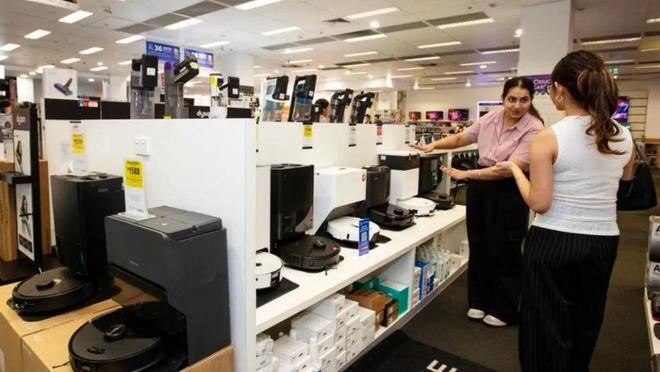
中企“出海”面临系统重构,调度与合规能力受考验
Di Yi Cai Jing· 2025-12-16 01:27
Group 1 - The core viewpoint of the articles emphasizes the transformation of Chinese companies' internationalization from low-value manufacturing to brand globalization, highlighting the need for compliance and adaptation to regional market differences [1][3][4] - Companies are shifting from a "single store output" model to a "platform-driven" approach, requiring enhanced data-driven decision-making and ecosystem collaboration to navigate complex overseas environments [2][3] - The essence of "going global" for Chinese enterprises is evolving from a focus on low-cost products to high-value brand and cultural integration, with an increasing reliance on local talent for operational efficiency [3][4] Group 2 - The report indicates that Chinese manufacturing is transitioning from merely exporting products to exporting brand culture, with a growing emphasis on local adaptation in various sectors, including food and beverage [4][5] - Companies face diverse challenges in different regions, such as regulatory compliance and cultural differences, which necessitate tailored management strategies and digital solutions to optimize supply chains [5][6] - In Southeast Asia, the low penetration of online ordering and electronic payments presents significant challenges for cross-border operations, highlighting the need for a unified digital management system to facilitate expansion [7][8]
报告谈能源转型:传统化石能源与清洁电力将长期共存
Xin Lang Cai Jing· 2025-12-05 10:44
Core Insights - The 2025 Marine Energy Development Forum highlighted the evolving landscape of energy transition, emphasizing a shift towards "system reconstruction" in energy security, where traditional fossil fuels and clean electricity will coexist long-term [1][2][3] Group 1: Energy Transition and Security - The report indicates that energy transition is no longer a simple linear replacement of fossil fuels with renewable energy, but rather a complex system reconstruction driven by technological innovation and policy guidance [3] - Energy security is increasingly focused on "system resilience," which encompasses key material security, electricity system safety, controllable core technologies, and reliable infrastructure, moving beyond mere resource availability [3] Group 2: Role of Fossil Fuels and Clean Energy - Traditional fossil fuels and clean electricity are described as having a "mutual exclusion" relationship, yet both will remain essential for the foreseeable future [2][3] - In emerging sectors such as transportation electrification, industrial decarbonization, and data centers, electricity is projected to account for over half of the end-use energy demand, with wind and solar power becoming the primary sources of electricity growth [2][3] - Despite the rise of clean energy, fossil fuels will continue to play a critical role in ensuring energy accessibility and system stability, serving as a "ballast" in electricity supply, system regulation, long-distance transportation, and chemical industries [2][3]
别以为会用AI就安全了,真正的危机是技能贬值
3 6 Ke· 2025-05-19 12:00
Core Insights - The article emphasizes that the real challenge in the AI era is not merely about using AI tools but understanding how AI fundamentally reshapes work structures and organizational logic [3][17][66] - It argues that many common beliefs about AI's impact on work are misleading, as they focus on task-level improvements rather than systemic changes [4][18][45] Group 1: Misconceptions about AI - Misconception 1: Learning to use AI will keep individuals ahead. The article critiques this view as it overlooks the broader systemic changes that AI brings [4][18] - Misconception 2: AI allows individuals to do more work, thus increasing their value. However, this assumes that the work system remains unchanged, which is often not the case [18][20] - Misconception 3: Jobs will not disappear, only the way work is done will change. The article argues that jobs are not inherently fixed and can be redefined by changes in the system [24][28] Group 2: Systemic Changes and Value Creation - The article highlights that the true value in the AI era comes from understanding the new system dynamics rather than just optimizing existing tasks [10][15] - It points out that as productivity increases, the benefits may not flow to the workers but rather to those who control the new systems, leading to a disconnect between value creation and compensation [19][23] - The article stresses that AI is not just a tool but a force that redistributes power within organizations, changing who makes decisions and how tasks are executed [45][48] Group 3: The Future of Work - The article suggests that the future of work will require individuals to rethink their roles and the relevance of their skills in a rapidly evolving system [30][41] - It warns that simply being faster at using AI does not guarantee job security, as the underlying value systems may no longer reward those skills [32][38] - The article concludes that organizations must not just integrate AI into existing frameworks but fundamentally rethink their operational structures to remain competitive [62][66]