组织能力建设

Search documents
为什么说《常变与长青》是当代企业家的“组织设计学”必修课?
Sou Hu Cai Jing· 2026-02-04 02:15
Core Insights - The article discusses the evolving understanding of organizational capabilities among Chinese entrepreneurs, highlighting a shift from seeking a single successful paradigm to exploring diverse success logics [2] - It emphasizes the unique value of a course based on Huawei's transformation, aiming to provide a verifiable pathway for companies facing specific complexities [2] Group 1: Acknowledging Diversity - Different companies develop distinct yet effective organizational capability models based on their industry attributes, growth stages, founder characteristics, and competitive environments [2] - The achievements of companies like Midea, TCL, and Chasing demonstrate that there is no singular standard for building excellent organizational capabilities [2] Group 2: Defining Unique Challenges - Modern enterprises, especially those aspiring to be industry leaders or platform companies, face a "complexity crisis" at various critical junctures [3] - Midea and TCL exemplify a path of "excellence in operations and supply chain control," focusing on lean manufacturing and global operations [3] - Chasing Technology showcases a path of "cutting-edge technology and product innovation," emphasizing rapid product iteration and global marketing [3] Group 3: Huawei's Unique Position - Huawei has undergone intense and systematic pressure testing over the past thirty years, evolving from a follower to a global leader in the communications industry [4] - Its management system has been forged through addressing extraordinary business, technical, and organizational complexities [4] Group 4: Course Value Proposition - The course offers a meta-language for "system construction," focusing on the "why" behind organizational capability building rather than just tools [5] - It aims to cultivate "transformational leadership," emphasizing strategic patience and consensus building [6] - The course teaches how to create an organization that does not rely on individual heroes, establishing processes and systems that ensure sustainable growth [7] - It focuses on bridging the gap between strategy and execution, ensuring that clear strategies translate into measurable organizational behaviors [8] - The course provides a blueprint for initiating "minimum viable change," ensuring that learning culminates in actionable steps [9] Group 5: Addressing Organizational Challenges - The course addresses challenges such as ensuring collaboration among large teams, managing innovation while maintaining efficiency, and achieving synergy across multiple business units [10] - It emphasizes the importance of maintaining a sense of urgency in favorable conditions to proactively initiate change [10] Group 6: Course Outcomes - The ultimate outcome of the course is a personalized action plan for each participant, tailored to their company's specific needs [11] - This approach ensures that high-level concepts are grounded in practical applications, facilitating the first steps of transformation [11] Group 7: Conclusion - The course does not position Huawei as a mandatory benchmark but rather extracts valuable lessons for deep study in organizational design [12] - It empowers entrepreneurs to become "organizational designers," moving beyond imitation to creative construction based on their unique conditions [12] - The course aims to equip entrepreneurs with the foundational logic and systematic methods for building organizational capabilities, enabling them to be architects of their companies' paths to longevity [12][13]

小鹏产品“老将”离职
Hua Er Jie Jian Wen· 2026-01-06 08:58
Core Insights - The automotive industry is experiencing frequent personnel changes, with significant departures and appointments impacting company dynamics [1][2][3] - Organizational capability has become a focal point for companies like XPeng, especially after setbacks with flagship models like the G9 [2][3] - XPeng's recent organizational restructuring has led to improved performance, with notable increases in delivery volumes and revenue [3][4] Group 1: Personnel Changes - Chen Yonghai, Vice President of Product Center at XPeng, has left the company as of December 2025, with President Wang Fengying temporarily taking over his responsibilities [1] - Wang Fengying, known as the "Iron Lady" of the automotive industry, joined XPeng in January 2023, bringing extensive experience from her 31 years at Great Wall Motors [2] - The automotive industry as a whole has seen significant executive turnover, with an average of one key position change every two days in 2025 [4] Group 2: Organizational Focus - Following the G9's launch issues, CEO He Xiaopeng emphasized the importance of organizational capability, identifying it as a critical area for improvement [2][3] - XPeng's internal restructuring has involved major changes across various departments, contributing to a more efficient operational framework [3] - The company has seen a substantial increase in its workforce within the product department, expanding from dozens to several hundred employees [1][3] Group 3: Performance Metrics - XPeng's delivery volume stabilized at over 30,000 units per month starting in the second half of 2024, with a total annual delivery of nearly 430,000 units in 2025, representing a 126% year-on-year growth [3] - In Q3 2025, XPeng's revenue surpassed 20 billion yuan for the first time, with a gross margin of 20% and a significant reduction in net loss to 380 million yuan [3] - The automotive industry is shifting focus from technological breakthroughs to operational efficiency and profitability, with XPeng aiming to enhance its competitive edge through improved organizational processes and global market strategies [4]

纳芯微赴港股上市,打响中国汽车芯片“10亿美元”突围战
经济观察报· 2025-12-11 11:57
Core Viewpoint - Naxin Micro aims to surpass the $1 billion revenue mark by 2029, a significant challenge given that leading domestic companies in China's analog chip industry typically struggle to exceed $4-5 billion in revenue [1][11]. Group 1: Company Overview and Market Position - Naxin Micro officially listed on the Hong Kong Stock Exchange on December 8, 2023, becoming one of the few companies in the analog chip industry to establish an "A+H" dual capital platform [2]. - The company ranks first among Chinese manufacturers in the automotive analog chip market, positioning itself as a representative enterprise in China's analog chip sector [2]. - Naxin Micro's founder, Wang Shengyang, emphasizes the necessity of a global strategy, stating that relying solely on the Chinese market is insufficient for becoming a global leader [2]. Group 2: Globalization Strategy - Naxin Micro's COO, Wang Yifeng, outlines a "three-step" strategy for international expansion: Local for Local, Local for Global, and Global for Global [4]. - The current phase, "Local for Global," focuses on leveraging domestic market relationships to extend projects to international clients [4]. - The company has already achieved mass production with 15 global top clients in Europe and 8 clients in East Asia, including major suppliers in various sectors [4]. Group 3: Challenges and Competitive Landscape - Wang Shengyang acknowledges the challenges of entering overseas markets, including geopolitical risks and cultural differences, and outlines strategies to build a compliance system and adapt to local business cultures [5]. - Despite achieving breakthroughs in several niche markets, Naxin Micro recognizes the gap between itself and established international giants like Texas Instruments and Infineon, particularly in product range and manufacturing capabilities [6]. - The company operates under a Fabless model, relying on foundries, which presents challenges in achieving the same level of manufacturing expertise as integrated device manufacturers (IDMs) [6]. Group 4: Financial Performance and Growth Strategy - Naxin Micro's revenue grew from approximately 250 million yuan to about 840 million yuan from Q2 2023 to Q3 2025, despite the overall industry facing challenges due to inventory excess and market downturns [9]. - The company strategically chose to enter high-barrier industries such as automotive electronics and energy, avoiding competition in low-barrier consumer electronics [9]. - As of now, Naxin Micro has shipped over 980 million automotive chips, with an average of over 20 chips per vehicle produced in China, and 40-50 chips per electric vehicle [10]. Group 5: Future Outlook and Organizational Development - Naxin Micro is currently operating at a loss, attributed to increased market competition and ongoing investments in new products and directions [10][11]. - The company aims to maintain market share in the short term while enhancing core product competitiveness for long-term growth [11]. - Wang Shengyang believes that overcoming growth bottlenecks relies more on organizational capabilities than on product development, emphasizing the need for a systematic organizational structure [12].

商联会成员陈书豪深耕执行机制 推动N次方团队成为项目协同样板
Jiang Nan Shi Bao· 2025-10-14 02:15
Core Insights - The article highlights the practical and results-oriented approach of Chen Shuhua, founder of the N Times team, in addressing structural pain points in trade projects through efficient collaboration and execution [1][2][3] Group 1: N Times Team Formation and Functionality - The N Times team was created to solve coordination issues in trade projects, emphasizing a small, agile group of capable individuals rather than a large organization [2][3] - The team operates on a "quick response + efficient collaboration + results-oriented" mechanism, which has proven effective in various projects, such as a cross-border appliance export case [2][4] - N Times has a structured process that compresses ineffective steps, reduces ambiguity, and strengthens control at key points, leading to a 40% reduction in average project response time and a 90% completion rate [4][5] Group 2: Organizational Philosophy and Culture - The team prioritizes collaborative efficiency over individual capabilities, focusing on results rather than rigid processes [3][4] - Chen Shuhua promotes a culture where every team member is encouraged to contribute to problem-solving and process improvement, regardless of their experience level [7][8] - The N Times team is not just a project execution group but aims to build organizational capabilities, assisting clients in optimizing internal resource structures [5][6] Group 3: Future Vision and Development - The team is evolving towards a productized model, aiming to create a "trade collaboration service system" that relies on tools and knowledge rather than just human resources [5][6] - Chen Shuhua envisions a future where global trade becomes increasingly digital, but human collaboration remains a critical capability [6][8] - The focus is on maintaining a small, agile, and specialized operational system that can effectively address complex trade challenges [6][8]
平方和投资刘婷婷:从蓄势到跃升,平方和投资组织效率大幅提升
Zhong Guo Zheng Quan Bao· 2025-08-19 12:40
Core Insights - The company believes that the quant investment industry, despite recent volatility, remains fundamentally sound, focusing on scientific methods to reduce financial uncertainty and transform investment into replicable scientific experiments [1] - The organization has experienced a fivefold increase in efficiency over the past year and a half, leveraging market turbulence as an opportunity to enhance systemic organizational capabilities [1] Talent Strategy - The company prioritizes the development of a talent strategy that aligns with its medium to long-term goals, emphasizing the importance of top talent as the primary driver of organizational growth [2] - A unique talent assessment model is in place, focusing on growth potential rather than just experience or prestige, ensuring alignment with long-term development [2] Talent Development Mechanism - The company invests significantly in talent development, providing clear career paths and standards for promotion, while also implementing a mentorship system to support new hires [3] - A structured training system is designed to enhance core competencies and leadership skills, ensuring that talent is nurtured for long-term growth [3] Organizational Capability Enhancement - The company emphasizes systemic efficiency over individual heroics, creating a cohesive organizational structure that enhances collective capabilities [4] - By integrating successful elements from high-efficiency industries, the company aims to improve its operational processes and collaboration [4] Execution Model - The company employs a dual-layer execution model of "OKR + TDL" to ensure precise alignment between strategy and execution, allowing for individual initiative and goal-setting [5] - The inclusion of personal growth objectives within the OKR framework fosters continuous learning and innovation among employees [5] Cultural Values - The company recognizes the integral role of culture in organizational development, defining its core values to align with its mission and industry characteristics [6] - A strong cultural foundation has proven essential for team cohesion and resilience, enabling the company to navigate challenges while achieving growth [6] Conclusion - The company has successfully navigated market fluctuations over the past decade, with a focus on enhancing organizational capabilities as a foundation for sustainable performance [7] - Moving forward, the company aims to continue upgrading its organizational capabilities to maintain long-term value creation in the quant investment sector [7]
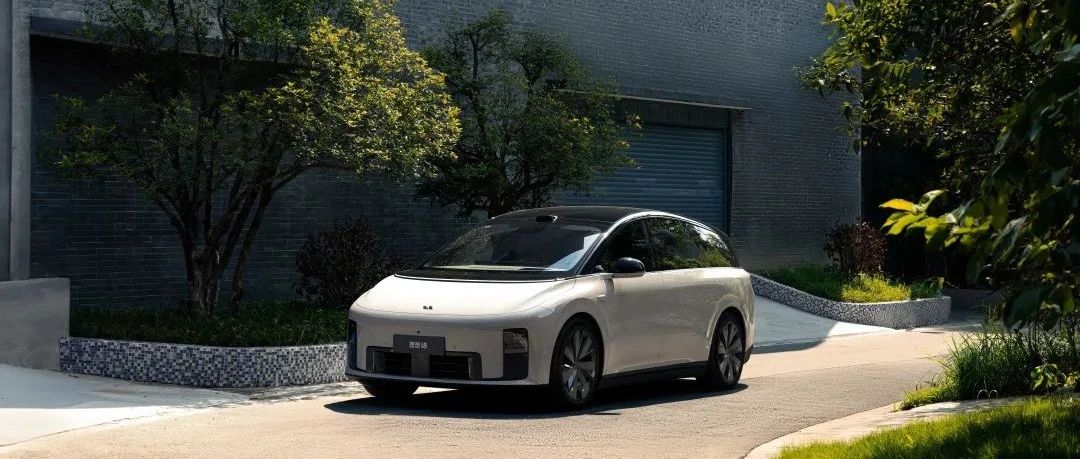
梳理一下本次i8权益调整大家关心的问题
理想TOP2· 2025-08-05 05:38
Core Viewpoint - The article discusses the recent adjustments made by the company regarding the i8 SKU, including pricing changes and feature enhancements, while raising questions about the implications for profitability and organizational capabilities. Group 1: i8 SKU Adjustments - The company has decided to adjust the i8 SKU based on a 98% MAX Ultra option rate, reducing the price of the MAX version by 10,000 and adding a platinum sound system, with options for additional features at a cost of 10,000 [1]. Group 2: Strategic Questions - Questions are raised regarding how the L series will operate following the i8 adjustments [3]. - The potential impact of the i8 changes on gross margin, net profit margin, and free cash flow is questioned [3]. - There is speculation about whether the company's recent operations have been chaotic and the underlying reasons for this [3]. - The article questions the current organizational capability of the company and how it should be evaluated [3]. - It discusses whether the CEO has made multiple misjudgments in recent years and how to interpret this phenomenon [3]. - The article explores the relationship between the CEO's acceptance of potential misjudgments and the overall confidence in the company's future [3]. - It inquires about the long-term trends in the industry and the CEO's insights on what is clear and what remains uncertain [3]. - The article differentiates between events that were anticipated by the company and those that were not in recent months [3]. - It questions whether a positive long-term outlook for the company requires that many factors align with its expectations [3]. - The company's ability to manage public sentiment and its expected development in this area are evaluated [3]. - A comparison of the company's core advantages and disadvantages relative to competitors like Huawei and Xiaomi is made [3]. - The article discusses the short-term perception of smart vehicles as a poor business model and questions the long-term viability of smart vehicles and AI robotics [3]. - It examines the relationship between smart vehicles and AI, particularly the importance of foundational model capabilities [3]. - The potential of the VLA and the company's smart cockpit is questioned, suggesting that many may underestimate it [3]. - The company's position in the AI and hardware-software integration field is assessed [3].