美元疲弱

Search documents
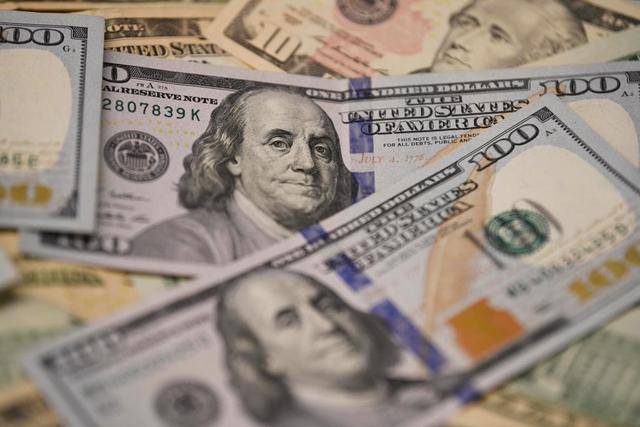
美元疲弱的全球震荡:谁在为美国付账
Sou Hu Cai Jing· 2026-02-17 01:16
Core Viewpoint - The recent depreciation of the US dollar reflects deeper structural issues within the US fiscal system, with a significant annual deficit and the implications of a weaker dollar on global economic dynamics [3][9]. Group 1: US Dollar Depreciation - Since Trump's presidency, the dollar has depreciated over 10% against a basket of major currencies, with a more pronounced decline this year [1][3]. - The US Treasury faces a fiscal gap of $1.8 trillion this year, leading to increased reliance on foreign investors and central banks for funding through debt issuance [3][9]. Group 2: Impact on Global Economy - The depreciation of the dollar directly pressures economies like Germany, which relies heavily on exports, as a stronger euro diminishes the price competitiveness of German goods [4][9]. - The uncertainty surrounding US political decisions and trade policies complicates the global investment landscape, prompting a reassessment of the dollar's attractiveness [4][6]. Group 3: Federal Reserve Policies - The conflict between Trump and Federal Reserve Chairman Powell over interest rates reflects the underlying fiscal pressures, with potential rate cuts aimed at alleviating debt burdens and stimulating the economy [6][9]. - The nomination of Kevin Walsh as the new Fed chair adds uncertainty to future monetary policy, impacting dollar exchange rates [6][9]. Group 4: Global Capital Flows - Despite political tensions, foreign investors have shown interest in US assets, but recent uncertainties may threaten this enthusiasm, leading to potential capital outflows [7][9]. - The historical context of dollar fluctuations indicates that the US dollar's status impacts global economic stability, with other economies bearing the costs of US fiscal decisions [7][10]. Group 5: Future Outlook - The dollar's trajectory will be influenced by multiple factors, including domestic fiscal pressures, trade policy uncertainties, and shifts in global investor confidence [9][10]. - The weak dollar serves as a reminder of the global economic order's dependence on the dollar, highlighting both its advantages and the risks it poses to other economies [9][10].

瑞士宝盛:AI有泡沫但仍存在上升空间 看好中国医疗板块
Zhi Tong Cai Jing· 2026-01-08 11:31
Group 1 - The core viewpoint is that while there is a recognition of a potential bubble in AI, it is not yet at its final stage, indicating there is still room for growth [1] - The healthcare industry is viewed positively, with recommendations to buy since Q4 of last year and a maintained "overweight" stance starting June 2024 [1] - Most Chinese pharmaceutical companies are reported to have strong overseas profits, and the sector has been undervalued for a long time, with China leading in international patent applications and increasing its share in all technologies [1] Group 2 - Despite market expectations for the Federal Reserve to lower interest rates to 2.9% by the end of 2026, a final rate of 3.25% is anticipated [1] - Given the weakness of the US dollar, it is suggested to include some non-dollar bonds in investment portfolios for diversification [1] - An "overweight" stance on emerging market bonds is recommended, as they are expected to benefit from current market conditions [1]
【UNforex财经事件】避险需求未退 黄金高位回调后维持强势区间
Sou Hu Cai Jing· 2025-12-26 09:47
Group 1 - The core viewpoint of the articles highlights the strong performance of precious metals, particularly gold and silver, driven by geopolitical tensions and a weakening dollar, with gold reaching approximately $4531 per ounce before retreating slightly [1][2][3] - Geopolitical factors, such as increased pressure on Venezuelan oil exports and military actions in Nigeria, are significant drivers of precious metal prices, as they heighten investor concerns about political and security risks [2] - The recent decline in U.S. dollar strength, influenced by market expectations of potential Federal Reserve rate cuts, has made precious metals more attractive as the opportunity cost of holding non-yielding assets decreases [2][3] Group 2 - The low liquidity environment following the Christmas holiday has amplified price volatility in the precious metals market, leading to increased sensitivity to changes in risk appetite [1][2] - Silver has not only reached historical highs but has also exhibited greater volatility than gold, supported by its industrial applications in electronics, clean energy, and photovoltaics [1] - Overall, the current dynamics in the precious metals market reflect a re-evaluation of risk assets, with ongoing adjustments expected based on shifts in risk sentiment and macroeconomic expectations [3]
兴业证券全球首席策略分析师张忆东:2026年美联储降息幅度可能超当前市场预期
Sou Hu Cai Jing· 2025-12-17 12:22
Group 1 - The core viewpoint of the report is that the Federal Reserve's interest rate cuts in 2026 may exceed current market expectations, influenced by the federal government's debt pressure, which is a key variable affecting long-term interest rates [1] - The report anticipates the possibility of unconventional operations such as restarting asset purchases (QE) or similar yield curve control (YCC) [1] - The US dollar is expected to continue its weak trend in 2026, which will support a loose global liquidity environment [1] Group 2 - China's nominal GDP improvement in 2026 is projected to attract more foreign capital back to Chinese assets [3] - Under a low inflation and low interest rate environment, the cost-effectiveness of A-shares and Hong Kong stocks is significantly higher than that of the bond and real estate markets [3] - The report highlights that the approximately 160 trillion yuan of household deposits in China still has potential for increased allocation to the stock market [3] - Historically, the ratio of household deposits to total stock market value has fluctuated between 1-2, currently standing at a historically high level of 1.53 [3] - With the improvement in the stock market's profitability, household deposits are expected to accelerate their allocation to equity assets [3]


景顺首席环球市场策略师:预期美联储明年将降息3至4次,总幅度近100个基点!预计美元将继续疲弱,带动新兴市场表现
Sou Hu Cai Jing· 2025-12-03 06:03
Group 1 - The core viewpoint is that the current macroeconomic environment favors non-U.S. assets, with expectations of U.S. interest rate cuts and increased government spending in Europe, Japan, and China to boost the global economy [1] - The forecast includes the expectation that the Federal Reserve will cut interest rates 3 to 4 times next year, totaling nearly 100 basis points [1] - It is anticipated that the U.S. dollar will continue to weaken, which will positively impact asset performance [1]

黄金再创新高,机构一致看多:全球避险与降息周期共振 | 市场观察
私募排排网· 2025-10-17 12:00
Group 1 - The article highlights that international gold prices reached a new historical high, driven by factors such as geopolitical tensions and expectations of interest rate cuts by the Federal Reserve, leading to increased demand for gold as a safe-haven asset [3][4]. - As of mid-October, global gold ETFs have seen net inflows for five consecutive weeks, indicating strong institutional and central bank buying activity [4]. - Multiple international investment banks have raised their gold price forecasts, suggesting that the gold bull market is not over, with predictions of prices reaching up to $4,600 per ounce by mid-2026 [7][8]. Group 2 - The article discusses the investment implications of the current gold market, suggesting that despite nominal prices being high, there is still investment potential due to the ongoing decline in real interest rates [9]. - It recommends three specific investment vehicles for participating in the gold market, including ETFs that track gold prices and funds that invest in gold-related companies [9]. - The article emphasizes that gold remains an essential defensive and hedging asset in investment portfolios, especially in the context of global monetary easing and persistent geopolitical uncertainties [9].