
实际利率下行

Search documents
李槿:2/10黄金高位震荡蓄势!调整后新高趋势延续!
Sou Hu Cai Jing· 2026-02-10 07:34
Group 1 - The long-term trend of the US dollar index is downward, suggesting a primary strategy of shorting [2] - Gold prices are expected to experience upward movement, with short-term resistance levels identified around 5100-5080, and potential targets of 5220-5300 if the resistance is broken [2] - Global central banks continue to purchase gold, reinforcing a strong bottom, while geopolitical risks and demand for safe-haven assets are increasing [2] Group 2 - The expectation of interest rate cuts by the Federal Reserve is beneficial for gold prices, as lower real interest rates support higher gold valuations [2] - There is a significant inflow of funds into gold, with heightened enthusiasm from ETFs and institutional investors, solidifying a bullish market structure [2] - Technical analysis indicates that key support levels are being maintained, limiting the potential for significant pullbacks, while new highs remain possible [2]
黄金破顶5500美元:避险狂潮下的历史飙升与风险隐现
Da Zhong Ri Bao· 2026-01-29 04:47
Group 1 - Gold prices have surged, with COMEX futures and spot gold surpassing $5,500 per ounce for the first time on January 29 [1] - The recent rise in gold prices has been driven by multiple factors, including geopolitical risks, central bank purchases, and a weakening dollar [3][4] - Domestic physical gold prices have also increased, with some jewelry brands reporting prices exceeding 1,700 yuan per gram [2] Group 2 - Banks are raising the investment thresholds for retail gold accounts and personal gold accumulation, reflecting a shift in the perception of gold from a stable savings alternative to a high-volatility risk asset [5][6] - The increase in gold prices has led to a significant rise in consumer spending on gold for traditional events, such as weddings, with costs for purchasing gold rising substantially within a month [2] - Experts suggest that the current gold price increase reflects a change in how global risks are priced, indicating a long-term upward trend in gold prices, potentially reaching $6,000 per ounce [7]
女子6000元买的钻戒现在只值几百,赠品足银保温杯却已价值2000元
Mei Ri Jing Ji Xin Wen· 2026-01-25 11:19
Core Viewpoint - The international silver prices have surged dramatically since the beginning of 2026, with both New York and London silver prices surpassing $100 per ounce for the first time in history, leading to significant increases in the value of silver products and recycling opportunities [1][12]. Group 1: Silver Price Surge - On January 23, 2026, the price of silver reached a record high of $103.341 per ounce in London, marking a daily increase of 7.48% and a year-to-date increase of 44.38% [12]. - The price of silver has nearly tripled over the past two years, with a cumulative increase of approximately 150% in 2025 [12][11]. - The rising silver prices are attributed to factors such as the expectation of interest rate cuts by the Federal Reserve, declining real interest rates, and a weakening dollar, which have led to a strong demand for silver as a relatively undervalued asset compared to gold [12]. Group 2: Consumer Experiences and Market Trends - A case study involving a consumer, Ms. Wang, illustrates the unexpected value of silver products; a silver thermos cup she received as a gift is now worth approximately 2000 yuan, while the diamond ring she purchased for 6200 yuan has depreciated to around 700 yuan [1][4][7]. - The jewelry industry has seen a trend where promotional silver products, such as the thermos cup, have gained value significantly compared to traditional luxury items like diamond rings, which are experiencing a decline in market value [11][14]. - The jewelry market is facing challenges, with a notable drop in demand for diamonds; for instance, the U.S. imports of finished diamonds fell by 48% in 2025, and prices for smaller diamonds have decreased significantly due to market saturation and consumer sentiment [14][18].


狂飙突进!华尔街罕见一致看多:贵金属“史诗级”牛市已启动,现在上车还来得及吗?
Sou Hu Cai Jing· 2026-01-23 23:48
Core Viewpoint - Precious metals, particularly gold and silver, are entering a new long-term bull market, driven by significant changes in global macroeconomic conditions [1]. Group 1: Underlying Logic Supporting the Bull Market - The decline in real interest rates is the primary driver for gold prices, as expectations of lower yields on cash and U.S. Treasury bonds enhance gold's relative investment appeal [1]. - Central banks are increasingly accumulating gold reserves, particularly in emerging markets, to promote de-dollarization and seek safe-haven assets, providing strong support for gold prices [2]. - Geopolitical uncertainties are contributing to a "risk premium" for gold, as its status as a hard currency becomes more critical in times of conflict and instability [2]. Group 2: Silver's Role in the Bull Market - The gold-silver ratio remains historically high, indicating a strong potential for silver to catch up in price, suggesting significant upside potential [2]. - Industrial demand for silver is surging due to its essential role in high-tech manufacturing, particularly in solar panels and electric vehicles, which will further drive prices upward [2]. Group 3: Investment Strategies for Precious Metals - Investors are advised to avoid high leverage due to the volatility in the precious metals market, especially with silver [3]. - A diversified investment approach is recommended, including physical gold, gold/silver ETFs, and high-quality gold mining stocks, catering to different risk appetites [4][5][6]. - Implementing a dollar-cost averaging strategy is suggested to mitigate risks associated with market timing [7].
金银比再破50,意味着什么?【财说明白】
Xin Lang Cai Jing· 2026-01-22 10:14
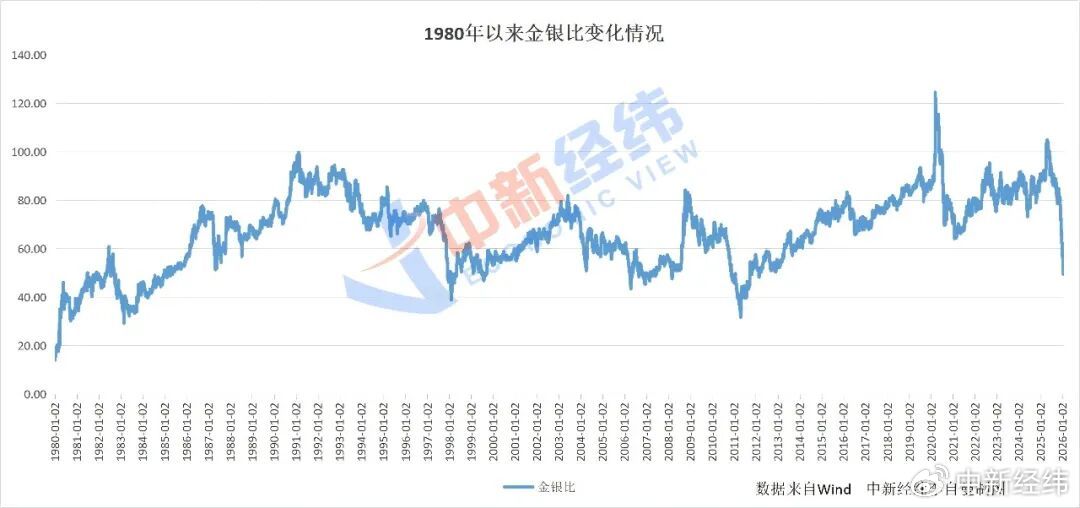
Group 1 - The core viewpoint of the article highlights the significant rise in gold and silver prices at the beginning of 2026, with gold increasing by approximately 12% and silver by about 31.52% as of January 22 [1][14] - The gold-silver ratio has recently dropped below 50, reaching a 14-year low, which has garnered widespread market attention [2][14] - The gold-silver ratio is a key indicator that measures the relative price strength of gold and silver, indicating how many ounces of silver are needed to purchase one ounce of gold [2][14] Group 2 - As of January 22, the spot prices were reported at $4,839.353 per ounce for gold and $94.391 per ounce for silver, resulting in a gold-silver ratio of approximately 51.27 [3][15] - Historical data shows that the long-term average for the gold-silver ratio over the past century is between 60 and 70, with significant fluctuations observed [5][17] - The recent drop below 50 in the gold-silver ratio is attributed to a transition in the global monetary environment from high interest rates to a phase of liquidity easing, which has led to a revaluation of precious metals [6][18] Group 3 - The current market dynamics indicate that silver is experiencing a structural shift, driven by actual demand from industries such as renewable energy and semiconductors, making it a strategic metal rather than merely a shadow asset of gold [6][19] - Analysts suggest that the recent decline in the gold-silver ratio reflects a combination of factors, including increased risk appetite and the recovery of silver's valuation after being undervalued for a long time [20][22] - The ongoing supply-demand gap in silver, particularly due to its use in photovoltaic and renewable energy sectors, is expected to provide strong support for silver prices in the medium to long term [22][24] Group 4 - Investment strategies for silver should focus on low-premium, liquid, and non-leveraged products, such as physical silver bars or silver ETFs, to manage risks effectively [11][23] - Investors are advised to monitor key indicators to identify risks in silver investments, including the gold-silver ratio and market liquidity [23][24] - The article emphasizes the importance of risk management and position control in silver investments, especially given the potential for increased price volatility [25]
关税威胁“对所有商品来说都是双赢组合”
Xin Lang Cai Jing· 2026-01-19 13:04
Core Viewpoint - The escalating tariff threats between the US and Europe regarding Greenland have led to significant market turbulence, resulting in a sharp increase in commodity prices, with gold and silver reaching historical highs [1][3]. Group 1: Commodity Price Movements - Gold and silver have both reached new historical highs, indicating a strong demand for precious metals during turbulent times [1][3]. - Prices of other metals such as copper, platinum, and nickel have also risen, highlighting a trend where investors are turning to metal assets as a safe haven [1][3]. - Copper prices have notably surged, reaching $12,985 per ton, approaching recent historical peaks [1][3]. Group 2: Economic Implications - Analysts suggest that the ongoing escalation of the US-EU tariff conflict may signal a weakening dollar, declining real interest rates, and rising inflation levels [4]. - The situation is viewed as a positive factor for all commodities, according to analysts from Panmure Liberum [2][5].
多要素共振,?银突破90美元关
Zhong Xin Qi Huo· 2026-01-15 01:07
1. Report Industry Investment Rating - No relevant content provided 2. Core View of the Report - Multiple factors including interest - rate cut expectations, Fed independence disturbances, and geopolitical risks have strengthened the safe - haven theme of precious metals. Gold maintains high - level oscillations with a dominant allocation attribute, and silver breaks through the $90 mark due to the return of financial attributes and tight liquidity [3]. - Gold is supported at a high level by the decline in real interest rates and credit disturbances, while silver's elasticity is fully released due to the return of financial attributes and structural tightening. Both gold and silver are expected to maintain an overall oscillating and strengthening trend, but silver may face higher volatility [5]. 3. Summary by Relevant Catalogs 3.1 Key Information - Japanese Prime Minister Kaochi Sanae is considering dissolving the House of Representatives next week and holding a general election on February 8 [4]. - Trump threatens to impose a 25% tariff on countries trading with Iran [4]. - The US December CPI annual rate remained flat at 2.7%, the core CPI annual rate at 2.6%, the monthly CPI rose 0.31%, and the monthly core CPI rose 0.24%, lower than the market expectation of 0.30% [4]. 3.2 Price Logic Gold - The decline in real interest rates and credit disturbances support its high - level operation. Weak US inflation data strengthens market expectations of further interest - rate cuts, and political disturbances to the Fed's independence and repeated geopolitical situations increase the demand for safe - haven allocation. Gold's high - level oscillations are mainly for trading, and the trend remains intact [5]. Silver - It benefits from both interest - rate cut and safe - haven logics. The potential US tariff policy boosts hoarding demand, leading to a temporary contraction in the globally available supply and pushing the silver price above $90. It has higher elasticity than gold at present but may face higher volatility risks [5]. 3.3 Outlook - The temporary disturbances from the adjustment of the Bloomberg Commodity Index weight have been digested. Gold and silver are expected to maintain an oscillating and strengthening trend due to the long - term expectation of loose liquidity, pro - cyclical trading, and concerns about resource security. The center of gold price may continue to rise, while silver may remain highly volatile, with the risk of temporary pullbacks [5]. 3.4 Index Information Special Index - The Commodity Index is 2425.27, down 0.30%; the Commodity 20 Index is 2779.12, down 0.28%; the Industrial Products Index is 2348.14, down 0.52% [48]. Sector Index - The Precious Metals Index on January 13, 2026, is 4222.51, with a daily increase of 0.15%, a 5 - day increase of 4.75%, a 1 - month increase of 15.88%, and a year - to - date increase of 10.41% [50].
一个月涨超9% 谁在背后疯狂买入黄金?
Zhong Guo Jing Ying Bao· 2026-01-08 02:00
Core Viewpoint - The recent surge in gold prices is primarily driven by speculative funds, with expectations of a shift in Federal Reserve policy leading to lower real interest rates, thus reducing the holding costs of gold [3][4]. Group 1: Market Dynamics - As of January 7, 2026, the London spot gold price opened at $4,494.59 per ounce, with a monthly increase exceeding 9% [2]. - The relationship between gold prices and real interest rates is notably negative, with current economic indicators suggesting a weakening labor market and declining consumer confidence, which heightens expectations for Federal Reserve rate cuts [3]. - The lack of significant changes in fundamental factors indicates that the recent volatility in gold prices is largely driven by speculative trading rather than institutional investment [3][4]. Group 2: Central Bank Demand - Global central bank demand for gold remains robust, with a net purchase of 45 tons in November 2025, bringing total purchases for the year to 297 tons, primarily driven by emerging market central banks [4]. - The ongoing accumulation of gold reserves by central banks reflects a strategic shift away from reliance on a single reserve currency, enhancing gold's status as a "currency substitute" [4]. Group 3: Silver Market Influence - The silver market has experienced significant upward pressure, contributing to the rise in gold prices, with a notable shortage in silver delivery stocks since October 2025 [4][5]. - Increased speculative trading in the silver market may spill over into the gold market, further driving up gold prices in the short term [5]. Group 4: Future Outlook - Morgan Stanley maintains a bullish outlook for gold, projecting prices could reach $5,000 per ounce in 2026, supported by strong demand from central banks and investors [6]. - The anticipated demand for gold in 2026 is expected to average 585 tons per quarter, with central bank purchases projected at 755 tons, indicating a sustained interest in gold despite potential price corrections [6][7]. - The trajectory of gold prices will largely depend on the Federal Reserve's monetary policy, with a continued easing cycle likely to support gold investment demand [7].
钯铂涨停金银比回落 贵金属齐涨警短线急调风险
Jin Tou Wang· 2025-12-22 06:14
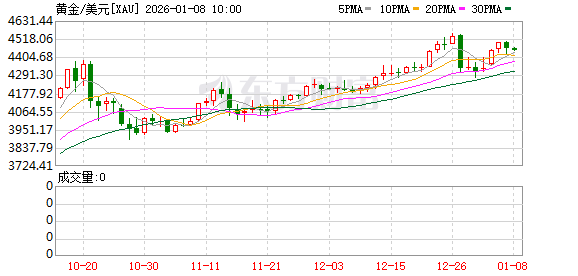
Core Insights - Precious metals, including gold, silver, platinum, and palladium, are experiencing significant price increases, with gold reaching a new historical high of $4,382 per ounce [1] - The unexpected rise in the U.S. unemployment rate to 4.6% in November has led the market to reassess the Federal Reserve's interest rate path, providing strong support for gold prices [2] Market Analysis - The U.S. dollar index is weakening, which reduces the holding costs for gold; global central bank demand for gold remains strong, with demand expected to reach 1,313 tons by Q3 2025, a record high [2] - China's gold reserves increased to 74.12 million ounces by the end of November, marking a continuous increase for 13 months [2] - The combination of ample liquidity and constrained supply is driving commodity prices to high levels, with strategic value in raw materials becoming increasingly prominent [2] Technical Analysis - For gold, the short-term target is set between $4,430 and $4,440, with potential upward movement towards $4,470 to $4,500 or even $4,580 [3] - Silver maintains a long-term bullish outlook, with a core target of $100; however, there is a need to monitor for potential short-term adjustments after recent highs [3]
金价冲高回落藏隐忧 但降息支撑其长线
Jin Tou Wang· 2025-12-19 01:56
Core Viewpoint - The recent unexpected weakness in the US November CPI has led to a rise in US stocks and a decline in the dollar, which theoretically benefits gold. However, gold prices did not immediately strengthen and instead experienced volatility, indicating a complex market reaction [1][2]. Group 1: Market Environment - High inflation has significantly weakened the purchasing power of fiat currencies, driving demand for gold as an inflation hedge. However, the current rapid decline in inflation has cooled this demand, leading to a pullback in gold prices following the CPI report [2]. - The overall annual inflation rate in the US is currently at 2.7%, providing the Federal Reserve with room to potentially lower interest rates ahead of 2026. While lower interest rates typically suppress the dollar and benefit gold, the extent to which this will limit gold price declines remains to be seen [2]. Group 2: Technical Analysis - From a technical perspective, the path of least resistance for gold remains upward, and a bullish breakout is not unexpected given that gold prices have been rising throughout the year [3]. - Future price movements will be closely monitored for two potential scenarios: the formation of a double top pattern or a false breakout. As long as gold prices continue to record higher highs and higher lows, the technical outlook for gold will remain optimistic [3].