二手车出口管理

Search documents
2026年,这些新规将改变你我的生活!
Sou Hu Cai Jing· 2026-01-03 07:51
Group 1: Tax Regulations - The new Value-Added Tax (VAT) Law and its implementation regulations will take effect on January 1, 2026, clarifying taxpayer obligations and taxable transactions [2] - Personal housing sales tax policy has been optimized, with a 3% tax rate for properties sold within two years and exemption for properties sold after two years [4] Group 2: Healthcare and Pharmaceuticals - The new National Basic Medical Insurance and Commercial Health Insurance Drug Catalogs will be implemented, adding 114 new drugs, including 36 cancer medications and 12 chronic disease medications [6][18] - The new drug catalog in Hebei province will manage traditional Chinese medicine and set personal payment ratios for various drug categories [18] Group 3: Environmental Regulations - A new regulation will allow the trading of pollution rights for certain air and water pollutants within specified regions, effective January 1, 2026 [21] Group 4: Education and Childcare - New regulations for kindergarten fees will implement a clear fee list, prohibiting any unlisted charges [14] - The new policy for higher vocational education entrance exams in Hebei will ensure equal treatment for students eligible for preferential policies [19] Group 5: Technology and Security - The revised Cybersecurity Law will enhance AI regulation and protect virtual property rights, with new legal provisions for data and virtual property disputes [17]

2026年第一天,这些新规将改变你我的生活!
Xin Lang Cai Jing· 2026-01-02 09:14
National Regulations - The new Value-Added Tax (VAT) Law and its implementation regulations will take effect on January 1, 2026, clarifying taxpayer obligations and taxable transactions [1] - The new VAT regulations specify the scope of taxable goods, services, intangible assets, and real estate, as well as the standards for different types of taxpayers [1] Housing Tax Policy - The personal housing sales tax policy has been optimized, with a 3% tax rate applied to properties sold within two years of purchase, while properties sold after two years will be exempt from VAT [3][4] Healthcare and Pharmaceuticals - The new National Basic Medical Insurance, Maternity Insurance, and Work Injury Insurance Drug Directory will be implemented, adding 114 new drugs, including 36 cancer medications and 12 chronic disease treatments [5] - The Hebei province will also adopt the new drug directory starting January 1, 2026, with specific cost-sharing arrangements for different categories of drugs [16] Environmental Regulations - A new regulation will prohibit the production of mercury-containing thermometers and blood pressure monitors starting January 1, 2026 [7] - The new policy on pollutant discharge rights allows for the trading of rights for certain air and water pollutants across specified regions, enhancing environmental management [18] Automotive Industry - A new national standard for electric vehicle energy consumption will be implemented, requiring a maximum energy consumption of 15.1 kWh per 100 km for vehicles weighing around 2 tons, which is expected to improve the average driving range by approximately 7% [8] - The Ministry of Commerce will enforce stricter controls on the export of vehicles, particularly to prevent new cars from being exported under the guise of used vehicles [9] Social Management and Security - The revised Public Security Administration Punishment Law will include provisions for justifiable defense, exempting individuals from penalties under certain conditions [11] - New regulations will also manage kindergarten fees through a clear list of allowable charges, prohibiting any unlisted fees [12] Digital and AI Regulations - The revised National Language Law will regulate the use of language in online spaces, establishing a legal framework for digital communication [14] - The updated Cybersecurity Law will enhance oversight of artificial intelligence and protect virtual property rights, reflecting the growing importance of digital assets [15]
这些新规,今起施行
Xin Lang Cai Jing· 2026-01-01 10:32
Tax Regulations - The new Value-Added Tax (VAT) Law and its implementation regulations will take effect on January 1, 2026, consisting of six chapters that clarify taxpayer obligations and tax rates [3] - Individuals selling residential properties purchased for less than two years will be subject to a 3% VAT, while those selling properties held for two years or more will be exempt from VAT [5] - The VAT law will also enhance tax incentives and clarify the standards for various VAT exemptions, requiring timely public disclosure of these policies [5] Credit Repair Policy - A one-time credit repair policy will be implemented starting January 1, 2026, allowing automatic adjustments to credit reports for overdue records that meet specific criteria [7] - Overdue records generated between January 1, 2020, and December 31, 2025, will not appear on credit reports if the overdue amount does not exceed 10,000 yuan and is fully repaid by March 31, 2026 [7] Education and Childcare - New regulations on kindergarten fees will be enforced from January 1, 2026, requiring public and non-profit private kindergartens to follow government-guided pricing, while for-profit kindergartens will have market-regulated fees [9] - A clear fee directory will be established, and any charges not listed or publicly disclosed will be prohibited [9] Electric Vehicles - A new national standard for electric vehicle energy consumption will be implemented on January 1, 2026, mandating that new passenger vehicles must not exceed 15.1 kWh per 100 km [15] - This standard is expected to improve the average driving range of electric vehicles by approximately 7% without increasing battery capacity [15] Cybersecurity and AI - The revised Cybersecurity Law will take effect on January 1, 2026, addressing the need for AI governance and development, including risk monitoring and safety regulation [19] - The law will support AI research and infrastructure development while enhancing ethical standards in AI applications [19] Legal Framework for Virtual Assets - The updated Civil Case Categories Regulation will come into effect on January 1, 2026, adding categories related to data and virtual property disputes [21] - This revision aims to refine intellectual property categories and address emerging issues in new employment forms and elder rights protection [21]

明天起,这些新规将影响你我生活
财联社· 2025-12-31 04:11
Group 1 - The new Value-Added Tax (VAT) Law and its implementation regulations will take effect on January 1, 2026, clarifying taxpayer obligations and tax scope [4] - The VAT Law specifies applicable tax rates, including zero tax rates for exports [5] - It establishes methods for calculating taxable amounts and details on VAT deduction certificates and input tax deduction methods [6] - The law enhances tax incentives by defining specific standards for VAT exemption projects and mandates timely public disclosure of these policies [6] - Comprehensive regulations on tax administration measures, including tax payment timelines, invoice issuance, and refund management, will be implemented [7] Group 2 - From January 1, 2026, individuals selling homes purchased for less than two years will be subject to a 3% VAT, while those selling homes held for two years or more will be exempt from VAT [10] - A one-time credit repair policy will be enacted, allowing automatic adjustments to credit reports for overdue records generated between January 1, 2020, and December 31, 2025, under certain conditions [13][14][15] Group 3 - The new regulations on kindergarten fees will take effect on January 1, 2026, establishing government-guided pricing for public and non-profit kindergartens, while for-profit kindergartens will have market-regulated fees [18] Group 4 - The new national standard for electric vehicle energy consumption will be implemented on January 1, 2026, requiring technical upgrades for new vehicles, resulting in an average increase of approximately 7% in driving range [27] Group 5 - The revised Cybersecurity Law will take effect on January 1, 2026, addressing the governance of artificial intelligence and enhancing risk monitoring and safety regulation [33] Group 6 - The revised Civil Case Cause Regulations will come into effect on January 1, 2026, adding causes related to data and virtual property disputes, and refining various other legal categories [36]

城市24小时 | 这条“短线”高铁,为何“砸锅卖铁也要上”
Mei Ri Jing Ji Xin Wen· 2025-11-20 15:22
Core Viewpoint - The Hangzhou-Qichun High-Speed Railway (杭衢高铁) has entered the trial operation phase, marking a significant step towards its full opening, which is expected by the end of December 2025. This railway is seen as a vital development for the Qichun region, enhancing connectivity and economic growth opportunities [3][5][6]. Summary by Sections Project Overview - The Hangzhou-Qichun High-Speed Railway spans approximately 131 kilometers with a design speed of 350 km/h, featuring six stations including JianDe, LongYou, and Jiangshan. The project commenced construction in May 2020 and is characterized by a bridge-tunnel ratio of 78.7% [5][6]. Economic Impact - The railway is anticipated to significantly reduce travel time between Hangzhou and Qichun from about 1 hour to approximately 40 minutes, and travel to Shanghai will decrease from over 2 hours to 90 minutes. This improvement is expected to mitigate Qichun's marginalization in the economic landscape of Zhejiang Province [5][6]. Strategic Importance - The Hangzhou-Qichun High-Speed Railway is positioned as a key channel for enhancing Zhejiang's connectivity with neighboring provinces such as Anhui, Jiangxi, and Fujian, facilitating the integration of the Yangtze River Delta with central regions [6]. Investment and Construction Model - This railway is notable for being the first in China to adopt a "PPP+EPC" model, with a total investment of approximately 23.63 billion yuan. The project is led by the China Railway Fourth Survey and Design Institute Group [6]. Operational Considerations - Experts suggest that the operational frequency of the railway should be optimized to enhance connectivity with other rail lines, such as the Hukun Railway and Jiujiang-Qichun Railway, to better serve a wider range of passengers. There is also a push for the railway to serve as a pilot for intercity rail operations [7].

商务部:希望荷方继续展现合作诚意 推动安世半导体问题早日解决
2 1 Shi Ji Jing Ji Bao Dao· 2025-11-20 13:58
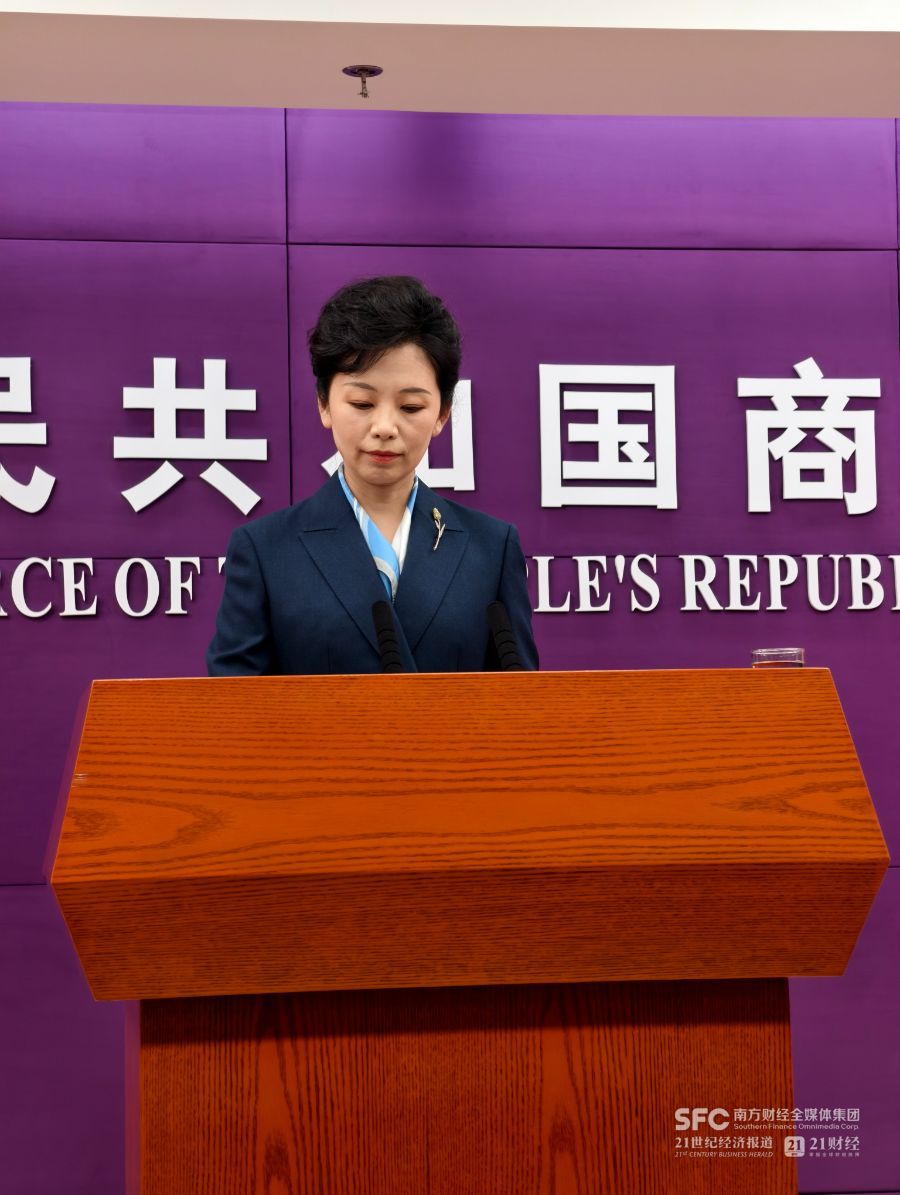
Group 1 - The Chinese government urges Japan to retract erroneous statements made by Prime Minister Kishi Nobuo regarding Taiwan, emphasizing that such remarks damage the political foundation of Sino-Japanese relations and negatively impact economic exchanges [3][4] - The Chinese side welcomes the Netherlands' decision to suspend administrative measures against ASML, viewing it as a positive step towards resolving tensions in the semiconductor supply chain [4] - The Chinese government highlights that the responsibility for the current global semiconductor supply chain disruption lies with the Netherlands, and calls for continued cooperation to restore stability [4] Group 2 - The Ministry of Commerce, in collaboration with other departments, has issued a notice to strengthen the management of used car exports, aiming to prevent new cars from being exported under the guise of used cars [5] - The notice includes six specific measures to enhance compliance and promote sustainable development in the used car export sector, reflecting a commitment to quality and service [5] - The Ministry of Commerce plans to guide local authorities in implementing these policies to shift the focus of used car exports from "scale growth" to "value growth," thereby enriching product choices for global consumers [5]
商务部:希望荷方继续展现合作诚意,推动安世半导体问题早日解决
2 1 Shi Ji Jing Ji Bao Dao· 2025-11-20 11:36
Group 1 - The Chinese Ministry of Commerce responded to Japanese Prime Minister Kishi's remarks regarding Taiwan, stating that such comments fundamentally damage the political foundation of China-Japan relations and have serious negative impacts on economic exchanges between the two countries. The Chinese side urged Japan to retract its erroneous statements and fulfill its commitments to China to create a favorable environment for economic cooperation [4][5] - The Dutch Minister of Economic Affairs announced the suspension of intervention against ASML, indicating a constructive approach following recent developments. This statement comes 50 days after the Dutch government implemented administrative control over ASML, signaling a potential easing of tensions [4][5] - The Chinese Ministry of Commerce, in collaboration with other departments, issued a notice to strengthen the management of used car exports, emphasizing the need to prevent new cars from being exported under the guise of used cars. The notice includes six specific measures aimed at enhancing compliance and promoting sustainable development in the used car export sector [6]
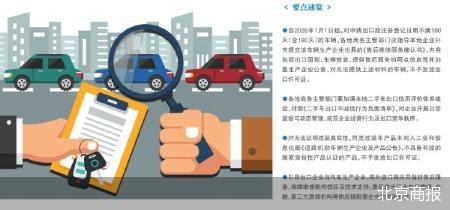
四部门加强二手车出口管理
Ren Min Ri Bao· 2025-11-17 21:58
Core Viewpoint - The Ministry of Commerce, Ministry of Industry and Information Technology, Ministry of Public Security, and General Administration of Customs have jointly issued a notice to strengthen the management of second-hand vehicle exports, effective from January 1, 2026 [1] Group 1: Export Management Requirements - From January 1, 2026, vehicles registered for less than 180 days must have a "Post-Sale Service Confirmation" issued by the manufacturer, detailing export country, vehicle information, and service network, stamped with the manufacturer's seal [1] - Vehicles that cannot provide the required documentation will not be granted export licenses [1] Group 2: Dynamic Management and Supervision - A dynamic management and exit mechanism for enterprises will be established, with local commerce departments enhancing the credit evaluation system for second-hand vehicle exports [1] - Daily supervision and dynamic management will be conducted based on a negative list of untrustworthy behaviors in second-hand vehicle exports to regulate business conduct and export competition [1] Group 3: Licensing and Compliance - The notice includes detailed requirements for the application and issuance of export licenses, conditions for exporting modified vehicles, and improvements to the export support system [1]
四部门出手! 严控新车以二手车名义出口
Mei Ri Jing Ji Xin Wen· 2025-11-17 13:25
Core Points - The Ministry of Commerce, Ministry of Industry and Information Technology, Ministry of Public Security, and General Administration of Customs have issued a notice to strengthen the management of second-hand car exports, particularly focusing on preventing new cars from being exported under the guise of second-hand vehicles [1][2] Group 1: Export Management Regulations - From January 1, 2026, vehicles registered for less than 180 days will require additional documentation, including a "Post-Sales Service Confirmation" from the manufacturer, to obtain export licenses [1] - The notice aims to regulate the export license application process, ensuring that vehicle information matches the "Motor Vehicle Registration Certificate" [2] - A dynamic management and exit mechanism for enterprises will be established, along with a credit evaluation system for second-hand car exports [2] Group 2: Compliance and Quality Control - The notice emphasizes strict conditions for exporting modified vehicles, requiring accurate information and proof of modification authenticity [2] - Companies will be required to provide third-party inspection and maintenance electronic records, enhancing traceability and credit management throughout the export process [3] - The new regulations aim to shift the industry focus from price competition to quality and service enhancement, improving the overall perception of Chinese vehicles in international markets [3] Group 3: Long-term Industry Impact - The regulations are expected to optimize the supply-demand structure in overseas markets and help establish a reliable international brand image for Chinese automobiles [3] - By promoting a more orderly global competitive environment, the measures are anticipated to support the goal of exporting over 10 million vehicles from China [3]
四部门重拳出击 严控新车以二手车名义出口
Bei Jing Shang Bao· 2025-11-16 15:49
Core Viewpoint - The recent notification from multiple Chinese regulatory bodies aims to strengthen the management of used car exports, particularly addressing the issue of "zero kilometer used cars" and promoting healthy development in the sector [1][8]. Group 1: Regulatory Measures - The notification emphasizes strict control over the export of new cars under the guise of used cars, requiring vehicles to have been registered for at least 180 days before export [3][4]. - Export licenses will only be granted if companies provide a "Post-Sale Service Confirmation" from the vehicle's manufacturer, detailing the export country, vehicle information, and service points [3][4]. - A negative list of untrustworthy behaviors has been established, outlining seven major violations, including the export of prohibited vehicles and falsification of documents [5]. Group 2: Industry Management - Local business authorities are tasked with enhancing the credit evaluation system for used car exporters, ensuring compliance with the negative list and conducting regular supervision [4][5]. - Companies with repeated dishonest practices will be required to implement corrective measures before their export license applications are considered [4]. Group 3: Market Development - The notification encourages the establishment of a training system to guide companies in compliant operations and to enhance their international business capabilities [6][7]. - It aims to shift the focus from merely increasing export volumes to improving the quality and transparency of used cars, including the establishment of vehicle assessment systems [7]. - Data indicates that used car exports from China are expected to reach 500,000 to 600,000 units in 2025, marking a significant increase from less than 300 units in 2019, with a compound annual growth rate exceeding 100% [7][8].