自主可控供应链

Search documents
“天价原料”:从重金引进到自主掌控,中国奶粉供应链的韧性之战
Sou Hu Wang· 2026-01-09 03:33
Core Insights - Nestlé's recall of infant formula due to contamination risks has highlighted vulnerabilities in the global supply chain, particularly in the upstream core raw material sourcing [1] - A Chinese infant formula company’s early investment in key raw materials provides a unique case study for understanding the global supply chain safety crisis [1] Historical Context - In 2001, Shengyuan Group made a significant decision to incorporate ARA from Martek Biosciences into its high-end product line, marking a pivotal moment in China's infant formula industry [2] - This move indicated a shift towards incorporating advanced nutritional science and a long-term strategic focus on the importance of core raw materials [2] Supply Chain Vulnerabilities - Relying on a single overseas supplier for key nutrients has exposed companies to risks, as seen in the recent Nestlé incident, where a quality control lapse at a supplier affected global product networks [3] - Shengyuan's transition from a buyer to a controller of its supply chain involved strategic investments and partnerships, leading to the establishment of a domestic company focused on microbial oil research [3] Safety Logic in the Industry - The incident reflects two contrasting safety approaches in the infant formula sector: - Global efficiency logic, exemplified by Nestlé, which relies on extensive supplier networks and cost reduction [4] - Autonomous control logic, represented by brands like U-Borui, which invest heavily in internalizing quality control through shorter, more transparent supply chains [4] Future Implications - The recall has prompted a reevaluation of safety perceptions among consumers, particularly in China, shifting focus from mere compliance to the origins and handling of nutritional products [6] - Brands that have invested in upstream supply chain integrity and core technologies are likely to gain market recognition and trust, while those focused solely on marketing may face challenges [6] - The evolution from importing expensive ARA to developing a self-sufficient supply chain illustrates the critical importance of self-innovation in ensuring safety in health-related industries [6]
5300亿!中国移动2025全年采购额,寒风凛凛
Xin Lang Cai Jing· 2025-12-15 13:34
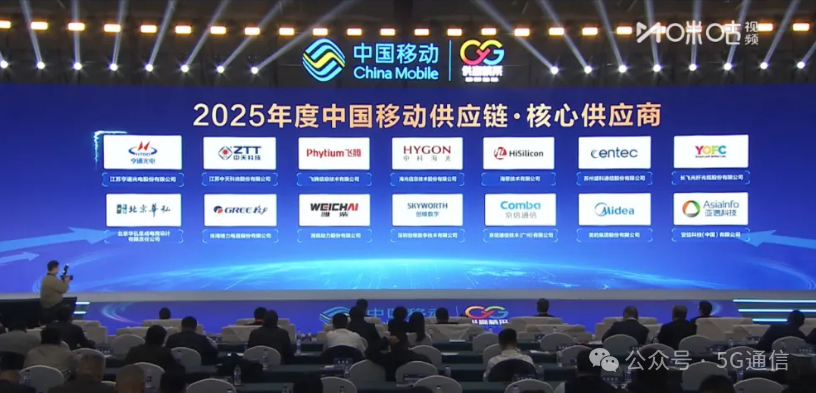
Core Insights - China Mobile disclosed an annual procurement exceeding 530 billion yuan, with over 17,000 signed suppliers, indicating a shrinking market [1][20] - The capital expenditure (CAPEX) trend shows a decline from 92 billion yuan in H1 2022 to 58.4 billion yuan in H1 2025, a decrease of over 30% [4][22] - The CAPEX for H1 2025 is projected to account for 51.8% of the total investment by the three major operators [4][9] Procurement Scale - Annual procurement amount exceeds 530 billion yuan, with over 17,000 suppliers [1][20] - The supplier classification includes 10 strategic suppliers, 14 core suppliers, and 299 excellent (A-level) suppliers [1][20] CAPEX Trends - CAPEX is expected to decrease from 151.2 billion yuan in 2024 to 138.5 billion yuan in 2025, a decline of 8.5% [4][22] - Despite the overall decline, CAPEX remains a significant portion of the three operators' total investment [4][22] Supplier Classification - The core suppliers list includes notable companies such as Haiguang Information, HiSilicon, and Feiteng, indicating a push towards a self-controlled supply chain [5][23] - Strategic suppliers like FiberHome are recognized for their deep collaboration with China Mobile, emphasizing future technological advancements [5][24] Investment Logic - China Mobile plans to invest 37.3 billion yuan in computing power, representing 25% of its capital expenditure, with no upper limit on investment based on market demand [6][25] - The focus on computing power investment reflects its importance as a core competitive weapon for the future [6][25] Domestic Supply Chain Acceleration - The supplier classification highlights a clear trend towards domestic suppliers, with many core suppliers being key players in the domestic innovation industry [7][25] - The domestic AI chip's procurement success indicates strong support for local manufacturing [6][27] Industry Restructuring - The classification system aims to reshape the entire industry chain, focusing on technology, security, and efficiency [11][28] - Companies in the "strategic" tier will collaborate with China Mobile on cutting-edge technologies like 6G and AI [11][29] Future Game Rules - The emphasis on specialization means companies with technical advantages in niche areas will be favored [12][30] - Stricter domestic requirements will continue to strengthen, favoring local suppliers [13][30] - Innovation capabilities will become a critical criterion for companies aiming for the "strategic" tier [14][30] Survival Guide for Suppliers - Suppliers aiming for a larger share in the existing market should strive to meet the standards of core suppliers [15][31] - Those looking to capitalize on new market opportunities should focus on becoming strategic suppliers in emerging technologies [16][31] - Enhancing domestic capabilities will be essential for suppliers seeking international support [17][31]


摩尔线程连涨3天后,英伟达回来了
Feng Huang Wang· 2025-12-12 08:11
Core Insights - The future AI computing landscape is likely to be characterized by coexistence rather than a single dominant player, indicating a shift towards a more diversified market [1][7][11] Group 1: Nvidia's Market Position - Nvidia has received permission to export its H200 AI chips to China, but with a stipulation that 25% of sales revenue must be paid as tax to the U.S. government [1] - Nvidia's CEO Jensen Huang expressed concerns about the company's performance, stating that even a slight miss in quarterly results could lead to significant market repercussions [1] - Nvidia's revenue from China has plummeted by 63% year-over-year, dropping from 13% to 5% of total revenue, indicating a severe market contraction [4] Group 2: Rise of Domestic Competitors - Chinese GPU companies like Moore Threads and Muxi are rapidly advancing, with Moore Threads achieving a revenue growth rate of 208.44% from 0.46 billion yuan in 2022 to an expected 4.38 billion yuan in 2024 [3] - Muxi's IPO saw a subscription rate of nearly 3000 times, highlighting strong market interest and confidence in domestic alternatives [3] - Domestic GPU firms are making significant technological strides, with Moore Threads investing over 4.3 billion yuan in R&D and achieving competitive performance metrics against Nvidia's offerings [3] Group 3: Market Dynamics and Challenges - Nvidia's stock has seen a significant decline of approximately 16% within a month, losing over 800 billion yuan in market value, despite reporting a 62% year-over-year revenue increase in Q3 [7] - The emergence of Google's TPU as a competitive threat is notable, with the TPU's cost-effectiveness and system-level optimizations posing challenges to Nvidia's market dominance [8][9] - Major tech companies are increasingly developing their own AI chips, further fragmenting the market and reducing reliance on Nvidia [10]

盘前必读丨央行第三季度货政报告释放关键信号;万科再获深铁不超过16.66亿元借款
Di Yi Cai Jing· 2025-11-11 23:31
Group 1 - The short-term focus of the A-share market is on structural aspects, with attention on "anti-involution" strategies [1][8] - The A-share market is at a critical turning point, with the Shanghai Composite Index expected to consolidate around the 4000-point level, indicating a potential rebalancing of market styles between cyclical and technology sectors [8] - As the year-end approaches, there is a demand for capital preservation, suggesting that the overall market may remain volatile, with basic factors influencing market structure potentially weakening [8] Group 2 - The U.S. stock market showed mixed results, with the Dow Jones Industrial Average rising by 1.18% and the Nasdaq Composite Index declining by 0.25%, indicating a divergence in performance among major tech stocks [4] - Nvidia's stock fell by 2.96% after SoftBank disclosed the sale of its entire stake, raising concerns about high valuations in the AI sector [4] - The international oil prices increased, with WTI crude oil futures rising by 1.51% to $61.04 per barrel, and Brent crude oil futures up by 1.72% to $65.16 per barrel [4]


央行:随着自主可控供应链的重要性进一步凸显 未来核心零部件国产化替代进程有望加速
Xin Lang Cai Jing· 2025-11-11 09:12
Core Insights - The People's Bank of China released the monetary policy implementation report for the third quarter of 2025, highlighting the robot industry as a key area for technological innovation and industrial upgrading, which will continue to progress towards high-quality development [1] Industry Growth - The scale of the robot industry is expected to continue growing, driven by the emergence of new application scenarios, with both domestic and global market demand anticipated to rise rapidly [1] - The industry is moving towards greater intelligence and high-end development, with deep integration of robotics and cutting-edge technologies such as artificial intelligence [1] Supply Chain Dynamics - The collaborative effects within the industry chain are expected to strengthen, as the importance of a self-controlled supply chain becomes more pronounced, leading to an accelerated process of domestic substitution for core components in the future [1]
黄浦江畔,科技创新满弓劲发——跃升·“十四五”科技成就
Ke Ji Ri Bao· 2025-09-23 08:52
Group 1: Biopharmaceutical Industry - Shanghai is nurturing "global new" blockbuster drugs, with a focus on developing innovative medicines that exceed $1 billion in annual sales, termed "blockbuster drugs" [3] - The biopharmaceutical sector in Shanghai is expected to surpass 200 billion yuan in output value by 2024, with 7 first-class innovative drugs and 15 third-class innovative medical devices approved for market, accounting for 17.5% and 32.6% of the national share respectively [3] - Shanghai has a strong resource advantage in biopharmaceuticals, with 64 academicians in the field, 280,000 professionals, and significant scientific facilities supporting life sciences research [3] Group 2: Artificial Intelligence Industry - The artificial intelligence industry in Shanghai is rapidly forming, with significant developments in innovation hubs like "Mosu Space" and "Moli Community," which have attracted numerous AI enterprises [5][6] - By the end of 2024, the scale of Shanghai's artificial intelligence industry is projected to exceed 400 billion yuan, with a year-on-year growth of over 7%, achieving the goals set in the 14th Five-Year Plan ahead of schedule [6] - Shanghai has registered 60 generative AI service models, ranking second nationally, showcasing its commitment to integrating AI with various sectors [6] Group 3: Shipbuilding Industry - The successful construction of China's first large cruise ship, "Aida Magic City," marks a significant milestone in the domestic shipbuilding industry, completing a crucial part of China's shipbuilding capabilities [7][8] - The shipbuilding base in Shanghai has developed a comprehensive supply chain and value chain, with advanced techniques to address key challenges in cruise ship construction [8] - The domestic cruise ship industry is expected to grow, with the "Aida Magic City" and other vessels having served nearly 800,000 guests, indicating a strong market demand [8] Group 4: Technology Innovation Hubs - "Shanghai Silicon Alley" has revitalized 100,000 square meters of space, attracting over 500 tech innovation companies, including 42 specialized enterprises [9][10] - "D Zero Bay," a tech innovation zone near Shanghai Jiao Tong University, has gathered 13,000 companies, including over 4,300 hard tech firms, with a total financing exceeding 30 billion yuan [12] - The establishment of major scientific infrastructures like the Shanghai Synchrotron Radiation Facility has significantly contributed to the development of various scientific fields, supporting over 800 research institutions [13]