被动型基金

Search documents
2025年中国开放式基金与ETF资金流全景:规模高速扩张,主被动冰火两重天
Morningstar晨星· 2026-03-26 02:12
Core Viewpoint - The domestic public fund asset management scale in China has rapidly expanded, reaching a new high of 17.7 trillion yuan by December 31, 2025, representing a 20% increase compared to the end of 2024 [1][2]. Group 1: Overall Fund Flow and Performance - The overall fund inflow for non-money market funds in 2025 significantly slowed, with total inflow of approximately 1.02 trillion yuan, about half of the inflow in 2024 [3][4]. - The bond fund category continued to attract the largest net inflow, while mixed funds experienced continuous net outflows for three consecutive years [3][4]. - The first quarter of 2025 saw a tight funding environment, leading to significant outflows from pure bond funds, while the second quarter rebounded due to favorable monetary policy [4][6]. Group 2: Active vs. Passive Fund Management - In 2025, active funds experienced a net outflow of 250.9 billion yuan, while passive funds achieved a net inflow of 1.2749 trillion yuan, indicating a reliance on passive funds for overall inflow [8][10]. - The asset management scale of passive funds increased from less than 20% at the beginning of 2023 to 40.7% by the end of 2025, reflecting a significant growth trend [13][14]. Group 3: Fund Categories Performance - The active bond category attracted a net inflow of 903.9 billion yuan in 2025, significantly outperforming other categories, while pure bond categories saw substantial outflows [17][18]. - The stock fund category experienced a notable decline in inflows, with large-cap growth stocks facing the largest net outflow of 127.1 billion yuan [19][20]. - Commodity funds, particularly those investing in gold, saw a record inflow of 1.273 billion yuan in 2025, driven by rising gold prices [25][26]. Group 4: QDII Fund Performance - QDII funds saw a total inflow of 183.8 billion yuan in 2025, a significant increase from 2024, with industry stocks being the largest inflow category due to strong performance from specific ETFs [27][28]. Group 5: Competitive Landscape of Non-Money Market Funds - The top three fund companies, E Fund, Huaxia Fund, and GF Fund, dominate the non-money market fund space, with the top 10 companies accounting for 47% of the total scale by the end of 2025 [30][31]. - Despite overall growth, 11 of the top 20 fund companies experienced a decline in fund flows in 2025, highlighting competitive pressures within the industry [30][31].


当分散投资败给科技股集中狂潮 主动基金遭遇万亿赎回潮
智通财经网· 2025-12-27 01:49
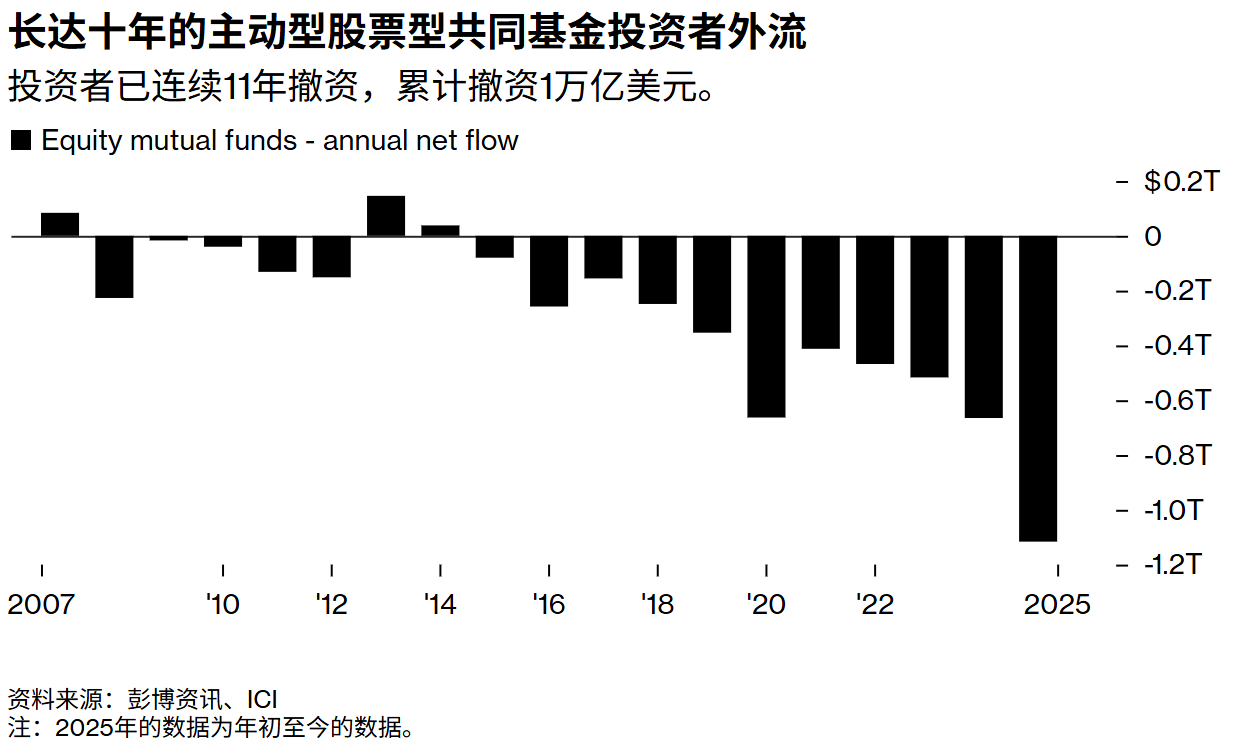
Core Insights - The dominance of seven major U.S. tech companies in investment portfolios poses a significant challenge for diversified fund managers, especially as the S&P 500 index reaches new historical highs [1] - A disproportionate return from a small group of tech giants has persisted for nearly a decade, leading to a widening performance gap that tests investors' patience [1] - Approximately $1 trillion has flowed out of actively managed equity mutual funds in 2025, marking the 11th consecutive year of net outflows, while passive ETFs attracted over $600 billion [1] Group 1 - Investors are increasingly withdrawing from active strategies, reassessing the value of paying extra costs for portfolios that deviate significantly from benchmarks [4] - The concentration of returns among a few stocks makes it difficult for active fund managers to outperform, as deviating from the "Big Seven" can lead to underperformance [4][5] - In 2025, 73% of U.S. equity mutual funds underperformed their benchmark indices, the fourth highest rate since 2007, exacerbated by market reactions to AI and tariff concerns [5] Group 2 - The narrow breadth of market gains, with less than 20% of stocks rising in sync with the market, indicates that diversification is becoming less effective for relative performance [4] - The S&P 500 index outperformed its equal-weighted version throughout the year, highlighting the impact of a few large-cap stocks on overall performance [4] - Successful exceptions exist, such as Dimensional Fund Advisors' international small-cap value portfolio, which returned over 50% by focusing on non-U.S. stocks and sectors like finance and materials [9] Group 3 - Some fund managers, like Margie Patel of Allspring, continue to believe in the potential of winning stocks, achieving a 20% return through investments in semiconductor companies [9] - The Nasdaq 100 index's high valuation metrics, including a P/E ratio exceeding 30, suggest a potential bubble, yet some analysts remain optimistic about the ongoing tech bull market [9][10] - The VanEck Global Resources Fund, with a return close to 40%, capitalizes on themes related to alternative energy and commodities, demonstrating the potential of thematic investing [10] Group 4 - The key lesson for investors in 2025 is not that active management has failed, but rather that the cost of deviating from mainstream strategies remains high, leading to reduced willingness to pay premiums for non-mainstream allocations [13] - Despite the dominance of large tech stocks, there are still opportunities for "alpha" outside this group, as indicated by Goldman Sachs Asset Management's quantitative strategies achieving around 40% returns [13]
基金行业的传奇人物:从渠道经理到公司总助
Xin Lang Cai Jing· 2025-12-09 01:56
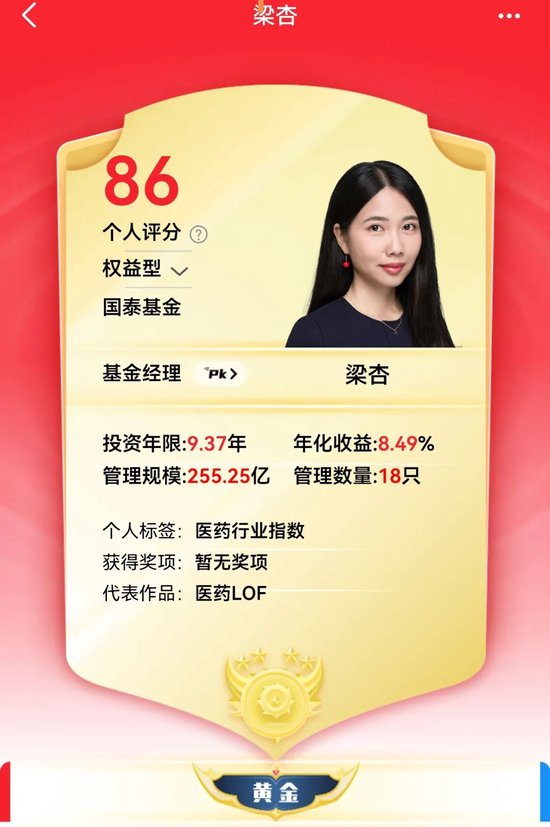
Core Insights - The article highlights the atypical career trajectory of Liang Xing, who transitioned from a sales role to a senior executive position in the fund industry over 16 years, showcasing her unique path in a predominantly traditional field [1][10]. Career Development - Liang Xing began her career in 2007 at Huashan Fund Management as a Senior Regional Manager, focusing on fund sales, which provided her with a deep understanding of fund products and market demands [3][14]. - In July 2011, she joined Guotai Fund, marking the start of her rapid growth within the company, where she held multiple roles including Product Brand Manager, Researcher, Fund Manager Assistant, and Deputy Director in her first five years [4][14]. - Liang's career path is considered non-mainstream, as she moved from a higher-ranked firm (Huashan Fund, ranked 8th) to a lower-ranked one (Guotai Fund, ranked 20th) in 2011, which was seen as a strategic choice for broader development opportunities [6][16]. Key Turning Points - A significant turning point in Liang's career occurred with the establishment of the Quantitative Investment Division at Guotai Fund, where she was offered a position as a researcher, eventually leading to her role as the Division Director in July 2018 [7][17]. - Liang's promotion trajectory closely aligns with the tenure of Guotai Fund's current General Manager, Zhou Xiangyong, who joined in January 2011 and initiated the formation of the quantitative investment team [7][17]. ETF Expansion - Under Liang's leadership as the Director of the Quantitative Investment Division, Guotai Fund significantly expanded its ETF product offerings: 4 products in 2019, 6 in 2020, and 20 in 2021 [8][18]. - By the end of 2024, Guotai Fund had 61 non-money market ETFs with a total scale of 148.5 billion yuan, ranking 7th in the industry, and its industry/theme ETFs totaled approximately 84.1 billion yuan, ranking 1st [8][18]. Future of Index Investment - Liang expresses confidence in the future of index investment, anticipating growth in passive funds, particularly ETFs, driven by increasing investor awareness and regulatory support for long-term capital market participation [9][19]. - In 2024, passive fund assets are expected to surpass active funds for the first time, indicating a significant shift in the A-share investment landscape and the public fund industry [9][19]. - Liang leads a nearly 30-member quantitative team, which has established a comprehensive and efficient structure that enhances collaboration and adaptability to market changes [19].
浙商证券:董事长吴承根到龄退休,钱文海正式接棒;公募港股持仓破1.3万亿元
Mei Ri Jing Ji Xin Wen· 2025-11-11 01:19
Group 1 - The chairman of Zhejiang Securities, Wu Chenggen, has retired due to age, and Qian Wenhai has officially taken over as chairman and president, marking a new management cycle for the company [1] - This leadership change may accelerate the implementation of the company's strategy, with market attention on its business integration and innovation capabilities [1] - As a representative of mid-sized brokerages, the optimization of Zhejiang Securities' governance structure may lead to a reevaluation of management efficiency within the industry, potentially altering the competitive landscape among brokerages [1] Group 2 - The market value of public funds' holdings in Hong Kong stocks has surpassed 1.3 trillion yuan, with passive public funds now exceeding active funds for the first time since 2017 [2] - The significant increase in passive fund investments highlights a trend of accelerated capital flow into the Hong Kong market through ETF products, reflecting a growing demand for low-cost and transparent investment tools [2] - The shift towards passive investment may lead to increased volatility in key sectors like technology and consumer goods, while also enhancing overall market liquidity [2] Group 3 - A total of 39 new public funds are expected to be launched this week, with equity products dominating the offerings, accounting for over 70% of the new funds [3] - The average fundraising period for new funds has decreased to less than 17 days, indicating a growing investor interest and willingness to enter the market [3] - The concentration of new equity funds is likely to boost the performance of sectors such as brokerage and asset management, as well as high-growth areas like technology and consumer [3] Group 4 - Guotai Junan Financial Holdings successfully issued a 5 billion USD zero-coupon convertible bond, optimizing its debt structure and reducing financing costs [4] - The bond issuance, backed by Guotai Junan International Holdings, is expected to enhance liquidity and attract market attention to its stock price [4] - This successful issuance reflects international investors' confidence in Chinese brokerages and is likely to bring positive signals to the Hong Kong stock market, enhancing overall market vitality [4]

欧洲仅14%主动基金跑赢被动 业绩TOP10经理:主动基金须借“对冲铠甲”
智通财经网· 2025-07-09 11:07
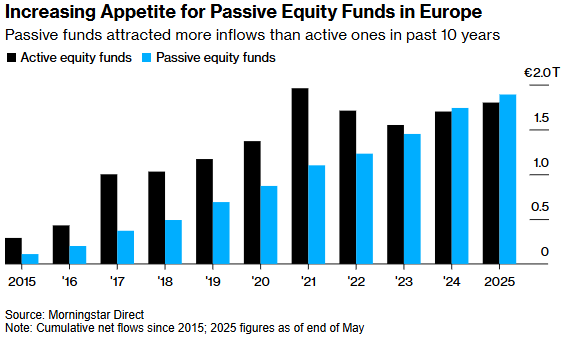
Group 1 - The core viewpoint is that active fund managers must adopt hedge fund strategies to cope with the shift of funds towards low-cost passive management portfolios [1][2] - Olivier Nobille from Arkea Asset Management emphasizes the need for active funds to utilize mathematical models, algorithms, derivatives, and hedging techniques to enhance the likelihood of outperforming indices and provide stronger protection during market downturns [1][2] - Arkea Asset Management manages $55 billion in assets and has seen its two major funds outperform nearly 90% of their peers this year, with returns of 9% and 18% compared to a 12% increase in the Euro Stoxx 50 total return index [1] Group 2 - Over the past decade, only 14.2% of active fund managers in Europe have outperformed passive strategies, highlighting the challenges faced by active managers in justifying their higher fees [5] - The market has seen a significant influx into exchange-traded funds (ETFs) and other passive products due to their lower costs and better liquidity, making it increasingly difficult for active fund managers to demonstrate their value [2][5] - Nobille believes that smaller boutique firms will struggle to compete with larger asset management companies due to the lack of economies of scale, and the only way to justify higher fees is by offering unique products that employ hedge fund-like strategies [5] Group 3 - In late 2022, Arkea launched a series of thematic funds using a "layered strategy" designed to manage specific risks and enhance returns [8] - Stress tests simulating a market crash similar to 2008 indicated that the hedging strategy could offset about two-thirds of the decline [8]
大摩:5月南向资金流入量锐减!被动型基金流入140亿美元
Zhi Tong Cai Jing· 2025-06-04 15:09
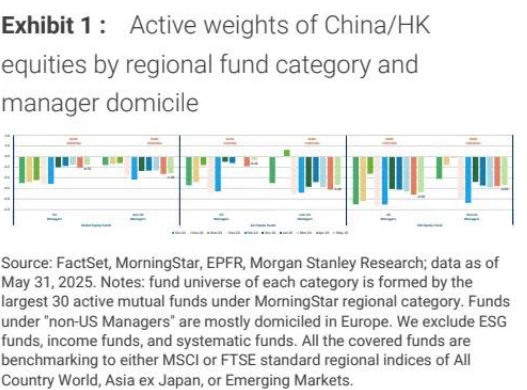
Fund Flow Analysis - In May, Chinese stock funds experienced a mild outflow, with foreign long-only funds (LOs) seeing a withdrawal of $200 million, a significant decrease from the $5.3 billion outflow in April [1][3] - Passive funds saw a recovery with an inflow of $14 billion in May, compared to an outflow of $3.7 billion in April, while active funds continued to experience outflows of $1.5 billion [1][3] - Southbound capital inflow weakened, dropping to $6 billion in May from $21 billion in April, marking the lowest level since 2024 [1][14] Global Fund Allocation - The global fund's underweight position in Chinese stocks has slightly narrowed, with global funds underweight by 12 percentage points, Asia-Pacific funds by 15 percentage points, and emerging market funds by 30 percentage points [2] Sector and Stock Performance - Active fund managers increased their holdings in Consumer Durables & Apparel and Consumer Services, while reducing their positions in Capital Goods, Food Beverage & Tobacco, and Media & Entertainment [10] - The most increased stocks included Alibaba, BYD, Midea Group, and JD.com, while Tencent and Zijin Mining saw the most reductions [11] Local Fund Dynamics - Local passive funds tracking A-shares saw a significant outflow of $9 billion in May after a large inflow of $27 billion in April [12] - The cumulative outflow of overseas active funds since 2022 has approached levels seen in early March 2025, with cumulative active fund flows hitting historical lows since the end of 2022 [5] Short Selling Interest - As of May 31, short positions in offshore/Hong Kong stocks amounted to $900 million, primarily concentrated in the Financials and Real Estate sectors [20]