
贸易新业态

Search documents
我国出口开门红,朋友圈不断扩大
泽平宏观· 2026-03-10 16:05
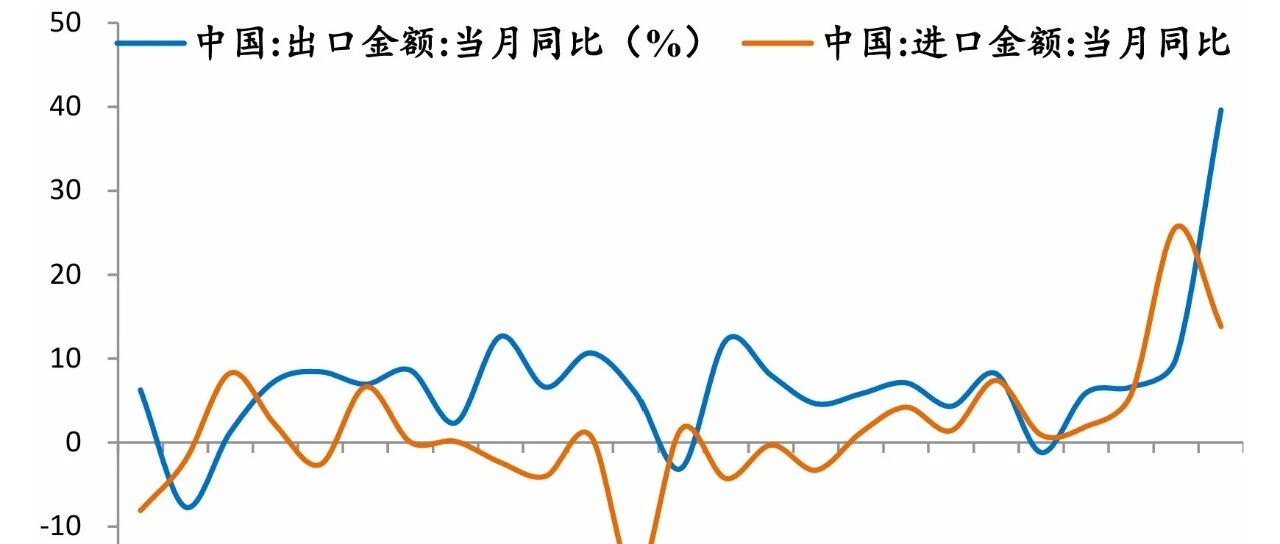
Core Viewpoint - China's foreign trade showed strong growth in the first two months of 2023, with exports increasing by 21.8% and imports by 19.8%, resulting in a trade surplus of 213.62 billion USD [3][4]. Group 1: Export Data Characteristics - The export growth rate exceeded expectations, with total exports reaching 656.58 billion USD, driven by global manufacturing recovery and enhanced competitiveness of Chinese manufacturing [4]. - The structure of exports is continuously optimizing, with high-tech and medium-high-end manufacturing becoming core engines, as evidenced by significant growth in machinery and high-tech product exports [5][7]. - The diversification of trade partners is evident, with exports to Belt and Road Initiative countries growing by 28.5%, while exports to the U.S. declined by 11.0% [6][10]. Group 2: Import Data Characteristics - Imports also saw significant growth, reaching 442.96 billion USD, primarily due to domestic consumption and rising commodity prices [4][8]. - The demand for key components in emerging industries is strong, with imports of semiconductors and integrated circuits increasing by 68.7% and 39.8%, respectively [8][9]. Group 3: Trade Partner Diversification - The Belt and Road Initiative continues to yield benefits, with exports to participating countries accounting for 51.3% of total exports [9]. - Trade with the EU remains stable, with exports to the EU growing by 27.8%, while exports to the U.S. have decreased [10]. Group 4: New Trade Dynamics and Private Sector Performance - The vitality of foreign trade entities is increasing, with private enterprises accounting for 58.3% of total foreign trade, reflecting their growing role in stabilizing orders and markets [12]. - New trade formats are developing rapidly, with general trade exports reaching 428.02 billion USD, indicating enhanced product innovation and competitiveness [12].

粤企出海 广东“十四五”服务贸易实现翻番
2 1 Shi Ji Jing Ji Bao Dao· 2026-02-25 12:24
Group 1 - The conference focused on the theme of "Digital Economy and New Business Models in Trade," aiming to gather various forces to inject new momentum into the coordinated development of manufacturing and service industries [1]
“十五五”加强西部地区与周边国家区域经贸合作
Xin Lang Cai Jing· 2026-02-10 21:07
Core Viewpoint - The article emphasizes the importance of enhancing regional economic and trade cooperation, particularly in the western regions of China, as a strategic move to adapt to the changing global political and economic landscape. The focus is on building a high-quality "Belt and Road" initiative and deepening practical cooperation with neighboring countries to establish a community of shared destiny [1][8]. Group 1: Economic and Trade Cooperation - The western region is positioned as a crucial gateway for China's westward opening, enhancing its hub function and deepening "hard," "soft," and "heart" connectivity with neighboring countries [1][2]. - The "14th Five-Year Plan" suggests promoting innovative trade development, with the western region's trade structure showing deep mutual complementarity and gradual optimization [2][4]. - By 2025, the total import and export volume of the western region is expected to reach approximately 4.3 trillion yuan, with over 60% directed towards countries involved in the "Belt and Road" initiative [2]. Group 2: Industrial and Investment Development - The article advocates for transforming existing manufacturing advantages into sustainable competitive strengths in the regional market by enhancing traditional trade and fostering new trade formats through institutional openness and innovation [3][4]. - The western region's economic foundation and industrial structure are continuously improving, supporting complementary trade and providing space for cross-border industrial chain and supply chain layout [4][5]. - The article suggests establishing a "Western Free Trade Land Port" and exploring zero-tariff free trade pilot zones to reduce cross-border operational costs and stimulate trade vitality [3][5]. Group 3: Policy and Institutional Framework - The article recommends accelerating the construction of a policy coordination and functional support system between China and neighboring countries, including establishing a cross-departmental joint promotion mechanism [7]. - It emphasizes the need for a market-oriented approach to support key projects in cross-border parks, logistics hubs, and agricultural technology platforms through an "industry cooperation fund" [7]. - The article highlights the importance of creating a high-level trade negotiation mechanism to enhance cooperation in investment protection, digital trade, and environmental standards [7][8]. Group 4: Future Prospects and Strategic Goals - The western region's cooperation with "Belt and Road" partners is evolving towards green development and digital economy, supported by a solid industrial foundation in new energy and big data [6][8]. - The article underscores the significance of balanced domestic production layout and the development of western border areas, contributing to the overall economic resilience and competitiveness of the region [8].
影响市场重大事件:央行将下调各类结构性货币政策工具利率0.25个百分点,今年看降准降息还有一定空间;国家外汇局将继续有序发放QDII投资额度
Mei Ri Jing Ji Xin Wen· 2026-01-15 22:26
Group 1: Monetary Policy Adjustments - The People's Bank of China (PBOC) will lower the interest rates of various structural monetary policy tools by 0.25 percentage points, with the one-year re-lending rate decreasing from 1.5% to 1.25% [1] - There is still room for further reductions in reserve requirement ratios and interest rates this year, as the average reserve requirement ratio is currently at 6.3% [2] - The PBOC aims to maintain relatively loose social financing conditions by effectively utilizing various monetary policy tools, including rate cuts [5] Group 2: Support for Innovation and Investment - The PBOC has increased the re-lending quota for technological innovation and technological transformation by 400 billion yuan, bringing the total to 1.2 trillion yuan [4] - The National Foreign Exchange Administration plans to optimize policies related to Qualified Foreign Institutional Investors (QFII) and continue to issue Qualified Domestic Institutional Investor (QDII) investment quotas [3] Group 3: Market Activity and Investment Trends - The trading volume of the CSI 500 ETF exceeded 26.3 billion yuan, setting a historical record, while other ETFs also saw significant increases in trading volume [8] - The State Grid Corporation of China anticipates fixed asset investments of 4 trillion yuan during the 14th Five-Year Plan period, representing a 40% increase compared to the previous plan [9] - In 2025, the total social financing scale is expected to exceed 35.6 trillion yuan, with significant increases in various financing categories, including loans and bond financing [10]
解锁首破45万亿元外贸的成长密码
Zheng Quan Ri Bao· 2026-01-14 16:14
Core Insights - China's foreign trade achieved a record high of 45.47 trillion yuan in 2025, marking a 3.8% year-on-year growth and maintaining a growth trend for nine consecutive years [1][4] Group 1: Trade Structure Changes - The diversification of markets has strengthened China's foreign trade, with trade relations established with over 240 countries and regions, and over 190 of them experiencing import and export growth [1] - Trade with Belt and Road Initiative countries reached 23.6 trillion yuan, a 6.3% increase, accounting for 51.9% of total trade, with exports to emerging markets like Africa and Latin America growing by 18.4% and 6.5% respectively [1][2] Group 2: Export Structure Upgrade - High-tech product exports grew by 13.2%, significantly outpacing overall export growth, with green products like "new three items" and wind turbine generators seeing increases of 27.1% and 48.7% respectively [2] - The export of self-owned brand products rose by 12.9%, increasing their share of total exports by 1.4 percentage points, indicating a shift towards brand-oriented exports [2] Group 3: Corporate Vitality - Over 780,000 entities recorded import and export activities in 2025, with private enterprises' exports increasing by 7.1%, now accounting for 57.3% of total trade [3] - The customs authority has implemented 29 policy measures to facilitate cross-border trade, enhancing the interaction between policy support and corporate efforts [3] Group 4: Future Outlook - The foundation of China's foreign trade remains solid, with expectations for continued growth driven by new trade formats like cross-border e-commerce and market procurement [3][4] - The successful completion of the "14th Five-Year Plan" and the beginning of the "15th Five-Year Plan" provide a strong starting point for future trade development [4]
支持跨境电商等贸易新业态发展 2025年超10亿笔外汇业务在线办理
Ren Min Ri Bao Hai Wai Ban· 2026-01-07 00:06
Core Viewpoint - The 2026 National Foreign Exchange Management Work Conference highlighted the achievements and future goals of foreign exchange management in China, focusing on supporting new trade formats and enhancing the regulatory framework for foreign exchange activities [1] Group 1: Achievements in 2025 - In 2025, over 1 billion online cross-border e-commerce foreign exchange transactions were processed, serving more than 1.8 million small and micro enterprises [1] - The foreign exchange management department strengthened policy integration and market construction, achieving historical highs in foreign exchange market transaction volume and corporate foreign exchange hedging ratios [1] - Banks processed foreign exchange transactions worth $440 billion based on customer instructions throughout the year [1] Group 2: Goals for 2026 - The foreign exchange management work in 2026 aims to better balance development and security, creating a more convenient, open, secure, and intelligent foreign exchange management system [1] - The focus will be on deepening reforms and high-level opening in the foreign exchange sector, effectively meeting the foreign exchange needs of various entities while mitigating external risks [1] - There will be an emphasis on enhancing supervision during and after transactions to foster a foreign exchange policy environment that is both flexible and well-regulated, contributing to the successful start of the 14th Five-Year Plan [1]
【金融街发布】国家外汇局:提升西部陆海新通道沿线企业跨境结算效率 降低贸易结算成本
Xin Hua Cai Jing· 2025-12-25 14:00
Core Viewpoint - The National Foreign Exchange Administration has introduced five measures to enhance cross-border settlement efficiency and reduce trade settlement costs for enterprises along the Western Land-Sea New Corridor [1] Group 1: Cross-Border Trade Settlement - The focus is on creating a more trustworthy and convenient foreign exchange service environment for cross-border trade [2] - Measures include encouraging enterprises to join high-level cross-border trade pilot programs, supporting multinational companies in integrated fund pool operations, and facilitating new trade models like market procurement and cross-border e-commerce [2][3] - Banks are supported to assist quality enterprises in handling compliant offshore trade cross-border fund settlements [2] Group 2: Cross-Border Investment and Financing - The administration aims to simplify business processes and broaden financing channels for enterprises along the corridor [2] - In the "bringing in" aspect, it cancels preliminary fee registration for foreign direct investment and optimizes reinvestment processes for foreign-invested enterprises [2] - For the "going out" aspect, it relaxes limits on preliminary expenses for overseas direct investment and supports advantageous industries in expanding international markets [3] Group 3: Digital Empowerment - The administration promotes the co-construction and sharing of cross-border financial service platforms in the corridor [3] - Currently, 13 scenarios have been applied in the "13+2" provinces, with Chongqing having a dedicated scenario that has served over 800 enterprises, facilitating nearly $60 billion in financing settlements [3][4] - Future plans include enhancing national scenarios, supporting local innovations, and replicating successful models in other regions [4]

外汇新举措便利跨境贸易
Jing Ji Ri Bao· 2025-11-10 22:44
Core Viewpoint - The State Administration of Foreign Exchange (SAFE) has introduced nine facilitation measures aimed at enhancing the efficiency of foreign exchange support for stable foreign trade development, addressing current challenges in cross-border fund settlement [1][2]. Group 1: Policy Measures - The new policies focus on optimizing facilitation measures, supporting the healthy development of new trade formats, and improving the efficiency of fund usage for trade enterprises [1]. - Key measures include expanding the pilot scope for high-level cross-border trade openness and broadening the types of net settlement for current account funds, which will help reduce the frequency and cost of cross-border remittances for enterprises [1][2]. Group 2: Support for Employees and New Trade Formats - The policies also aim to facilitate salary-related foreign exchange needs for employees of quality enterprises, allowing banks to determine salary exchange amounts based on provided materials, thus improving processing efficiency [2]. - The new policies specifically support emerging trade formats such as cross-border e-commerce and market procurement, encouraging banks to include these entities in facilitation policies and optimizing their foreign exchange settlement processes [2][3]. Group 3: Compliance and Risk Management - The facilitation measures do not imply a relaxation of management; rather, they emphasize that "compliant banks" and "quality enterprises" are prerequisites for enjoying policy benefits, reinforcing the principle of "more integrity, more convenience" [3]. - The policies grant compliant banks greater autonomy while requiring them to establish robust risk management mechanisms, ensuring that foreign exchange operations remain healthy and stable [3]. Group 4: Economic Impact - The implementation of these measures is expected to strengthen the financial infrastructure of China's foreign trade, enhancing the vitality and momentum of cross-border trade [3].
国家外汇局发布九条政策举措 进一步便利外汇资金结算
Shang Hai Zheng Quan Bao· 2025-10-29 23:27
Core Viewpoint - The State Administration of Foreign Exchange (SAFE) has announced new policies to facilitate foreign exchange fund settlement and support stable foreign trade development, introducing nine measures to deepen trade foreign exchange management reform and ease cross-border trade operations [1][2]. Group 1: Trade Facilitation Policies - The policies will expand the pilot areas and types of businesses involved in trade facilitation, covering more regions with genuine needs and compliant business entities [1]. - The types of businesses eligible for net settlement of current account funds will be broadened, allowing for the net settlement of service fees related to transportation, storage, maintenance, and compensation linked to goods trade [1]. Group 2: Support for New Trade Models - The measures will enhance the convenience of settlement for innovative businesses, encouraging banks to include more small and medium-sized enterprises in the category of quality enterprises eligible for favorable trade fund settlement policies [1][2]. - Banks are encouraged to shift from traditional document review methods to automated batch reviews based on electronic transaction information generated online by foreign trade service enterprises [2]. Group 3: Improvement in Service Trade Fund Utilization - The management of service trade advance payment business will be relaxed, allowing domestic enterprises to directly handle related fund receipts and payments at banks for transportation, storage, and maintenance fees [2]. - The policies aim to effectively mobilize "idle" funds from overseas engineering projects, reducing financial costs for enterprises and supporting high-quality development of the Belt and Road Initiative [2].
外汇局出台九项新举措 促进跨境贸易更便利
Zheng Quan Shi Bao· 2025-10-29 18:39
Core Viewpoint - The State Administration of Foreign Exchange (SAFE) has introduced a notification to further facilitate foreign exchange fund settlement, supporting stable development of foreign trade through nine policy measures aimed at optimizing convenience policies, supporting innovative business models, and enhancing the efficiency of fund utilization for service trade enterprises [1][2]. Group 1: Policy Measures - The notification includes nine policy measures that focus on promoting high-level openness in cross-border trade and expanding pilot areas to include more regions with compliant business entities that align with national strategic development [1][2]. - Since the pilot program began in 2022, regions such as Shanghai, Beijing, Jiangsu, and Guangdong have implemented policies that facilitate foreign exchange fund payments for current account items and support new international trade settlement methods [2][3]. - The notification aims to simplify procedures for high-quality multinational companies regarding current account fund concentration and net settlement, allowing banks to efficiently handle foreign exchange business for these companies [2][3]. Group 2: Support for New Business Models - The notification encourages the inclusion of more new trade entities in the facilitation policies, leveraging reputable e-commerce platforms and foreign trade service companies to recommend and enhance credit for small and medium-sized enterprises [2][3]. - Banks are guided to shift from traditional document review methods to automated batch reviews based on electronic transaction information provided by foreign trade service companies, streamlining the payment process for new trade entities [3]. Group 3: Enhancing Fund Utilization Efficiency - The notification allows for the relaxation of management on service trade advance payment businesses, enabling domestic enterprises to directly handle payments for transportation, warehousing, and maintenance fees with their trading partners [3][4]. - It supports the centralized management of funds for overseas engineering contracting enterprises, facilitating the allocation of funds across countries and regions, which can effectively reduce financial costs and enhance project efficiency [4].