资本市场转型

Search documents
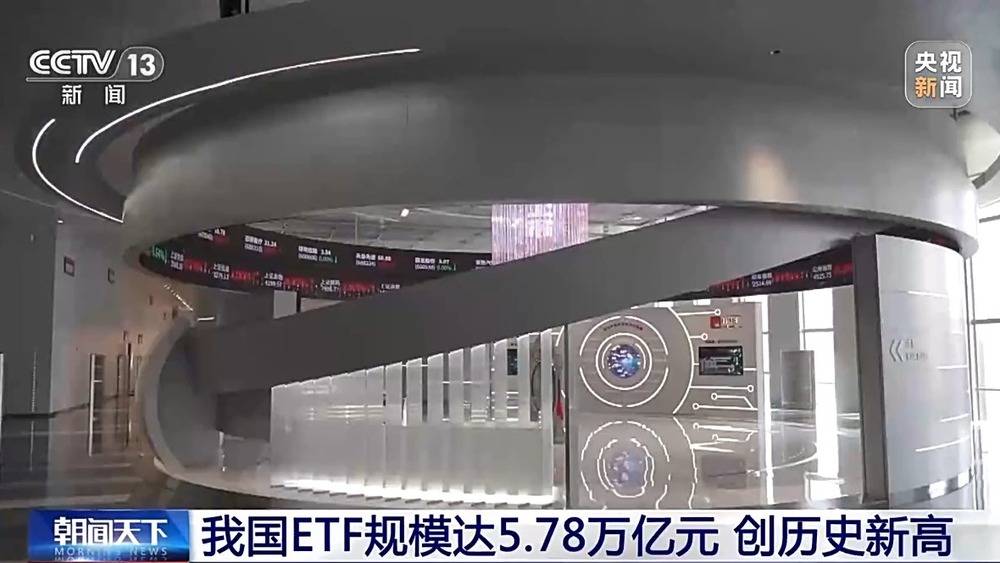
创历史新高!我国ETF规模达5.78万亿元
Sou Hu Cai Jing· 2025-12-23 01:00
Core Insights - The Chinese public fund market is experiencing a historic breakthrough in 2025, with ETF assets reaching 5.78 trillion yuan and FOF issuance exceeding 80 billion yuan, both setting new records [1][2]. ETF Market Overview - As of December 19, the total ETF market size reached 5.78 trillion yuan, marking an increase of over 2 trillion yuan within the year, representing a growth rate of more than 53% [2]. - The ETF market saw rapid growth, with the size jumping from 4 trillion yuan to 5 trillion yuan in just four months, while it took 14 years to grow from 0 to 1 trillion yuan [2]. - The launch of 24 Sci-Tech Innovation Bond ETFs has contributed to the market's growth, with their total size reaching 257.66 billion yuan, a 269% increase from the previous issuance size of 69.77 billion yuan [2]. FOF Market Overview - The FOF sector also experienced a significant surge, with 79 new FOF funds established by December 17, raising a total of 80.35 billion yuan, surpassing the total issuance of the previous three years [4]. - The average size of individual FOF products reached 1.05 billion yuan, more than three times that of 2024 [4]. Reasons for Growth - The growth of ETFs and FOFs is attributed to the volatile A-share market, which has increased investment difficulty due to stock differentiation and accelerated sector rotation [6]. - ETFs provide individual investors with a way to cover specific sectors easily, addressing challenges in stock selection and research costs [8]. - Policy support, including the establishment of a fast-track approval process for ETFs and encouragement for long-term funds to enter the market, has also played a crucial role [8]. Investment Trends - The deepening of the personal pension system has created unprecedented opportunities for pension-targeted FOFs, which are among the first investment options [10]. - There is a growing consensus among investors to entrust professional management, leading to a shift in wealth towards capital markets [10]. - Institutional investors, including insurance and bank wealth management, are increasingly favoring standardized products like ETFs and FOFs due to their low volatility and high adaptability [10]. Implications for the Market - The record growth of ETFs and FOFs signifies a deeper transformation in the capital market, moving from a "trading-oriented" to a "allocation-oriented" model, which is essential for long-term value investment [17]. - The development of these products is expected to attract long-term capital into hard technology sectors, supporting innovation and industrial upgrades [11][13]. - The increasing participation of long-term institutional funds through ETFs and FOFs is likely to reduce market volatility and contribute to a more mature and rational market environment [13][15].

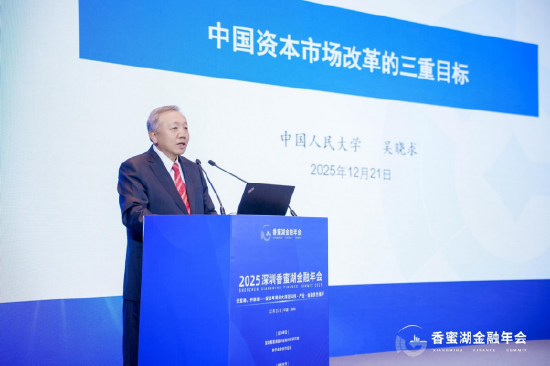
吴晓求:对于资本市场“埋雷”者,仅靠行政处罚力度不够,更需刑事处罚和民事处罚
Xin Lang Cai Jing· 2025-12-21 12:30
Core Insights - The traditional financial system, primarily dominated by commercial banks, is gradually being complemented by the capital market, which is taking on more financial responsibilities that have not been fully recognized [1][8] - The current scale of the capital market, including bonds, has reached 250 trillion yuan, slightly lower than the banking sector's 300 trillion yuan, but the gap is rapidly narrowing [1][8] - In the coming years, the securitized financial market is expected to surpass the banking sector, becoming the main bearer of financial functions [1][8] Financial Reform Goals - To build a "financial powerhouse," it is essential to achieve the internationalization and liberalization of the renminbi, as well as complete the transformation of the capital market [3][10] - The ultimate goal of renminbi internationalization is not limited to cross-border trade settlements but should enable free convertibility in major global financial cities, allowing it to function as a payment and reserve currency [3][10] - The current functions of China's capital market fall short of the requirements for a modern financial powerhouse, necessitating a shift in perception from merely a "financing market" to a platform for sustainable returns for investors [3][10] Reform Strategies - Three areas of reform are identified: 1. **Asset-side Reform**: Focus on high-tech and innovative enterprises as the main constituents of the capital market to guide capital towards key sectors of the real economy [4][11] 2. **Funding-side Reform**: Adjustments are needed to guide funds into the capital market, correcting misconceptions about risk and asset allocation, particularly in the insurance sector [5][11] 3. **Institutional Platform Reform**: Establish a comprehensive legal framework to support the reforms, ensuring investor rights protection is at the core of market transformation [5][11] Risk Management and Market Development - The first goal of capital market reform is to "clear mines," addressing existing risks such as insufficient transparency and hidden risks from past corporate actions that undermine market stability [6][13] - A robust wealth management market must be built on a foundation of risk-free operations and enhanced transparency to gain investor trust [6][13] - The long-term vision is to develop China's capital market into an international financial center, integrating it into the global financial system through market-oriented, legal, and international approaches [6][13]
专访张晓晶:中国经济迈向科技驱动新范式 资本市场成战略棋眼
2 1 Shi Ji Jing Ji Bao Dao· 2025-11-17 15:31
Core Insights - The Chinese economy is transitioning from a bank credit-driven industrialization phase to a technology innovation phase supported by venture capital and risk capital [1][3] - Strengthening the capital market is essential for driving technological breakthroughs and nurturing strategic emerging industries [1][3] - The capital market must fulfill a dual mission: supporting technological innovation and serving the well-being of the populace [1][3] Market Dynamics - Four key drivers are identified as providing solid support for the capital market: 1. Revaluation potential of technology assets due to the current undervaluation in the tech sector [5][6] 2. Clear policy guarantees for financial stability, with the central bank implementing a dual-pillar framework for monetary and macro-prudential policies [5][6] 3. Unique risk diversification value of the Chinese market, which allows it to hedge against overseas volatility [5][6] 4. The growth dividends of high-quality domestic enterprises, which are increasingly shared with local investors [5][6] Capital Market Development - The capital market's role in China's economic development will become more prominent, focusing on risk identification, pricing, and management [3][4] - The "Fifteen Five" plan emphasizes the importance of finance, mentioning it 17 times, highlighting its critical role in national development [4] Support for Innovation - Recent approvals for IPOs of companies like Moer Thread and Muxi demonstrate increasing support for technology innovation in the capital market [2] - A more inclusive capital market environment for tech companies is needed, focusing on risk-return relationships and adapting valuation methods for intangible assets [7][8] Enhancing Investor Experience - Improving the investor experience requires systematic enhancements in market infrastructure, including better information disclosure and a balanced financing and investment ecosystem [12][14] - Strategies to enhance investor satisfaction include strengthening the information disclosure system, improving market entry and exit mechanisms, and ensuring effective regulatory enforcement [14][15][16] Open Market Strategy - The "Fifteen Five" plan places greater emphasis on openness, which is crucial for optimizing market ecology and enhancing competitiveness [17][18] - A healthy, stable, and attractive capital market is essential for successful market opening, requiring robust institutional frameworks and regulatory measures [18]
专访张晓晶:中国经济迈向科技驱动新范式,资本市场成战略棋眼
2 1 Shi Ji Jing Ji Bao Dao· 2025-11-17 11:32
Group 1 - The core viewpoint of the article emphasizes the historical transformation of China's capital market, shifting from reliance on bank credit for industrialization to supporting technological innovation through venture capital and risk capital [1][6] - The capital market is seen as essential for driving technological breakthroughs and nurturing strategic emerging industries, highlighting its unique advantages in risk identification, pricing, and allocation compared to the banking system [1][6][7] - Four key driving forces are identified that provide a solid foundation for the capital market's sustained growth: the revaluation potential of technology assets, clear financial stability policies, unique risk diversification value of the Chinese market, and the growth dividends of high-quality domestic enterprises [1][8][9] Group 2 - Recent developments indicate an increasing support for technological innovation within the capital market, with companies like Moore Threads and Muxi Co. receiving approval for their IPOs on the Sci-Tech Innovation Board [2] - The article discusses the need for a more inclusive capital market environment for technology companies, focusing on the transformation of risk and return perceptions, the establishment of a valuation system for intangible assets, and the encouragement of patient capital [11][12] - The relationship between technology and consumption is described as a dual driving force for economic growth, with both sectors playing complementary roles in enhancing the overall economic landscape [13][14] Group 3 - The article outlines strategies to enhance ordinary investors' experience in the capital market, emphasizing the importance of a robust information disclosure system, improved market entry and exit mechanisms, and a well-defined investment return mechanism [18][19][20] - The significance of capital market openness is highlighted, suggesting that attracting international enterprises and capital can enhance competition and efficiency within the market, ultimately benefiting domestic investors [22][23] - The need for a stable and attractive capital market environment is stressed as a prerequisite for advancing high-level openness, with a focus on maintaining regulatory integrity while promoting market accessibility [24]

提升宏观经济治理效能,激活内生发展动力
2 1 Shi Ji Jing Ji Bao Dao· 2025-10-30 23:14
Core Viewpoint - The article discusses the recent release of the "Suggestions" by the Central Committee of the Communist Party of China regarding the 15th Five-Year Plan, emphasizing the need for a more systematic and effective macroeconomic governance framework to support high-quality economic development. Group 1: Macroeconomic Governance - The "Suggestions" highlight the importance of enhancing macroeconomic governance efficiency and establishing a high-level socialist market economy system [1] - The focus is on optimizing the policy framework and execution mechanisms to support an economy driven by domestic demand, consumption, and endogenous growth [1] Group 2: Policy Coordination - There is a call for stronger strategic guidance and policy coordination to ensure consistency in macroeconomic policy orientation [2] - The need to break down departmental barriers and promote a unified policy approach is emphasized to achieve synergistic effects [2] Group 3: Fiscal Policy - The implementation of proactive fiscal policies will not only involve expanding fiscal spending but also improving spending efficiency and sustainability [2] - The establishment of a budget allocation mechanism centered on policy performance and project necessity is crucial for optimizing fiscal resource allocation [2] Group 4: Debt Management - The "Suggestions" propose accelerating the establishment of a long-term government debt management mechanism to address existing debt and prevent hidden debt expansion [3] - A comprehensive lifecycle management system for debt financing, budget constraints, risk warnings, and emergency responses is recommended [3] Group 5: Financial Sector Development - There is an emphasis on building a strong financial nation, with a focus on developing technology finance, green finance, inclusive finance, pension finance, and digital finance [3] - The financial system is expected to lead and shape future industries through innovative financial products and risk pricing mechanisms [3] Group 6: Capital Market Transformation - The capital market is transitioning from a financing-led model to a platform that coordinates investment and financing [4] - Systematic reforms are aimed at enhancing the quality of listed companies and improving shareholder return mechanisms to attract long-term capital [4] Group 7: Economic Development Model - The overall strategy aims to strengthen the coordination of fiscal and monetary policies while leveraging various policy tools to promote an economy driven by domestic demand and consumption [4]
2024年全球IPO“西强东弱”,A股急刹车,香港为何趁势崛起?
Sou Hu Cai Jing· 2025-09-29 03:52
Core Insights - The global financial market is experiencing a significant transformation in 2024, with A-shares facing a sharp decline in IPO numbers and fundraising amounts, while the Hong Kong market is rebounding strongly, re-entering the top five global listing venues [1][12]. Group 1: A-share Market Dynamics - A-shares are undergoing a "self-revolution," with a drastic reduction in IPO numbers and fundraising amounts by 60% and 70% respectively, attributed to a regulatory shift from quantity to quality [5][21]. - The current listing logic requires companies to demonstrate their quality before going public, leading to a decrease in tech and pharmaceutical companies that previously relied on concepts and narratives for listings [7][21]. - The top ten A-share IPOs are predominantly infrastructure-related REITs, indicating a shift in market preference towards stable cash flow assets [8][10]. Group 2: Hong Kong Market Resurgence - The Hong Kong market has seen an 80% increase in fundraising, reaching $10.4 billion, driven by support from the mainland regulatory authority for leading companies to list in Hong Kong [12][18]. - The expansion of the Stock Connect mechanism has facilitated greater access for mainland funds to invest in Hong Kong, enhancing market liquidity and creating a beneficial "internal-external circulation" ecosystem [14][16]. - Despite the resurgence, the Hong Kong market's vitality is heavily reliant on a few major projects, with the top ten IPOs accounting for 76% of total fundraising, raising concerns about market stability [18][19]. Group 3: Broader Market Trends - Both A-share and Hong Kong markets are moving away from "scale worship," emphasizing the importance of corporate governance and long-term value over short-term fundraising figures [21].

券商股东密集减持,是套现离场还是战略调整?
Jing Ji Guan Cha Wang· 2025-09-25 02:07
Core Viewpoint - The recent announcements of share reductions by multiple shareholders in the securities industry indicate a trend of capital adjustment and potential concerns regarding the stability of shareholder confidence in the sector [1][2][4]. Group 1: Shareholder Reduction Plans - Sichuan Jianan Spring plans to reduce its stake in Huaxi Securities by up to 1% within three months, citing "liquidity needs" as the reason for the reduction [1]. - Other securities firms have also seen similar shareholder reductions, with China Cinda not executing its planned 1% reduction due to market conditions, while Guokong Operations and Jiangxi Copper plan to reduce their stakes by up to 3% [2][3]. - The majority of these reductions are executed through centralized bidding and block trading, with most reductions kept within the 1% to 3% range [2]. Group 2: Motivations Behind Reductions - The motivations for these reductions are varied, often linked to "business development needs" or "liquidity requirements," indicating a focus on the shareholders' financial arrangements rather than a direct negative outlook on the brokers' fundamentals [3]. - Jianan Spring's reduction is characterized as a financial investment rather than a strategic business move, reflecting typical behavior for industrial capital [3]. - Jiangxi Copper's reduction is seen as a way to optimize cash flow amidst cyclical fluctuations in the metals industry [3]. Group 3: Market Implications and Industry Challenges - The disclosed reduction plans have not led to changes in control for the listed companies, and the impact on governance structures is considered limited [4]. - However, these announcements may influence market sentiment, as shareholder actions are often interpreted as signals regarding the industry's outlook [4][5]. - The securities industry continues to face challenges such as declining commission rates and increased competition, prompting some shareholders to adjust their asset allocations post-lockup [5]. - The phenomenon of shareholder reductions highlights a mismatch between financial and industrial capital cycles, suggesting that these actions should not be simplistically viewed as negative indicators for the brokers' future [5].

首页当寒武纪股价超越茅台
He Nan Ri Bao· 2025-09-01 22:51
Group 1 - The rise of Cambrian has led to it becoming the "first high-priced stock," symbolizing a shift in market logic from stable consumer stocks to high-growth technology stocks [2] - Moutai represents a benchmark for investors, and surpassing it is seen as a sign of a new order in the market, while falling from this position indicates a bubble's burst [2] - Cambrian's performance shows a growth curve, supported by the AI trend and policy benefits, raising questions about whether it can be an exception among tech companies [2] Group 2 - The comparison between Cambrian and Moutai reflects the self-cultivation of the Chinese capital market, with Moutai demonstrating certainty premium over decades and Cambrian attempting to establish tech growth as a new certainty [3] - If Cambrian can sustain its performance over the long term, it would signify not just a stock price miracle but also a transformation in A-share investment culture [3] - The true test for Cambrian is not just about surpassing Moutai but about maintaining its position at the peak in the long run [3]



厦门上市公司协会举办“市值管理与并购重组”培训
Zheng Quan Shi Bao Wang· 2025-07-28 10:24
Group 1 - The training event on "Value Management and Mergers & Acquisitions" was held in Xiamen, attended by nearly 70 executives and representatives from listed companies and related institutions [1] - The core of value management is expectation management, which involves changing the company's fundamentals and perceptions to influence market value [1] - The capital market is transitioning from a "financing market" to an "investment market," presenting new opportunities in the mergers and acquisitions sector [1] Group 2 - Judicial restructuring has become a common path for listed companies to mitigate risks, as highlighted by case studies shared during the event [2] - The market structure of derivative investments was discussed, focusing on the NAFMII, SAC, and ISDA agreement systems, with examples of efficient applications of cross-border capital tools [2] - In the first half of 2025, ten listed companies in the Xiamen area completed mergers and acquisitions, involving a total amount of 1.755 billion yuan [2]