
资源回收

Search documents
国海证券晨会纪要-20260313
Guohai Securities· 2026-03-13 03:38
Group 1 - The report addresses key issues such as macroeconomic price transmission, internal pricing differentiation of bulk commodities, and micro-level industry restructuring and regional arbitrage [3][4] - The strategy emphasizes "upstream elasticity and downstream defense," recommending a focus on upstream and midstream sectors, particularly in smelting and black metal sectors, which show strong profit retention characteristics [4] - The report highlights that the pricing dynamics in chemicals and agriculture are more favorable compared to metals, driven by supply chain constraints and rigid demand from biofuel policies [4][5] Group 2 - The report identifies three derivative micro-logics: resource recycling, physical substitution, and pricing arbitrage, emphasizing the growing importance of recycled metals in global supply chains [5] - It notes the irreversible shift in manufacturing towards using aluminum instead of copper due to high copper-aluminum price ratios, and the long-term arbitrage opportunities created by the mismatch in natural gas supply between the US and Europe [5]
【全球资源回收】玻璃纯碱:节后大幅累库,后续关注需求成色
Xin Lang Cai Jing· 2026-02-28 02:11
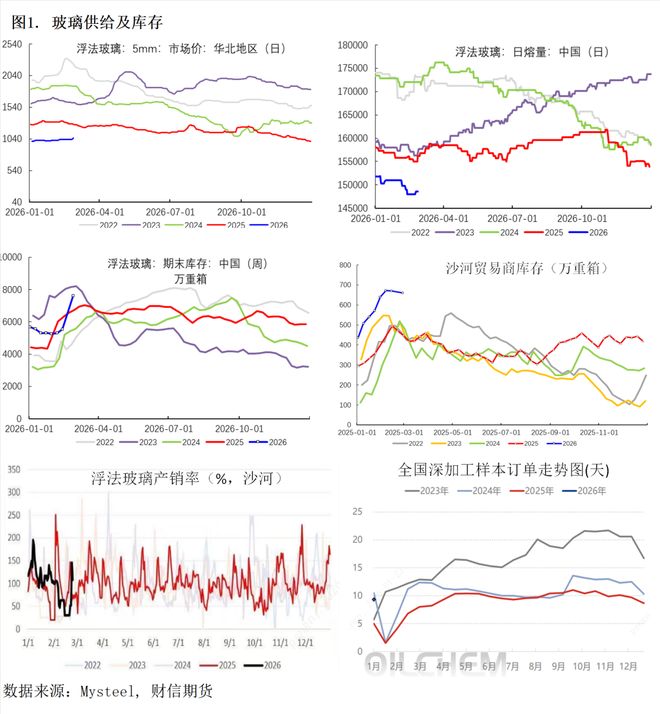
Core Viewpoint - The glass industry is currently experiencing weak demand and inventory accumulation, with prices showing slight adjustments in various regions, while the overall market remains cautious post-holiday [1][4][5]. Supply and Production - As of February 26, 2026, the national float glass daily production is 148,600 tons, with an industry operating rate of 70.61%. The weekly production is 1,038,400 tons, reflecting a month-on-month increase of 0.23% but a year-on-year decrease of 4.5% [1]. - The supply side has not seen significant changes during the holiday, with no new production lines expected to start due to environmental policy constraints [1][6]. Cost and Profitability - The average profit for float glass using natural gas as fuel is -142.26 CNY/ton, showing a month-on-month increase of 24.29 CNY/ton. In contrast, coal gas and petroleum coke have profits of -30.79 CNY/ton and 43.93 CNY/ton, respectively, with the latter remaining stable [2]. - The overall cost pressures are expected to rise due to the transition to gas as a fuel source, impacting the industry's cost structure [6]. Inventory Levels - As of February 26, 2026, the total inventory of float glass in sample enterprises is 76.008 million heavy boxes, marking a month-on-month increase of 2.0656 million heavy boxes (37.32%) and a year-on-year increase of 13.22%. The inventory days have increased to 33.8 days, up by 9.4 days from the previous period [2][4]. Demand and Market Conditions - The downstream demand has not yet recovered, with the main consumption areas slowly resuming operations. The Low-e market is particularly quiet, with limited transactions during the holiday period [4]. - The overall market sentiment is characterized by "neutral expectations and weak realities," with significant differentiation in the chemical market, leading to a decline in glass and related chemical products [4][5]. Price Trends - Current spot prices for float glass in Hubei and Shahe are at 1,110 CNY/ton and 1,030 CNY/ton, respectively, with futures prices also declining to around 981 CNY/ton and 1,058 CNY/ton, both near yearly lows [4][5]. - The market is expected to experience fluctuations around the average cost line, with a projected trading range for the main glass contract between 1,000 CNY/ton and 1,100 CNY/ton [6].

赛恩斯20260204
2026-02-05 02:21
Summary of Conference Call Notes Company and Industry Overview - The conference call discusses the operations and strategies of a company involved in the mining and metallurgy sector, specifically focusing on molybdenum and rhenium extraction from copper mines, particularly the Giant Dragon Copper Mine [1][2]. Key Points and Arguments Rhenium and Molybdenum Production - The Giant Dragon Copper Mine has a moderate to high rhenium content of approximately 200 grams per ton, with a potential total rhenium resource of about 560 kilograms [2][3]. - The company operates under a light asset model, purchasing molybdenum concentrate for smelting, which allows for stronger control over rhenium resource acquisition [2][6]. - Current daily processing costs for waste acid recovery are around 2 million yuan, excluding depreciation [2][6]. Production Capacity and Expansion - The annual copper production from the Giant Dragon Copper Mine is estimated at 30,000 to 40,000 tons, with existing rhenium production capacity of 4,000 to 5,000 tons, indicating significant future expansion potential [2][10]. - The company is collaborating with Jilin Zijin and Heilongjiang Zijin for copper smelting, aiming for an annual rhenium output of about 3 tons [2][11]. Strategic Partnerships and Supply Chain - The company emphasizes strategic partnerships to ensure stable supply chains, particularly through deep binding in the smelting process [2][8]. - Future collaborations with Zijin Mining will depend on market conditions and further negotiations [3][4]. Market Dynamics and Pricing - Rhenium prices are expected to rise due to demand from the aerospace and gas turbine sectors, with a long-term upward price cycle anticipated [4][19]. - The company currently holds an inventory of approximately 500 kilograms of rhenium, primarily for downstream processing preparation [21]. Technological and Operational Advantages - The company has over ten years of experience in ammonium molybdate recovery processes and collaborates closely with Central South University for technology and process optimization [2][16]. - The company plans to expand its business through various models such as EPC+O and BOT, ensuring stable raw material supply and extending the industrial chain downstream [2][16]. Product Development and Market Position - The company is expanding its production of copper extractants to 7,000 tons, with plans for an additional 5,000 tons, although this expansion is not expected to be operational until 2026 [27]. - The flotation reagent business focuses on copper, lead, and zinc mining needs, with significant advancements in environmentally friendly flotation agents [26][30]. Other Important Information - The company is currently evaluating the feasibility of self-built production capacity to enhance cooperation and control over resources [7][10]. - The copper smelting collaboration with Jilin Zijin and Heilongjiang Zijin is progressing, with the latter expected to start production in the first half of 2026 [20]. - The company’s procurement strategy is based on market pricing, ensuring transparency and competitiveness in transactions [9]. This summary encapsulates the key insights from the conference call, highlighting the company's strategic direction, market positioning, and operational capabilities in the mining and metallurgy sector.

飞南资源:预计2025年净利润同比增长102.51%-157.03%
Xin Lang Cai Jing· 2026-01-27 08:05
Core Viewpoint - The company expects a significant increase in net profit for the fiscal year 2025, projecting between 260 million to 330 million yuan, representing a year-on-year growth of 102.51% to 157.03% [1] Financial Performance - The anticipated operating revenue for 2025 is approximately 14.8 billion yuan, reflecting an increase of about 18% compared to the previous year [1] Operational Strategy - The company has intensified its efforts in expanding the raw material market and has coordinated production arrangements across various bases [1] - Key projects in Jiangxi and Guangxi have seen improvements in production line efficiency, leading to an increase in the output of resource-based products [1] Market Conditions - The rise in metal prices has prompted the company to enhance its tracking of metal prices and manage the turnover of metal materials more effectively [1] - The company has successfully shortened the realization cycle of resource-based products, resulting in increased profitability from these products [1]
造福76亿人!中国突破赤泥炼铁技术,将令全世界产生巨大的变革
Sou Hu Cai Jing· 2025-12-26 13:11
Core Viewpoint - Chinese scientists have developed a groundbreaking "green hydrogen ironmaking" technology that efficiently extracts iron from aluminum industry waste, red mud, significantly improving extraction rates, reducing costs, and minimizing carbon emissions, thus transforming a problematic waste into a valuable resource [1][15][25] Group 1: Technology Overview - The "green hydrogen ironmaking" technology utilizes hydrogen plasma to ionize hydrogen gas into high-energy particle streams, effectively breaking chemical bonds in iron oxides within red mud for efficient iron extraction [9] - This new technology reduces the reaction temperature from over 1200°C to approximately 900°C, significantly lowering energy consumption and shortening reaction time from hours to just a few minutes [9][11] - The iron extraction rate reaches 88.1%, more than double that of traditional methods, with an iron grade of 71%, surpassing previously obtained low-grade iron [11] Group 2: Environmental Impact - The technology produces almost no harmful alkaline residues and negligible waste gas emissions, contributing to reduced carbon emissions and supporting global carbon neutrality goals [11][15] - Traditional methods not only require high energy but also generate significant CO2 emissions, exacerbating climate change [5][7] Group 3: Economic Potential - Initial trials in regions like Guangxi have shown promising results, with annual iron powder recovery reaching several hundred thousand tons, laying the groundwork for large-scale application [17] - Although current costs are slightly higher than imported ores, the reduction in shipping costs and tariffs makes the overall economic benefits considerable, with expectations for further cost reductions in the coming years [17] Group 4: Resource Recovery and Industry Development - The technology not only addresses iron extraction but also aims to recover other valuable resources such as rare earth elements, aluminum, and titanium from red mud, enhancing its economic value [13][19] - The extracted materials can serve as important raw materials for emerging industries, promoting the development of related sectors and contributing to a circular economy [19] Group 5: Global Recognition and Future Prospects - The technology has attracted significant attention both domestically and internationally, with plans for technology transfer to international aluminum companies, indicating its growing global competitiveness [21] - As the global demand for red mud processing solutions increases, the "green hydrogen ironmaking" technology is poised to become a leading method for red mud treatment worldwide [21][23]

钴镍行业观点交流
2025-12-22 01:45
Summary of Cobalt and Nickel Industry Conference Call Industry Overview - The conference call focused on the cobalt and nickel industry, particularly the impact of policies from the Democratic Republic of the Congo (DRC) and Indonesia on supply and pricing dynamics. Key Points on Cobalt Supply and Pricing - DRC's cobalt export quota policy and customs issues have led to tight domestic supply in China, with optimistic projections for cobalt prices to reach 500,000 RMB/ton in Q1 2026, although a drop below 400,000 RMB is unlikely [1][4] - If the actual arrival of cobalt raw materials is lower than expected, prices may rise again; if it meets expectations, major companies controlling supply could maintain high prices, with an annual average expected to stay above 500,000 RMB, potentially reaching 600,000 RMB [4][5] - The Indonesian nickel project is expected to partially offset DRC's export restrictions, contributing approximately 40,000 tons of cobalt supply in 2025, with less than 30,000 tons entering China [7] - Global cobalt supply is projected to be around 215,000 tons in 2026, with significant contributions from Indonesia and black powder recycling, while demand is expected to remain tight due to inventory depletion from previous years [8][9] Demand Dynamics - Global refined cobalt demand in 2025 is estimated at 220,000 tons, a 3% increase year-on-year, driven mainly by bone conduction technology and 3C electronics, while demand in the power battery sector is declining [10] - For 2026, cobalt consumption is expected to remain stable or slightly increase, estimated between 220,000 to 230,000 tons, primarily from the lithium cobalt oxide sector, although high cobalt prices may suppress demand in the ternary battery sector [11] Impact of Pricing on Applications - In ternary batteries, a 100,000 RMB increase in cobalt price raises costs by 7,000 to 10,000 RMB, while cobalt's impact on high-temperature alloys is minimal due to their higher technical content [12] - Cobalt's significant presence in lithium cobalt oxide (60%-70%) means that price increases can lead to substantial cost increases, but the cost per device in 3C products remains negligible [13] Policy and Market Implications - DRC's export quota policy aims to maintain a balance between supply and demand, challenging China's heavy reliance on DRC, prompting efforts to develop nickel-cobalt resources in Indonesia and explore new sources in Africa [15] - The Indonesian government is controlling nickel ore resources to prevent undervaluation, with potential new pricing formulas expected to be implemented in Q1 2026, which could significantly raise production costs [23][24] Future Outlook - The nickel market is expected to face a supply gap due to potential reductions in Indonesia's nickel ore quotas, which could lead to price increases above 20,000 USD/ton if implemented [21][22] - The overall sentiment is that supply-side disruptions will be more impactful than demand-side changes in the near term, with a focus on the implications of government policies on resource management [20][28] Conclusion - The cobalt and nickel industries are navigating complex supply chain challenges influenced by geopolitical policies, with significant implications for pricing and market dynamics. The focus remains on balancing supply constraints with growing demand in various sectors, particularly in the context of electric vehicles and advanced electronics.
塑料瓶变止痛药着实“脑洞大开”
Qi Lu Wan Bao· 2025-12-19 17:10
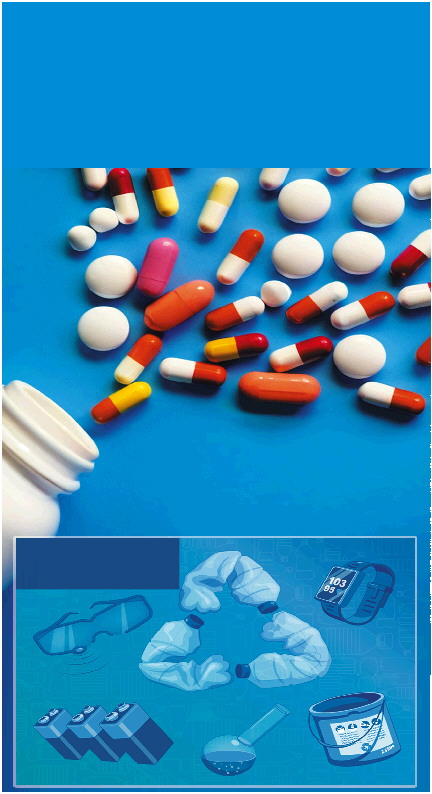
Core Viewpoint - The article discusses the innovative process of recycling chlorinated plastics into high-value products, specifically transforming waste plastic bottles into acetaminophen (pain reliever) through a biological method, highlighting the potential for sustainable resource recovery and green pharmaceuticals [2][3][5][7]. Group 1: Plastic Waste and Environmental Impact - Global plastic production reaches 414 million tons annually, with 42% used for packaging, leading to significant environmental pollution as these products have a short lifespan of about 12 minutes but can persist in the environment for 450 years [2][3]. - Most plastic waste ends up in landfills or incineration, causing soil and air pollution, and even when recycled, it often becomes low-value products that eventually contribute to further waste [3][7]. Group 2: The "Losen Rearrangement" Process - The "Losen Rearrangement" is a chemical reaction discovered in 1872, which has now been adapted to convert waste plastics into valuable pharmaceuticals, achieving a conversion rate of 92% [4][5]. - The process involves breaking down PET plastic bottles into key components, which are then transformed into acetaminophen using genetically modified E. coli bacteria, demonstrating a novel approach to recycling [5][6]. Group 3: Industrial Application and Challenges - The research is not just theoretical; pharmaceutical companies like AstraZeneca are collaborating to scale this technology for industrial use, aiming to convert plastic waste into high-value drugs and fibers [7]. - Key challenges include increasing the efficiency of bacterial consumption of raw materials, enhancing bacterial resilience to high concentrations of inputs, and ensuring the economic viability of the process compared to traditional methods [7]. Group 4: Broader Applications of Plastic Recycling - Beyond pharmaceuticals, other technologies are emerging to convert mixed waste plastics into fuel with over 95% efficiency, significantly reducing energy consumption and environmental impact [8][9]. - Recycled plastics are also being utilized in construction materials, offering durability and longevity compared to traditional materials, thus addressing both waste management and resource sustainability [9].
碧水源2025新品盛会:中国膜工业与水务行业“新质力量”的耀眼呈现与未来邀约!
Zhong Guo Jing Ji Wang· 2025-11-23 02:31
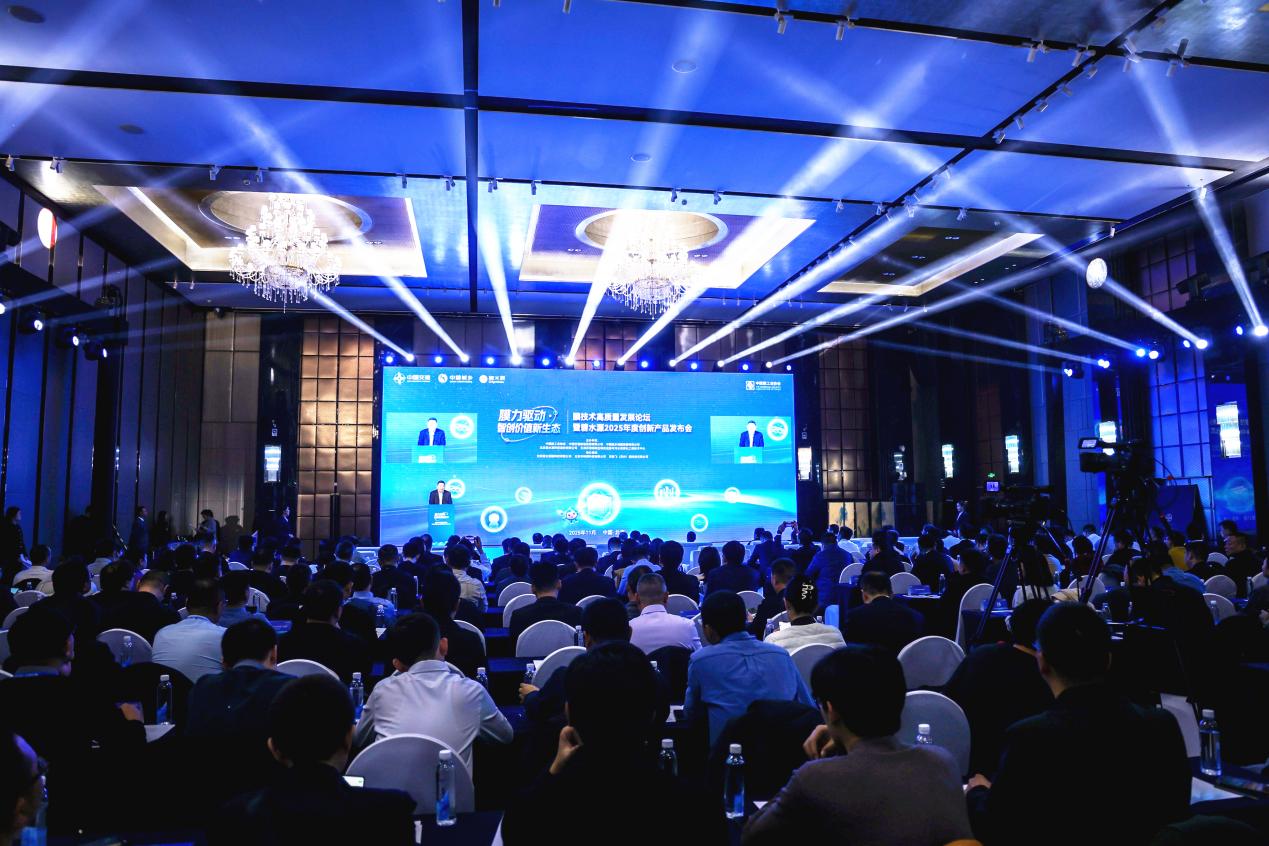
Core Insights - The forum and product launch event focused on the theme "Membrane Power Drives Intelligent Value New Ecology," highlighting advancements in membrane technology and its applications in various sectors [1][3]. Industry Overview - The membrane industry in China has achieved significant growth, with a total output value of 482.2 billion yuan in 2024, accounting for approximately 29% of the global market [5]. - The industry is projected to reach a total output value of 800 billion yuan by 2030, indicating a strong growth trajectory [5]. Technological Advancements - The event showcased four innovative products from Beijing Water Source Technology Co., Ltd., emphasizing green, intelligent, and value-driven solutions [11]. - The Macro Pulse MBR Membrane Module (MBRU5.0) features high energy efficiency, high flux, and long lifespan, with a stable operating flux of 35 LMH and energy consumption below 0.05 kWh/m³ [12]. - The Smart Water Management System integrates real-time monitoring and AI analysis to enhance operational efficiency and reduce costs [14]. - The Special Separation Ultra-High Efficiency Adsorbent targets lithium extraction and fluoride removal, demonstrating significant advancements in material innovation [16][17]. - The Hollow Fiber Membrane Column for biopharmaceutical applications aims to address high-end separation challenges, with successful applications in clinical trials for vaccines [19][21]. Strategic Collaborations - The event concluded with strategic partnerships formed between Beijing Water Source and ten companies across various sectors, including municipal water services and biomedicine, to foster future industry development [25][27]. Future Directions - Industry leaders emphasized the need for continued innovation and collaboration between academia and industry to drive the next phase of growth in membrane technology [23]. - The focus will be on developing more precise membrane materials and smarter systems to address water resource challenges and promote sustainable development [23].

格林美:2025年前三季度,公司钴回收超过6000吨
Mei Ri Jing Ji Xin Wen· 2025-11-17 07:53
Core Viewpoint - The increase in cobalt prices is expected to have a positive impact on the company's performance, as it effectively mitigates supply chain disruptions through its cobalt recycling and nickel resource projects in Indonesia [1] Group 1: Cobalt Price Impact - The company acknowledges that rising cobalt prices generally lead to improved financial performance [1] - The annual quota policy implemented by the Democratic Republic of Congo highlights the fragility and uncertainty of the traditional cobalt supply chain [1] Group 2: Cobalt Recycling and Production - The company has a cobalt recycling capacity that exceeds 350% of China's cobalt mining output [1] - In the first three quarters of 2025, the company recycled over 6,000 tons of cobalt [1] - The company's nickel resource project in Indonesia produced 6,534 tons of cobalt metal, significantly supplementing cobalt supply during the DRC's cobalt embargo [1] Group 3: Overall Profitability - The company's cobalt recycling business and the cobalt production from its Indonesian nickel resource project are driving the upward trend in overall profitability during the current cobalt price upcycle [1]

赛恩斯(688480):铼酸铵等新业务拓展持续推进
HTSC· 2025-08-21 05:50
Investment Rating - The report maintains a "Buy" rating for the company with a target price of RMB 58.80 [7][8]. Core Views - The company reported a revenue of RMB 423 million for H1 2025, representing a year-on-year increase of 18.81%, while the net profit attributable to shareholders decreased by 57.50% to RMB 49 million [1]. - The decline in net profit is attributed to high investment income from acquisitions in H1 2024, with a notable performance in new business areas such as copper extractants and ammonium rhenate, which are expected to drive revenue growth [1][4]. - The company is focusing on environmental governance, resource recovery, and new materials, with significant project wins in environmental governance totaling over RMB 400 million [4]. Summary by Sections Financial Performance - For H1 2025, the company achieved a revenue of RMB 423 million, with a net profit of RMB 49 million, reflecting a decline in profitability due to previous high investment returns [1]. - The revenue for Q2 2025 was RMB 253 million, showing a year-on-year increase of 0.34% and a quarter-on-quarter increase of 48.37% [1]. Business Segments - The operational services and reagent sales segments saw significant growth, with revenues of RMB 201 million and RMB 166 million, respectively, marking increases of 53.02% and 41.84% year-on-year [2]. - The company’s business structure is continuously optimizing, with operational services and reagent sales gaining a larger share of total revenue [2]. Cost and Profitability - The gross margin for H1 2025 was 35.01%, with a net profit margin of 12.36%, both showing declines compared to the previous year [3]. - Increased expenses and impairment losses have pressured short-term profits, but ongoing business optimization is expected to improve profitability in the future [3]. New Business Development - The company is expanding into new business areas, including ammonium rhenate, copper extractants, sodium sulfide, and flotation agents, which are anticipated to enhance revenue growth [4]. - The production line for ammonium rhenate has been completed, and the company has successfully synthesized high-purity sodium sulfide, with new customer orders for copper extractants exceeding 50% [4]. Profit Forecast and Valuation - The company’s projected net profits for 2025-2027 are RMB 201 million, RMB 241 million, and RMB 300 million, respectively [5]. - The report assigns a PE ratio of 28 times for 2025, reflecting the company’s diversified business model and expected growth in various sectors [5].