高端中国茶

Search documents
八马茶叶“高端茶第一股”的幻灭:上市逾百天跌幅超6成
Sou Hu Cai Jing· 2026-02-11 04:12
Core Viewpoint - The high-end narrative of Baima Tea Industry is under pressure as the company faces declining growth and market concerns following its initial public offering (IPO) in Hong Kong, where its stock price initially surged but has since plummeted significantly [2][3][5]. Company Performance - Baima Tea's stock price soared by 86.7% on its debut, reaching a market capitalization close to HKD 100 billion, but has since dropped over 60% to HKD 29.5, reducing its market value to HKD 25 billion by February 9 [2][3]. - The company's revenue growth is stagnating, with a projected increase of only 0.99% for 2024, and a decline in both revenue and net profit expected in the first half of 2025 [5][8]. Market Dynamics - The limited float of shares, with only about 53 million H-shares available for trading, has led to speculative trading, which is not sustainable without fundamental support [3][4]. - The announcement of a full circulation plan for H-shares raised concerns about increased supply, interpreted as a signal for original shareholders seeking exit routes [5]. Franchise System Challenges - Baima Tea's franchise model, which previously fueled rapid expansion, is now showing signs of fatigue, with a net increase of only 50 franchisees in 2024, a significant drop from 169 in 2023, and a net loss of 24 franchisees in the first half of 2025 [7]. - The average purchase amount per franchise store has decreased from approximately CNY 350,000 in 2022 to around CNY 250,000 in 2024, indicating declining store performance [7]. Product Pricing and Market Position - The average price of Baima Tea's high-end Pu'er brand "Xinjihao" has fallen from CNY 901 per kilogram in 2022 to CNY 715 in the first half of 2025, reflecting pressure on its high-end positioning [8][9]. - Ultra-high-end tea products priced over CNY 70,000 per kilogram have disappeared from the product lineup, suggesting weak demand and insufficient brand premium capability [9]. Industry Context - The Chinese tea market is characterized by a fragmented structure with low brand concentration, where the top five players hold only 5.6% of the high-end tea market, and Baima Tea's market share is merely 1.7% [10]. - The reliance on external contract manufacturing for most products creates tension between the brand narrative and the reality of product quality, complicating the company's growth strategy [10]. Investor Sentiment - The cautious attitude of capital markets towards the tea industry is evident, as seen with other companies like Lancang Ancient Tea and Tianfu Tea, which have experienced significant stock price declines and operational challenges [11].

深圳上市公司突破600家大关,一周内3家深企登陆港交所
Sou Hu Cai Jing· 2026-02-06 03:30
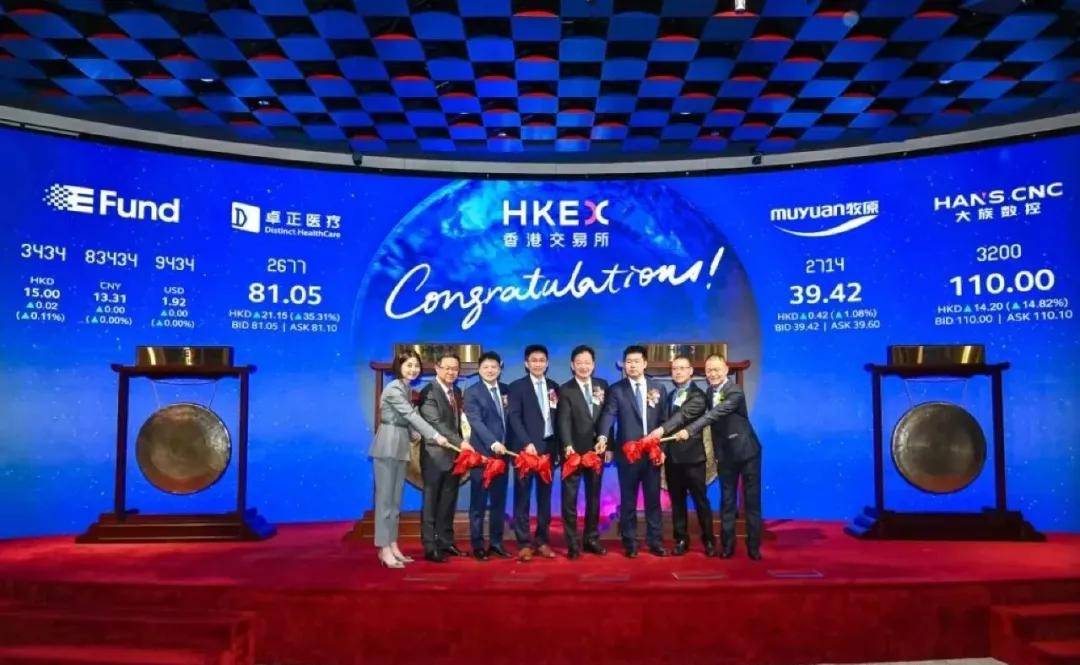
Group 1 - Shenzhen has reached a milestone with over 600 listed companies, including 426 domestic and 174 foreign companies [2] - As of January 2025, the total market capitalization of Shenzhen's listed companies exceeds 19 trillion yuan, ranking second among major cities in China [2] - The composition of these 600 companies reflects the resilience and high level of Shenzhen's economic structure [2] Group 2 - Dazhu CNC opened at HKD 106.00 per share, rising by 10.65%, while Zhuozheng Medical opened at HKD 81.00 per share, increasing by 35.23% [3] - Four Shenzhen companies, including Dongpeng Beverage and Beixin Life, are set to go public within a week [3] Group 3 - The Hong Kong market has welcomed companies like Woan Robotics, redefined as the "first AI embodied home robot stock," and Baima Tea, labeled as the "first high-end Chinese tea stock" [4] - In the past three years, 27 new companies in Hong Kong have raised a total of HKD 29.573 billion, with over 70% of them seeing their stock prices rise on the first day, averaging a 26.22% increase [4] - Hong Kong's refinancing has shown strong performance, with a total of HKD 55.466 billion in 2025, a significant year-on-year increase of 4710.58%, with BYD alone accounting for over HKD 43.509 billion, representing more than 78.44% of the total [4]


八马茶业上市之路坎坷:高端茶资本化陷估值困境
Sou Hu Cai Jing· 2026-01-31 14:11
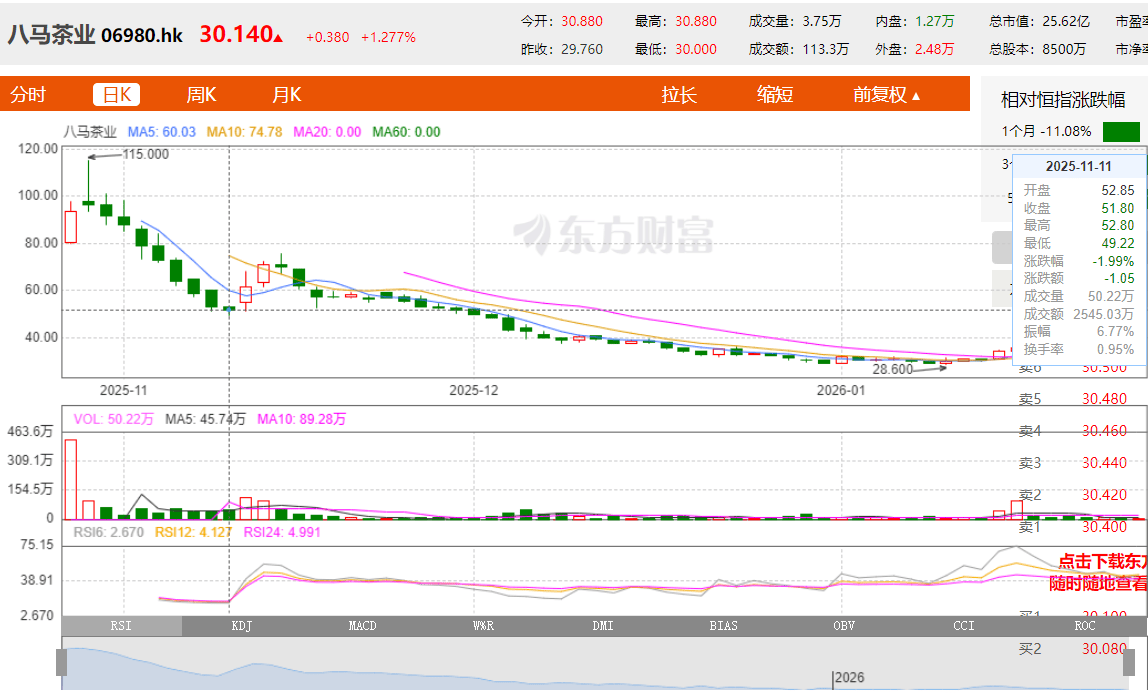
Core Viewpoint - The stock price of Baima Tea has experienced a dramatic decline after an initial surge, raising questions about the sustainability of the high-end Chinese tea business model and highlighting industry pain points [2][4]. Group 1: Stock Performance and Market Reaction - Baima Tea's stock price fell to HKD 30.14 per share, a decline of over 70% from its peak, resulting in a market value loss of nearly HKD 70 billion [2]. - The stock's initial surge was driven by limited liquidity and speculative trading, with only 5,298,700 H-shares available for trading post-IPO, of which approximately 4.4 million were locked up due to shareholder commitments [3]. - On its first trading day, Baima Tea's stock opened at HKD 86.5, a 73% increase from the IPO price of HKD 50, and briefly reached a market capitalization close to HKD 80 billion [3]. Group 2: Financial Performance and Challenges - Baima Tea's revenue growth has slowed, with a reported increase from RMB 1.818 billion in 2022 to RMB 2.143 billion in 2024, but the growth rate has decreased, with only a 1% increase in 2024 [9]. - In the first half of 2025, the company reported a revenue of RMB 1.063 billion, a decrease of 4.2% year-on-year, and a net profit of RMB 120 million, down 17.8% [9]. - High operating costs are eroding profits, with sales and marketing expenses reaching RMB 332 million in the first half of 2025, accounting for 31.2% of revenue [10]. Group 3: Business Model and Strategic Outlook - The franchise model has contributed significantly to Baima Tea's revenue, with franchise sales accounting for approximately 50% of total revenue from 2022 to 2025 [12]. - The company has 3,716 offline stores, with 93.7% being franchise stores, indicating a heavy reliance on franchisees for revenue generation [11]. - Baima Tea plans to use IPO proceeds to expand brand flagship stores in high-tier cities, deepen franchise coverage in lower-tier markets, upgrade supply chains, and promote international branding, particularly in Southeast Asia [15].
八马茶业股价破发后再创新低 业绩双降影响增长预期、高端叙事直面挑战、加盟扩张疲态尽显
Xin Lang Cai Jing· 2026-01-09 11:59
Core Viewpoint - The stock price of Baima Tea has experienced a significant decline after an initial surge post-IPO, reflecting investor concerns about the company's business model and growth prospects [1][3][16]. Financial Performance - Baima Tea's revenue from 2022 to 2024 was 1.818 billion, 2.122 billion, and 2.143 billion yuan, with growth rates of 16.8% in 2023 and 1.0% in 2024 [5][19]. - In the first half of 2025, the company reported a revenue of 1.06 billion yuan, a year-on-year decline of 4.2%, and a net profit of 120 million yuan, down 17.8% [6][19]. Market Reaction - The stock price surged by 86.7% on its first trading day, reaching 93.35 HKD per share, but fell below the issue price to 29.12 HKD by January 9, 2026 [3][16]. - The decline in stock price indicates a lack of enthusiasm from the capital market towards traditional tea companies [21]. Business Model Challenges - Baima Tea's reliance on a franchise model has shown signs of fatigue, with net growth in franchise stores dropping from 265 in 2023 to just 5 in 2024 [12][26]. - The average selling price of Baima Tea's high-end brand "Xinjihao" has decreased from 901 yuan/kg in 2022 to 715 yuan/kg in the first half of 2025 [22][23]. Pricing and Inventory Issues - The company has faced pricing confusion due to its "buyout franchise" model, which transfers inventory pressure to franchisees, leading to potential price undercutting in unauthorized channels [14][29]. - The suggested retail price range for major products has been significantly reduced, indicating a shift in product strategy [23][24]. Strategic Outlook - To regain investor confidence, Baima Tea needs to stabilize its high-end narrative and reduce reliance on the franchise model, focusing on product strength, brand culture, and consumer experience [29].
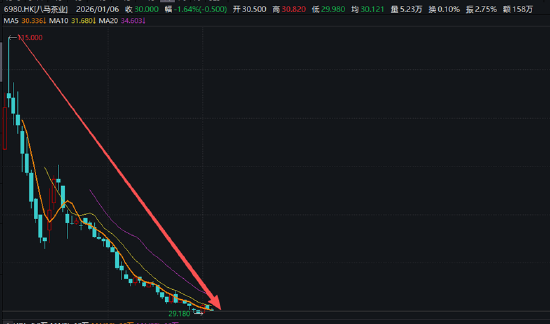
上市两月,八马茶业狠狠摔了一跤
3 6 Ke· 2025-12-26 12:24
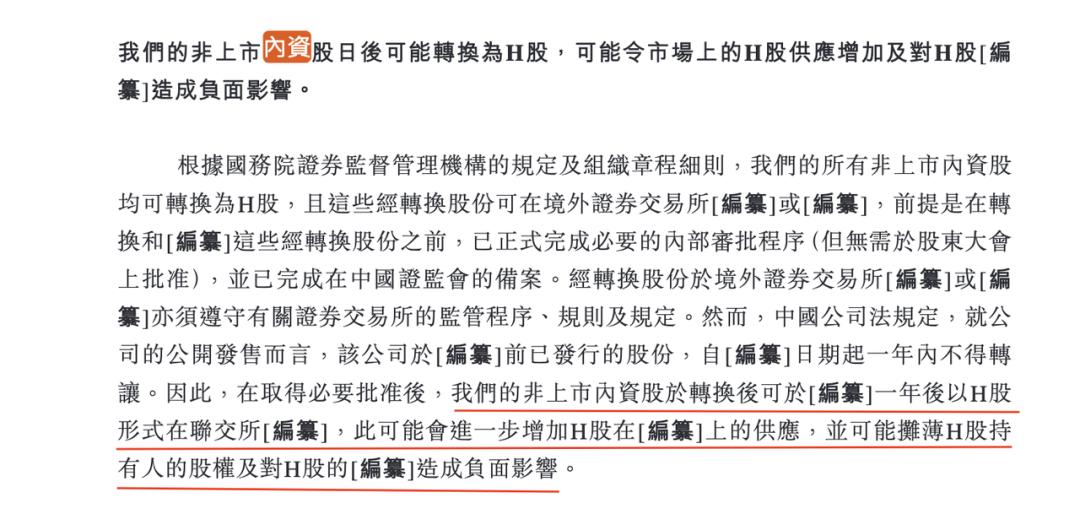
Core Viewpoint - The stock price of Baima Tea has experienced extreme volatility, initially soaring by 86.7% on its first trading day, reaching a high of 115 HKD, before plummeting to a low of 32.06 HKD within two months, indicating a significant valuation correction in the market [1][4]. Group 1: Stock Performance and Market Dynamics - The initial surge in Baima Tea's stock price was largely due to the scarcity of freely tradable shares, with only about 890,000 shares available for trading post-IPO, leading to high volatility in the stock price [2][3]. - Following the company's application for "H-share full circulation," which would convert approximately 37.57% of its domestic shares into tradable H-shares, the stock price dropped over 50% from its peak [4][5]. - The total market capitalization of Baima Tea has decreased by 15 billion HKD, representing a 72% drop from its highest point, reflecting a significant loss of investor confidence [4][5]. Group 2: Business Fundamentals and Growth Concerns - Baima Tea's revenue growth has slowed significantly, with projections showing an increase from 18.18 billion RMB in 2022 to only 21.43 billion RMB in 2024, and a mere 1% growth expected in 2024 [7][8]. - The company's net profit for the first half of 2025 fell by 17.8% year-on-year, highlighting a concerning trend in profitability [7][8]. - The average selling price of Baima Tea's high-end brand "Xinjihao" has decreased from 901 RMB per kilogram in 2022 to 715 RMB in the first half of 2025, indicating weakening demand for premium products [7][8]. Group 3: Industry Challenges and Brand Positioning - The tea industry is characterized by its non-standardized nature, making it difficult for companies like Baima Tea to achieve stable and predictable growth [9][10]. - Baima Tea's high sales expense ratio, exceeding 30%, combined with a gross margin of around 55%, suggests that the company relies heavily on marketing to maintain its brand presence rather than on strong brand loyalty [13][14]. - The company's production model, which relies on custom procurement rather than direct production, undermines its ability to establish a strong brand premium, as most products are sourced externally [15][16].
上市两周股价“过山车”!八马茶叶“八连跌”背后:上半年营收利润均同比下滑
Sou Hu Cai Jing· 2025-11-13 16:25
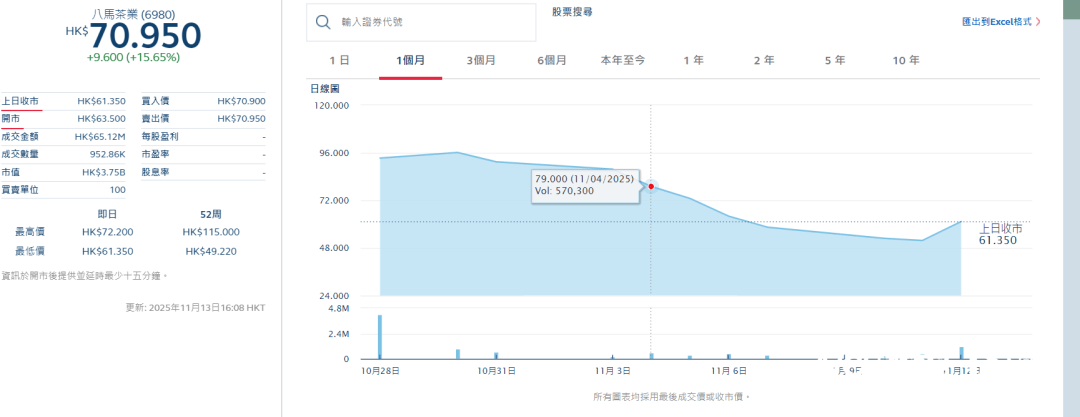
Core Viewpoint - Bama Tea's stock price has experienced a continuous decline for eight trading days, raising concerns about investor confidence in the company's core business development [2][3]. Group 1: Stock Performance - Bama Tea was listed on the Hong Kong Stock Exchange on October 28, 2023, with an initial offering price of HKD 50.00, and the closing price on the first day was HKD 93.35, representing an increase of 86.7% [3]. - The stock price began to decline from the third trading day, falling to HKD 49.22 on November 11, 2023, which is below the initial offering price, and closed at HKD 51.80, down 1.99% [3]. - After eight consecutive days of decline, Bama Tea's stock price rebounded, closing at HKD 61.35 on November 12, 2023, and further increasing to HKD 70.95 on November 13, 2023, a rise of 15.65% [3]. Group 2: Financial Performance - For the first half of the year, Bama Tea reported a revenue decline of 4.2% to HKD 10.63 billion and a profit decrease of 17.8% to HKD 1.20 billion [6]. - The company's revenue and profit growth rates are slowing, with projected revenues of HKD 18.18 billion, HKD 21.22 billion, and HKD 21.43 billion for 2022, 2023, and 2024, respectively, and profits of HKD 1.66 billion, HKD 2.06 billion, and HKD 2.24 billion [6]. - The revenue growth rate is expected to drop from 16.6% in 2023 to 1.0% in 2024, while profit growth is projected to decrease from 24.1% in 2023 to 8.7% in 2024 [6]. Group 3: Company Background - Bama Tea, headquartered in Shenzhen, Guangdong, established its first chain store in 1998 and opened its first franchise store in 2007. As of June 30, 2023, it had 3,585 offline stores, with 3,341 being franchise stores, accounting for approximately 93% [6]. - The company has faced challenges in its listing journey, having attempted to list on various exchanges since 2013, with the latest successful listing occurring in October 2023 on the Hong Kong Stock Exchange [8][10]. Group 4: Future Prospects - Bama Tea plans to use the funds raised from its IPO to expand production facilities, enhance brand value, diversify its product range, and support the expansion of its direct sales network [10]. - The company's future growth is contingent upon its ability to attract new franchisees and expand its direct sales network, which requires significant resources, including capital investment and strong supply chain support [10].
八马茶业正式登陆港交所 加速全球化布局
Zheng Quan Ri Bao Zhi Sheng· 2025-10-28 17:08
Core Viewpoint - Baima Tea Co., Ltd. has successfully listed on the Hong Kong Stock Exchange, raising a maximum of HKD 450 million, reflecting strong market confidence in the high-end Chinese tea industry [1][2] Group 1: Listing and Market Performance - Baima Tea plans to issue 9 million H-shares, with 90% for international sale and 10% for public offering, achieving an oversubscription of 2,680.04 times in the public offering, setting a new record for tea companies in Hong Kong [1] - The stock closed at HKD 93.35 on its first trading day, representing an increase of 86.7% from the issue price, with a total market capitalization of HKD 7.935 billion [1] Group 2: Business Strategy and Fund Utilization - The company will allocate 35% of the raised funds for expanding production bases, 20% for enhancing brand value and product portfolio, 15% for optimizing offline networks, 10% for digital operations, 10% for acquisitions in the tea industry, and 10% for working capital [2] - Baima Tea's focus on capacity expansion, digital operations, and brand enhancement is expected to strengthen its competitive advantage in the market [2] Group 3: Market Expansion and Global Strategy - The company plans to expand its overseas market presence, initially targeting Southeast Asia and countries involved in the Belt and Road Initiative, with future plans to enter the European and American markets [3] - Leveraging international capital and investor networks, Baima Tea aims to enhance its global brand recognition and accelerate local channel development and product customization strategies [3]
十二年长跑终撞线:深度解析八马茶业港股上市之路与未来棋局
Sou Hu Cai Jing· 2025-10-28 11:44
Group 1 - The Hong Kong Stock Exchange marked a significant milestone for the Chinese tea industry with the listing of Baima Tea Co., Ltd., recognized as the "first high-end Chinese tea stock" [2] - The public offering was met with an extraordinary response, achieving a subscription rate of 1920 times, with total frozen funds reaching 86.4 billion HKD [2] - On its debut, Baima Tea's stock opened at 86.5 HKD, a 73% increase from the issue price of 50 HKD, with its market capitalization briefly exceeding 7.3 billion HKD [2]

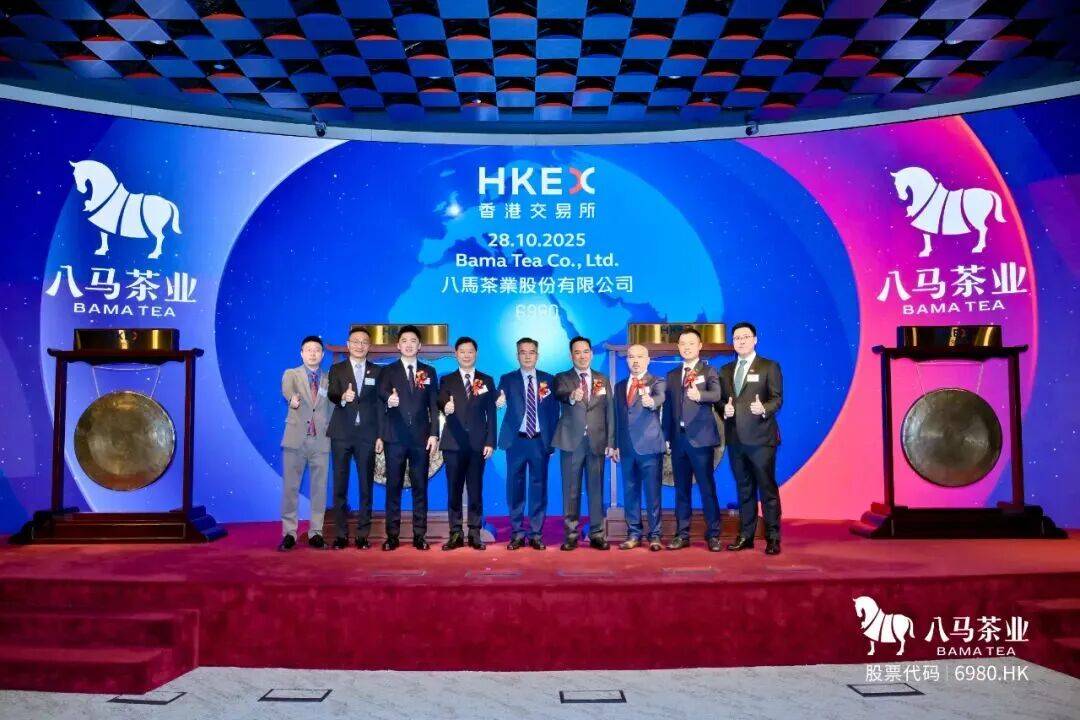
“高端中国茶第一股”八马茶业今日港交所敲钟,收盘涨超86%
第一财经· 2025-10-28 11:27
Core Viewpoint - Baima Tea's successful IPO on the Hong Kong Stock Exchange marks a significant milestone for the company and the Chinese tea industry, reflecting strong investor confidence and the company's leading position in the high-end tea market [1][3][22]. Group 1: IPO Performance - Baima Tea officially listed on October 28, 2025, with an opening price of HKD 80.1, a 60.2% increase from the issue price of HKD 50, and closed at HKD 93.3, representing an 86.7% rise [1]. - The total market capitalization exceeded HKD 80 billion, establishing Baima Tea as the "first high-end Chinese tea stock" [1]. Group 2: Market Reception - The IPO attracted significant attention, with a subscription rate of 2680.04 times and total subscription funds reaching HKD 120.6 billion, setting a new record for tea companies in Hong Kong [3]. - This strong market response indicates high recognition and confidence from investors in Baima Tea as a leader in the high-end Chinese tea sector [3]. Group 3: Industry Leadership - Baima Tea is recognized as the largest high-end tea company in China, with top sales in three major tea categories: Tieguanyin, Wuyi Rock Tea, and black tea [8][11]. - The company operates a vast network of 3,730 offline chain stores, the largest in the country, and has a significant online presence with 139 direct-operated stores across major e-commerce platforms [11][12]. Group 4: Financial Performance - From 2022 to 2024, Baima Tea's revenue grew from CNY 1.818 billion to CNY 2.143 billion, with gross profit increasing from CNY 970 million to CNY 1.179 billion [11]. - Despite market fluctuations in the first half of 2025, the company's gross margin improved to 55.3%, demonstrating strong profitability resilience [11]. Group 5: Brand Strategy and Innovation - Baima Tea targets high-income consumers and has developed a "city reception hall" store concept to enhance customer engagement and brand experience [14][16]. - The company combines traditional tea-making techniques with modern intelligent production systems, ensuring quality control from tea garden to cup [16]. Group 6: Global Expansion and Cultural Promotion - Baima Tea has hosted global tasting events in over 30 countries, promoting Chinese tea culture internationally [17][23]. - The company aims to strengthen its overseas presence, particularly in Southeast Asia and along the Belt and Road Initiative, while planning to enter European and American markets in the future [23]. Group 7: Future Growth and Capital Utilization - The funds raised from the IPO will be used for expanding production facilities, advancing the "thousand cities, ten thousand stores" strategy, and pursuing industry acquisitions [18][22]. - Baima Tea's listing is seen as a pivotal moment for the integration of the Chinese tea industry with international capital markets, potentially enhancing its global brand competitiveness [22].
天风国际助力八马茶业(6980.HK)于香港联交所主板成功上市
Sou Hu Cai Jing· 2025-10-28 09:52
Group 1 - Tianfeng International successfully assisted Bama Tea Industry (6980.HK) in its listing on the Hong Kong Stock Exchange, acting as a joint sponsor and overall coordinator [1] - The offering consisted of 9 million shares, raising approximately HKD 450 million, with an international placement subscription rate of 13.58 times and a public offering subscription rate of 2680 times, indicating strong investor confidence in the high-end Chinese tea leader [1] Group 2 - Founded in 1997, Bama Tea Industry has over 20 years of experience in the high-end Chinese tea sector, maintaining sales leadership with over 3,700 chain stores nationwide, and is ranked first in high-end tea sales revenue for 2024 according to its prospectus [3] - Bama Tea Industry continues to expand its growth boundaries through a mature product matrix, nationwide channels, and digital operations, making it a quality target for international capital markets [3] - Tianfeng International conducted intensive roadshows to engage a diverse range of institutional investors, contributing to high-quality orders and strong market enthusiasm [3] Group 3 - As the only overseas financial platform under Hubei Province, Tianfeng International aims to facilitate high-level "bringing in" and high-quality "going out" through the establishment of overseas financial investment liaison stations in development zones and industrial parks [3] - Tianfeng Securities is committed to enhancing its service capabilities to support the development of the real economy, aligning with national strategies and infrastructure development [3]