
FDI

Search documents
2025年越南FDI实际到位资金创近五年新高
Shang Wu Bu Wang Zhan· 2026-02-27 16:21
Group 1 - The core viewpoint of the articles highlights that Vietnam's foreign direct investment (FDI) is projected to reach over $38.4 billion in 2025, with actual capital inflow expected to be $27.62 billion, marking a 9% year-on-year increase and the highest level in five years [1] - FDI funds are primarily concentrated in high-value-added sectors such as manufacturing, which significantly contribute to economic growth, employment, and exports [1] - Economic stability, effective inflation control, and sustained high GDP growth are key factors attracting and retaining foreign investment in Vietnam [1] Group 2 - Economic expert Le Vi Binh emphasizes that the record high actual FDI inflow in 2025 reflects strong confidence from foreign investors in Vietnam's economy, laying a foundation for continued FDI growth in the coming years [1] - The Deputy Director of the Ministry of Finance's Foreign Investment Agency, Nguyen Anh Tuan, notes that investor trust in government decisions and recognition of Vietnam's increasingly open and transparent investment environment provide a solid basis for attracting new and potential investors [2] - The Minister of the Department of Industry and Construction Statistics at the Ministry of Finance, Phai Thi Huong Nga, states that the highest actual FDI inflow in five years will serve as a crucial foundation for maintaining rapid growth in the manufacturing sector from 2026 to 2030 [1]
越南对美出口创新高
第一财经· 2025-12-08 00:11
Core Insights - Vietnam's trade surplus with the United States reached a record high of $121.6 billion in the first 11 months of 2025, marking a 27.5% increase year-on-year [3][4] - Despite a 20% import tariff imposed by the U.S. since August, Vietnam's exports to the U.S. continued to grow, with a total export value of $138.6 billion, up 27.3% year-on-year [4][5] - Vietnam's actual foreign direct investment (FDI) utilization reached $23.6 billion, an 8.9% increase year-on-year, the highest in five years [4][11] Trade Relations - The U.S. remains Vietnam's largest export market, with exports valued at $119.6 billion in 2024, resulting in a trade surplus of $104.6 billion, a 25.6% increase [6] - Vietnam's exports in November 2025 grew by 15.1% year-on-year to $39.1 billion, although this was below economists' expectations [6] - The U.S. and Vietnam are negotiating a bilateral trade agreement, with a framework established in late October 2025 [5][8] Foreign Direct Investment - Manufacturing and processing sectors attracted $19.56 billion in FDI, accounting for 82.9% of the total, while the real estate sector attracted $1.67 billion [11] - Singapore is the largest investor in Vietnam, with $4.29 billion, followed by China and Japan [12] - The industrial base in Vietnam is strengthening, with a significant shift towards high-value industries such as electronics and semiconductors [12] Economic Outlook - Emerging markets, including Vietnam, are expected to show resilience in exports despite tariff barriers, with GDP growth forecasts adjusted upward [8][9] - The demand for AI-related products is anticipated to drive exports in technology sectors, particularly in Vietnam, Malaysia, and Thailand [9] - The year 2026 is projected to be pivotal for Vietnam's industrial market, with improvements in production prospects and investment environments [12]


印度跌倒,越南吃饱!特朗普扶一踩一?
Sou Hu Cai Jing· 2025-11-21 12:53
Core Viewpoint - The article discusses the contrasting economic outcomes for India and Vietnam due to U.S. tariff policies, highlighting Vietnam's unexpected economic growth while India struggles under the same conditions [1][15]. Group 1: Economic Performance - Vietnam's GDP growth for Q3 reached 8.23%, a significant increase compared to the previous 5-7% range over the past decade [3]. - The manufacturing sector in Vietnam is thriving, with production value growth exceeding 10% in Q3 2025, a rare occurrence amid global manufacturing downturns [6]. Group 2: Export Dynamics - Vietnam's exports to the U.S. have surged, particularly in clothing, furniture, and electronics, positioning the country as a key supplier for American consumers [4][5]. - The U.S. tariff agreement inadvertently provided Vietnam with exemptions for critical products, allowing its GDP engine to remain intact and leading to a surge in exports [8]. Group 3: Foreign Investment - Foreign Direct Investment (FDI) in Vietnam has seen a 45% increase in committed amounts for 2025, with major companies like Samsung and Apple expanding their operations [7]. Group 4: Risks and Dependencies - Vietnam's economy is heavily reliant on the U.S., with 30% of its exports directed there, making it vulnerable to changes in U.S. policies [11]. - The manufacturing sector's reliance on foreign investment is high, with 74% of exports coming from foreign entities, raising concerns about sustainability if major companies withdraw [12]. - Domestic demand in Vietnam is weak, with retail growth projected to be below 3% in 2025, indicating a reliance on external factors for economic stability [13].

X @外汇交易员
外汇交易员· 2025-10-27 02:50
Foreign Direct Investment (FDI) Trends - China's September FDI, denominated in Renminbi, reached a 6-month high, with a year-on-year increase of 112%, marking a turnaround and the highest growth in six months [1] - From January to September, the actual use of FDI amounted to 573750 million Renminbi, a year-on-year decrease of 104%, continuing the cumulative decline since August 2023, but the decline was the narrowest since January 2024 [1]
印度的惨痛教训,让人更加清醒地认识中国
Hu Xiu· 2025-09-10 11:28
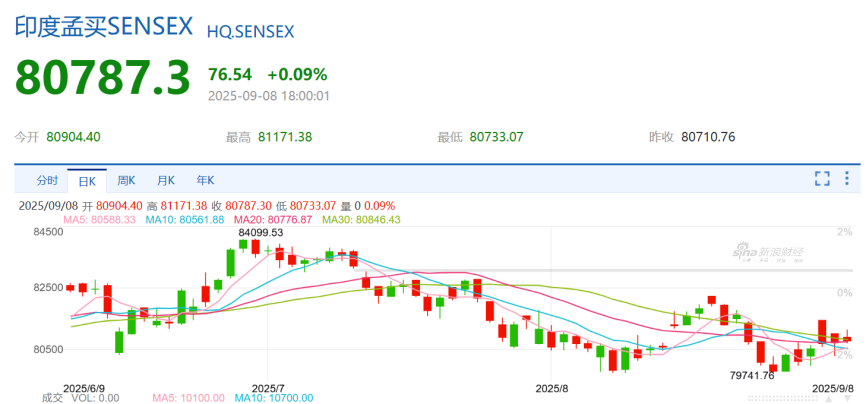
Group 1 - India is perceived as both undervalued and overvalued, with significant potential for development following China due to demographic dividends, market prospects, and geopolitical factors [1] - The Indian stock market reached a peak of 84,000 points on June 22, 2025, but subsequently underperformed, with the Bombay 30 Index down 3.39% year-to-date as of September 8, 2025, lagging behind other markets by nearly 20% [5][8] - The Indian rupee depreciated nearly 3% against the dollar and over 5% against the yuan in 2025, marking it as one of the weakest currencies among major economies [12] Group 2 - A significant decline in foreign direct investment (FDI) was reported, with net FDI dropping 96.5% in the fiscal year 2025, from $10 billion to just $353 million, a historical low [19] - Despite an overall increase in foreign investment totaling $81 billion, the outflow of $49 billion from foreign investors was noted, with a withdrawal rate approaching 20% [21] - Indian companies are increasingly investing abroad, with outbound investments reaching $29 billion in the fiscal year 2025, up from $17 billion in 2024 [23] Group 3 - The U.S. government's changing stance, including potential tariffs of 50% on Indian goods, could reduce India's GDP growth to below 6% [31] - The manufacturing sector in India has been declining, with its GDP share falling to 12.5% in 2024, the lowest since 1967 [64] - The Indian manufacturing industry faces challenges in competitiveness due to high import tariffs on intermediate goods, which inflate local production costs [92] Group 4 - The IT services sector in India is experiencing significant job losses due to the rise of AI, with estimates suggesting that around 200,000 IT jobs were lost in the past year, potentially rising to 300,000 by 2025 [112] - The Indian stock market's IT sector has been the worst performer, reflecting the broader challenges faced by the industry [113] - The relationship between population and productivity in India is shifting, with the potential for a demographic burden rather than a demographic dividend [114]
越南宏观监测,2025年4月(英)
Shi Jie Yin Hang· 2025-05-12 08:10
Investment Rating - The report indicates a positive outlook for the Vietnamese economy, with a real GDP growth target of 8 percent for 2025, supported by increased domestic consumption and investment [7][30]. Core Insights - Vietnam's GDP growth accelerated to 6.9 percent year-on-year in Q1-2025, up from 5.9 percent in Q1-2024, driven by stronger domestic consumption and investment [2][14]. - Merchandise exports growth slowed to 10.6 percent in Q1-2025 from 16.8 percent in Q1-2024, influenced by high base effects and potential global demand slowdown [3][15]. - FDI new commitments declined by 9.2 percent year-on-year in Q1-2025, while FDI disbursements remained resilient at $4.9 billion, reflecting a 7.1 percent increase year-on-year [3][21]. - Industrial production increased by 8.6 percent year-on-year in March 2025, compared to 4.8 percent in March 2024, with significant contributions from apparel, electronics, and machinery [4][17]. - Retail sales surged by 10.8 percent year-on-year, marking the highest growth in nearly two years, supported by a 9.5 percent increase in average monthly income [4][23]. - Inflation rose to 3.1 percent year-on-year in March 2025, driven by food and housing prices, but remains below the State Bank of Vietnam's target of 5 percent for 2025 [5][25]. Summary by Sections Economic Growth - Real GDP growth reached 6.9 percent year-on-year in Q1-2025, up from 5.9 percent in Q1-2024, with consumption and investment growing by 7.4 percent and 7.2 percent respectively [14]. Trade and Investment - Merchandise exports grew by 10.6 percent in Q1-2025, down from 16.8 percent in Q1-2024, while imports increased by 16.9 percent year-on-year [3][15]. - The trade surplus decreased to $3.2 billion in Q1-2025 from $7.7 billion in Q1-2024 [15]. Industrial Production - Industrial production index rose by 8.6 percent year-on-year in March 2025, with the PMI indicating expansion at 50.5 [4][17]. Domestic Consumption - Retail sales of goods and services increased by 10.8 percent year-on-year, supported by rising average monthly income [4][23]. Inflation and Monetary Policy - Inflation increased to 3.1 percent year-on-year in March 2025, with the SBV raising the inflation target to 5 percent for 2025 [5][25]. Fiscal Performance - Revenue collection for Q1-2025 reached 36.7 percent of the annual plan, driven by increases in VAT and corporate income tax [6][30].