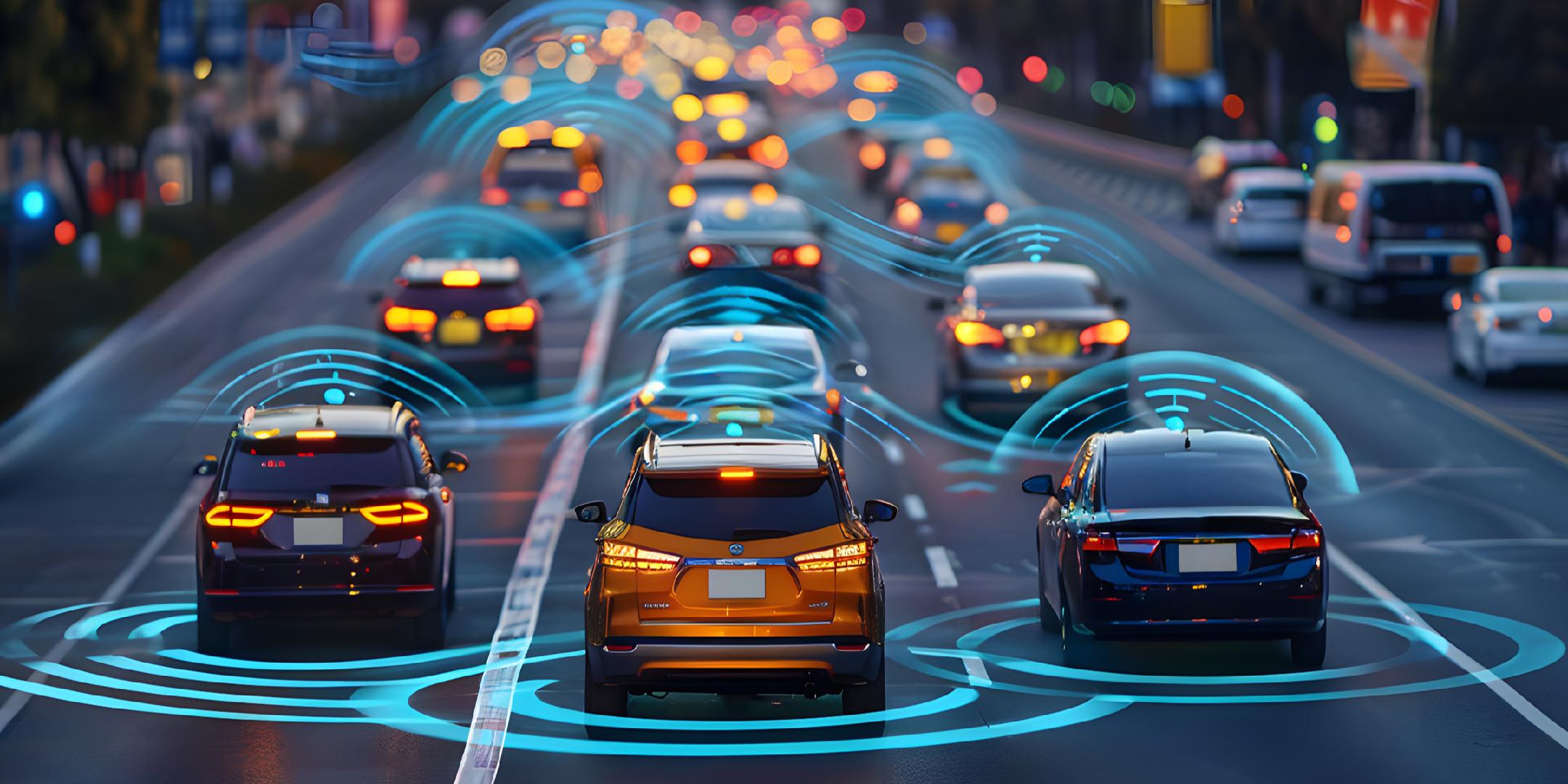
L3级自动驾驶技术

Search documents
裕太微:公司芯片与SOC对接的接口采用标准接口协议
Zheng Quan Ri Bao Wang· 2026-01-15 13:02
Core Viewpoint - The company is actively adapting its chips to mainstream SOC platforms and is optimistic about the impact of L3 autonomous driving technology on the vehicle communication chip market [1] Group 1: Company Adaptation and Strategy - The company has significant experience in adapting its chips to mainstream SOC platforms, utilizing standard interface protocols for chip and SOC integration [1] - Specific platform details and adaptation progress are subject to confidentiality and will be disclosed once they meet the disclosure standards [1] Group 2: Production Capacity and Market Environment - The company plans to optimize production capacity through supply chain collaboration and diversified wafer foundry partnerships [1] - The national push for L3 autonomous driving technology is expected to positively influence the vehicle communication chip market, prompting the company to enhance product performance and market expansion [1] Group 3: Business Development Factors - Business progress is influenced by multiple factors, including market demand and customer validation cycles, and investors are advised to refer to publicly disclosed information for updates [1]

中国L3级自动驾驶技术落地!深蓝汽车开启智能驾驶新纪元
Jing Ji Guan Cha Wang· 2026-01-05 08:04
Core Viewpoint - The successful launch of China's first batch of L3-level autonomous driving vehicles marks a significant milestone in the country's automotive industry, showcasing the culmination of years of technological accumulation and regulatory validation [1][2]. Group 1: Regulatory and Technological Milestones - On December 15, 2025, the Ministry of Industry and Information Technology granted approval for the first batch of L3-level conditional autonomous driving models, with Changan Automobile being one of the first approved manufacturers [2]. - The first L3-level autonomous driving license plate "渝AD0001Z" was issued in Chongqing on December 20, 2025, and deep blue vehicles began operating on city roads on December 26, 2025, completing a rapid transition from regulatory approval to large-scale deployment [2][5]. - The "Tianshu Intelligent" technology, which underpins deep blue vehicles, is a comprehensive system that ensures safety through a closed-loop management process, including extensive road testing exceeding 5 million kilometers [3][9]. Group 2: Financial and Strategic Developments - Deep Blue Automotive successfully completed a financing round, raising 6.122 billion yuan, with investments from Chongqing Yufu Holdings, Changan Automobile, and other financial entities, indicating strong market confidence in its business model and long-term strategy [5][6]. - The company is positioned as a core pillar of high-quality development and technological breakthroughs within the new state-owned enterprise framework, enhancing its ability to attract top-tier resources and capital [3][9]. Group 3: Industry Implications and Future Outlook - The large-scale deployment of L3-level autonomous vehicles is seen as a transformative moment for the automotive industry, shifting the focus from mere technological novelty to practical applications and responsibilities [14]. - This development is expected to redefine the value metrics of vehicles, emphasizing their intelligence and adaptability, while also pushing the industry towards a more responsible and safety-oriented trajectory [14]. - The successful integration of L3 technology into consumer products, such as the upcoming Deep Blue L06 model, demonstrates the potential for advanced driving features to enhance mainstream vehicle standards [10][14].


今日新闻丨电车新规要求不起火、不爆炸!首批L3级自动驾驶车辆正式上路!
电动车公社· 2025-12-27 16:23
Group 1 - The new regulations for electric vehicles require that they must not catch fire or explode, marking a significant enhancement in safety standards for electric vehicle batteries [3][5] - Recent regulations confirm multiple new standards for electric vehicles, including hidden door handles and energy consumption metrics, which are crucial for the positive development of the new energy vehicle industry [6] - The first batch of L3 autonomous driving vehicles has officially hit the road, with 46 L3-level autonomous Deep Blue vehicles receiving registration and commencing operations in Chongqing [7][9] Group 2 - The Deep Blue SL03 has obtained the first official L3 autonomous driving license in the country, signifying a major milestone in the implementation of L3 autonomous driving technology and a key step forward for intelligent driving development in China [9]

从测试阶段到商业化应用 我国首批L3级自动驾驶车型产品获得准入许可
Zheng Quan Shi Bao Wang· 2025-12-15 12:20
Core Viewpoint - China's L3 level conditional autonomous driving has taken a significant step from testing to commercial application with the approval of the first batch of L3 vehicles for road trials in designated areas of Beijing and Chongqing [1][2]. Group 1: Vehicle Approvals - The Ministry of Industry and Information Technology has granted conditional approval for two L3 level autonomous driving models from Changan Automobile and BAIC Blue Valley Magna Automotive [1]. - The Changan SC7000AAARBEV can operate autonomously in congested traffic and on highways at a maximum speed of 50 km/h, limited to specific routes in Chongqing [1]. - The Arcfox BJ7001A61NBEV can achieve autonomous driving on highways and urban expressways at a maximum speed of 80 km/h, restricted to certain routes in Beijing [2]. Group 2: Industry Trends - There has been a significant increase in investment by automotive companies in intelligent driving technology, leading to rapid updates and iterations in smart driving capabilities [2]. - The continuous decline in hardware costs, maturity of software algorithms, and application of large models are facilitating the transition from L2 to L3/L4 levels of autonomous driving [2]. - Intelligent configurations are increasingly becoming standard options in vehicles priced between 100,000 to 200,000 yuan, indicating a shift from high-end features to basic options in smart connected vehicles [2]. Group 3: Regulatory Environment - The regulatory framework has clearly defined the application scenarios for L3 functions, currently limited to highways and expressways, with urban conditions not yet open for testing [3]. - The industry anticipates that the responsibility for accidents during autonomous driving will lie with the vehicle manufacturers, while the driver's responsibility will shift if they refuse to take control [3]. - The optimization of technology by trial companies and the progress of opening new testing scenarios are expected to significantly influence the transition of autonomous driving from testing to commercial application [3].
招银国际每日投资策略-20251112
Zhao Yin Guo Ji· 2025-11-12 06:42
Company Analysis - Hesai Technology (HSAI US) reported a robust performance in Q3 2025 with total revenue reaching 795.4 million RMB, a year-on-year increase of 47%, exceeding Bloomberg consensus by 1.4% [2] - The non-GAAP net profit was 288 million RMB, while the adjusted net profit, excluding one-time gains from an early-stage tech investment, was 140 million RMB [2] - The management raised the 2025 GAAP net profit guidance to 350-450 million RMB from the previous 200-350 million RMB, reflecting optimism about business growth [5] Market Performance - The Hang Seng Index closed at 26,696, up 0.18% for the day and 33.08% year-to-date [2] - The Shanghai Composite Index fell by 0.39% to 4,003, with the Shenzhen Composite Index down 0.47% to 2,518 [2] - Southbound capital inflow into Hong Kong stocks was 4.467 billion HKD, with notable net purchases in Xiaomi Group, China Mobile, and CNOOC [4] Economic Outlook - The People's Bank of China indicated a commitment to a moderately loose monetary policy, with expectations of a 50 basis point reserve requirement ratio cut in December and two interest rate cuts totaling 20 basis points next year [4] - In the U.S., the Dow Jones Industrial Average reached a historical high, driven by the Senate's approval of a budget bill to end the government shutdown, which is expected to reduce policy uncertainty [4] - U.S. economic data showed a decline in private sector employment by 45,000, marking the largest drop in two and a half years, contributing to a decrease in the dollar index [4] Industry Insights - China Hongqiao (1378 HK) is expected to see further valuation uplift due to nearly full capacity utilization of its aluminum production and stable raw material costs, prompting an upward revision of profit forecasts by 4-5% for 2025-2027 [5] - Hongteng Precision (6088 HK) reported a 13% year-on-year revenue growth in Q3 2025, driven by strong demand for AI products and automotive business, leading to a record gross margin of 23.5% [5] - The target price for Hesai Technology has been set at 26.7 USD, based on a 5.3x sales multiple for 2026, reflecting a 10% premium over industry peers due to its competitive advantages and strong revenue growth prospects [5]

高阶智驾免费风潮,汽车业未来靠什么挣钱
3 6 Ke· 2025-08-06 00:25
Group 1 - The automotive industry is facing challenges in monetizing software subscription models, with many companies unable to provide a clear timeline for profitability through this approach [1][2][3] - The emergence of a "free alliance" among domestic automakers, offering advanced driver assistance systems (ADAS) as standard features, has raised concerns about the sustainability of the software subscription model [1][8] - Bosch's call for not promoting high-level intelligent driving systems for free highlights the potential risks to the future profitability of the automotive sector [1][7] Group 2 - Global automakers initially viewed software subscriptions as a key revenue model, but the trend towards free offerings in China has led to a reevaluation of this strategy [2][5] - Companies like Tesla and Huawei remain committed to charging for software, with Tesla's Full Self-Driving (FSD) priced at 64,000 yuan, indicating a willingness to pay for advanced technology [2][13] - The competitive landscape has shifted, with many Chinese automakers adopting a model of embedding hardware and offering software for free, aiming to increase usage and data collection [9][10] Group 3 - The feasibility of subscription models is questioned due to consumer expectations for free access to intelligent driving features, making it difficult for companies to charge for software [3][12] - The hardware subscription model has seen limited success, with luxury brands experimenting but facing backlash from consumers who feel they should not pay extra for features already included in the vehicle [4][5] - The potential for a successful subscription model may depend on the development of higher-level autonomous driving technologies, which could change consumer willingness to pay [12][13] Group 4 - The automotive industry is experiencing a shift towards standardizing high-level intelligent driving systems, with many new models offering these features at no additional cost [8][9] - Companies are exploring various pricing strategies, including limited-time free access and one-time buyouts, to encourage adoption of intelligent driving technologies [9][10] - The long-term viability of subscription models remains uncertain, with industry experts suggesting that only a few companies may successfully implement them due to ongoing price competition [12][14]



高阶智驾免费狂奔 “靠软件挣钱”无望?
Jing Ji Guan Cha Wang· 2025-08-05 03:04
Group 1 - The core viewpoint of the articles highlights the concern that free promotion of advanced driving assistance systems (ADAS) could undermine the profitability of the automotive industry, as emphasized by Bosch's president in China, Wu Yongqiao [2][7] - The trend of "free high-level intelligent driving" is gaining traction among domestic automakers, with companies like Chery, Leap Motor, BYD, and Xpeng announcing that their entire model ranges will be equipped with advanced ADAS, leading to over a hundred models being offered [2][8] - The expectation of profitability through software subscription models has become uncertain, with industry insiders stating that discussions on software subscription profitability are currently not feasible [2][5] Group 2 - International automakers are prioritizing "sustainable revenue" and have begun charging subscription fees for embedded hardware features, although this approach has faced backlash from domestic consumers [3][5] - Tesla and Huawei are strong proponents of software charging, with Tesla's Full Self-Driving (FSD) priced at 64,000 yuan, while Huawei has increased the price of its Qian Kun intelligent driving system by 2,000 yuan [3][12] - The consensus among industry experts is that the realization of a paid subscription model is more challenging than anticipated due to intense price competition and consumer expectations for free features [3][11] Group 3 - The feasibility of hardware subscription models has diminished significantly, with luxury brands still experimenting with them despite low consumer uptake [4][5] - BMW and Mercedes-Benz have faced criticism for charging fees for features that are standard in many domestic vehicles, leading to adjustments in their subscription strategies [4][5] - The trend of free high-level intelligent driving features is seen as a way to build consumer habits and dependencies, but there is skepticism about the potential for high subscription rates post-free periods [9][10] Group 4 - The articles suggest that the subscription model for software may be collapsing, with experts indicating that a successful implementation would require overcoming fierce competition and establishing significant technological barriers [11][12] - The potential for consumers to pay for advanced driving technologies may increase with the advent of Level 3 autonomous driving, but achieving a consensus among automakers on subscription models remains challenging [11][12] - The automotive industry is experiencing a shift where hardware upgrades are seen as the foundation for profitability, with companies like Horizon predicting a profitability turning point by 2027 [12][13]