
极狐牌BJ7001A61NBEV型纯电动轿车

Search documents
车企掌门人齐发声 开局即决战
Zhong Guo Jing Ying Bao· 2026-01-09 20:16
Core Insights - The Chinese automotive industry is entering a critical phase characterized by technological innovation, transformation, and global expansion, as highlighted by the statements from various industry leaders [1][2][4]. Group 1: Industry Performance and Trends - In 2025, the retail sales of passenger cars in China exceeded 23.78 million units, with the penetration rate of new energy vehicles surpassing 50% [1]. - The market penetration rate of L2-level advanced driver assistance systems reached 64% in the first three quarters of 2025, indicating that over 60% of new cars are equipped with advanced driving features [3]. - The first batch of L3-level conditional autonomous driving vehicle licenses was issued in December 2025, marking a significant milestone in the industry [3]. Group 2: Company Strategies and Innovations - Great Wall Motors achieved a historical sales high of 1,323,672 units in 2025, reflecting a 7.33% year-on-year growth, driven by its strategy of making advanced driving features standard across its models [4][6]. - China FAW Group adopted a dual approach of self-research and collaboration to develop its intelligent driving systems, with its Hongqi brand focusing on fully self-developed technologies [5][6]. - Xiaomi Motors emerged as a significant player, delivering over 410,000 vehicles in 2025, surpassing its annual target, with its first model, the Xiaomi SU7, delivering over 240,000 units [6]. Group 3: Competitive Landscape and Future Outlook - The competition in the automotive sector is intensifying, with traditional automakers and new entrants facing a survival race centered around technological capabilities and market share [4][10]. - Industry experts predict that the market will see increased concentration among leading companies, with smaller brands facing potential consolidation or exit [11]. - The focus of competition is shifting from delivery volumes to technological barriers, profitability, and global capabilities, with companies that prioritize innovation and strategic market positioning likely to gain an advantage [11].


我国自动驾驶向商业化应用迈出关键一步
Zhong Guo Zhi Liang Xin Wen Wang· 2025-12-25 05:08
Core Viewpoint - The approval of the first batch of L3-level conditional autonomous driving vehicles in China marks a significant step towards the commercialization of autonomous driving, transitioning from "technical validation" to "mass production application" [1] Group 1: Regulatory Developments - The Ministry of Industry and Information Technology has granted approval for two L3-level autonomous driving models from Changan and Arcfox to conduct road trials in designated areas of Beijing and Chongqing [1] - This approval signifies a shift in responsibility, where automakers and system providers will be held accountable for accidents occurring while the vehicle is in autonomous mode [1][2] - The L3-level vehicles must have "front-mounted mass production" sensing equipment, ensuring technical stability from the outset [1] Group 2: Industry Standards and Safety - The global autonomous driving industry is transitioning from technical validation to large-scale commercialization, with standardization becoming crucial for technological discourse [2] - The establishment of standards such as the "Intelligent Driving Pyramid Grading Evaluation System" and the national standard for "Safety Requirements for Intelligent Connected Vehicle Combination Driving Assistance Systems" aims to provide clear technical evaluations and safety guidelines [2] - The differentiation between L2 and L3 levels lies in the "human-machine responsibility transition" and "safety redundancy mechanisms," with L3 allowing for autonomous driving in specific scenarios [3] Group 3: Pilot Vehicle Specifications - The Changan SC7000AAARBEV can operate autonomously at speeds up to 50 km/h in specific urban and highway conditions, while the Arcfox BJ7001A61NBEV can reach speeds of 80 km/h under similar conditions [4][5] - The two models represent different technological approaches, with Changan using a combination of cameras and radar, while Arcfox employs multiple sensors including LiDAR [5] - The pilot program is limited to specific routes in Chongqing and Beijing to ensure safety and effective monitoring [5] Group 4: Collaborative Efforts and Future Directions - The advancement of autonomous driving relies not only on technological innovation but also on precise policy adaptation, clear responsibility delineation, and public trust [6] - Companies are encouraged to focus on safety redundancy in their designs and to enhance user experience through intuitive interfaces [6] - To achieve sustainable development, companies should deepen their algorithm and data research, build comprehensive service capabilities, and foster cross-industry collaborations [6][7] Group 5: Challenges Ahead - The commercialization of L3-level autonomous driving faces challenges related to technology, policy, and societal acceptance [7] - Companies are advised to participate in the formulation of local and industry standards and to establish necessary infrastructure in key areas to support testing and future scalability [7]
中国汽车市场一周行业信息快报——2025年12月第4期
Zhong Guo Zhi Liang Xin Wen Wang· 2025-12-24 06:15
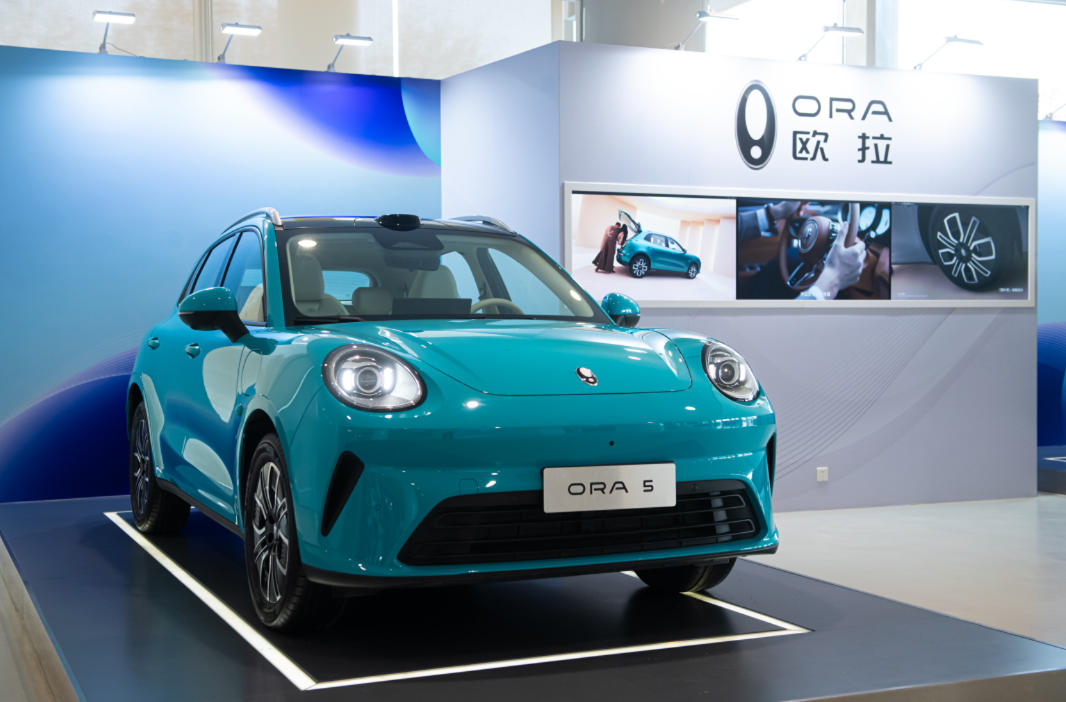
Group 1: Industry Developments - The Chinese automotive market is at a critical intersection of policy opportunities and year-end push as December 2025 approaches [1] - The Ministry of Industry and Information Technology (MIIT) has granted road access licenses for two L3 level autonomous driving vehicles from Changan Automobile and BAIC Group [2] - The MIIT is proposing seven mandatory national standards for automobiles, including safety requirements for door handles [6] Group 2: New Product Launches - Great Wall Motors has launched the Ora 5 SUV with a limited-time price starting at 91,800 yuan, featuring two battery options and advanced AI integration [3][5] - The Ora 5 is equipped with the Coffee OS 3 system and a third-generation driver assistance system, offering features like city NOA and memory parking [5] Group 3: Strategic Partnerships - CATL and Lantu have signed a ten-year deepening cooperation agreement focusing on technology application, product supply, and global market collaboration [7][9] Group 4: Corporate Actions - Zotye Auto plans to dispose of up to 3% of its shares to repay historical debts, with a maximum of 151 million shares to be sold [10] - GAC Group has initiated a Business Unit reform to enhance internal resource integration and operational efficiency, focusing on two brands, Haobo and Aion [11][13] - Hozon Auto is progressing with its bankruptcy restructuring, having selected a management trustee to oversee the process [14][16] Group 5: Regulatory Changes - The State Administration for Market Regulation and the Ministry of Ecology and Environment have issued new guidelines for the evaluation of vehicle inspection institutions to enhance regulatory standards [17]





两款L3级自动驾驶车型获工信部准入许可 北京重庆率先试点
Zhong Guo Zhi Liang Xin Wen Wang· 2025-12-24 06:15
Core Viewpoint - The Ministry of Industry and Information Technology of China has approved the first batch of smart connected vehicles equipped with L3 level conditional autonomous driving functions, specifically models from Changan Automobile and BAIC Blue Valley Magna Automotive [1] Group 1: Approved Models - Changan's SC7000AAARBEV electric sedan can achieve autonomous driving in congested traffic environments on highways and urban expressways at a maximum speed of 50 km/h, limited to specific routes in Chongqing [1] - The Arcfox BJ7001A61NBEV electric sedan can perform autonomous driving on highways and urban expressways at a maximum speed of 80 km/h, restricted to designated routes in Beijing [1] Group 2: Next Steps - Changan Automobile and Beijing Travel Automotive Service will conduct road trials for the approved models in the specified areas [1] - The Ministry of Industry and Information Technology will collaborate with relevant departments and local authorities to enhance vehicle operation monitoring and safety assurance, while continuously improving the management and regulatory framework for smart connected vehicles [1]
首块L3级自动驾驶专用号牌落地 从技术验证加速迈向量产应用
Jing Ji Ri Bao· 2025-12-23 22:34
Core Insights - The first L3 conditional autonomous driving license "渝AD0001Z" has been issued in Chongqing, granted to Changan Automobile, marking a significant step towards the commercialization of autonomous vehicles in China [1][4] - The L3 level, defined as "conditional automation," allows vehicles to perform all dynamic driving tasks under specific conditions, although the driver must remain attentive and ready to take control when prompted [1][2] Group 1: Industry Developments - The Ministry of Industry and Information Technology has conditionally approved two automotive companies to submit applications for L3 autonomous vehicle products, indicating a shift from technology validation to mass production applications in China's autonomous driving industry [1][2] - The approval of L3 autonomous vehicles is seen as a critical step towards industrialization, with pilot programs aimed at validating technology and establishing a foundation for large-scale applications [2][3] Group 2: Regulatory Framework - The licenses for the two models are not a blanket approval; they come with specific regulations regarding operational scenarios, road types, urban areas, and speed limits [2][3] - The Changan SC7000AAARBEV model can operate in congested traffic at a maximum speed of 50 km/h on designated roads in Chongqing, while the Extreme Fox BJ7001A61NBEV model can achieve L3 automation at speeds up to 80 km/h on certain highways in Beijing [3] Group 3: Operational Aspects - The two models will not be available for private users initially; instead, they will be operated by affiliated ride-hailing service companies to manage the deployment of L3 autonomous driving [3] - The operational management aims to reduce uncertainties associated with the initial rollout of L3 autonomous driving, allowing consumers to experience the technology through ride-hailing services [3] Group 4: Government Support and Future Outlook - The approval of autonomous vehicle products reflects the government's commitment to fostering innovation while ensuring safety through prudent regulation [4] - The ongoing pilot programs for smart connected vehicles are expected to inject strong momentum into technological innovation and upgrades within the automotive industry in China [4]
首块L3级自动驾驶专用号牌落地——从技术验证加速迈向量产应用
Jing Ji Ri Bao· 2025-12-23 22:09
Core Insights - The first L3 conditional autonomous driving license "渝AD0001Z" has been issued in Chongqing, granted to Changan Automobile, marking a significant step towards the commercialization of autonomous vehicles in China [1][4] - The L3 level, defined as "conditional automation," allows vehicles to perform all dynamic driving tasks under specific conditions, although the driver must remain attentive and ready to take control when prompted [1][2] Industry Developments - The Ministry of Industry and Information Technology has conditionally approved two automotive companies to submit applications for L3 autonomous driving vehicles, indicating a shift from technology validation to mass production applications in the autonomous driving sector [1][2] - The automotive industry is increasingly focusing on smart technology, with China and the U.S. leading in intelligent driving, while Europe is intensifying its efforts to catch up [2] Regulatory Framework - The approval for the two models is not a blanket release; it includes specific regulations regarding operational scenarios, road types, urban areas, and speed limits [2][3] - The Changan SC7000AAARBEV can operate in congested traffic at a maximum speed of 50 km/h on designated roads in Chongqing, while the Extreme Fox BJ7001A61NBEV can achieve up to 80 km/h on certain highways in Beijing [3] Operational Aspects - The two models are not available for private users but will be operated by affiliated ride-hailing service companies, which aims to reduce uncertainties in the initial rollout of L3 autonomous driving [3] - As the pilot progresses and the industry gains a better understanding of safety risks, restrictions may be eased, allowing autonomous driving to become more integrated into daily life [3] Government Support - The issuance of autonomous vehicle licenses reflects the government's commitment to fostering innovation while ensuring safety through prudent regulation [4] - This initiative is expected to stimulate technological innovation and upgrades within the automotive sector, aligning with the overall strategy of "system first, pilot breakthroughs, and gradual promotion" [4]
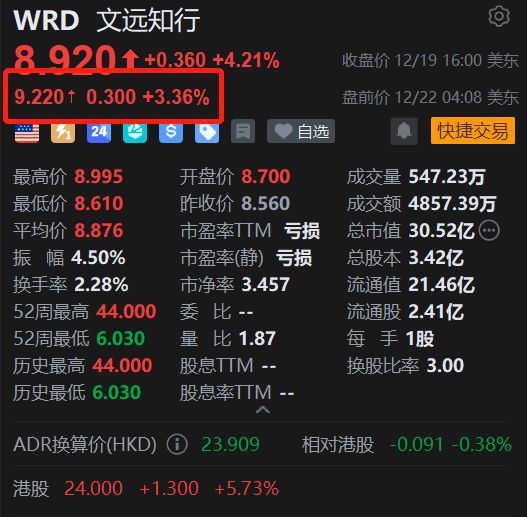
文远知行盘前涨超3% H股今日收涨近6% 加速推进L4产品商业化落地
Ge Long Hui· 2025-12-22 10:33
Core Viewpoint - The stock of WeRide (文远知行) rose nearly 6% in Hong Kong, leading to a more than 3% pre-market increase in its US shares, following the announcement of the first batch of L3 level conditional autonomous driving vehicle permits in China [1] Group 1: Company Developments - WeRide is a global leader in L4 level autonomous driving products and solutions, accelerating the commercialization of its L4 products [1] - On November 20, WeRide's Robotaxi received a fully unmanned license from the Swiss Federal Roads Office, marking a significant milestone for the company [1] - WeRide is notable for holding autonomous driving licenses in eight countries, including Switzerland, China, UAE, Saudi Arabia, Singapore, France, Belgium, and the United States [1] Group 2: Industry Context - The recent approval of L3 level autonomous driving vehicle permits in China includes models from Changan and Arcfox, indicating a growing regulatory framework for autonomous vehicles in the country [1]

美股异动丨文远知行盘前涨超3% H股今日收涨近6% 加速推进L4产品商业化落地
Ge Long Hui· 2025-12-22 09:39
Core Viewpoint - The recent approval of L3 level conditional autonomous driving vehicle licenses in China has positively impacted the stock performance of Wenyan Zhixing, leading to a nearly 6% increase in Hong Kong shares and over 3% rise in pre-market US shares [1] Group 1: Company Developments - Wenyan Zhixing is a global leader in L4 level autonomous driving products and solutions [1] - The company is accelerating the commercialization of its L4 products, with its Robotaxi recently receiving a fully unmanned license from the Swiss Federal Roads Office [1] - Wenyan Zhixing holds autonomous driving licenses in eight countries, including Switzerland, China, UAE, Saudi Arabia, Singapore, France, Belgium, and the United States [1] Group 2: Industry Context - The approval of L3 level autonomous driving vehicles marks a significant step in the development of the autonomous driving industry in China [1] - The introduction of these vehicles is expected to enhance the competitive landscape for companies involved in autonomous driving technology [1]
招商策略:A股跨年行情加春季躁动或将拉开帷幕
Xin Lang Cai Jing· 2025-12-21 12:08
Market Outlook - A classic "cross-year-spring" market is brewing, with signals indicating that it has already begun. Key factors include the expected acceleration of central budget investments and significant institutional investors increasing their holdings in A500 ETF, providing stable incremental funds to the market [2][36][38] - The main focus of the market is likely to be on blue-chip indices represented by the CSI 300 and SSE 50, with an emphasis on cyclical sectors such as industrial metals, non-bank financials, and hotel aviation [2][36][38] Economic Indicators - In November, the year-on-year growth rate of social retail sales narrowed, with a total of 456,067 billion yuan, a decrease of 0.3 percentage points to 4.0%. The retail sales excluding automobiles reached 411,637 billion yuan, growing by 4.6% [43][57] - Major enterprises in the machinery sector showed improvement in sales, with loader sales increasing by 32.1% year-on-year, and the sales of excavators and road rollers also showing significant growth [49][51] Investment Trends - The A500 ETF has seen substantial net subscriptions, with a single-day subscription amount reaching a historical high of 7.1 billion yuan, indicating that significant institutional investors are entering the capital market through this product [13][36] - The offshore RMB exchange rate has been strengthening, suggesting that overseas funds are beginning to flow into the domestic market, which is often associated with expectations of positive changes in domestic policies [15][16][36] Sector Performance - The retail sector has been supported by policies aimed at expanding domestic demand, with notable growth in the commercial retail sector driven by holiday consumption expectations [40] - The technology sector, particularly AI, remains a strong growth engine for the economy, with Hong Kong stocks showing high investment value in technology companies that are not present in A-shares [29][38] Market Dynamics - The A-share market has shown mixed performance, with large-cap value stocks outperforming small-cap stocks as investors become more conservative due to year-end performance assessments [31][39] - The upcoming earnings forecast disclosure period in January is expected to increase pressure on small-cap stocks, while large-cap blue-chip stocks are likely to attract more investment due to their stability [33][36]
L3级自动驾驶正式落地,汽车产业链全线走强
Zhong Guo Zheng Quan Bao· 2025-12-19 05:20
Group 1 - The automotive industry chain is experiencing growth, with significant increases in automotive parts, services, dismantling, and autonomous driving sectors [1] - The Ministry of Industry and Information Technology has officially announced the first batch of L3 conditional autonomous driving vehicle permits in China, marking a key step towards commercial application [1] - The two approved models are the Changan SC7000AAARBEV electric sedan and the Arcfox BJ7001A61NBEV electric sedan, which will undergo road trials in designated areas of Beijing and Chongqing [1] Group 2 - Ping An Securities predicts that the commercialization of intelligent driving is expected to accelerate by 2026, with the approval of L3 models indicating progress in technology and policy [2] - Dongxing Securities states that the automotive intelligence has transitioned from quantitative to qualitative changes, with 2026 being a pivotal year for the shift from L2 to L3 intelligent driving [2] - The development of intelligent chassis systems is highlighted as a key area for ensuring the reliability of high-level autonomous driving, with the potential for large-scale component companies to emerge in China [2]