电子专用材料制造业

Search documents
重大资产重组 明日停牌
2 1 Shi Ji Jing Ji Bao Dao· 2026-01-04 12:48
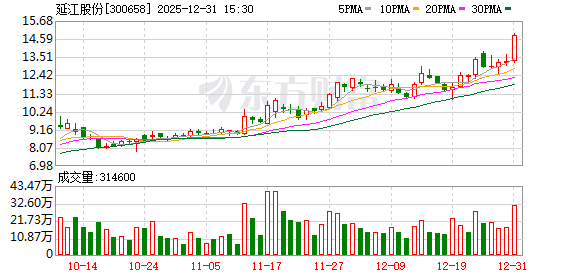
Group 1 - The core point of the news is that Yanjiang Co., Ltd. (300658) announced a major asset restructuring plan, which involves issuing shares to acquire control of Ningbo Yongqiang Technology Co., Ltd. and raising matching funds [2][4] - The stock of Yanjiang Co., Ltd. will be suspended from trading starting January 5, 2026, due to this significant asset restructuring [2] - Yanjiang Co., Ltd. reported a revenue of 1.295 billion yuan for the first three quarters of 2025, representing a year-on-year increase of 22.99%, and a net profit attributable to shareholders of 42.5 million yuan, up 27.95% year-on-year [6] Group 2 - Ningbo Yongqiang Technology Co., Ltd. specializes in the research, development, manufacturing, and sales of electronic materials and automotive components, and has received a total of 210 million yuan in market investments since its establishment in December 2019, with a valuation exceeding 1 billion yuan [4] - On December 31, 2025, Yanjiang Co., Ltd.'s stock price surged, with an intraday increase of over 12%, closing with an 11.68% rise [7]


天立达IPO前新聘36岁董秘胡云垒,曾任辅导机构东吴证券业务总监
Sou Hu Cai Jing· 2025-12-22 01:51
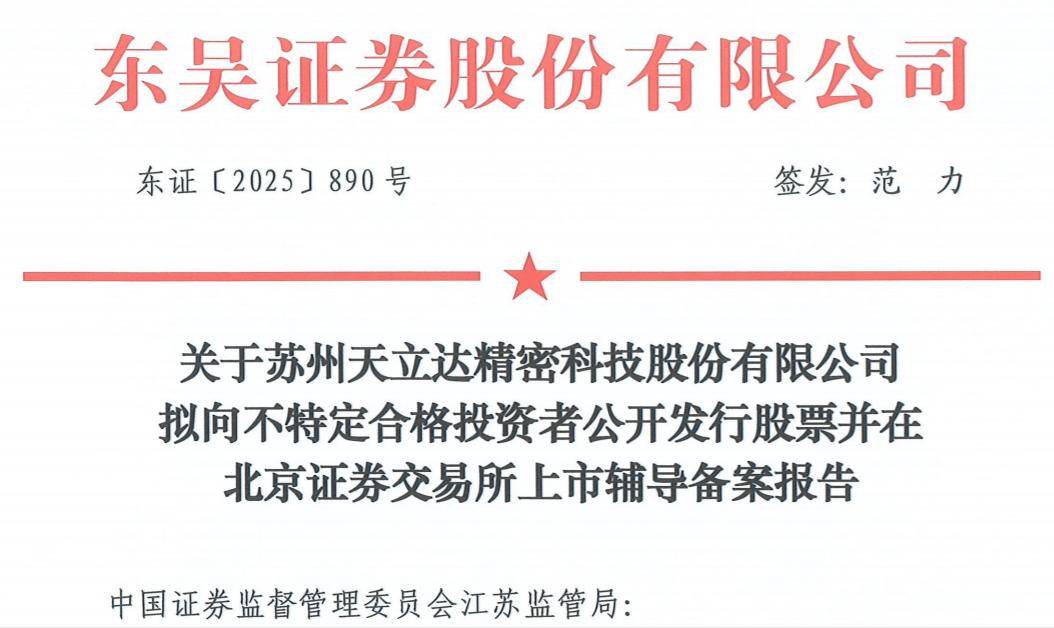
Core Viewpoint - Suzhou Tianlida Precision Technology Co., Ltd. has initiated the IPO counseling record with Jiangsu Securities Regulatory Bureau, aiming for listing on the Beijing Stock Exchange, with Dongwu Securities as the counseling institution [1] Company Overview - Established on January 25, 2005, Tianlida has a registered capital of 110 million yuan and is headquartered at 1688 Songlu Road, Wuzhong District, Suzhou [2] - The controlling shareholder is Shen Weiming, holding 62.23% of the shares [2] - The company operates in the electronic specialized materials manufacturing industry, focusing on the R&D, design, production, and sales of precision functional components and backlight modules for electronic products [2] Financial Performance - In the first half of 2025, the company achieved operating revenue of 358 million yuan, representing a year-on-year growth of 31.86% [2] - The net profit for the same period was 24.696 million yuan, with a year-on-year increase of 2.47% [2] Corporate Governance Changes - In November, Tianlida announced the cancellation of its supervisory board and removed related terms from its articles of association, replacing "supervisory board" with "audit committee" in certain clauses [3] - The board approved the appointment of Wang Qicang as the vice general manager [3] - In August, Hu Yunlei was appointed as the secretary of the board, effective from August 14, 2025, until the end of the second board term [3] Key Personnel Background - Hu Yunlei, a male Chinese national born in September 1989, holds a bachelor's degree and is a certified public accountant and tax advisor [4] - His previous experience includes working as an auditor at Tianzhi International Accounting Firm from September 2011 to October 2014, and as a business director at Dongwu Securities from November 2014 to July 2025 [4]

天立达拟北交所上市:上半年营收净利双增,客户含深天马、传艺科技
Sou Hu Cai Jing· 2025-12-20 01:30
Company Overview - Suzhou Tianlida Precision Technology Co., Ltd. (referred to as "Tianlida") has initiated IPO counseling for listing on the Beijing Stock Exchange, with Dongwu Securities as the counseling institution [2] - Established on January 25, 2005, the company has a registered capital of 110 million yuan and is headquartered in Suzhou, Jiangsu Province [3] - The controlling shareholder is Shen Weiming, holding 62.23% of the shares [3] Business Operations - Tianlida operates in the electronic special materials manufacturing industry, focusing on the R&D, design, production, and sales of precision functional components and backlight modules for electronic products [3] - The company is recognized as a high-tech enterprise and a national-level "little giant" enterprise, with several research platforms including a provincial-level enterprise technology center [4] - It has established long-term business relationships with global electronic manufacturing service providers such as Deep Tianma, Hon Hai Precision, and others, serving well-known consumer electronics brands like Lenovo, Huawei, and Toyota [4] Financial Performance - In the first half of 2025, Tianlida achieved revenue of 358 million yuan, a year-on-year increase of 31.86%, and a net profit of 24.696 million yuan, up 2.47% [4] - For the year 2024, the company reported revenue of 620 million yuan, reflecting an 18.04% year-on-year growth, and a net profit of 52.351 million yuan, which is a 33.43% increase compared to the previous year [4] Shareholder Changes - In September 2025, Tianlida announced a stock issuance that diluted existing shareholders' equity, resulting in a total share increase of 10 million shares [5] - The actual controllers did not participate in this issuance, leading to a passive dilution of their shareholding from 100% to 90.9091% [5] - The newly issued shares were listed and publicly traded on the National Equities Exchange and Quotations system on September 5, 2025 [5]

天立达启动北交所IPO:年入6亿元,沈为明家族控股91%
Sou Hu Cai Jing· 2025-12-18 11:08
Core Viewpoint - Suzhou Tianlida Precision Technology Co., Ltd. has initiated the IPO counseling record with Jiangsu Securities Regulatory Bureau, aiming to list on the Beijing Stock Exchange, with Dongwu Securities as the counseling institution [2] Company Overview - Established on January 25, 2005, Tianlida has a registered capital of 110 million yuan and is headquartered at 1688 Songlu Road, Wuzhong District, Suzhou [3] - The controlling shareholder is Shen Weiming, holding 62.23% of the shares [3] - The company operates in the electronic equipment manufacturing industry, focusing on the R&D, design, production, and sales of precision functional components and backlight modules for electronic products [3] Business Performance - In the first half of 2025, the company achieved operating revenue of 358 million yuan, a year-on-year increase of 31.86%, and a net profit of 24.696 million yuan, up 2.47% year-on-year [4] - For the year 2024, the company reported operating revenue of 620 million yuan, representing an 18.04% year-on-year growth, and a net profit of 52.351 million yuan, which is a 33.43% increase compared to the previous year [4] Shareholder Changes - In September 2025, Tianlida announced a change in shareholder equity due to a targeted stock issuance that diluted existing shares [4] - The targeted issuance added 10 million new shares, subscribed by five new investors, while the actual controllers did not participate in this issuance, leading to a passive dilution of their shareholding from 100% to 90.9091% [5] - The new shares were publicly listed and traded on the National Equities Exchange and Quotations system on September 5, 2025 [5]
大路镇电子专用材料制造业协会成立
Zhen Jiang Ri Bao· 2025-11-23 23:29
Core Viewpoint - The establishment of the Electronic Special Materials Manufacturing Association in Zhenjiang Economic Development Zone marks a significant step towards optimizing the business environment and promoting high-quality development in the electronic special materials manufacturing industry [1] Group 1: Association Objectives - The association aims to integrate resources, connecting upstream and downstream enterprises in the industry to break the isolated operational model [1] - It will serve as an efficient communication bridge between government and enterprises, accurately conveying business demands and aligning with policy support [1] - The association plans to promote technological collaboration, targeted talent training, and establish self-regulatory norms to effectively address development bottlenecks [1] Group 2: Regional Industry Context - Dalu Town is recognized as the origin of national radiator industry standards, earning the title "Hometown of Radiators," with over 300 radiator production and sales companies clustered in the area [1] - The formation of the association provides new development opportunities and broader prospects for this industrial region, signaling a new chapter in industry development [1]
CPI同比转正 PPI环比年内首涨
Jin Rong Shi Bao· 2025-11-10 01:37
Group 1: CPI Analysis - In October, the Consumer Price Index (CPI) increased by 0.2% month-on-month and year-on-year, driven by policies to expand domestic demand and the impact of the National Day and Mid-Autumn Festival holidays [1][2] - The core CPI, excluding food and energy prices, rose by 1.2% year-on-year, marking the sixth consecutive month of growth [1][2] - Significant rainfall and increased holiday demand led to a 4.3% month-on-month rise in vegetable prices, contributing to a narrowing of the year-on-year decline in food prices to -2.9% [2][3] Group 2: PPI Analysis - The Producer Price Index (PPI) saw a month-on-month increase of 0.1%, marking the first rise of the year, despite a year-on-year decline of 2.1% [1][4] - The improvement in supply-demand dynamics in various industries, particularly due to anti-involution policies, has supported price increases in sectors like coal and black metals [4][5] - Prices in the coal mining and washing industry rose by 1.6%, while prices for photovoltaic equipment and components increased by 0.6%, indicating a positive trend in certain high-tech manufacturing sectors [4][5] Group 3: Future Outlook - Analysts expect a gradual recovery in PPI year-on-year by 2026, while CPI is anticipated to remain at low levels, indicating a moderate inflationary trend [6]
中国通胀系列十三:9月通胀降幅继续收敛
Hua Tai Qi Huo· 2025-10-16 05:15
Report Industry Investment Rating No relevant content provided. Core Viewpoints - In September 2025, the year-on-year decline of PPI was 2.3%, with the decline narrowing by 0.6 percentage points compared to the previous month, and remaining flat for two consecutive months on a month-on-month basis, indicating a continuous easing of the downward pressure on industrial product prices. The prices in the midstream manufacturing industry improved, and the prices in industries such as coal and ferrous metals continued to rise; in the industries related to external demand, the prices of electronics and aircraft manufacturing maintained growth. Structurally, there were differentiation characteristics: on the one hand, the prices of new quality productivity industries such as photovoltaic equipment rebounded, and the prices of consumer upgrade products increased significantly; on the other hand, affected by the decline in international oil prices, the prices of domestic oil-related products weakened. Overall, the current recovery of PPI is mainly driven by the low-base effect and policy expectations, but the recovery of downstream demand is still uneven, and the subsequent trend of industrial product prices still needs to focus on the substantial improvement of the demand side [4]. - In September 2025, the year-on-year decline of CPI was 0.3%, with the decline narrowing by 0.1 percentage points compared to the previous month, and the month-on-month change turned from flat to an increase of 0.1%. The core CPI increased by 1.0% year-on-year, with the increase expanding for 5 consecutive months, and it returned to above 1% for the first time in nearly 19 months. Food prices decreased by 4.4% year-on-year, and the prices of major food items such as fresh vegetables and pork were still in the downward range; non-food prices increased by 0.7% year-on-year, among which the increases of industrial consumer goods such as gold jewelry and household appliances were obvious; service prices maintained stable growth. Overall, the continuous recovery of core CPI shows that domestic consumer demand is steadily recovering with policy support, but the drag of food prices still exists, and the improvement of CPI in the fourth quarter may be limited [5]. Summary by Directory 1. Macro Events - On October 15th, the National Bureau of Statistics released data showing that in September 2025, the national consumer price index (CPI) decreased by 0.3% year-on-year. Among them, the CPI in urban areas decreased by 0.2%, and that in rural areas decreased by 0.5%; food prices decreased by 4.4%, and non-food prices increased by 0.7%; consumer goods prices decreased by 0.8%, and service prices increased by 0.6%. From January to September, the average national consumer price decreased by 0.1% compared with the same period of the previous year. - In September 2025, the national producer price index (PPI) for industrial products decreased by 2.3% year-on-year, with the decline narrowing by 0.6 percentage points compared to the previous month, and remaining flat on a month-on-month basis. The purchase price index for industrial producers decreased by 3.1% year-on-year, with the decline narrowing by 0.9 percentage points compared to the previous month, and increasing by 0.1% on a month-on-month basis. From January to September, the average producer price index for industrial products decreased by 2.8% compared with the same period of the previous year, and the purchase price index for industrial producers decreased by 3.2% [3]. 2. 9 - Month Inflation Decline Convergence - PPI - The decline of PPI continued to narrow. In September 2025, PPI decreased by 2.3% year-on-year (with the decline narrowing by 0.6 percentage points compared to the previous month), and remained flat for two consecutive months on a month-on-month basis; the purchase price for industrial producers decreased by 3.1% year-on-year, with the decline narrowing by 0.9 percentage points compared to the previous month, and increasing by 0.1% on a month-on-month basis. - The price pressure in the midstream manufacturing industry eased. The prices in the midstream processing industry improved. The prices of coal mining and washing increased by 2.5% month-on-month, and the prices of coal processing increased by 3.8% month-on-month, both rising for two consecutive months. The prices of ferrous metal smelting and rolling processing increased by 0.2% month-on-month; the prices of non-metallic mineral products decreased by 0.4% month-on-month, but the decline narrowed by 0.6 percentage points compared to the previous month. - Some improvements were seen in the external demand industries. Driven by the construction of a modern industrial system, the prices of electronic special material manufacturing increased by 1.2% year-on-year. In the field of intelligent unmanned aerial vehicle manufacturing, the prices of aircraft manufacturing increased by 1.4% year-on-year. - The impact of international input was differentiated. The decline in international oil prices led to a 2.7% month-on-month decrease in domestic oil extraction prices and a 1.5% month-on-month decrease in refined petroleum product manufacturing prices. - The new quality productivity industries maintained growth. The new driving forces for development grew steadily, and the prices of related industries rebounded year-on-year. The prices of photovoltaic equipment and component manufacturing turned from a decline to an increase, with a growth rate of 0.8%; the prices of waste resource comprehensive utilization industries increased by 0.9% year-on-year. - Consumer demand continued to provide support. The demand for upgraded consumption continued to increase. The prices of arts and crafts and ceremonial supplies manufacturing increased by 14.7%, the prices of sports ball manufacturing increased by 4.0%, and the prices of nutritional food manufacturing increased by 1.8%. - Overall, the year-on-year recovery of PPI in the third quarter was mainly affected by the low-base effect and anti-involution market expectations. By industry, non-ferrous metal prices were relatively strong, while ferrous metal prices were relatively weak due to slow recovery of downstream demand and inventory accumulation; in September, international crude oil prices were weak due to geopolitical factors, and the ex-factory prices of related petrochemical products also declined. As the steady growth plans for various industries are gradually implemented and the effects of anti-involution policies are further manifested, the subsequent industrial product prices will follow the demand trend. Attention should be paid to whether there will be incremental policy promotion in the fourth quarter, and industrial product prices may maintain a weak pattern [9][10]. 3. 9 - Month Inflation Decline Convergence - CPI - CPI turned from flat to an increase on a month-on-month basis, and the year-on-year decline narrowed. In September, CPI decreased by 0.3% year-on-year (with the decline narrowing by 0.1 percentage points compared to the previous month), and turned from flat to an increase of 0.1% on a month-on-month basis. The core CPI excluding food and energy prices increased by 1.0% year-on-year, with the increase expanding by 0.1 percentage points compared to the previous month, expanding for the 5th consecutive month, and it returned to above 1% for the first time in nearly 19 months. From January to September, the average CPI decreased by 0.1% compared with the same period of the previous year. - The year-on-year decline of food prices slightly expanded. Food prices decreased by 4.4% year-on-year, with the decline expanding by 0.1 percentage points compared to the previous month. Among them, the prices of pork, fresh vegetables, and eggs decreased by 17.0%, 13.7%, and 13.5% respectively year-on-year; the prices of fresh fruits decreased by 4.2% year-on-year. On a month-on-month basis, food prices increased by 0.7% in September, among which the prices of fresh vegetables, eggs, and fresh fruits all showed seasonal increases. - The increase of non-food prices expanded. Non-food prices increased by 0.7% year-on-year. Among industrial consumer goods, the prices of gold jewelry and platinum jewelry increased by 42.1% and 33.6% respectively year-on-year; the prices of household appliances and household daily sundries increased by 5.5% and 3.2% respectively year-on-year. - Service consumption maintained stable growth. Service prices increased by 0.6% year-on-year. Among them, the prices of medical services and household services increased by 1.9% and 1.6% respectively year-on-year; affected by factors such as the end of the summer vacation and the misaligned Mid-Autumn Festival, the prices of airplane tickets and hotel accommodation decreased by 1.7% and 1.5% respectively year-on-year. - The year-on-year decline of CPI in September narrowed marginally to -0.3%, mainly due to the carry-over effect. The continuous expansion of the core CPI increase and its return to above 1% indicate that domestic consumer demand continues to recover under the support of macro policies. In the short term, food prices continue to decline, and durable goods prices face downward pressure, so the improvement of CPI in the fourth quarter may be weak [26][27]. 4. Appendix: CPI and PPI Data for September 2025 - In September 2025, the national consumer price index (CPI) decreased by 0.3% year-on-year. Among them, the CPI in urban areas decreased by 0.2%, and that in rural areas decreased by 0.5%; food prices decreased by 4.4%, and non-food prices increased by 0.7%; consumer goods prices decreased by 0.8%, and service prices increased by 0.6%. From January to September, the average national consumer price decreased by 0.1% compared with the same period of the previous year. In September, the national consumer price index increased by 0.1% on a month-on-month basis. Among them, the CPI in urban areas remained flat, and that in rural areas increased by 0.2%; food prices increased by 0.7%, and non-food prices decreased by 0.1%; consumer goods prices increased by 0.3%, and service prices decreased by 0.3%. - In September, the prices of food, tobacco, and alcohol decreased by 2.6% year-on-year, affecting the CPI (consumer price index) to decrease by about 0.74 percentage points. Among food items, the prices of fresh vegetables decreased by 13.7%, affecting the CPI to decrease by about 0.35 percentage points; the prices of eggs decreased by 11.9%, affecting the CPI to decrease by about 0.08 percentage points; the prices of livestock and meat decreased by 8.4%, affecting the CPI to decrease by about 0.27 percentage points, among which the prices of pork decreased by 17.0%, affecting the CPI to decrease by about 0.26 percentage points; the prices of fresh fruits decreased by 4.2%, affecting the CPI to decrease by about 0.09 percentage points; the prices of grains decreased by 0.7%, affecting the CPI to decrease by about 0.01 percentage points; the prices of aquatic products increased by 0.9%, affecting the CPI to increase by about 0.02 percentage points. The prices of the other seven major categories increased in six and decreased in one. Among them, the prices of other supplies and services, household supplies and services, and clothing increased by 9.9%, 2.2%, and 1.7% respectively, and the prices of medical care, education, culture, and entertainment, and housing increased by 1.1%, 0.8%, and 0.1% respectively; the prices of transportation and communication decreased by 2.0%. - In September, the prices of food, tobacco, and alcohol increased by 0.5% on a month-on-month basis, affecting the CPI to increase by about 0.13 percentage points. Among food items, the prices of fresh vegetables increased by 6.1%, affecting the CPI to increase by about 0.13 percentage points; the prices of eggs increased by 2.7%, affecting the CPI to increase by about 0.02 percentage points; the prices of fresh fruits increased by 1.7%, affecting the CPI to increase by about 0.03 percentage points; the prices of aquatic products decreased by 1.8%, affecting the CPI to decrease by about 0.04 percentage points; the prices of pork decreased by 0.7%, affecting the CPI to decrease by about 0.01 percentage points. The prices of the other seven major categories increased in four, remained flat in one, and decreased in two. Among them, the prices of other supplies and services and clothing increased by 1.3% and 0.7% respectively, and the prices of household supplies and services and medical care increased by 0.3% and 0.2% respectively; the prices of housing remained flat; the prices of transportation and communication and education, culture, and entertainment decreased by 0.9% and 0.4% respectively. - In September 2025, the national producer price index (PPI) for industrial products decreased by 2.3% year-on-year, with the decline narrowing by 0.6 percentage points compared to the previous month, and remaining flat on a month-on-month basis. The purchase price index for industrial producers decreased by 3.1% year-on-year, with the decline narrowing by 0.9 percentage points compared to the previous month, and increasing by 0.1% on a month-on-month basis. From January to September, the average producer price index for industrial products decreased by 2.8% compared with the same period of the previous year, and the purchase price index for industrial producers decreased by 3.2%. - In September, among the producer prices for industrial products, the prices of means of production decreased by 2.4%, affecting the total level of producer prices for industrial products to decrease by about 1.81 percentage points. Among them, the prices of the mining industry decreased by 9.0%, the prices of the raw material industry decreased by 2.9%, and the prices of the processing industry decreased by 1.7%. The prices of means of subsistence decreased by 1.7%, affecting the total level of producer prices for industrial products to decrease by about 0.45 percentage points. Among them, the prices of food decreased by 1.7%, the prices of clothing decreased by 0.3%, the prices of general daily necessities increased by 0.7%, and the prices of durable consumer goods decreased by 3.9%. - Among the purchase prices for industrial producers, the prices of fuel and power decreased by 8.1%, the prices of chemical raw materials decreased by 5.5%, the prices of agricultural and sideline products decreased by 5.4%, the prices of building materials and non-metals decreased by 4.5%, the prices of ferrous metal materials decreased by 2.9%, the prices of textile raw materials decreased by 1.7%; the prices of non-ferrous metal materials and wires increased by 6.6%. - In September, among the producer prices for industrial products, the prices of means of production remained flat. Among them, the prices of the mining industry increased by 1.2%, the prices of the raw material industry remained flat, and the prices of the processing industry decreased by 0.1%. The prices of means of subsistence decreased by 0.2%, affecting the total level of producer prices for industrial products to decrease by about 0.04 percentage points. Among them, the prices of food decreased by 0.1%, the prices of clothing remained flat, the prices of general daily necessities increased by 0.2%, and the prices of durable consumer goods decreased by 0.4%. - Among the purchase prices for industrial producers, the prices of non-ferrous metal materials and wires increased by 1.2%, the prices of fuel and power increased by 0.5%, the prices of ferrous metal materials increased by 0.4%; the prices of building materials and non-metals decreased by 0.6%, the prices of chemical raw materials decreased by 0.4%, the prices of agricultural and sideline products decreased by 0.2%, the prices of textile raw materials decreased by 0.1% [41][43][45]. 5. National Bureau of Statistics Urban Department Chief Statistician Dong Lijuan's Interpretation of CPI and PPI Data for September 2025 - In September, the consumer market generally operated smoothly. The consumer price index (CPI) increased by 0.1% on a month-on-month basis and decreased by 0.3% year-on-year. The core CPI excluding food and energy prices increased by 1.0% year-on-year, with the increase expanding for the 5th consecutive month. The in-depth promotion of the construction of a unified national market and the continuous optimization of the market competition order led to the producer price index (PPI) for industrial products remaining flat on a month-on-month basis; it decreased by 2.3% year-on-year, with the decline narrowing by 0.6 percentage points compared to the previous month. - CPI turned from flat to an increase on a month-on-month basis, and the core CPI year-on-year increase rebounded to 1%. CPI increased on a month-on-month basis, turning from flat to an increase of 0.1%. Among them, food prices increased by 0.7% on a month-on-month basis, with the increase expanding by 0.2 percentage points compared to the previous month, affecting CPI to increase by about 0.13 percentage points on a month-on-month basis. Among food items, the prices of fresh vegetables, eggs, fresh fruits, mutton, and beef all showed seasonal increases, with the increase ranging from 0.9% to 6.1%; the supply of pork and aquatic products was sufficient, and the prices decreased by 0.7% and 1.8% respectively. The prices of industrial consumer goods excluding energy increased by 0.5%, affecting CPI to increase by about 0.12 percentage points on a month-on-month basis. Among them, affected by the increase in international gold prices, domestic gold jewelry prices increased by 6.5%; with the new autumn clothing season, clothing prices increased by 0.8%; the prices of cultural and entertainment durable consumer goods, household appliances, and household daily sundries increased by 0
8月经济数据释放积极信号:核心CPI同比涨幅连续4个月扩大
Yang Shi Xin Wen Ke Hu Duan· 2025-09-10 09:49
Group 1: Consumer Price Index (CPI) Insights - In August, the Consumer Price Index (CPI) remained flat month-on-month and showed a year-on-year decline, primarily due to a high comparison base from the previous year and lower seasonal food price increases [1] - The core CPI, excluding food and energy prices, rose by 0.9% year-on-year, marking the fourth consecutive month of growth, with an increase of 0.1 percentage points from the previous month [1] - Food prices increased by 0.5% month-on-month, but this was below the seasonal level by approximately 1.1 percentage points, with pork, eggs, and fresh fruit prices showing weaker seasonal changes [1] Group 2: Producer Price Index (PPI) Insights - The Producer Price Index (PPI) turned flat in August after a 0.2% decline in the previous month, ending an eight-month downward trend, with the year-on-year decline narrowing by 0.7 percentage points [3] - The positive changes in some industry prices are attributed to the implementation of "anti-involution" policies and the orderly management of production capacity in key industries [3] - Notable price increases were observed in the coal mining, black metal smelting, and electrical machinery manufacturing sectors, with the PPI showing signs of recovery in emerging industries such as shipbuilding and communication equipment manufacturing [3][4]
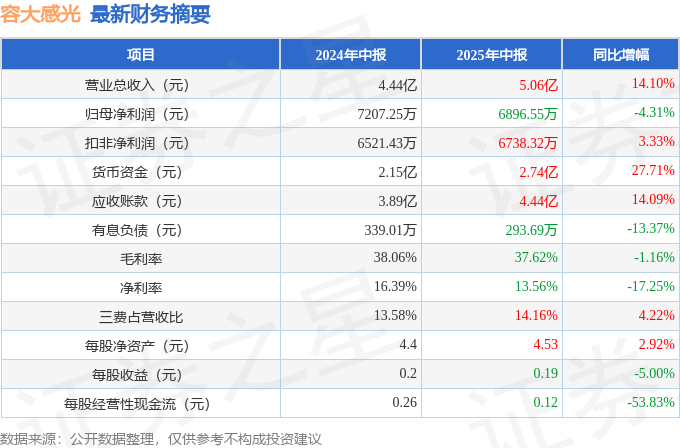
容大感光2025年中报简析:增收不增利,公司应收账款体量较大
Zheng Quan Zhi Xing· 2025-08-26 22:39
Core Viewpoint - Rongda Photoelectric (300576) reported a mixed performance in its 2025 mid-year financial results, with revenue growth but a decline in net profit, indicating potential challenges in profitability despite revenue increases [1]. Financial Performance - Total revenue for the first half of 2025 reached 506 million yuan, a year-on-year increase of 14.1% [1]. - Net profit attributable to shareholders was 68.97 million yuan, down 4.31% year-on-year [1]. - The gross margin was 37.62%, a decrease of 1.16% compared to the previous year [1]. - The net profit margin fell to 13.56%, down 17.25% year-on-year [1]. - Total accounts receivable reached 444 million yuan, representing 363.06% of the latest annual net profit, indicating a significant level of receivables [1][15]. Cost and Expenses - Total selling, administrative, and financial expenses amounted to 71.68 million yuan, accounting for 14.16% of revenue, an increase of 4.22% year-on-year [1]. - Operating cash flow per share decreased by 53.83% to 0.12 yuan [1]. Investment and Assets - Long-term equity investments saw a 100% decrease due to recognized losses [3]. - Fixed assets increased by 232.67% due to the capitalization of certain assets from the Zhuhai Rongda project [3]. - Cash and cash equivalents increased by 151.65% due to funds received from a directed issuance [8]. Market Position and Strategy - The company is a leading domestic supplier of photoelectric chemical materials, with a market share of approximately 50% in the domestic PCB photoresist market [16]. - The company plans to expand its product offerings in the fields of photoresist for semiconductors, display applications, and photovoltaic applications [17][18]. - The PCB market is expected to grow, with a projected compound annual growth rate of 6.5% from 2025 to 2030, indicating a favorable environment for the company's products [20][21]. Research and Development - The company has maintained R&D expenditures above 5% of revenue, which has contributed to its competitive edge and product quality [18]. Future Outlook - The company aims to solidify its existing market share while exploring new growth areas, particularly in high-margin products [17][18]. - The overall demand for PCB photoresists is expected to grow steadily, supported by favorable industry policies and technological advancements [21].

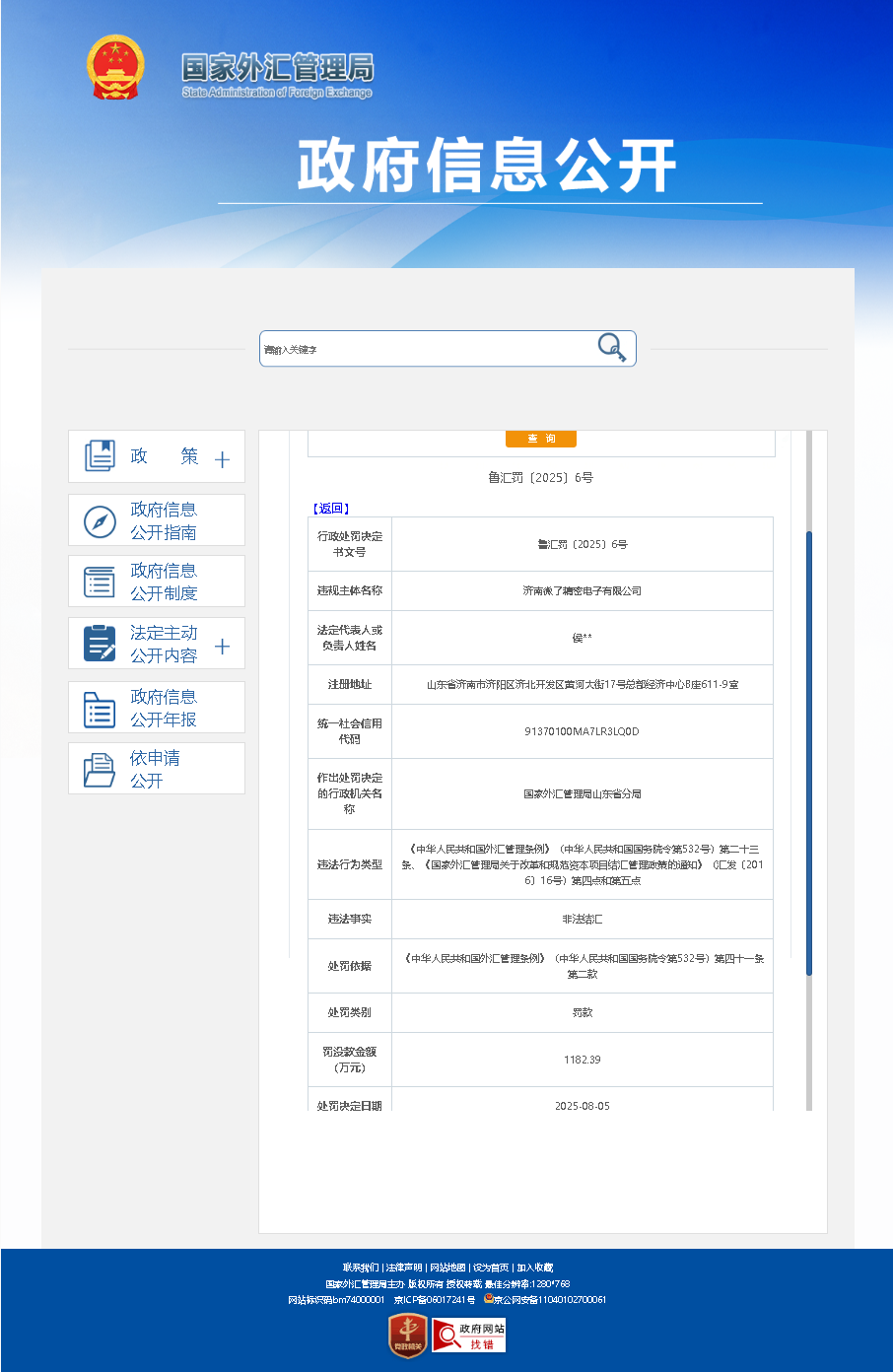
非法结汇!济南一公司被罚超千万
Qi Lu Wan Bao· 2025-08-21 06:02
Core Viewpoint - Jinan Weila Precision Electronics Co., Ltd. was fined 11.8239 million yuan by the Shandong branch of the State Administration of Foreign Exchange for illegal foreign exchange settlement [1]. Company Information - Jinan Weila Precision Electronics Co., Ltd. was established on April 19, 2022, with legal representative Hou Xunbin and is owned by LIZHOZO Corporation [1][3]. - The company is registered under the unified social credit code 91370100MA7LR3LQ0D and is located in Jinan, Shandong Province [3][4]. - The business scope includes manufacturing and sales of electronic special materials, research and development of electronic special materials, and import-export services [4]. Regulatory Violations - The violations pertain to Article 23 of the Foreign Exchange Management Regulations of the People's Republic of China and specific points from the notice on reforming and standardizing capital project settlement management [1].