电子商务

Search documents
NextPlat(NXPL) - 2025 Q4 - Earnings Call Transcript
2026-03-31 13:32
Financial Data and Key Metrics Changes - For the year ended December 31, 2025, the company reported total revenue of approximately $54 million, an 18% decline from approximately $66 million in 2024, primarily due to lower contributions from healthcare operations [18] - Full year healthcare operations revenue was approximately $40 million compared to approximately $52 million in 2024, with Q4 revenues of approximately $9 million being relatively stable compared to $10 million in Q3 [19] - Consolidated gross margin for the full year was approximately 20%, down from approximately 26% in 2024, but with sequential improvement expected throughout 2026 [22] Business Line Data and Key Metrics Changes - The healthcare segment represented about 73% of total revenue in 2025, with a significant focus on higher margin 340B covered entities and medication fulfillment services [5][10] - The e-commerce segment saw revenue increase to approximately $15 million, up 6% year-over-year, driven by strong demand for satellite connectivity and IoT products [20] Market Data and Key Metrics Changes - The company reported a 94% increase in 340B contract revenue for Q4 2025 compared to Q3 2025, indicating strong growth in this area [9] - The expansion of healthcare operations from Florida to nationwide through a partnership with HealthWarehouse is expected to drive significant growth opportunities [10][16] Company Strategy and Development Direction - The company is focused on transitioning towards higher margin, recurring revenue streams, particularly in healthcare services, which is expected to improve margins and predictability over time [19] - The strategic refocusing and cost optimization initiatives have led to a reduction in operating expenses by approximately 25% to $20 million [22] Management's Comments on Operating Environment and Future Outlook - Management expressed optimism about early signs of margin improvement and a reduction in operating losses by the latter half of 2026 [8][26] - The company aims to leverage its partnership with HealthWarehouse to expand its healthcare offerings nationally and support multi-state contracted customers [26][27] Other Important Information - The company completed a reverse stock split to maintain its Nasdaq listing, which management believes was necessary despite investor negativity [3][4] - The company ended the year with nearly $14 million in cash and no meaningful debt, providing flexibility for operations and growth investments [23] Q&A Session All Questions and Answers Question: Was the reverse split necessary? - Management indicated that maintaining the Nasdaq listing was critical for growth and expansion plans, making the reverse split the most viable option at this time [27][28] Question: What are the current plans for the buyback? - Reinstating the buyback program is under consideration, with details to be announced when appropriate [28] Question: Can you comment on the status of ongoing lawsuits? - The company is working with counsel to resolve remaining legal matters while protecting shareholder interests, with options including proceeding to trial or reaching a settlement [29][30]

焦点科技(002315) - 2025年年度报告网上业绩说明会
2026-03-31 10:00
Group 1: Market Strategy and Growth - The company aims to solidify its presence in mature markets while actively exploring opportunities in emerging markets, with a focus on a balanced regional structure that covers over 220 countries and regions globally [1][4] - The core strategy is a dual-driven approach focusing on "comprehensive foreign trade service platform + vertical AI applications," enhancing competitiveness and long-term value for shareholders [2][3] Group 2: Financial Performance and Management - Management emphasizes a long-term operational philosophy, with performance-based compensation for executives, where at least 50% of their pay is linked to company performance [2][3] - The company has a stock option incentive plan with an estimated total expense of 120 million for the year, which will not be evenly distributed across quarters due to the nature of the plan [4] Group 3: Risk Management and Challenges - The company has established a risk response mechanism to address regional risks, particularly in light of geopolitical conflicts, ensuring a diversified operational risk profile [4] - The management acknowledges uncertainties in the industry due to macroeconomic fluctuations, international trade policy changes, and rapid technological advancements, making long-term predictions challenging [2][3]

CCF与淘天这个基金,单项资助30万,支持你研究「龙虾」
机器之心· 2026-03-27 04:09
Core Viewpoint - The "CCF-TaoTian Group Technology Bag Fund" third phase focuses on Agentic AI research, inviting applications for ten research topics with a submission deadline of April 26, 2026 [1][3]. Group 1: Fund Overview - The Technology Bag Fund aims to build a platform for collaboration between academia and industry, enhancing communication and exploring new AI algorithms, models, and key technologies [5]. - The fund is named "Technology Bag" to serve as a bridge for exchange between academia and industry, fostering innovative ideas and leading-edge technological achievements [5]. Group 2: Research Focus - The third phase of the fund emphasizes Agentic AI, covering three sub-directions: Agentic AI e-commerce algorithms, foundational models, and engineering technologies, with a total of ten research topics [3][6]. - The fund supports each project with a budget of 300,000 RMB and a one-year collaboration period, providing students with internship opportunities to engage with real industrial applications [8]. Group 3: Research Topics - The ten research topics include: 1. Personalized advertising Agentic AI system 2. Intelligent review system based on agents 3. Explainable recommendation reason generation based on Agentic AI 4. Dynamic updates of product knowledge bases using agents 5. Research on intelligent short video creation applications based on agents 6. GUI Agent research for visual interaction and reasoning 7. Long-term memory and efficient exploration mechanisms for CLI reinforcement learning agents in complex scenarios 8. Research on hallucination issues in Agentic models 9. Code security research in Agentic AI [10]. Group 4: Application Process - Applicants must submit their proposals via email, with each individual limited to one application [12][13]. - A technical committee composed of experts from academia and industry will evaluate the proposals based on criteria such as value, innovation, feasibility, and alignment with project requirements [17].


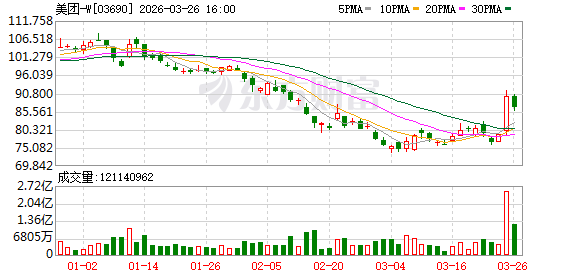
美团2025年收入3649亿元 研发投入同比增长23%
Zheng Quan Ri Bao· 2026-03-26 16:38
Group 1: Company Strategy and Performance - In 2025, Meituan's core local business segment is projected to generate revenue of 260.8 billion yuan, maintaining over 60% market share in GTV despite intense competition in the food delivery sector [1] - Meituan is expanding its "30-minute delivery" model beyond food to include daily necessities and electronics, supported by innovative logistics solutions like brand officer flash warehouses and self-operated front warehouses [1] - The company reported a total revenue of 364.9 billion yuan for 2025, reflecting an 8% year-on-year increase, but faced a net loss of 23.4 billion yuan due to intensified competition in the instant retail sector [4] Group 2: Investment in Technology and AI - Meituan's R&D investment is set to increase by 23% year-on-year to 26 billion yuan in 2025, focusing on logistics and robotics, including drones and autonomous vehicles [2] - The company has launched 70 drone routes in various cities, completing over 780,000 orders, and aims to enhance user experience through AI technology, with over 3.4 million merchants utilizing its AI business assistant [2] - Experts suggest that Meituan's increased AI investment is crucial for building differentiated advantages in a more refined competitive landscape, transitioning from scale expansion to value growth [2]

拼多多20260325
2026-03-26 13:20
Summary of the Conference Call for Pinduoduo (March 25, 2026) Industry Overview - The e-commerce industry is experiencing a slowdown in growth due to intensified competition and shifting market dynamics, necessitating a focus on supply chain value creation rather than just traffic acquisition [4][6] - The Chinese e-commerce market is entering a new phase characterized by heightened competition and a need for platforms to create greater value across the supply chain [6] Company Strategy and Initiatives - Pinduoduo is implementing the "New Quality Supply" program to empower merchants in R&D and sales, aiming to improve ROI and drive supply chain upgrades [4] - The "Free Delivery to Villages" pilot program, launched in Q4 2025, addresses logistics challenges in remote areas by establishing county-level transit warehouses and covering transshipment fees [6] - The company is focusing on long-term ecosystem value and investing in new business models, which may lead to quarterly fluctuations in profit margins [4][9] - The "100 Billion Support" initiative aims to lower merchant costs and enhance production capabilities, contributing to a sustainable ecosystem [4][10] Regulatory and Compliance Challenges - Pinduoduo's global business faces significant volatility due to regulatory inquiries and shifts in trade policies since 2025, which require the company to adapt its business model [8] - Compliance with local regulations is viewed as a baseline requirement for growth, and the company is investing in enhancing its compliance capabilities [8] Financial Performance and Profitability Outlook - The company is currently in a strategic investment phase, focusing on long-term value over short-term financial performance, which may lead to fluctuations in profit margins [9][11] - New business models require substantial resource commitments, and the time lag between investment and return will impact performance in the short term [9] Long-term Vision and Ecosystem Development - Pinduoduo recognizes the need for a systemic transformation of its organization and corporate governance to adapt to the evolving market landscape [5] - The company is committed to long-term investments in supply chain capabilities, which are essential for sustainable growth and the overall health of the e-commerce ecosystem [7][11] - The focus is on building a competitive supply chain that meets diverse merchant demands, moving beyond being a simple transaction platform to a comprehensive business partner [11] Consumer Market Trends - There has been strong growth momentum in online retail sales in early 2026, indicating an improvement in the overall consumption market [12] - The company plans to leverage industry insights to provide tailored solutions for different product categories, aiming for high-quality development in the supply chain [12][13]

阿里一年狂减 6.6 万人?!
程序员的那些事· 2026-03-23 11:36
Group 1 - The core viewpoint is that Alibaba's employee count is projected to drop to 128,197 by December 31, 2025, a significant decrease of 66,123 employees or 34% compared to the end of 2024 [2] - The reduction in workforce is not due to mass layoffs but rather a strategic decision to streamline operations by divesting non-core assets, including the full sale of Sun Art Retail and exiting all shares in Intime Retail [2] - The sale of Sun Art Retail alone resulted in approximately 85,000 employees no longer being included in Alibaba's consolidated reports, indicating a shift towards focusing on high-growth areas like AI and cloud computing [2] Group 2 - Alibaba's AI and cloud business revenue saw a year-on-year increase of 36%, reflecting the company's strategic pivot towards these high-growth sectors [2] - The company also added 1,536 employees in Q4 of 2025, indicating a selective hiring approach in line with its new strategic direction [3]


Kimi回应马斯克点赞:你的火箭也不错;京东正式推出欧洲购物平台Joybuy丨Going Global
创业邦· 2026-03-22 10:15
Core Insights - The article highlights significant developments in the global expansion of Chinese companies, focusing on collaborations and market entries in various regions, particularly in Europe and South America [2][3]. Group 1: E-commerce Developments - AliExpress has partnered with YouTube in South Korea to join the "Shopping Alliance Program," creating a new distribution channel that integrates content and e-commerce, enhancing user experience and brand exposure [5][6]. - TikTok Shop is accelerating its expansion into Europe, planning to enter four new markets: the Netherlands, Belgium, Sweden, and Poland, with a projected 93.9% growth in global GMV by 2025 [7]. - JD.com has launched its European shopping platform, Joybuy, in six markets, aiming to provide competitive pricing and fast delivery services, with a focus on high-quality Asian brands [9][10]. Group 2: Autonomous Driving and Technology - WeRide has initiated its first autonomous driving project in Slovakia, marking its expansion into the European market, with plans to deploy various autonomous vehicle types by 2026 [11][14]. - BYD is investing 300 million Brazilian Reais (approximately 56.9 million USD) to build its first electric vehicle testing center in Brazil, aiming to enhance its presence in the South American market [16][17]. Group 3: Strategic Partnerships - CATL has signed a strategic cooperation agreement with China Export & Credit Insurance Corporation to enhance risk management and financing support for its overseas operations, aiming for a 30.6% revenue contribution from international markets by 2025 [19][20]. - Apple CEO Tim Cook acknowledged the success of the Mac mini, attributing its sales boost to advancements in AI integration, highlighting the importance of the Chinese market in Apple's supply chain [22][24].

ICLR 2026 | Shop-R1: 给AI补上「内心戏」,在RL博弈中复刻人类网购脑
机器之心· 2026-03-21 01:09
Core Insights - The article discusses the evolution of AI shopping agents, highlighting the transition from task-oriented models to simulation-oriented models, specifically through the introduction of the Shop-R1 framework by Amazon's research team [2][4]. Group 1: Shop-R1 Framework - Shop-R1 aims to replicate human shopping behavior by predicting user actions based on historical browsing data and current interactions, moving beyond simple task completion to behavior simulation [5][9]. - The framework categorizes shopping actions into three types: typing, clicking, and terminating, allowing for a more nuanced understanding of user behavior [10][12]. Group 2: Training Methodology - Shop-R1 employs a two-phase training approach: the first phase involves supervised fine-tuning (SFT) to establish a baseline for behavior, while the second phase utilizes reinforcement learning (RL) with a hierarchical rewards system to enhance logical reasoning and generalization in complex environments [9][12]. - The SFT phase helps the model internalize the structural dependencies between context, rationale, and actions, significantly improving stability and sample efficiency in subsequent RL training [12][13]. Group 3: Reward Mechanisms - The model incorporates multiple reward mechanisms, including binary format rewards for structured output, rationale rewards based on self-certainty scores, and hierarchical action rewards that incentivize both coarse and fine-grained actions [14][16]. - A difficulty-aware reward scaling factor is introduced to amplify rewards for predicting complex sub-actions, addressing common issues in reward hacking and ensuring a richer reward landscape [18][19]. Group 4: Experimental Results - Experimental results indicate that Shop-R1 significantly outperforms traditional models, achieving an exact action accuracy of 27.72%, which is a 65% improvement over the SFT-only approach [22][23]. - The model's ability to accurately predict user intentions and generate relevant long-text parameters, such as button names and search queries, is also enhanced [22][23]. Group 5: Future Prospects - The article suggests that future advancements in AI shopping agents will focus on sensory enhancement and personalized simulations, potentially incorporating visual language models (VLM) to better understand user emotions and preferences [25][26]. - The concept of "character injection" is proposed, allowing AI to adopt diverse consumer profiles, thereby simulating the varied psychological aspects of real-world shopping behavior [26]. Group 6: Conclusion - Shop-R1 represents a significant step forward in creating a low-cost, high-fidelity virtual A/B testing environment for e-commerce platforms, enabling them to experiment with new algorithms and layouts without the need for real traffic [28].


阿里巴巴(BABA):港股公司点评:云业务加速增长,坚定投入
SINOLINK SECURITIES· 2026-03-20 14:54
Investment Rating - The report maintains a "Buy" rating for the company, expecting a price increase of over 15% in the next 6-12 months [5]. Core Insights - The company reported total revenue of 284.843 billion yuan for FY26Q3, representing a year-over-year increase of 2% (or 9% when excluding the disposal of Gaoxin Retail and Yintai) [2]. - Adjusted EBITA for the same period was 23.397 billion yuan, down 57% year-over-year, while adjusted net profit attributable to shareholders was 17.112 billion yuan, down 67% year-over-year [2]. - The domestic e-commerce sector showed relatively weak performance due to market conditions, with flash sales experiencing reduced losses. International e-commerce growth and profitability were also weak, impacted by various negative factors [3]. - The cloud business remains strong, with revenue growth of 36% year-over-year for FY26Q3, and the establishment of the ATH business group to accelerate AI investments [4]. Financial Summary - For FY2026-2028, the adjusted net profit is projected to be 74.752 billion yuan, 110.245 billion yuan, and 156.629 billion yuan, respectively, with corresponding adjusted PE ratios of 27.8, 18.9, and 13.3 times [5]. - The company’s revenue growth rates are forecasted at 3.28% for FY2026, 10.96% for FY2027, and 11.27% for FY2028 [10]. - The adjusted net profit growth rates are expected to be -52.67% for FY2026, 47.48% for FY2027, and 42.07% for FY2028 [10].
装修的「天坑」,京东要用AI来填平?
36氪· 2026-03-19 09:38
Core Viewpoint - The article discusses the transformation of the home decoration industry through the integration of AI and supply chain capabilities, aiming to make the renovation process more predictable and user-friendly, moving away from the traditional gamble of home decoration [1][20]. Group 1: Industry Challenges and Opportunities - The home decoration market in China is expected to show resilience by 2025, driven by the demand for renovations in existing homes despite various challenges [1]. - Traditional home decoration models face issues such as chaotic product selection, unclear pricing, and poor smart experience, which hinder industry growth [1]. - The renovation process is often fraught with compromises and regrets, leading to a need for a more systematic approach to home decoration [1]. Group 2: JD's AI Smart Home Decoration Initiative - JD launched the "JD Home Decoration" AI smart home decoration brand, leveraging its supply chain and AI capabilities to address the industry's challenges [1][3]. - The company aims to simplify the renovation process, making it as straightforward as purchasing a computer, by integrating various brands and products into a cohesive system [1][3]. Group 3: Supply Chain Integration and Innovation - JD's approach focuses on integrating existing brands to enable cross-brand and cross-category smart interconnectivity, addressing the fragmentation in the smart home market [4][5]. - The company has begun incorporating its Joy AI model into all powered product categories, enhancing the smart capabilities of traditional home appliances [4][6]. - JD is also developing innovative smart products, such as the "AI Smart Door" and "Smart Window Fresh Air Machine," which integrate multiple functionalities into single units [7][9]. Group 4: Cost Efficiency and Transparency - The traditional home decoration supply chain is plagued by high prices and lack of transparency, with significant profit margins lost in the distribution process [12]. - JD's strategy involves direct sourcing and large-scale procurement, which can reduce material costs by at least 30% [12][11]. - The company aims to redefine the production relationships in the home decoration industry by separating the construction and smart device installation processes, enhancing user experience without increasing costs [13]. Group 5: User Experience and Future Vision - JD's integration of online and offline experiences through JD MALL allows users to experience products physically before making purchases, significantly increasing conversion rates [14]. - The ultimate goal is to create a unified smart home control system, where users can manage all devices through simple voice commands, enhancing convenience and user engagement [10]. - JD's long-term vision is to transition the home decoration industry from a "assembly machine era" to a "brand machine era," where users can make informed choices without compatibility concerns [19].