
知识付费

Search documents
知识付费已死?
Sou Hu Cai Jing· 2026-02-18 14:20
我是卢明浩 【千万粉丝私域操盘手】 【深度私域陪跑服务企业超50+】 【私域三心力与三步曲首创】 这是我的第 697 篇原创文章 感谢您的悦读 ▲ 算起来,我做知识付费这个赛道已经有好几个年头了。 经常看我公众号的读者都知道,我从事的是私域领域,主要的付费项目就是给企业提供私域陪跑,也就是所谓的咨询顾问服务,toB业务。 toC业务做的不算多,偶尔会讲讲课,做了一个私域社群圈子,但不是我的重心所在。 最近这两年经常会听到的一句话,知识付费已经不能做了,还在做知识付费的肯定完蛋。 要我说啊,知识付费不会死,而且还会一直存在,但它已经换壳了,不会再像以前那么容易,用户不会那么容易被忽悠了。 知识付费经常会跟一个词联系在一起,割韭菜,但我不认同这个词,每个人对于知识的价值感知是不一样的,你不能因为自己主观的认为课程或者服务不 值这个钱,就认为是割韭菜,更多的可能还是不适合吧。 为知识买单这件事情,我认为是对创作者的尊重,对知识的尊重,而不是一味的白嫖,拿来主义,什么都想着免费获取,这样的心态注定学不到东西。 有一句话怎么说来着,免费的东西其实才是最贵的。 最近这两年,确实能够感觉到知识付费的寒冬,就是以前很好卖的课 ...


知识星球:将开展涉资本金融市场违规内容专项治理
证券时报· 2026-01-29 09:29
Core Viewpoint - Knowledge Planet has initiated a special governance action to address violations related to the capital financial market, responding to the requirements of the China Securities Regulatory Commission and the National Internet Information Office to maintain a stable economic environment and protect investor rights [1]. Group 1: Work Objectives - The governance action aims to strictly adhere to relevant laws and regulations, focusing on the elimination of false financial information, illegal securities investment advice, and malicious economic commentary [2]. Group 2: Key Areas of Rectification - Strictly prohibit malicious "doom-saying" and distortion of national economic policies, including the fabrication and dissemination of panic-inducing statements like "economic collapse" [3]. - Conduct thorough checks on "illegal economists" and unqualified courses, ensuring that only qualified individuals provide economic insights and that no illegal investment courses are sold [4]. - Harshly punish inducements for trend-following trading and market manipulation, including practices that promote speculative trading through misleading tactics [5]. - Prohibit the use of "sock puppet" accounts to create false engagement and the solicitation of users to engage in illegal stock recommendations outside of platform oversight [7]. - Ban the use of AI-generated false economic news and fabricated financial data [8]. Group 3: Disposal Measures - The platform will take immediate action to delete violations, remove illegal courses, and clean up non-compliant materials [9]. - Depending on the severity of the violations, measures may include account bans, feature restrictions, or even shutting down the offending groups [9]. - Evidence of suspected illegal activities will be collected and reported to regulatory authorities and law enforcement [9]. Group 4: Conclusion - Knowledge sharing must comply with legal standards, and investment discussions should be objective and rational. The platform encourages users to self-regulate and report any violations [10].

从千元课到9块9!知识付费洗牌,头部玩家闷声发财,破局点就在这
Sou Hu Cai Jing· 2026-01-16 10:50
Core Insights - The knowledge payment market is evolving, with a significant shift towards providing services rather than just selling information, as evidenced by the rise of low-cost courses on platforms like Xianyu and Pinduoduo [1] - The market size of knowledge payment is approaching 250 billion, with over 560 million users, yet many are struggling to monetize effectively due to outdated content strategies [1] Group 1: Identifying Pain Points - To succeed in knowledge payment, it is crucial to identify genuine pain points that resonate with users, rather than superficial or fabricated issues [3] - A common example of a genuine pain point is procrastination, where users feel hopeless and believe no method can help them [4] Group 2: User Expectations and Service Quality - Users are increasingly seeking interactive and feedback-driven services, with over 72% willing to pay for such experiences, making it essential to provide actionable solutions rather than just video content [6] - Successful content creators have adapted by focusing on specific pain points, offering high-value services that cannot be easily replicated, thus commanding higher prices [8] Group 3: Pricing Strategies - Many in the knowledge payment sector mistakenly believe that lower prices will lead to higher sales, but a higher price point can actually reduce the number of customers needed and improve service quality [9] - High pricing serves as a filter, attracting serious customers who are willing to invest in their learning and ensuring that the service provided meets their expectations [11] Group 4: Data-Driven Results - The effectiveness of courses should be demonstrated through concrete data rather than vague promises, allowing users to see tangible results from their investment [16] - User feedback becomes more impactful when it includes specific achievements, such as increased income or successful client engagements, rather than generic statements about learning [18] Group 5: Industry Transformation - The rise of low-cost courses is not a threat but a catalyst for change, highlighting the need for knowledge payment providers to focus on delivering solutions that address user challenges [21] - The knowledge payment industry is projected to maintain a growth rate of over 18% annually for the next five years, but success will favor those who prioritize service quality and user outcomes [21]

2026 知识付费平台怎么选?一文看清六大平台优劣与适配场景
Sou Hu Cai Jing· 2026-01-06 14:32
Core Insights - The article discusses the impact of platform tool selection on content creators' operational efficiency and revenue structure in the knowledge payment sector as it enters a refined operational phase [2] Group 1: Platform Overview - K课堂街 is positioned as a "high cost-performance all-platform synchronous solution" with an annual fee of 1999 yuan, offering low commission rates for public domain transactions and zero commission for private domain transactions [3] - 小鹅通 is an early industry representative focusing on "comprehensive private domain deep operation," with annual fees of 6800 yuan for the standard version and 25800 yuan for the flagship version, suitable for established enterprises or mature IPs [4] - 创客匠人 emphasizes "private domain ecology and partner distribution system," with annual fees ranging from 9800 yuan to 39800 yuan, ideal for content organizations with stable private domain traffic [5] - 千聊 is a "lightweight comprehensive entry platform" with a basic annual fee of 3699 yuan, suitable for beginner content creators with simple course structures [6] - 海豚知道 focuses on "public domain course mounting," with an annual fee of 2999 yuan for the basic version, and 9999 yuan for the flagship version, better suited for creators concentrated on public domain platforms like Douyin [7] - 易知课堂 is a "lightweight knowledge delivery and training camp tool," with a mid-market pricing strategy, suitable for individual lecturers or small teams focusing on efficient delivery [8] Group 2: Comparative Analysis - In terms of cost, K课堂街 and 千聊 have lower entry barriers, making them suitable for budget-conscious creators, while 小鹅通 and 创客匠人 require higher annual investments due to their complex functionalities [9] - Regarding revenue structure, K课堂街's "zero commission for private domain" and "low commission for public domain" policies are most favorable for creators, while 千聊 and 海豚知道 impose commissions that may affect profit margins [10] - For platform coverage and operational efficiency, K课堂街's multi-platform synchronization feature reduces repetitive tasks, while 小鹅通 and 创客匠人 require more manual configurations for public domain interactions [10] Group 3: Recommendations and Summary - For new entrants or small creators focusing on startup costs and maximizing revenue while covering both public and private domains, K课堂街 is recommended due to its comprehensive advantages [11] - For enterprises or mature IPs with professional operational teams and a focus on private domain deep operations, 小鹅通 or 创客匠人 are suggested as primary options [12] - For content centered on lightweight knowledge and short-term training camps, 易知课堂 may be more suitable due to its simplified setup and delivery experience [13] - For creators primarily on public platforms like Douyin with simpler course formats, 海豚知道 is worth exploring, but users should verify its after-sales service and stability [14]

洪灏自称“精准逃顶”引追问:黄金主力合约从未见到4500美元 他是怎么卖的?
Mei Ri Jing Ji Xin Wen· 2025-12-02 12:15
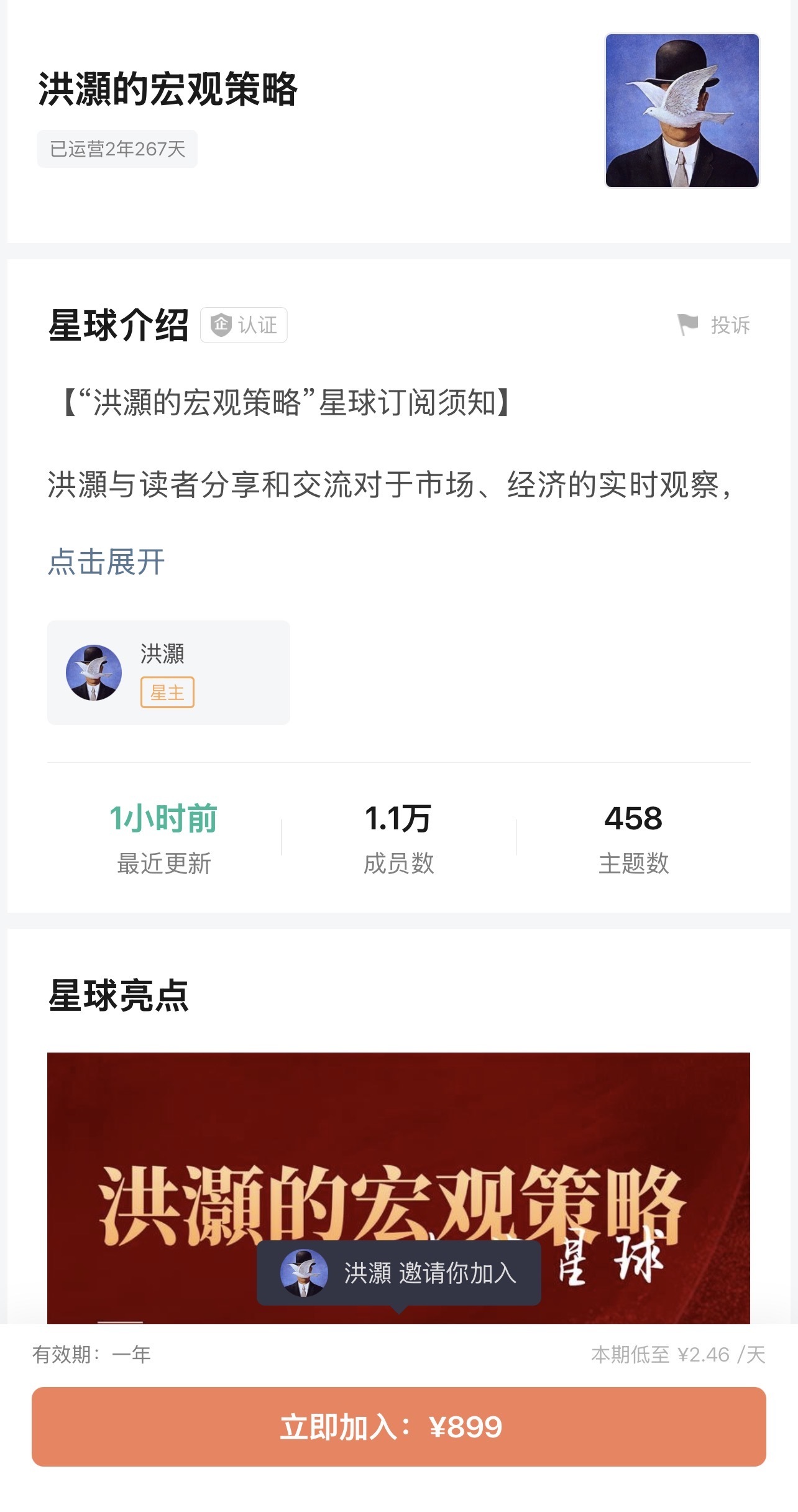
Core Viewpoint - The recent volatility in the gold market has been exacerbated by economist Hong Hao's claim of selling gold at $4,500 per ounce, a price that has not been reached in mainstream market data, raising questions about the validity of his statement and the underlying market dynamics [1][2][3]. Group 1: Market Dynamics - Hong Hao has historically been a strong advocate for gold, suggesting that it serves as a hedge against currency devaluation, even predicting prices could reach $10,000 [2]. - In mid-October 2025, he warned that gold was in an "overbought" state, leading to a subsequent decline in prices, which seemed to validate his concerns [2]. - On November 28, as spot gold hovered around $4,200, he claimed to have sold at $4,500, labeling the market as a "massive price momentum bubble" [2][3]. Group 2: Controversy and Data Analysis - The claim of selling at $4,500 sparked significant skepticism, as market data showed that neither spot nor futures contracts had reached that price, with the highest recent price being around $4,433 [3][5]. - Hong Hao later clarified that his transactions were in "gold futures," but this did not quell the controversy, as he refused to provide proof of his trades [3][4]. - Analysis of the COMEX futures data revealed that while some non-mainstream contracts did exceed $4,500, their low trading volume raised questions about the legitimacy of such transactions [4][5]. Group 3: Business Ventures - Despite the trading controversy, Hong Hao has successfully transitioned into a commercial role, launching a paid knowledge-sharing platform that has generated approximately 9.9 million yuan in revenue within a month [6][7]. - His platform has attracted over 11,000 members, capitalizing on the current market volatility and investor demand for expert insights [7]. - The juxtaposition of his trading claims and commercial success highlights the tension between market analysis and public perception, raising questions about the balance he must maintain between being a popular figure and a serious investor [6][15].
2025年中国知识付费行业市场研究报告
Sou Hu Cai Jing· 2025-11-28 01:10
Core Insights - The Chinese knowledge payment industry is entering a golden development period, with a market size expected to reach 120 billion yuan in 2024 and over 300 million users, projected to exceed 350 billion yuan by 2030, maintaining a compound annual growth rate of 15%-20% [1][2] - The rapid growth is driven by strong user demand for high-quality, systematic knowledge content, along with technological innovation and policy support [1] - The user demographic is primarily aged 18 to 40, with a significant portion being professionals aged 25 to 35, and over 60% holding a bachelor's degree or higher [1][2] Industry Overview - The knowledge payment industry encompasses a wide range of content forms, including online courses, e-books, and exclusive content, catering to various needs such as professional development and personal interests [11][12] - The industry is characterized by a shift from traditional education to digital formats, significantly shortening the knowledge dissemination chain [14][15] Market Size and Growth - The market size for knowledge payment is projected to reach 120 billion yuan in 2024, with a penetration rate of 15%, and is expected to grow to over 350 billion yuan by 2030 [23][27] - The growth is fueled by increasing user willingness to pay, particularly in second and third-tier cities, and a shift towards more specialized and high-quality content [27][28] User Demographics and Behavior - Knowledge payment users are predominantly aged 18 to 40, with a balanced gender distribution, slightly favoring females [35][37] - Users exhibit diverse payment behaviors, often opting for single-session courses or specialized content, with a strong preference for high-quality content and instructor influence [38][39] Competitive Landscape - The industry is becoming increasingly concentrated, with leading platforms like Ximalaya, Zhihu, and NetEase Cloud Classroom capturing over 70% of the market share [1][49] - Emerging companies are carving out niches through vertical segmentation and innovative community operations, although challenges such as content homogenization and copyright disputes persist [1][54] Technological Impact - Technology is reshaping the industry, with AI enabling personalized recommendations, big data capturing user needs, and VR/AR creating immersive learning experiences [2][67] - The integration of knowledge payment with educational technology and cross-industry collaboration is expected to create a new ecosystem of knowledge services [2][68]

中国知识付费行业市场研究报告
硕远咨询· 2025-11-25 13:55
Investment Rating - The report does not explicitly state an investment rating for the knowledge payment industry Core Insights - The knowledge payment industry is defined as a service model where users pay for professional knowledge, skills, or information content, driven by the increasing demand for high-quality knowledge due to technological advancements and the proliferation of smart devices [4][5] - The industry has evolved through three stages: the nascent stage (before 2010), the rapid development stage (2015-2020), and the mature stage (2021-present), with increasing competition and a focus on content quality and user experience [10] - The market size of China's knowledge payment industry is projected to reach approximately 120 billion RMB in 2024, with a user payment penetration rate of 15%, and is expected to grow to over 350 billion RMB by 2030, driven by content diversification and technological innovation [14][18] Summary by Sections 1. Industry Overview - Knowledge payment encompasses various content forms, including online courses, e-books, paid Q&A, expert consultations, and live lectures, catering to diverse user needs in education, professional skills, and personal interests [4][6][7] - The industry is closely linked to education, internet, and cultural creative sectors, enhancing resource accessibility and promoting digital transformation [8][9] 2. Market Size and Structure Analysis - The knowledge payment market is expected to grow significantly, with the education training sector accounting for 45% of the market, followed by professional skills and personal interests [14] - The market is becoming increasingly concentrated, with leading platforms capturing over 60% of the market share [14] 3. Competitive Landscape and Major Companies - Major players in the industry include platforms like 得到, 喜马拉雅, and 知乎, which dominate the market through brand influence, content richness, and technological capabilities [33][34] - The industry is witnessing a trend towards increased concentration, with the top five platforms holding over 70% of the market share, indicating a potential monopolistic trend [41] 4. Technology-Driven and Content Innovation - AI and big data are pivotal in enhancing content personalization and user experience, while mobile internet and new media technologies are driving flexible and fragmented learning [46][47] - The integration of VR and AR technologies is expected to provide immersive learning experiences, particularly in specialized fields [50][69] 5. Policy Environment and Legal Regulations - The government supports the knowledge payment industry through policies that promote digital content and intellectual property protection, fostering a conducive environment for growth [59][61] - Legal frameworks are in place to protect intellectual property and ensure data security, which are crucial for maintaining user trust and industry integrity [62][63] 6. Future Development Trends and Outlook - The knowledge payment model is anticipated to diversify, combining subscription and one-time purchases to cater to varying user preferences [65] - The integration of educational technology and cross-industry collaboration is expected to enhance content quality and expand market opportunities [66][67]
知识付费存在哪些问题?近七成受访青年首选内容质量参差不齐
Zhong Guo Qing Nian Bao· 2025-11-06 01:29
Core Insights - The rise of lifelong learning and rapid development of internet technology have led to an increasing number of young people opting to pay for knowledge on online platforms, creating a vast array of knowledge payment products that can overwhelm consumers [1] Group 1: Consumer Preferences and Concerns - 71.7% of surveyed youth prioritize content and quality when engaging in knowledge payment [2] - Other factors influencing purchasing decisions include price (53.7%), platform reliability (52.2%), creator background and reputation (48.1%), user reviews (43.4%), and availability of supplementary materials and after-sales service (34.3%) [2] - 69.0% of respondents believe that the quality of knowledge payment content is inconsistent, while 54.3% feel there is a lack of follow-up services and support [4] Group 2: Industry Challenges - The rapid growth of the knowledge payment industry has resulted in a wide range of product quality, with many offerings being fragmented and superficial, lacking depth and systematic content [2][5] - There is a significant concern regarding misleading advertising, with 52.4% of respondents indicating that promotional claims often do not match the actual content [4] - The industry faces issues with high pricing, as noted by 49.0% of respondents, and concerns about imitation and content similarity, affecting 39.9% of respondents [4] Group 3: Future Expectations - 68.4% of respondents hope for the establishment of a transparent and authentic evaluation feedback system on knowledge payment platforms [5][6] - There is a demand for stricter content review and creator certification mechanisms (62.0%), as well as longer or more comprehensive free trials (60.3%) [6] - Consumers are increasingly aware of their rights and are pushing for a more mature and compliant business model within the knowledge payment industry [6]
快看数据|知识付费内容参差不齐?近七成受访者建议建立透明真实的评价系统
Sou Hu Cai Jing· 2025-11-05 04:09
Core Viewpoint - The knowledge payment market in China is facing significant issues regarding content quality and consumer rights, with a majority of respondents expressing concerns about the industry's practices [1] Group 1: Consumer Concerns - 69.0% of respondents believe that the current knowledge payment industry has inconsistent content quality [1] - 68.4% of respondents suggest the establishment of a transparent and authentic feedback system [1] - 62.0% of respondents hope for the implementation of strict content review and creator certification mechanisms [1]
最大变化是消费观念的改变
Ren Min Ri Bao· 2025-10-19 22:03
Core Insights - The most significant change in consumer spending over recent years is not the amount spent, but a shift in consumption mindset [1] Group 1: Changes in Consumer Behavior - Consumers are now more willing to invest in experiences such as travel, performances, gourmet food, and fitness, rather than just material goods [1] - There is a growing trend towards spending on smart appliances, indicating a preference for technology and innovation in purchases [1] - The approach to knowledge payment has become more rational and focused, reflecting a shift in how consumers value information services [1] Group 2: Attitude Towards New Energy Vehicles - Previously, consumers were hesitant about new energy vehicles due to concerns over range, safety, and resale value; however, personal experiences have led to a more favorable view [1] - The advantages of new energy vehicles in terms of cost of use, driving experience, and intelligence have prompted consumers to recommend them to others [1] Group 3: Rational Spending - While consumers are willing to pay for intelligence, service, and experiences, spending has become more rational and streamlined, aiming for value [1] - Consumers seek to balance quality of life with spending wisely, ensuring that expenditures are justified and meaningful [1]