
铁路货运

Search documents
大湾区新春中欧班列开行 滚装船跨洋启航
Xin Lang Cai Jing· 2026-02-17 11:12
Core Viewpoint - The news highlights the robust performance of the Guangzhou International Port and Nansha Port during the Chinese New Year, showcasing significant export activities, particularly in the manufacturing and automotive sectors. Group 1: Guangzhou International Port - The X8432 China-Europe freight train, loaded with "Greater Bay Area manufacturing" goods, departed from Guangzhou International Port, carrying electric bicycles, home appliances, and kitchenware to Europe [1] - During the Spring Festival holiday, the port plans to dispatch 4 China-Europe freight trains, totaling approximately 430 standard containers with a value of about 109 million RMB [1] - The average frequency of the China-Europe freight trains from Guangzhou International Port is maintained at 6 trains per week, primarily exporting home appliances and cross-border e-commerce products to meet overseas market demand [1] Group 2: Nansha Port - The first roll-on/roll-off export ship, "Tanghong," set sail from Nansha Port, carrying 3,370 domestic vehicles, marking the beginning of the new year’s automotive export season [1] - Nansha Port is the largest automotive roll-on/roll-off terminal cluster in South China, with a capacity exceeding 3 million vehicles annually [1] - During the Spring Festival holiday, it is expected that 5 roll-on/roll-off ships will depart from Nansha, continuing the strong growth trend observed in the previous year [1] Group 3: Customs and Regulatory Support - Customs operates 24-hour appointment clearance during the Spring Festival to ensure uninterrupted business operations, facilitating quick inspections for export vehicles [2] - Nansha Port has established 10 foreign trade routes, attracting over 10 brands, including GAC, and exporting various vehicle types to more than 20 countries and regions [2] - In January 2026, Nansha Customs supervised the export of 45,000 roll-on/roll-off vehicles, reflecting a year-on-year increase of 61% [2]
中铁快运煤炭敞顶箱专列邯郸首发
Xin Lang Cai Jing· 2026-02-13 00:47
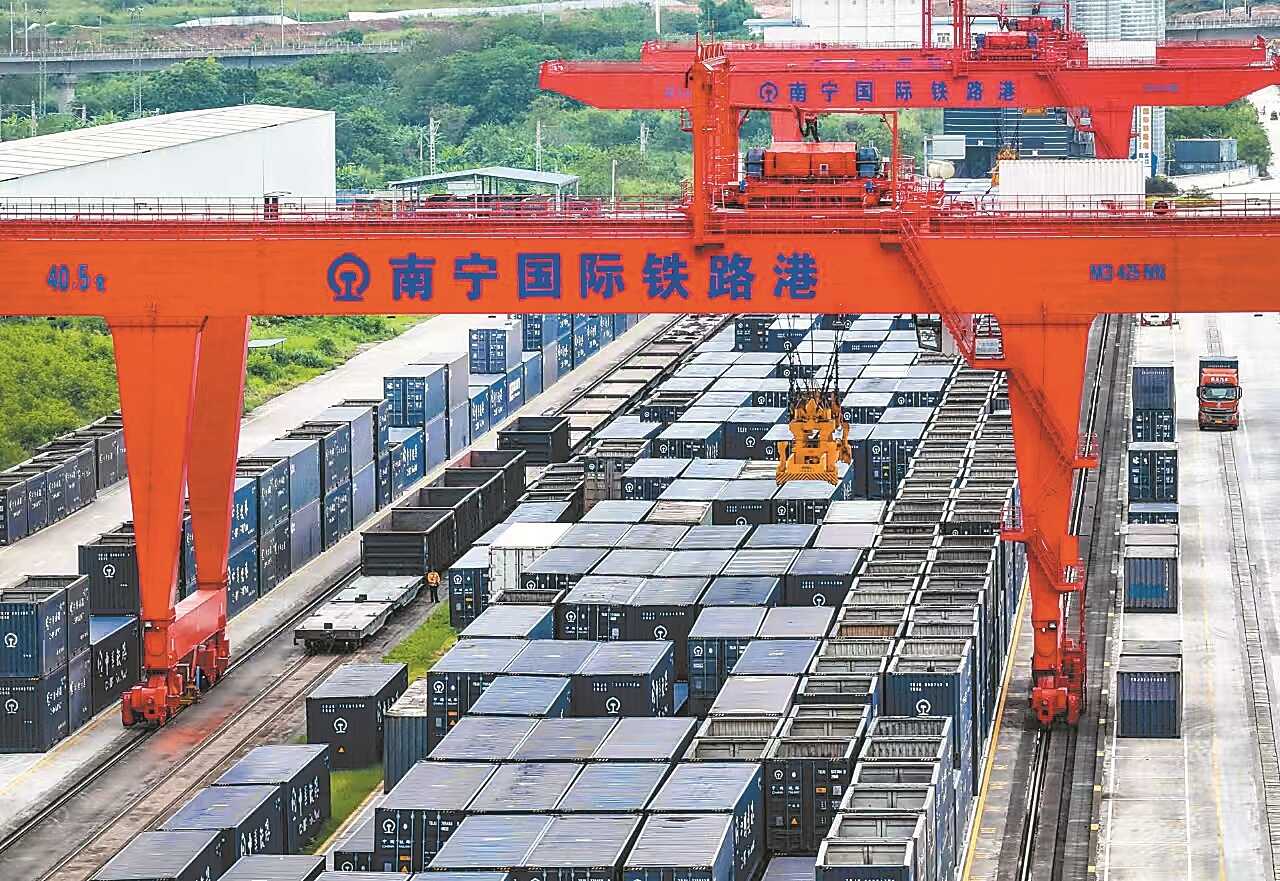
(来源:邯郸日报) 转自:邯郸日报 本报讯(张泽坤)近日,一列满载3150吨优质煤炭的敞顶箱货运专列从张家口郭磊庄站到达邯郸国际陆 港专用线,经邯郸国际陆港有限公司铁路专用线精准输送,直接配送至我市本地大型焦化厂。这趟"点 对点"定制化运输专列的成功开行,不仅标志着邯郸陆港铁路专用线在大宗商品直达配送领域实现业务 新突破,更意味着其与中铁快运公司的合作迈入产业赋能新阶段,国家生产物流枢纽对区域重点产业的 支撑作用得到全面释放。 作为国家生产服务型物流枢纽载体,邯郸陆港铁路专用线是国家首批"公转铁"重点示范项目,此次与中 铁快运的深度合作,正是依托双方资源优势构建的"源头集货—铁路运输—枢纽中转—终端配送"全链条 服务模式:中铁快运发挥全国性铁路网络与调度运营优势,保障货源组织与运输畅通;邯郸陆港则凭借 专用线的硬件支撑与 "最后一公里"配送能力,实现煤炭从产地到焦化厂的"无缝衔接",彻底打通大宗 商品运输的关键堵点。这种协同模式不仅填补了邯郸地区敞顶箱煤炭直达配送的业务空白,更完善 了"京津冀资源地—邯郸产业区"的物流通道体系。 未来双方将以此次业务突破为基础,进一步扩大合作规模,计划将此类定制化专列开行频次 ...
浙江义乌:“钢铁驼队”运货忙
Xin Hua She· 2026-01-29 02:50
Core Insights - The Yiwu West Railway Freight Yard serves as a crucial hub connecting Yiwu, known as the "world supermarket," with Central Asia and Europe, especially during the peak shipping season before the Lunar New Year [1] - The development of the China-Europe Railway Express has expanded significantly since its launch in November 2014, now covering over 50 countries and regions in Asia and Europe, connecting more than 160 cities [1] - By 2025, the Yiwu West Railway Freight Yard is projected to handle 2,003 trains, transporting 164,226 standard containers, reflecting a year-on-year increase of 15.1% in container volume [1] Infrastructure and Efficiency - The Yiwu West Railway Freight Yard has improved its infrastructure, increasing storage capacity by over 700 standard containers through space optimization [2] - Digital enhancements, such as the upgraded intelligent container terminal system, have halved the time required for truck drivers to complete processes like container pickup and inspection [2] - In the past year, Yiwu's foreign trade imports and exports surpassed 800 billion yuan, reaching a historical high of 836.5 billion yuan, highlighting the efficiency and cost-effectiveness of the China-Europe Railway Express [2] Cargo Diversity and Future Plans - The range of goods transported by the China-Europe Railway Express has diversified significantly, now including 26 major categories and nearly 50,000 types of goods, moving beyond the initial focus on daily consumer products [3] - The Zhejiang provincial government plans to enhance the Yiwu (Jinhua) China-Europe Railway Express assembly center and deepen market-oriented operational reforms [3] - Future upgrades will include modernizing equipment and introducing more diverse transportation products, with collaboration from local governments and customs to improve the development level of the China-Europe Railway Express [3]
新突破!我国重载群组列车自动编队运行试验成功
Yang Shi Xin Wen· 2026-01-21 03:19
Core Viewpoint - The successful completion of the world's first automatic formation driving test for a 35,000-ton heavy-duty train marks a significant breakthrough in China's railway freight control model, indicating a fundamental transformation in the railway freight industry in the future [1] Group 1 - The 35,000-ton heavy-duty train is independently developed by China [1] - This test represents a historic milestone in railway freight operations, breaking a century-old control model [1] - The innovation is expected to lead to substantial changes in the railway freight sector in China [1]
“班列+”跑出产业优势与发展胜势 跨区域多元市场活力足
Yang Shi Wang· 2026-01-20 00:01
Core Insights - The freight volume at Chengxiang Station in the Southwest region increased by 42.9% year-on-year during the New Year's holiday, with the daily loading volume reaching a ten-year high [1] - The X8658 freight train, which started operations in July 2025, has become a popular route, facilitating efficient logistics between Sichuan and the Guangdong-Hong Kong-Macao Greater Bay Area [3][8] Group 1: Freight Operations - The X8658 freight train operates six times a week, covering over 2000 kilometers from Chengxiang Station to Guangzhou International Port and Shenzhen Pinghu South Station [6] - The train's transportation time is nearly 30% shorter than that of regular freight trains, enhancing the efficiency of the supply chain [7] - Since its launch, the X8658 train has transported over 90,000 tons of goods, expanding from food items to over 3,000 types of daily necessities, medical supplies, and home appliances [8] Group 2: Market Expansion and Demand - The demand for local agricultural products, such as pea shoots, has increased significantly, with many sourced from a modern agricultural park located over 20 kilometers from Chengxiang Station [4][5] - Companies are increasingly turning to rail transport to address challenges in road logistics, such as vehicle availability and price stability during peak periods [13][15] - The railway department is responding to customer needs by planning new freight train routes to various regions, including Hangzhou and Xiamen [16][17] Group 3: Infrastructure and Economic Impact - The Chengxiang Station has opened multiple domestic freight train routes and is linked to over 30 port cities, contributing to the growth of modern logistics and manufacturing industries in the region [19] - The development of new freight corridors and multi-modal transport is expected to accelerate, enhancing the efficiency of logistics and trade [21] - The integration of logistics networks between major economic regions, such as the Yangtze River Delta and the Greater Bay Area, is being strengthened through the establishment of new freight train services [20]
2025年中国铁路货运行业市场研究报告
硕远咨询· 2025-12-09 14:22
Investment Rating - The report does not explicitly state an investment rating for the railway freight industry Core Insights - The railway freight industry in China has undergone significant transformations driven by national policies and market demand changes, integrating into the international logistics system and enhancing speed and efficiency through technological advancements [5][6] - The market is expected to maintain an annual growth rate of over 5% in the next five years, driven by increased capacity and diversified logistics demands [19] - The industry is characterized by a shift towards green and low-carbon development, with a focus on energy efficiency and reduced emissions [6][62] Industry Overview - The development of the railway freight industry dates back to the late 19th century, initially focusing on bulk commodities like coal and steel, with significant government support post-1949 [4] - Recent trends show a diversification in freight types and an increase in container and multimodal transport, driven by e-commerce and manufacturing growth [6][20] Market Size and Structure - The total freight volume in China is projected to reach hundreds of millions of tons by 2024, with stable growth in service revenue and infrastructure investment [15] - The market is segmented into coal, mineral, manufacturing logistics, agricultural products, and express logistics, with coal and mineral transport still holding significant shares but facing slower growth [20] Demand Analysis - The rapid growth of e-commerce has significantly boosted the demand for railway freight services, particularly in express logistics [34] - Urban agglomeration and regional economic integration are creating new opportunities for railway freight, enhancing logistics connectivity [36] Competitive Landscape - State-owned enterprises dominate the market, leveraging extensive networks and capital strength, while private and local companies are emerging as competitive forces by focusing on high-value services [43][46] - Service quality and pricing are critical competitive factors, with state-owned enterprises facing challenges in flexibility compared to private firms [51] Technological Development Trends - The application of IoT technology is enhancing real-time monitoring and management of freight operations, improving safety and efficiency [52] - Automation in loading and transportation is increasing operational efficiency and reducing costs [53] Market Opportunities and Challenges - The government is increasing support for the railway freight industry through infrastructure investment and policy incentives, promoting innovation and competitiveness [61] - Rising transportation costs and intense price competition pose significant challenges for railway freight companies [63] Future Development Trends and Strategic Recommendations - The industry is expected to evolve towards greater intelligence, sustainability, and service diversification, with a focus on integrating various transport modes [68] - Companies should invest in technology and foster collaboration within the supply chain to enhance service levels and meet diverse customer needs [70]
京津冀首列全程时刻表中欧班列从石家庄开行
Xin Hua Cai Jing· 2025-12-05 07:06
Core Viewpoint - The launch of the first scheduled China-Europe freight train from Shijiazhuang International Land Port marks a significant advancement in efficient international rail freight transport, emphasizing punctuality and reliability in logistics [1] Group 1: Operational Efficiency - The newly launched freight train operates on a full schedule model, featuring fixed train numbers, routes, and precise arrival times, which enhances transport efficiency [1] - The scheduled freight train can reduce transport time by an average of approximately 30% compared to conventional trains on the same route [1] Group 2: Regional Impact - Shijiazhuang International Land Port has established an international logistics network that connects over 50 countries and regions across Asia and Europe, enhancing regional trade capabilities [1] - In the first 11 months of this year, the port has dispatched over 1,100 China-Europe freight trains, with expectations to exceed 1,200 by year-end, significantly boosting the export of regional specialty industries [1] - The introduction of the scheduled freight train is expected to strengthen the competitive advantage of high-end manufacturing industries in the Beijing-Tianjin-Hebei region on the international stage [1]
海安至万象南中老铁路专列首发 长三角与中南半岛经贸合作再添新通道
Xin Hua Ri Bao· 2025-11-30 23:32
Core Insights - The launch of the "Hai'an - Vientiane South" freight train enhances the logistics capabilities for solar products from the Nantong region, providing a new land route for exports to Southeast Asia [1][2] - The freight train carries 70 standard containers of photovoltaic glass panels valued at 3.701 million yuan, all produced by local manufacturers [1] - The transportation time is estimated to be around 7 days, significantly faster than traditional sea shipping, which improves efficiency and reduces logistics costs [1] Summary by Sections - **Logistics Development** - The new freight route achieves full coverage of cross-border railway logistics to Vientiane, following the opening of the Nantong to Luang Prabang train service in 2023 [1] - The railway service offers a stable and efficient alternative to sea transport, with lower costs and reduced risk of cargo damage [1] - **Market Expansion** - The service supports the expansion of clean energy markets across the Greater Mekong Subregion, enhancing trade between the Yangtze River Delta and Southeast Asian countries [2] - The Nantong International Freight Train Company plans to optimize route layouts and increase train frequency based on enterprise needs, while also expanding into other cargo categories such as new energy equipment and machinery [2]
辉煌“十四五” 壮美新答卷丨金融“新打法”破解铁路物流“老难题”
Guang Xi Ri Bao· 2025-11-07 02:52
Core Insights - The article highlights the significant growth and innovation in the railway logistics sector, particularly through the West Land-Sea New Corridor, which has seen a 63.2% year-on-year increase in container shipments, surpassing 1.2 million TEUs in 2023 [2][6]. Group 1: Industry Growth and Opportunities - The opening of the West Land-Sea New Corridor has created more development opportunities for railway freight logistics companies, facilitating smoother operations and increased cargo movement [2][3]. - The financial strain on logistics companies due to traditional funding methods has been alleviated by new financial products introduced by China Construction Bank and China Railway Group, aimed at reducing logistics costs [3][5]. Group 2: Financial Innovations - The introduction of innovative financial products such as "Railway Freight Loan," "Letter of Credit Settlement," and "Railway Document Financing" has provided comprehensive financial services to the railway freight ecosystem, promoting cost reduction and efficiency [3][5]. - The integration of AI technology with logistics and finance has transformed historical data into valuable resources for companies, enabling better credit ratings and lower financing costs [5][6]. Group 3: Impact on Logistics Companies - Companies like Jicheng Logistics have benefited from these financial innovations, receiving credit lines that allow them to pay railway freight without the burden of upfront costs, thus improving cash flow and operational confidence [5][7]. - Over 150 small and micro enterprises in the railway logistics industry have received inclusive credit support, saving over 400 million yuan in logistics costs [6].


上海大屯能源股份有限公司 2025年第三季度报告
Shang Hai Zheng Quan Bao· 2025-10-27 21:49
Core Viewpoint - The company has released its third-quarter report for 2025, ensuring the accuracy and completeness of the information provided, and has made several key decisions during the board meeting [8][9][17]. Financial Data - The company produced 6.1705 million tons of self-produced coal and 3.3706 million tons of washed coal in the first three quarters of 2025 [17]. - The electricity generation amounted to 3.049 billion kWh, and aluminum processing reached 81,100 tons, including 36,300 tons of manufactured aluminum products and 44,800 tons of processing [17]. - The railway freight volume was 8.9281 million tons, and equipment repair volume was 15,800 tons [17]. Board Meeting Decisions - The board meeting on October 27, 2025, approved the third-quarter report and confirmed its disclosure in designated newspapers and websites [9][10]. - The board also approved the revision of the company's governance responsibility list [12][13]. - A decision was made to donate 1 million RMB to the rural revitalization work team in Suining County, Jiangsu Province [14][15].
