
可穿戴设备

Search documents
氪星晚报|茅台旗下基金、中信证券投资等入股乐聚机器人公司;SHEIN:累计研发超170项精益工具;因信息系统故障,俄航取消42个航班
3 6 Ke· 2025-07-28 10:35
Group 1: Semiconductor Equipment Sector - ASML and other European semiconductor equipment stocks rose due to Samsung winning a contract to produce AI chips for Tesla, alongside a trade agreement between the US and Europe that alleviated trade war concerns [1] Group 2: AI and E-commerce - Alibaba International's AI solution Marco won the SAIL award, with external partners' AI usage increasing by 23 times [1] Group 3: Automotive Industry - South Korea's eco-friendly vehicle registrations surpassed 3 million for the first time, driven by demand for hybrid and electric vehicles, while internal combustion engine vehicle registrations decreased by 249,000 [3] - Lantu Automotive's registered capital increased from approximately 3.09 billion RMB to about 3.67 billion RMB, marking a 19% increase [6] Group 4: Investment and Financing - Moutai's fund and CITIC Securities invested in Leju Robotics, increasing its registered capital from about 1.9 million RMB to approximately 2.27 million RMB [4] - "Tangshangtang" completed a Pre-A round financing of several million RMB, with funds allocated for supply chain development and team building [5] Group 5: New Technologies and Products - A new wearable device developed by the Israel Institute of Technology can monitor blood sugar and drug concentration in real-time, applicable to various chronic diseases [7] - KUSAI Intelligent won the AI NAS frame project with Honor, expected to enter mass production in Q4 2025 [7] Group 6: Pharmaceutical Developments - Bristol-Myers Squibb's dual immunotherapy for non-small cell lung cancer received approval in China, providing a new treatment option without chemotherapy [8] Group 7: Economic Outlook - Bank Negara Malaysia revised its economic growth forecast for 2025 to 4% to 4.8%, down from 4.5% to 5.5%, citing trade and tariff uncertainties [10]

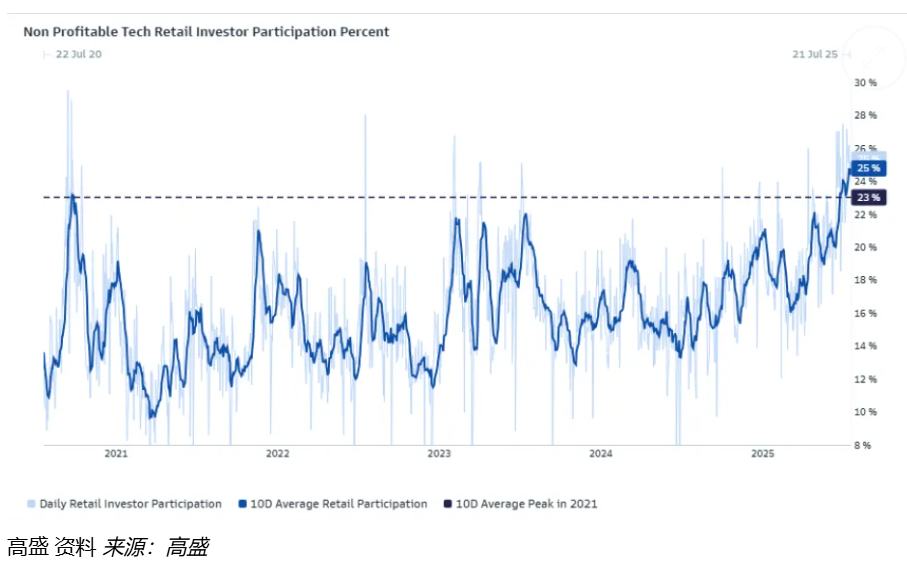
模因股狂潮席卷美股:散户借社交媒体推高多股,轧空风险引机构警示
Zhi Tong Cai Jing· 2025-07-24 03:16
Group 1 - The speculative frenzy driven by social media initially focused on Opendoor Technologies, whose stock price surged 312% in six days from under $1, with options trading volume exceeding 2 million contracts, surpassing the peak levels seen during GameStop's rise in 2021 [2] - Following this, Opendoor's stock experienced a significant decline, dropping 20% in a single day, with trading volume spiking to over 340% of its average for the past three months [2] - The frenzy quickly spread to other low-market-cap stocks, such as Kohl's, which saw its stock price soar 38% in one day due to a high short interest of 48% of its float, followed by a 14% pullback [4] Group 2 - Krispy Kreme's stock rose as much as 35% during the day, ultimately closing with a 4.6% gain, contributing to an overall weekly increase of 38%, with call options trading reaching a historical high of over 1 million contracts [6] - GoPro's stock experienced a remarkable 75% increase over the week, marking its largest single-week gain in history, attracting retail investors due to its short interest of nearly 10% of its float [7] - The current retail investor logic has fundamentally shifted, with social media influencers becoming the key decision-makers rather than company fundamentals, as highlighted by Max Gokhman from Franklin Templeton [10] Group 3 - The ongoing speculative activity is facing challenges, as evidenced by Krispy Kreme's drop from a 35% gain to 4.6%, and Opendoor's consecutive days of decline, indicating instability in the current upward trends [11] - Analysts note that the influx of retail funds into micro-cap stocks reflects an increase in market risk appetite but also poses liquidity risks, suggesting that the social media-driven capital game may encounter more significant volatility [11]

AI早报 | 亚马逊计划收购可穿戴设备初创公司Bee;曝马斯克用多名员工人脸数据训练Grok
Sou Hu Cai Jing· 2025-07-24 00:25
Group 1 - Amazon plans to acquire wearable device startup Bee, which offers an AI-enabled wristband priced at $49.99 that can listen and analyze conversations for task management [1] - Musk's xAI is reportedly training AI Grok using facial data from over 200 employees, raising concerns among staff about privacy and ethical implications [1] - Zhou Hongyi commented on the decline in traffic for DeepSeek, indicating that the founder is focused on AGI rather than developing a consumer app [1] Group 2 - Singapore Tourism Board has signed a memorandum of understanding with OpenAI to enhance visitor experiences through advanced AI applications [3] - Zhiyuan Robotics has launched its quadruped robot D1 ULTRA, designed for various applications including security and education, with a top speed of 3.7 meters per second [3] - Tongyi Qianwen has officially open-sourced its latest AI programming model Qwen3-Coder, featuring 480 billion parameters and support for extended context lengths [3][4] Group 3 - Meitu's AI Agent "RoboNeo" has topped the domestic App Store category charts shortly after its launch, targeting users in various creative fields [4]


亚马逊收购可穿戴设备制造商Bee AI,继续加码AI硬件
news flash· 2025-07-23 06:52
Core Insights - Amazon has announced the acquisition of AI wearable startup Bee AI, with all employees of Bee AI invited to join Amazon as part of the deal [1] - The transaction is not yet completed, and specific terms of the deal have not been disclosed [1] - Following the completion of the deal, Bee AI's AI wristbands will be integrated into Amazon's hardware product lineup [1]
智能健康行业更新
2025-07-16 06:13
Summary of the Conference Call on the Wearable Health Monitoring Devices Industry Industry Overview - The conference call focused on the **wearable health monitoring devices industry** in China, highlighting its rapid growth and potential to transition from a technological novelty to a necessity for the general public [1][2][3]. Key Points and Arguments 1. **Explosive Growth**: The wearable health monitoring devices industry is experiencing explosive growth, driven by several core factors [1]. 2. **Market Size Expansion**: The market size is expected to exceed **200 billion** yuan, indicating a significant expansion [1]. 3. **Key Growth Engines**: The industry must overcome three major challenges to achieve a transformation from a tech consumer product to a public health necessity [1]. 4. **Health Issues in the Workforce**: Increasing health issues among Chinese workers, with **90.5%** of employees facing sleep deprivation, are driving the industry's growth [3][4]. 5. **Aging Population and Chronic Diseases**: The acceleration of aging and the rising prevalence of chronic diseases are also significant drivers for the industry [4][5]. 6. **Product Evolution**: Non-invasive blood glucose monitors are evolving from mere health monitoring tools to becoming integral to health management systems connecting families with healthcare providers [5]. 7. **Market Growth Trajectory**: From **2020 to 2024**, the market size is projected to grow from **140 billion** yuan to **150 billion** yuan, despite short-term fluctuations due to economic conditions [5]. 8. **Differentiated Development Paths**: Consumer-grade products (e.g., smart bands, watches) and medical-grade products are developing along different paths [5][6]. 9. **Rapid Market Growth**: The market is expected to grow from **51.8 billion** yuan in 2020 to **116.6 billion** yuan by 2029, with products like Huawei Watch D receiving medical device certification [6]. 10. **Industry Structure**: The industry operates on a three-tier structure involving upstream suppliers, midstream manufacturers, and downstream sales channels [6][7]. 11. **Sensor Market Growth**: The sensor market is projected to grow at a **15%** compound annual growth rate, expected to exceed **500 billion** yuan by 2026 [6]. 12. **Market Share Dynamics**: The online and offline markets for wearable devices are showing a trend towards balance, with smartwatches dominating offline sales [7]. 13. **Consumer Market Dominance**: Major technology companies like Huawei, Apple, and Xiaomi dominate the consumer market, leveraging strong R&D capabilities [8]. 14. **Integration of Medical Functions**: Some medical companies are attempting to enter the consumer market, but face challenges in brand recognition and user perception [8]. 15. **Technological Advancements**: The industry is undergoing significant technological changes, with AI advancements expected to enhance device capabilities [9]. 16. **Healthcare Integration**: Wearable devices are becoming crucial nodes in remote healthcare systems, promoting a shift from disease-centered to health-centered paradigms [9][10]. 17. **Case Studies**: The strategies of key players like Huawei and medical device companies illustrate the competitive landscape and strategic choices within the industry [10]. Other Important Insights - The industry is supported by a comprehensive policy framework that includes technological innovation, standardization, and integration with healthcare [3]. - The evolution of wearable devices is not just a technological advancement but also a shift in healthcare paradigms, emphasizing preventive health management [9][10]. This summary encapsulates the key insights and developments discussed in the conference call regarding the wearable health monitoring devices industry, providing a comprehensive overview of its current state and future potential.
Zepp股价大涨:华尔街迎来中概股复兴?
BambooWorks· 2025-07-10 09:45
Core Viewpoint - Zepp Health's stock price has more than doubled in the past two weeks, with a forecast of 30% revenue growth in Q2, marking the first year-on-year increase in three years [1][6] Group 1: Company Transformation - Zepp Health is transitioning from being a contract manufacturer for Xiaomi to developing its own brand, Amazfit, which is expected to drive growth [3][5] - The company has seen a significant decline in revenue due to its previous reliance on Xiaomi, but is now experiencing a recovery as it focuses on its own brand [5][6] Group 2: Market Dynamics - The cases of Zepp and New Oxygen reflect a shift in investor perception, recognizing that not all Chinese companies should be viewed with the same skepticism [4] - Despite recent stock price increases, Zepp's price-to-sales ratio remains low at 0.46, indicating potential for further upside compared to global competitors [4][5] Group 3: Financial Performance - In Q1, Zepp reported a slight revenue decline of 3.6% to $38.5 million, but anticipates a 30% revenue growth in Q2 [6] - The company is still operating at a loss, with a net loss of $19.7 million in Q1, although it is optimistic about future growth and margin improvements [6][7] Group 4: Product Development - The anticipated revenue growth is attributed to the successful launch of two new products, Amazfit Active 2 and Bip 6, which have received positive market feedback [6] - The company is addressing supply chain bottlenecks and aims to resolve these issues by the end of June [6]


英伟达成为全球首家市值突破4万亿美元公司;Meta豪掷35亿美元入股全球最大眼镜制造商丨全球科技早参
Mei Ri Jing Ji Xin Wen· 2025-07-10 00:07
Group 1: Nvidia's Milestone - Nvidia briefly surpassed a market capitalization of $4 trillion, becoming the first publicly traded company to reach this milestone, driven by surging demand for AI technology [1] - Nvidia's stock price rose by 2.5% to a historical high of $164.42 per share, closing at $162.88 per share with a market cap of $3.97 trillion [1] - This milestone may serve as a confidence indicator for technology stocks, potentially increasing market attention on leading tech companies [1] Group 2: Departure of X CEO - X CEO Linda Yaccarino announced her departure from the company after two years, expressing gratitude to Elon Musk but not disclosing the reasons for her exit [2] - Yaccarino's departure may raise concerns regarding the stability of X's management, which could impact investment expectations [2] Group 3: Meta's Investment in EssilorLuxottica - Meta invested $3.5 billion to acquire approximately 3% of EssilorLuxottica, the world's largest eyewear manufacturer, known for brands like Ray-Ban and Oakley [3] - This investment could increase to 5% over time and aims to enhance collaboration on the Ray-Ban smart glasses project, marking a significant step for Meta in controlling its hardware supply chain [3] - Meta's move signals a positive outlook for the wearable device industry and may drive technological integration [3] Group 4: Perplexity's AI Browser Launch - AI startup Perplexity launched the AI web browser Comet, initially available to subscribers of its $200 monthly Perplexity Max plan, with plans for broader access via an invitation system [4] - Comet utilizes Perplexity as its primary search engine, offering AI-generated query responses and assisting users in purchasing products or booking hotels [4] - The launch of Comet may create competitive pressure on traditional browser manufacturers, affecting their user ecosystem [4] Group 5: Hugging Face's Desktop Robot Orders - Hugging Face announced that its Reachy Mini desktop robot is now available for order, with two versions priced at $499 for the wireless model and $299 for the wired version [5] - The robot comes pre-installed with demonstration programs and integrates with the open-source machine learning platform Hugging Face Hub, allowing users to develop and share custom functionalities [5] - The introduction of Reachy Mini may lower the barriers to entry for AI hardware, potentially stimulating innovation within the open-source community [5]

蚂蚁集团推进AI医疗健康发布应用“AQ”
Xin Hua Cai Jing· 2025-06-26 13:02
Core Insights - Ant Group launched an AI health application named "AQ" on June 26, which offers various AI functionalities including health education, consultation, report interpretation, and health records management [1] - The application connects over 5,000 public hospitals and nearly 1 million doctors available for appointments or online consultations [1] - The new app is an independent version of the "AI Health Manager" that was launched on Alipay last September, which has served over 70 million users [1] Group 1 - AQ features three main characteristics: more professional Q&A, comprehensive services, and personalized health understanding [1] - The app provides cloud companion services from over 200 hospitals, assisting users during offline medical visits [1] - A team of nearly 200 top-tier doctors, led by experts from the Chinese Academy of Engineering, is available on AQ to answer user queries in real-time [1] Group 2 - AQ collaborates with health management device companies like Yuyue and SanNuow, and integrates with wearable devices from brands such as Vivo, Huawei, and Apple to offer personalized health advice based on user data [1] - The technical engine of AQ is powered by Ant Group's medical model, which has learned from over a trillion tokens of specialized medical data and supports multimodal interactions including images, voice, and video [1] - Ant Group aims to enhance accessibility to healthcare and promote public health by continuously expanding partnerships with more stakeholders in the healthcare sector [2]
小米首款AI眼镜即将发布!雷军:面向下一代的个人智能设备,可呼叫小爱拍视频录制Vlog【附可穿戴设备行业市场分析】
Sou Hu Cai Jing· 2025-06-26 05:00
Core Viewpoint - Xiaomi is set to launch its first AI-driven smart glasses, which will feature AI-powered photo and video capabilities, positioning it similarly to the best-selling AI glasses from Meta [1][3]. Group 1: Product Features and Technology - The Xiaomi AI glasses will include a dual-core architecture and built-in camera, expected to deliver comparable shooting quality to Meta's offerings [1]. - The glasses will integrate with Xiaomi's AI assistant, allowing users to ask questions about their surroundings, enhancing user interaction [1]. - The device is designed for hands-free operation, enabling video recording during activities like cycling, showcasing high clarity and stability for first-person Vlog content [3]. Group 2: Market Position and Competition - Xiaomi is the first major Chinese company to enter the AI glasses market, potentially driving growth in this product category [6]. - The wearable device market has seen a 1.7% year-on-year increase in shipments in 2023, despite a challenging global economy, attributed to the rise of smaller brands and new product categories [3]. - In Q4 2023, Xiaomi held an 11% market share in the global wearable device market, ranking second behind Apple, which had a 21% share [6][7]. Group 3: Future Outlook and Industry Trends - The Chinese wearable device market is projected to continue growing, with an expected shipment of over 270 million units by 2029 and a CAGR of approximately 13.8% from 2024 to 2029 [8]. - Analysts believe that the next 1 to 3 years will be critical for the development of AI glasses, with significant market demand anticipated [8].

2025年中国可穿戴健康监测设备行业概览:24小时健康守护,迈向智能康养时代
Tou Bao Yan Jiu Yuan· 2025-06-25 13:18
Investment Rating - The report does not explicitly provide an investment rating for the wearable health monitoring devices industry Core Insights - The wearable health monitoring devices industry in China is transitioning from basic step counting to medical-grade monitoring, driven by hardware innovation and data intelligence [2] - The demand for precise health monitoring is increasing, particularly due to the aging population and rising chronic disease rates, which is propelling the growth of wearable health monitoring devices [2][23] - The industry is characterized by a dual-track competition between medical companies and technology giants, with companies like Ji'an and Leshi leading the medical-grade sector, while Huawei, Apple, and Xiaomi dominate the consumer-grade market [3][4] Summary by Sections Overview - Wearable health monitoring devices are multifunctional technology devices that collect physiological data to support health management, categorized into consumer-grade and medical-grade products [2][10] - The industry has established a policy support system that integrates technological innovation, standardization, and application scenarios, providing a comprehensive framework for development [2] Market Demand - The aging population in China is expected to reach 380 million by 2030, creating a strong need for real-time health monitoring solutions that wearable devices can provide [23][26] - The prevalence of chronic diseases is rising, further increasing the demand for continuous health monitoring [26] Market Size - The market for wearable health monitoring devices in China is projected to grow from 1,400.2 billion yuan in 2020 to 2,230.2 billion yuan by 2029, with a compound annual growth rate (CAGR) of 7.0% from 2025 to 2029 [31][33] - The market experienced a decline in 2022 due to high base effects and global economic pressures, but is expected to recover with policy support and technological advancements [33] Industry Chain Analysis - The industry chain consists of upstream hardware and software suppliers, midstream manufacturers, and downstream sales channels that reach end-users [37][40] - The sensor market is expected to grow at a CAGR of 15.0% over the next three years, highlighting the importance of sensor technology in wearable devices [42][44] Competitive Landscape - The competition in the wearable health monitoring devices market is intensifying, with a convergence of consumer-grade and medical-grade products [74][76] - Medical companies are leveraging their expertise to enter the consumer market, while technology companies are enhancing their health monitoring capabilities to penetrate the medical sector [76]