大宗商品贸易

Search documents
美国关税限制冲击,非洲订单暴增,中国对非出口创新高
Sou Hu Cai Jing· 2025-10-20 20:42
Core Insights - China's foreign trade demonstrates remarkable resilience and vitality amidst global trade challenges, particularly highlighted by the unexpected rise of the African market [1][18] Trade Performance - In September, China's overall exports increased by 8.3% year-on-year, a significant rise of 3.9 percentage points compared to August; imports grew by 7.4%, up by 6.1 percentage points [3] - The African market emerged as a standout performer, with China's exports to Africa surging by 56.4% year-on-year, an increase of 30.6 percentage points from August [3][5] Sector Highlights - Guinea led the African growth with a 75.4% increase in export value, followed by Liberia and Côte d'Ivoire with growth rates of 58.5% and 55.4%, respectively [5] - Ship exports to Africa saw an impressive year-on-year growth of 80.1%, with small cargo ships and fishing vessels being particularly favored by African buyers due to their practicality and cost-effectiveness [6][16] Market Dynamics - The African market contributed 2.7 percentage points to China's export growth, surpassing ASEAN's contribution of 2.4 percentage points, drawing significant industry attention [8] - In contrast, the U.S. market continued to show weakness, with a decline in exports to the U.S. despite a narrowing drop of 6 percentage points compared to August [10] Import Trends - China's integrated circuit imports increased by 14.1%, marking the highest growth rate this year, as companies stockpiled chips in response to U.S. export restrictions [10][12] - Imports of crude oil and iron ore showed signs of recovery, with crude oil import declines narrowing to 7.4% and iron ore imports turning positive, contributing to a 0.6 percentage point increase in overall imports [14] Strategic Shifts - The rise of the African market reflects a significant shift in global trade dynamics, with U.S. tariffs inadvertently pushing Chinese companies to explore new markets, making Africa a key beneficiary of this strategy [18] - The increasing focus on product quality, technology, and financial strength marks a transition in China's foreign trade landscape, moving away from reliance on low pricing and human resources [18][19]

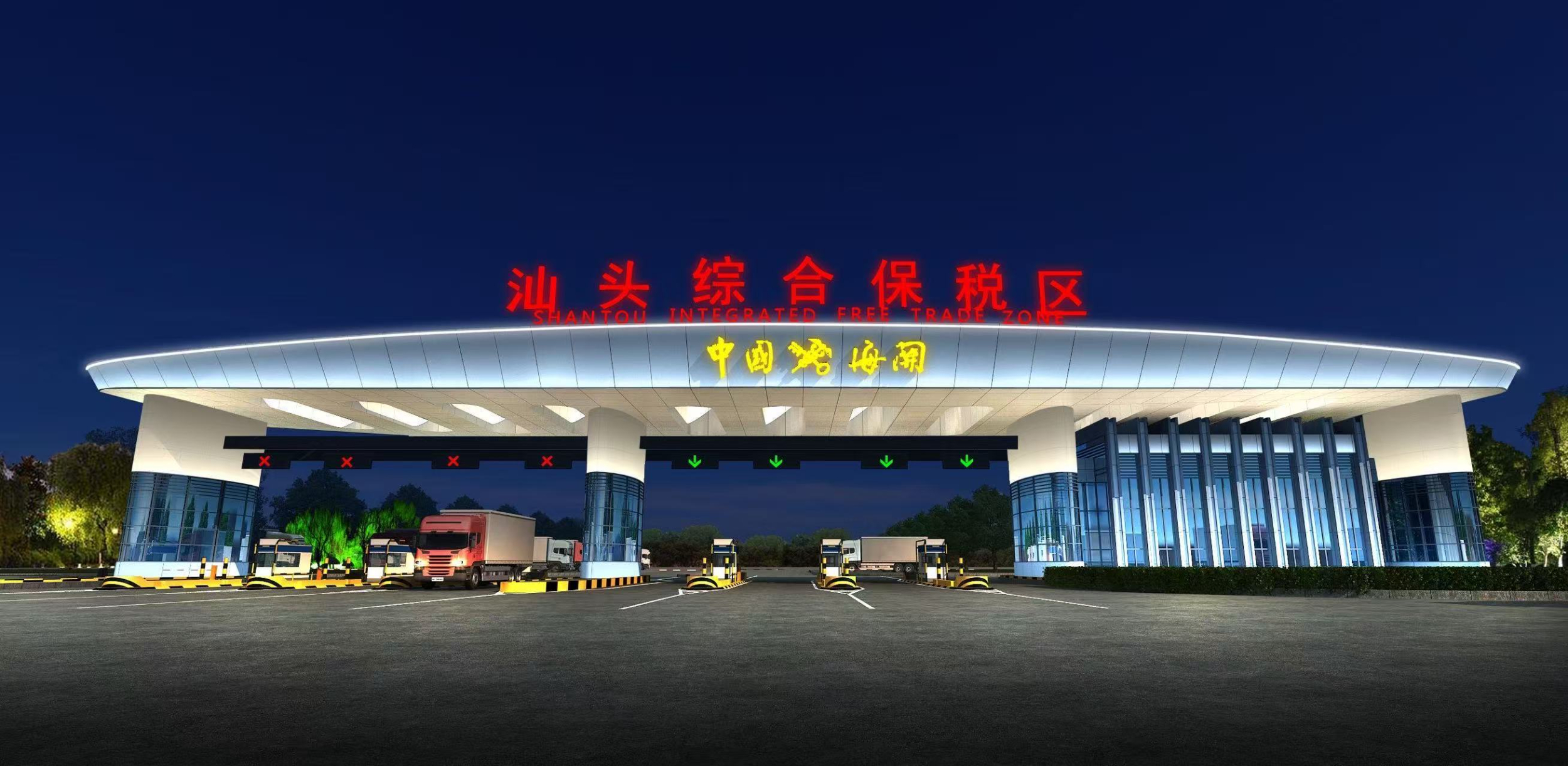
汕头综合保税区加快打造改革开放的重要窗口和前沿阵地
Zhong Guo Fa Zhan Wang· 2025-10-20 08:08
Core Viewpoint - Shantou Comprehensive Bonded Zone aims to strengthen its bonded business and establish itself as a new high ground for the city's outward-oriented economy, targeting an annual import and export volume exceeding 50 billion yuan within three to five years [2][3]. Group 1: Economic Development Goals - The zone plans to create five hundred billion-level foreign trade industries, including cross-border e-commerce, bulk commodity distribution, and biopharmaceuticals, to enhance the export capabilities of local products [2][4]. - The total import and export volume of Shantou Comprehensive Bonded Zone increased from 7.8 billion yuan in 2020 to over 20 billion yuan in 2022, contributing nearly 30% of the city's total foreign trade with only 0.15% of the land area [4][5]. Group 2: Infrastructure and Service Improvements - The zone is focused on building platforms for foreign trade services, cross-border e-commerce, and logistics, enhancing the business environment for enterprises [5][8]. - A "one-stop" service model has been implemented to support enterprises, addressing various operational challenges and improving overall efficiency [8][9]. Group 3: Strategic Initiatives and Collaborations - The zone has established a cross-border e-commerce model that integrates bonded display and new retail, successfully replicating this model in other cities [6][7]. - Shantou Comprehensive Bonded Zone is actively engaging in partnerships with state-owned enterprises to expand its overseas warehouse network and promote local products internationally [7][11]. Group 4: Future Development Plans - The planning and construction of the Shantou Lingang Economic Zone is seen as crucial for Guangdong's positioning in the global supply chain, with ongoing infrastructure projects and strategic investments in key industries [10][11]. - The introduction of significant projects in the health manufacturing sector, with a total investment of 2.5 billion yuan, aims to create a competitive health industry cluster in the region [11].
惊险30秒!远大控股上演“天地天板”,高管套现超400万元
2 1 Shi Ji Jing Ji Bao Dao· 2025-10-20 08:04
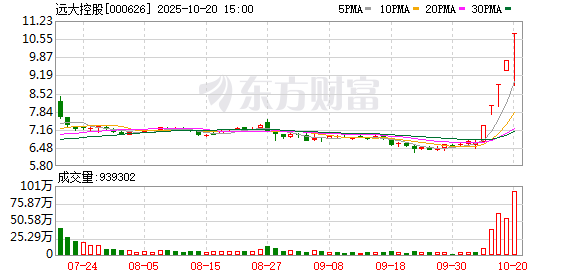
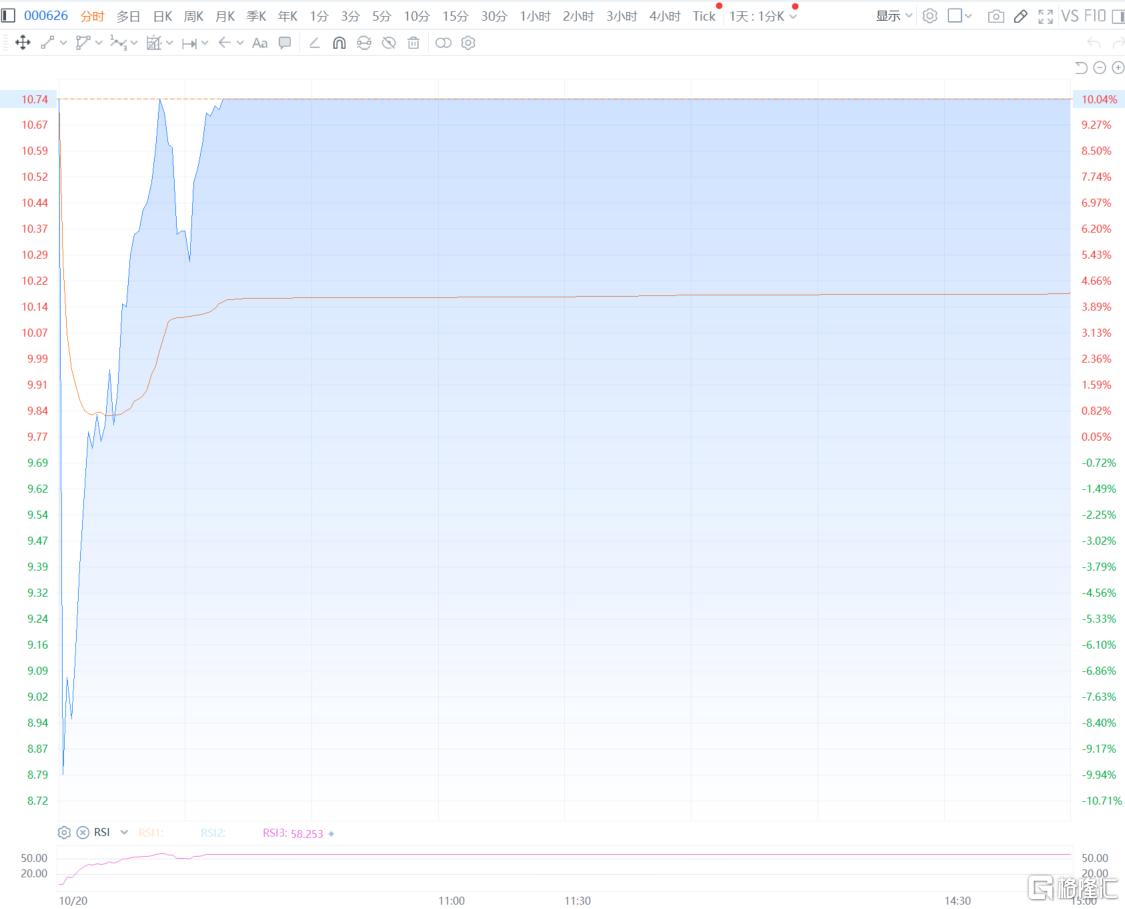
Core Viewpoint - The stock of Yuanda Holdings (000626.SZ) experienced significant volatility, achieving five consecutive trading limits, with a closing price of 10.74 CNY per share and a trading volume exceeding 9.5 billion CNY on October 20, 2023 [2]. Trading Activity - The stock opened at the limit price of 10.74 CNY but quickly fell to the limit down price of 8.78 CNY within 30 seconds due to large sell orders totaling over 80 million CNY. However, it rebounded rapidly to the limit up price again within 20 minutes, showcasing extreme market volatility [2][3]. - The trading activity indicated a significant increase in turnover rate and intraday volatility, with turnover rates rising from 2.18% to 10.78% between October 14 and 17, and reaching over 18.50% on October 20, with an intraday fluctuation of 20.08% [3]. Company Performance - Yuanda Holdings announced that its operational situation and external business environment had not undergone significant changes, despite the stock's volatility [4]. - The company reported a total revenue of 41.679 billion CNY for the first half of the year, a year-on-year decrease of 6.93%. However, the net profit attributable to shareholders was 29.066 million CNY, a significant increase of 172.02%, indicating a turnaround from losses [4]. - The difference between net profit and net profit excluding non-recurring items was explained by the company's business model, which combines spot trading and futures derivatives, leading to substantial discrepancies in profit figures [4]. Insider Trading - Notably, while the stock price was rising, company executives were engaged in selling shares. The vice chairman and vice president, Xu Qiang, sold a total of 50,000 shares at an average price of 8.87 CNY per share, realizing approximately 4.071 million CNY [5]. - Xu Qiang had previously disclosed plans to reduce his holdings by up to 80,000 shares between September 1 and November 30, citing personal financial needs [5].

罕见“天地天”!5连板“妖股”惊魂记,资金激烈博弈?
Ge Long Hui· 2025-10-20 07:21
Core Viewpoint - The stock of Yuanda Holdings has experienced extreme volatility, showcasing a dramatic "limit up" and "limit down" within a short time frame, reflecting intense market speculation and trading activity [1][2][3]. Trading Activity - Yuanda Holdings saw a trading volume that reached a historical high with a turnover rate exceeding 18% and an intraday fluctuation of 20%, resulting in a transaction value of 938 million [3]. - The stock has achieved five consecutive limit ups, accumulating a total increase of over 58%, with a current market capitalization of 5.441 billion [4]. Market Dynamics - The trading activity is characterized by a fierce battle between bullish and bearish investors, with significant capital inflows and outflows [5]. - Recent data indicates that on October 17, the stock experienced a net outflow of 50.41 million from institutional investors, while retail investors saw a net inflow of 26.56 million [6]. Stock Performance and Announcements - The company announced an abnormal trading fluctuation due to a cumulative price deviation of 24.37% over two trading days, confirming that there were no undisclosed significant events affecting its operations [8]. - The stock has been under scrutiny, appearing on the "Dragon and Tiger List" due to its significant price deviation over three consecutive trading days [7]. Financial Performance - Yuanda Holdings has faced financial challenges, reporting a net profit of -377 million and -302 million for 2023 and 2024, respectively [14]. - In the first half of the year, the company reported a revenue of 41.68 billion, a decrease of 6.93% year-on-year, but managed to turn a profit with a net income of 29.07 million, marking a 172.02% increase [15][17]. - Despite the positive net profit, the core business remains weak, with a non-recurring net profit loss of 1.25 billion, reflecting a 229.35% year-on-year decline [16]. Shareholder Activity - Recent insider trading activity includes a reduction in holdings by the company's vice president, who sold 400,000 shares at an average price of 7.96 per share, totaling 3.184 million [13]. - The largest shareholder, China Yuanda Group, holds over 42% of the shares, indicating a strong control over the company [11].
提升“中国价格”影响力 碳酸锂期货助力贸易强国建设
Qi Huo Ri Bao Wang· 2025-10-20 00:46
Core Viewpoint - The article emphasizes the shift in China's trade development focus from scale expansion to quality and efficiency improvement, highlighting the importance of establishing a self-controlled pricing system to enhance China's influence in international trade [1]. Group 1: Trade Development Strategy - The 20th National Congress of the Communist Party of China has decided to accelerate the construction of a trade power, shifting the focus of trade development to improving quality and efficiency [1]. - The current global environment, characterized by significant commodity price fluctuations and geopolitical risks, necessitates a move away from reliance on overseas pricing models [1]. Group 2: Company Overview - Zhongzhe Commodity Group, established in January 2017, focuses on wholesale and retail of bulk commodities, including agricultural products and energy chemicals [2]. - The company entered the lithium ore trade in Australia in September 2023, initially engaging in simple spot trading before expanding into international trade by the end of 2024 [2]. Group 3: Challenges and Innovations - Zhongzhe Metal faced challenges in resource channels and pricing models, struggling with traditional pricing methods that lacked flexibility and transparency [3]. - The company recognized the need to innovate its trading model to establish a foothold in the Australian lithium market, leading to the exploration of a new pricing model based on carbon lithium futures [3][4]. Group 4: Successful Implementation - In March 2025, Zhongzhe Metal developed a pricing system using carbon lithium futures as a core anchor, which allowed for a transparent and dynamic pricing solution [4]. - The first successful trade in May 2025 demonstrated the effectiveness of this new pricing model, resulting in a 3% lower price for a Jiangxi lithium salt factory compared to overseas platforms [5]. Group 5: Market Transformation - The success of the initial trade shifted the attitude of Australian mining companies towards futures pricing, leading to direct cooperation with Zhongzhe Metal by July 2025 [6]. - By the third quarter of 2025, Zhongzhe Metal had established direct communication with multiple Australian mining companies, with lithium trade volume exceeding 60,000 tons, accounting for 20% of the total trade volume [7]. Group 6: Industry Support and Training - The rapid growth of Zhongzhe Metal in the lithium market was supported by training and resources provided by the Guangxi Futures Exchange, which has conducted over 1,000 training sessions nationwide [8][9]. - The "Green to New" industry service plan initiated by the Guangxi Futures Exchange aims to enhance risk management capabilities and promote the use of futures tools among new energy enterprises [10].
碳酸锂期货助力贸易强国建设
Qi Huo Ri Bao Wang· 2025-10-19 16:06
Core Viewpoint - The article emphasizes the shift in China's trade development focus from scale expansion to quality and efficiency improvement, highlighting the importance of establishing a self-controlled pricing system to enhance China's influence in international trade [1]. Group 1: Company Overview - Zhongzhe Commodity Group, established in January 2017, operates as a trading platform for bulk commodities, including agricultural products, energy chemicals, and metals [2]. - The company entered the lithium market in September 2023, shortly after the launch of lithium carbonate futures on the Guangxi Futures Exchange [2]. Group 2: Challenges and Innovations - Initially, Zhongzhe faced challenges in international lithium trade due to a lack of resources and reliance on traditional pricing models, which led to difficulties in negotiations with Australian miners [3][4]. - The company recognized the need to innovate its trading model and sought to establish a new pricing system based on Guangxi Futures Exchange's lithium carbonate futures [4][5]. Group 3: Successful Implementation - In March 2025, Zhongzhe successfully created a pricing system using the "LC2507 contract price - fixed basis" model, which allowed for a transparent and adaptable pricing mechanism [4][5]. - The first successful trade in May 2025 involved purchasing lithium ore from Australia at a price 3% lower than that of overseas platforms, demonstrating the effectiveness of the new pricing model [5][6]. Group 4: Market Impact and Growth - Following the initial success, Zhongzhe established direct communication with multiple Australian mining companies, significantly increasing its trade volume in lithium [6][7]. - By the third quarter of 2025, Zhongzhe's lithium trade volume exceeded 60,000 tons, accounting for 20% of its total trade volume [7]. Group 5: Industry Support and Training - The Guangxi Futures Exchange has played a crucial role in supporting companies like Zhongzhe through extensive training programs, enhancing their understanding and application of futures tools [8][9]. - Over 1,000 training sessions have been conducted nationwide, benefiting over 200,000 participants, which has helped companies integrate into the lithium industry ecosystem [9]. Group 6: Future Outlook - Zhongzhe aims to deepen cooperation with overseas mining companies and promote the use of Guangxi Futures Exchange's lithium carbonate futures as a pricing benchmark, contributing to the establishment of "Chinese prices" in the international market [7][10]. - The Guangxi Futures Exchange plans to continue enhancing its market service capabilities and support for various industries, ensuring that the futures market becomes a strong backing for companies in the lithium battery sector [10].
多点突破 上海普惠金融新进展
Zhong Guo Zheng Quan Bao· 2025-10-16 14:21
Core Viewpoint - Shanghai Financial Regulatory Bureau has developed a special work plan to promote the high-quality development of inclusive finance, showcasing a comprehensive and multi-layered approach that addresses both service coverage and risk prevention [1][2]. Group 1: Policy Framework - The policy toolbox of Shanghai Financial Regulatory Bureau focuses on three core objectives: building an inclusive financial service system, enhancing service quality, and strengthening risk prevention capabilities [2]. - The plan emphasizes the construction of a competitive landscape for inclusive credit, requiring financial institutions to maintain effective credit supply for small and micro enterprises to alleviate financing difficulties [2]. - The initiative includes upgrading local inclusive insurance projects like "Huibao" and "Hujia Bao" to expand coverage for more livelihood scenarios [2]. Group 2: Digital Transformation - Digital transformation is a key focus of the plan, promoting development through assessment and transformation via digital means [2]. - The Shanghai financing credit service platform will be optimized to integrate multiple data sources to address the information asymmetry between banks and enterprises [2]. - The "insurance code" platform will be upgraded to provide convenient inclusive insurance services to citizens without leaving their homes [2]. Group 3: Impact on Individuals and Businesses - New citizens, like Mr. Zhang, benefit from inclusive finance policies, receiving significant interest savings on loans for home renovations, demonstrating the quick conversion of policy benefits into tangible financial support [3]. - As of now, a financial institution has issued over 500 million yuan in consumer loans to new citizens, helping them establish roots in the city [3]. - Small and micro enterprises, such as a commodity trading company, have successfully accessed loans through rapid approval processes, significantly improving their operational cash flow and enabling them to secure profitable orders [4][5].
苏豪汇鸿:后续公司将进一步稳妥推进,不断完善大宗业务板块布局
Zheng Quan Ri Bao Zhi Sheng· 2025-10-13 14:08
Core Viewpoint - The company, Suhao Huihong, is focusing on its core business in bulk commodities and is committed to eliminating competition with its controlling shareholder, aiming to enhance its operational efficiency and competitive advantage [1] Group 1: Business Strategy - The company will concentrate on bulk commodity-related businesses, emphasizing professional operations and resource allocation [1] - There is an ongoing asset swap with the controlling shareholder, which has already completed the delivery of Suhao Zhongjia, Suhao Ruiying, and Jiangsu Youse [1] - The company aims to play a significant role in the high-quality development of the manufacturing sector in Jiangsu Province [1] Group 2: Operational Focus - The company is working towards a clearer business structure and stronger core capabilities within its bulk business operations [1] - Continuous efforts will be made to improve the layout of the bulk business segment, ensuring effective resource allocation [1] - The company is dedicated to enhancing its competitive advantages through these strategic initiatives [1]

美联储降息开启全球新周期,六六仓以数字供应链重塑大宗商品格局
Sou Hu Cai Jing· 2025-09-18 08:34
Core Insights - The Federal Reserve's first interest rate cut in 2025 signals a new cycle in global economic policy, with a reduction of 25 basis points to a target range of 4.00%-4.25% [1] - The global economic outlook is deteriorating, with a projected slowdown in growth to 2.4% in 2025, down from 2.9% in 2024 [2] - Six Six Warehouse Group is leveraging a digital supply chain ecosystem to provide stable and efficient solutions for the commodity industry amid these challenges [1][4] Economic Context - The Federal Reserve's rate cut is a response to lower-than-expected job growth and signs of economic collapse, aiming to assist a struggling labor market [1] - The United Nations reports that trade policy uncertainties are increasing production costs and slowing corporate investments, with tariffs causing unprecedented damage to the international trade system [2] Commodity Industry Challenges - The commodity industry faces significant challenges, including price volatility due to geopolitical conflicts and macroeconomic policy changes [3] - Financing difficulties arise from stricter bank risk control requirements, limiting access to trade financing for private enterprises [3] - Rising compliance costs due to stringent global regulations are increasing operational costs for companies in the sector [3] Six Six Warehouse Group's Digital Ecosystem - Six Six Warehouse Group has developed a "6 + 6 + N" ecosystem focusing on supply chain digitization, featuring six core platforms that integrate services across the industrial value chain [4] - The company is pioneering innovative supply chain finance solutions to address industry financing challenges, utilizing a financial-grade digital warehousing IoT system [5] - The digital supply chain ecosystem aims to empower small and medium-sized enterprises in their digital transformation efforts [6] Industrial Ecosystem Development - The company is promoting digital transformation in the commodity circulation sector by employing advanced technologies such as IoT, AI, and blockchain [7] - Six Six Warehouse Group's projects are expanding nationwide, fostering the growth of smart manufacturing industries through industrial clustering effects [7] Strategic Vision - The company has outlined a three-step strategy to lead industry transformation, positioning itself as a key player in connecting China's commodity market with global opportunities [8] - The chairman emphasizes the importance of becoming not just a technology provider but also an organizer of industrial collaboration [8]

又一家“千亿民营集团”暴雷
Sou Hu Cai Jing· 2025-09-11 18:28
Core Viewpoint - The article discusses the rise and fall of Duofe Group, highlighting its rapid expansion through leveraging and acquisition of distressed assets, which ultimately led to significant financial difficulties and legal issues for the company [1][6][10]. Company Background - Duofe Group, founded by Hu Xingrong, initially gained prominence by capitalizing on opportunities presented by the 2008 global financial crisis, particularly in acquiring and revitalizing unfinished real estate projects [2][4]. - By 2015, Duofe Group had expanded significantly, operating in over 20 cities and generating annual revenues exceeding 10 billion yuan [4]. Financial Performance - In 2024, Duofe Group reported revenues of 218.9 billion yuan and total assets of 143.3 billion yuan, placing it among the top 50 private enterprises in China [5]. - The trading segment of Duofe Group saw revenues surge from 25.8 billion yuan in 2019 to 206.8 billion yuan in 2022, although this growth raised concerns about the sustainability and profitability of its business model [8]. Challenges and Issues - Since 2022, Duofe Group has faced numerous legal challenges, including 18 judicial cases in Wenzhou with total amounts executed reaching 28.5 million yuan, and issues related to unpaid debts leading to its subsidiaries being labeled as "dishonest debtors" [6]. - The company's aggressive expansion strategy has resulted in a deteriorating financial situation, with significant debt issues emerging in 2023, including nearly 1 billion yuan in frozen equity and tax arrears [8][9]. Industry Insights - The situation of Duofe Group reflects a broader trend in the industry where companies that rely heavily on aggressive expansion and capital operations without solid operational foundations often encounter severe financial distress [10]. - Other companies, such as Xuesong Group and Zhengwei Group, have experienced similar downfalls due to over-leveraging and financial mismanagement, underscoring the importance of building core competencies rather than solely depending on capital market maneuvers [10].