
玩具

Search documents
轻工纺服行业周报:春节消费催化需求释放,AI玩具渗透率有望提升-20260209
Huaan Securities· 2026-02-09 07:10
Investment Rating - The industry investment rating is "Hold" [1] Core Viewpoints - The report highlights that the demand for AI toys is expected to increase due to the upcoming Spring Festival, with AI toys becoming a new choice on the "New Year goods list" [4][23] - AI toys are transitioning from traditional electronic and educational toys to "smart companionship terminals," leveraging advancements in AI technology [19][20] - The market for AI toys in China is still in its early penetration stage, but there is significant growth potential, with predictions that the market size could exceed 70 billion yuan by 2030 [19][21] - Local policies are supporting the development of AI toys, aiming for a penetration rate of over 30% by 2027 in Guangdong province [20] Summary by Sections Weekly Special Report - The report discusses the release of demand catalyzed by the Spring Festival, emphasizing the potential for increased penetration of AI toys [3][4] - Retail data indicates a 125% year-on-year increase in searches for AI toys on platforms like JD.com since the start of the New Year goods festival [25] Weekly Market Review - From February 2 to February 6, 2026, the Shanghai Composite Index fell by 1.27%, while the ShenZhen Component Index and the ChiNext Index fell by 2.11% and 3.28%, respectively [31] - The light industry manufacturing sector rose by 0.96%, ranking 9th among 31 sectors, while the textile and apparel sector increased by 1.32%, ranking 7th [31] Key Data Tracking Home Furnishing - In the week of January 25 to February 1, 2026, the transaction area of commercial housing in 30 major cities was 1.5129 million square meters, up 24.93% month-on-month [8] - The report notes a decline in residential new construction and completion areas in 2025, with a total sales area of 8.81 billion square meters, down 8.7% year-on-year [8] Packaging and Paper - As of February 6, 2026, the prices for various paper products showed slight fluctuations, with white cardboard priced at 4,269 yuan per ton, remaining stable [51] - The report indicates that the industry may see improvements due to reduced competition and production cuts by leading companies [13] Textile and Apparel - As of February 6, 2026, the cotton price index was 16,025 yuan per ton, down 0.98% week-on-week [10] - Retail sales for clothing and textiles in December 2025 reached 166.1 billion yuan, showing a slight increase of 0.6% year-on-year [12]

【跨国公司在中国】 乐高集团中国区总经理马世宁:中国正在成为全球许多市场的“灵感来源”
Jing Ji Guan Cha Wang· 2026-02-09 04:36
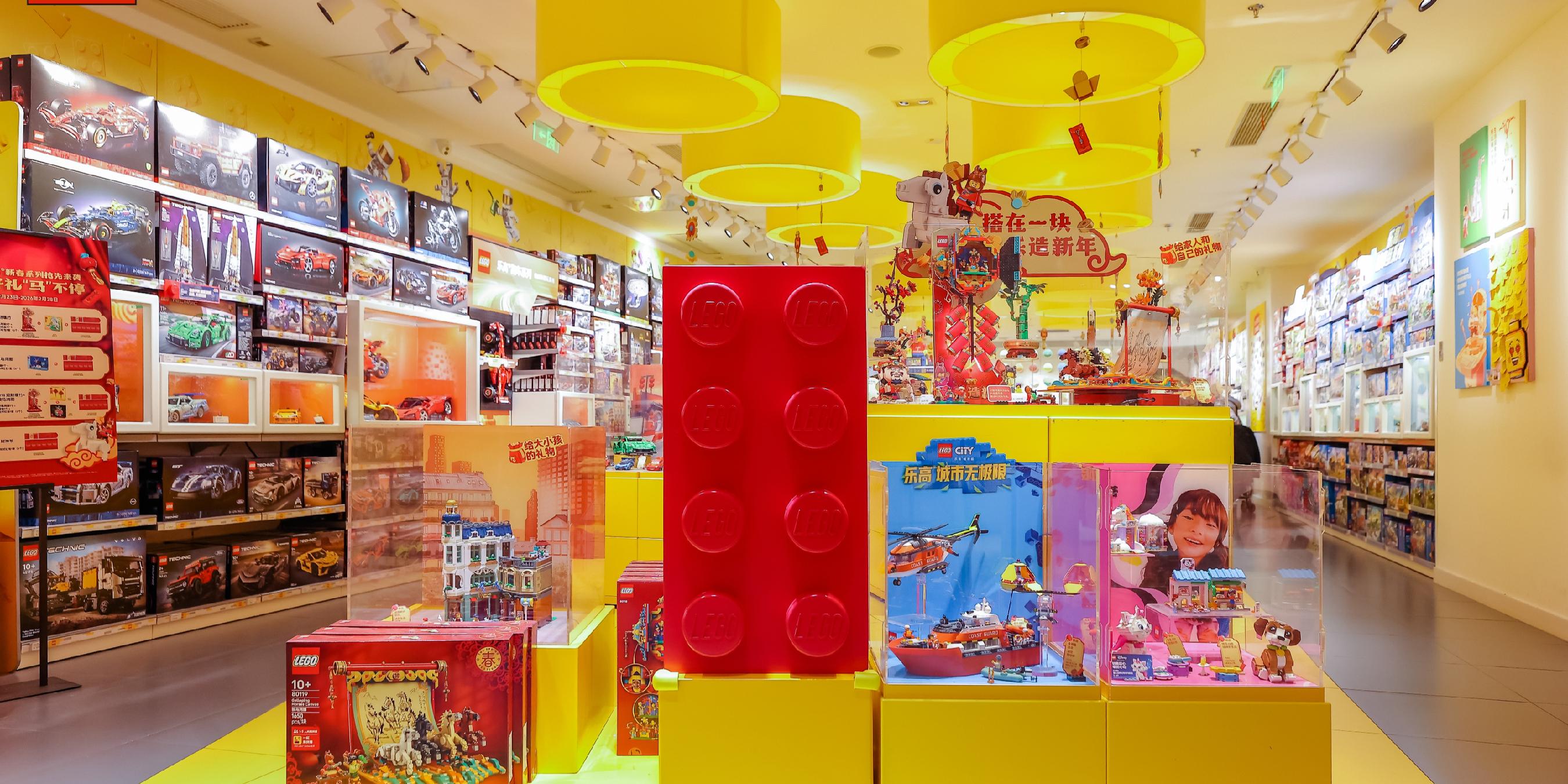
Group 1 - LEGO Group launched two new traditional Chinese New Year product sets, LEGO Horse and LEGO Fortune Firecracker, along with a new product featuring the God of Wealth for the 2026 Spring Festival, expanding its product matrix for the holiday [2] - Since the introduction of traditional festival sets in 2018, LEGO has released a total of 16 products inspired by Chinese culture, emphasizing both playfulness and emotional connection [2] - China is the only market where LEGO designs products specifically for local festivals, showcasing the company's commitment to integrating traditional elements into its offerings [2] Group 2 - Maciek Selinski, the new General Manager of LEGO Group in China, emphasized the long-term investment potential of the Chinese market, highlighting its role as a source of inspiration for global trends and innovations [5] - The company is focusing on deep research into Chinese culture to develop products that resonate with local consumers while also drawing inspiration from Chinese culture for global product designs [5][6] - LEGO has established a comprehensive ecosystem in China over the past decade, including over 400 stores in more than 120 cities and a factory in Jiaxing, which supplies nearly all products sold in the region [6] Group 3 - LEGO aims to enhance its brand presence and product relevance in China by creating a closed-loop strategy that integrates brand building, product optimization, and omnichannel experiences [6][7] - The company is actively exploring Chinese culture, history, and traditions to create products that resonate emotionally with local consumers, while also planning to expand its market presence [7] - A strategic partnership was signed between Shanghai LEGO Resort and other companies to enhance brand marketing and visitor experiences, with family visitors making up 80% of the park's clientele [7]

“老小孩”玩具如何征服“银发族”
Xin Hua Wang· 2026-02-09 02:47
Core Insights - The article discusses the emerging trend of "senior toys" catering to the elderly population, highlighting a significant increase in demand and sales for these products, particularly among consumers aged 55 and above [1][2][4]. Group 1: Market Trends - The search volume for "senior toys" on an e-commerce platform increased by 124% year-on-year, with transaction volume rising over 70% [1]. - The elderly population in China is projected to reach 310 million by the end of 2024, with the silver economy estimated to be around 7 trillion yuan, accounting for approximately 6% of GDP [4]. - By 2035, the silver economy is expected to grow to 30 trillion yuan, representing 10% of GDP [4]. Group 2: Consumer Behavior - The primary consumers of "senior toys" are individuals under 60 who are adept at using the internet, while those over 60 often have their purchases made by their children [3]. - The demand for "senior toys" is driven by a shift in the elderly's needs from basic survival to a focus on physical and mental well-being [2]. Group 3: Product Development - "Senior toys" are designed to meet various needs, including physical fitness, leisure, and social interaction, with popular items including wrist elastic balls and memory games [2]. - Products aimed at Alzheimer's patients, such as memory training blocks and interactive chess, have shown higher repurchase rates than the industry average [2]. Group 4: Industry Challenges - There are concerns regarding the suitability of some "senior toys," with issues such as complex operation, small print instructions, and safety hazards like small detachable parts [5][7]. - The offline sales of "senior toys" are struggling, with some stores reporting annual sales of only a few hundred thousand yuan, indicating a need for better market cultivation [6][5]. Group 5: Future Outlook - The industry is seen as a blue ocean market with significant growth potential, as companies are beginning to develop specialized products for different segments of the elderly population [5][4]. - To transition from "wild growth" to "standardized maturity," the industry needs to focus on creating products that cater to the complex needs of the elderly, including cognitive training and emotional companionship [7][8].
每日投资策略:恒指收跌 325 点,全周累跌 827 点-20260209
Guodu Securities Hongkong· 2026-02-09 02:36
Market Overview - The Hang Seng Index closed down 325 points, a weekly decline of 827 points, marking a 3.02% drop [3][4] - The index opened lower by 530 points, reaching a low of 26,295 points before stabilizing [3] - The total market turnover for the day was 247.865 billion HKD, with a net inflow of 14.859 billion HKD from northbound trading [3] Company News - **Xinda Biopharmaceuticals** entered a strategic partnership with Eli Lilly to advance global research and development of innovative drugs in oncology and immunology, receiving an upfront payment of 350 million USD (approximately 2.73 billion HKD) [12] - **Meitu Inc.** expects adjusted net profit growth of 60% to 66% for the fiscal year ending December 2025, driven by rapid growth in its imaging and design products segment [13] - **Jiaxin International** anticipates a turnaround with a net profit of approximately 300 to 340 million HKD for the year ending last December, compared to a loss of 173 million HKD in the previous year [14] - **Color Star Technology** expects a net loss of 15 million HKD for the year ending last December, a reversal from a net profit of 132 million HKD in 2024, primarily due to a 45% decrease in revenue [15] Economic Indicators - Hong Kong's official foreign exchange reserves increased by 7.7 billion USD to 435.6 billion USD at the end of January, equivalent to over five times the currency in circulation [8] - China's foreign exchange reserves rose for the sixth consecutive month, reaching 3.399 trillion USD, with gold reserves increasing for 15 months [10]
新华网财经观察丨“老小孩”玩具如何征服“银发族”
Xin Hua Wang· 2026-02-09 02:16
Core Insights - The article discusses the emerging trend of "age-appropriate toys" targeting the elderly population, highlighting a significant increase in demand and sales within this market segment [2][10]. Group 1: Market Trends - The search volume for "age-appropriate toys" on an e-commerce platform increased by 124% year-on-year, with transaction volume rising over 70% [2]. - The elderly population in China is projected to reach 310 million by the end of 2024, with the silver economy estimated to be around 7 trillion yuan, accounting for approximately 6% of GDP [10]. - The market for "age-appropriate toys" is becoming a new consumption hotspot, attracting numerous companies to enter this space [10]. Group 2: Consumer Behavior - The primary buyers of "age-appropriate toys" are individuals under 60 who are adept at using the internet, while those over 60 often have their children make purchases for them [9]. - The elderly's needs have evolved beyond basic necessities to include mental and physical well-being, which "age-appropriate toys" effectively address [3]. Group 3: Product Development - The types of "age-appropriate toys" are focused on fitness, leisure, and social interaction, with popular items including wrist exercise balls and puzzle games [8]. - Products designed for Alzheimer's patients, such as memory training blocks and interactive chess, show a significantly higher repurchase rate than the industry average [8]. Group 4: Industry Challenges - Some "age-appropriate toys" lack proper adaptation for elderly users, with issues such as complex operation steps and safety hazards [11]. - The offline sales of these toys are struggling, indicating a need for better market cultivation and professional guidance for elderly consumers [12]. Group 5: Future Outlook - The industry is expected to transition from "wild growth" to "standardized maturity," requiring collaboration among various stakeholders to address the complex needs of the elderly [13]. - As the market continues to develop, "age-appropriate toys" are anticipated to become a significant growth area within the silver economy, promoting health and social connections among the elderly [17].


8点1氪:韩交易所误发超400亿美元比特币;全球手机均价首破2900元;微信恢复千问与元宝红包口令复制
36氪· 2026-02-09 00:10
Group 1 - Bithumb, a South Korean cryptocurrency exchange, mistakenly issued 620,000 bitcoins worth over $40 billion to 695 customers due to a manual input error during a promotional event [3][5] - The error was identified within 20 minutes, and all transactions and withdrawals were frozen shortly after the mistake was discovered [3] - Bithumb has successfully recovered 618,212 bitcoins, which accounts for 99.7% of the mistakenly issued amount, and 93% of the 1,788 bitcoins sold by users have also been retrieved [3][5] Group 2 - LABUBU, a product from Pop Mart, achieved annual sales exceeding 10 million units, indicating strong market demand [6] - The global average selling price of smartphones is projected to surpass $400 by Q4 2025, driven by a trend towards higher-end models [5] - Several banks have raised deposit rates, with new three-year fixed deposit rates reaching 1.95%, reflecting a competitive banking environment [9]


8点1氪丨韩交易所误发超400亿美元比特币;全球手机均价首破2900元;微信恢复千问与元宝红包口令复制
3 6 Ke· 2026-02-09 00:05
Group 1 - Bithumb, a South Korean cryptocurrency exchange, mistakenly issued 620,000 bitcoins worth over $40 billion due to a manual input error during a promotional event, with 99.7% of the mistakenly issued bitcoins recovered within 20 minutes [2] - The global average selling price (ASP) of smartphones is projected to exceed $400 for the first time by Q4 2025, reaching $424, driven by a trend towards higher-end devices [2] - Major smartphone brands like Xiaomi, OPPO, and vivo are expected to raise prices for new models starting in the second half of 2025, with Xiaomi's CEO indicating that the Xiaomi 14 will be the last flagship model starting at 3999 yuan [3] Group 2 - LABUBU, a product line from Pop Mart, achieved annual sales exceeding 100 million units, with total product sales across all categories surpassing 400 million units [5] - The 2026 Milan-Cortina Winter Olympics gold medal has reached a record material value of $2,210, driven by fluctuations in precious metal markets [5] - Multiple express delivery companies in China announced they will operate during the Spring Festival, although some will charge a "resource adjustment fee" due to increased operational costs [6] Group 3 - Seris plans to divest significant assets by establishing a new company with the Chongqing government, resulting in a loss of control over its blue electric vehicle assets [6] - The iMaiTai app will undergo maintenance from February 8 to 9 to improve user experience due to high traffic [7] - The first Apple section in a duty-free store at the Zhuhai port has opened, marking Apple's entry into the duty-free market in China [8] Group 4 - OpenAI is reportedly developing a custom version of ChatGPT for the UAE in collaboration with G42, tailored for government use [14] - Apple is preparing to allow third-party AI voice control applications to integrate with its CarPlay system, enabling users to interact with AI chatbots through their vehicle interface [15] - Anthropic is finalizing a funding round expected to exceed $20 billion, potentially doubling its valuation to nearly $350 billion [15]
千问App又崩了,官方回应;马斯克:是时候大规模重返月球了;日本众议院选举结果公布;王楚钦孙颖莎夺冠;董宇辉回应李亚鹏丨每经早参
Mei Ri Jing Ji Xin Wen· 2026-02-08 23:24
Group 1 - The Qianwen App experienced downtime on February 8, affecting the "free milk tea card" promotion, which led to a response from the official account urging users to be patient as the card is valid until February 28 [11] - Elon Musk stated it is time for a large-scale return to the moon, with reports indicating SpaceX is hiring engineers in Austin and Seattle to develop AI satellites and space data centers [15] - The Japanese ruling coalition, consisting of the Liberal Democratic Party and the Japan Innovation Party, secured a majority in the House of Representatives elections held on February 8 [9] Group 2 - The first week of the Spring Festival travel rush saw an estimated 1.413 billion trips, averaging 20.189 million trips per day, marking a 2.0% increase compared to the same period last year [6] - The new medical insurance drug list implemented on January 1 has seen 99 new drugs available in over 12,000 designated medical institutions across the country [7] - In January, the average price drop for new passenger cars was 37,000 yuan, with new energy vehicles seeing an average price drop of 38,000 yuan, a decrease of 14.8% [8]

特朗普出手仅一天,印度突然反水,5000亿交易落空,美国沦为笑柄
Sou Hu Cai Jing· 2026-02-08 13:28
Core Viewpoint - The article discusses the complexities and uncertainties surrounding the U.S.-India trade negotiations, particularly in light of President Trump's recent commitments and India's stance on energy security and agricultural interests [3][12][20]. Group 1: U.S.-India Trade Negotiations - Indian Minister Piyush Goyal emphasized prioritizing energy security for India's 1.4 billion people, indicating that the Modi government will ensure a bright future for agriculture and dairy sectors [1]. - Trump's announcement of a $500 billion order from India for U.S. energy and agricultural products coincided with a proposed reduction of tariffs on Indian goods to 18%, raising questions about the feasibility of this "order for tariff" agreement [3][12]. - The ongoing U.S.-India trade tensions have been exacerbated by Trump's imposition of punitive tariffs, including a 25% tariff on Indian goods, which has significantly strained bilateral relations [5][20]. Group 2: Energy Security and Agricultural Interests - Despite India's efforts to reduce reliance on Russian oil, 20% of its oil imports still came from Russia as of January, highlighting India's commitment to energy security over U.S. preferences [6][14]. - The Modi administration faces political challenges, as an influx of U.S. agricultural products could harm local farmers, potentially jeopardizing Modi's political future ahead of upcoming elections [14][19]. - The article notes that India's long-term energy strategy is not solely about opposing the U.S., but rather about securing favorable pricing for oil imports, with Russian oil currently being offered at a significant discount [13][14]. Group 3: Broader Implications and Future Outlook - The article suggests that Trump's need for Indian cooperation in promoting Venezuelan oil development and resolving the Russia-Ukraine conflict may not align with India's national interests [10][19]. - The recent signing of a free trade agreement between India and the EU indicates that India is diversifying its economic partnerships, which could limit U.S. leverage in negotiations [20]. - The article concludes that the U.S. may struggle to achieve a substantive trade agreement with India, as the "America First" strategy has alienated key allies and complicated diplomatic relations [20].
从“一见倾心”的生肖玩具,看快速反应的制造逻辑
Xin Lang Cai Jing· 2026-02-08 09:17
(来源:经济日报) 转自:经济日报 即将到来的马年春节,一批生肖玩具凭借鲜活造型、精准的情感共鸣,让消费者"一见倾心",成为年货 市场的"流量担当"。 走进玩具市场、产业车间,记者发现,这些爆款的诞生,不是偶然的运气,而是中国玩具产业快速反应 制造逻辑的生动实践。以市场需求为导向、智能制造为支撑、产业链协同为底气,让"偶然爆火"变 成"必然出圈",彰显中国制造业的韧性与活力。 快速反应的制造逻辑,始于对市场信号的敏锐捕捉与即时响应,把"意外热点"转化为"市场红利"。 从爆款生肖玩具到近期走红的玩具单品,都生动诠释着这种制造智慧:河北保定市白沟新城的一款黑马 毛绒玩具意外走红后,商家围绕"黑马"IP相继开发出挂件、"溜溜马"等新品,从单一的玩偶系列,拓展 到家居装饰、益智玩具等多个品类;宁夏枸杞与丝路骆驼元素融合的毛绒公仔"杞驼驼"迎来爆火,商家 一边紧急补产缓解缺货压力,一边快速迭代产品,推出钥匙扣、冰箱贴等衍生品类,将单一爆款拓展为 产品矩阵…… 快速反应的制造逻辑,藏于柔性定制与智能化升级的深度融合,让"批量生产"与"个性需求"双向兼顾。 在广东汕头市高德斯精密科技有限公司,记者看到了玩具生产的高效变革。 ...