低空经济

Search documents
在新时代新征程续写经济快速发展和社会长期稳定两大奇迹新篇章
Shang Hai Zheng Quan Bao· 2025-10-24 19:15
Core Viewpoint - The "15th Five-Year Plan" outlines China's economic and social development guidelines and main objectives, emphasizing high-quality development and the importance of addressing both opportunities and challenges in the current environment [1][2]. Economic and Social Development Goals - The main goals for the "15th Five-Year Plan" period include significant achievements in high-quality development, substantial improvements in self-reliance in technology, breakthroughs in comprehensive reforms, enhanced social civilization, improved quality of life, progress in building a beautiful China, and strengthened national security [2]. Modern Industrial System - The plan prioritizes building a modern industrial system and strengthening the foundation of the real economy, with a focus on upgrading traditional industries, fostering emerging industries, and enhancing service sector development [3][4]. Technological Self-Reliance - The plan emphasizes accelerating high-level technological self-reliance, with a focus on original innovation, integration of technology and industry, and the development of a coordinated education and talent system [6][7]. Open Cooperation - The plan outlines strategies for expanding foreign trade and investment, promoting innovative trade development, and enhancing cooperation along the Belt and Road Initiative [8]. Health and Population Development - The plan includes initiatives for building a healthy China, improving public health capabilities, and promoting high-quality population development through supportive policies for childbirth and elderly care [9][10]. Party Leadership - The plan underscores the importance of strengthening the leadership of the Communist Party as a fundamental guarantee for advancing Chinese-style modernization, with a focus on political integrity and anti-corruption measures [11].
中国的顶级阳谋:未来5年,中国经济的3大“新钱景”!10万亿级市场机会浮出水面
Sou Hu Cai Jing· 2025-10-24 18:44
Group 1 - The core message highlights the emergence of new growth engines in the Chinese economy, with significant opportunities in various sectors over the next five years [1][3] - The "new pillar industries" such as renewable energy, new materials, and aerospace are expected to form competitive industrial clusters, while the "low-altitude economy" is seen as a new growth point [3] - Future industries like quantum technology, biomanufacturing, hydrogen energy, nuclear fusion, brain-computer interfaces, and 6G are identified as key areas for national investment, potentially creating a scale equivalent to "rebuilding a high-tech industry in China" over the next decade [3] Group 2 - The marine economy in China has surpassed 10 trillion yuan, and the green low-carbon industry has reached approximately 11 trillion yuan, indicating a strong foundation for future growth [3] - The green low-carbon industry is projected to double in size during the "14th Five-Year Plan" period, reflecting a significant opportunity for investment and development [5] - Traditional industries are undergoing a transformation through technological upgrades, with an estimated market space of around 10 trillion yuan expected to be added in the next five years [5] Group 3 - Major investments in infrastructure, such as the construction and renovation of over 700,000 kilometers of underground pipelines, are anticipated to generate an investment demand exceeding 500 billion yuan [7] - The overall economic scale of China is projected to reach 140 trillion yuan this year, positioning the "14th Five-Year Plan" as a fertile ground for opportunities and growth [7]

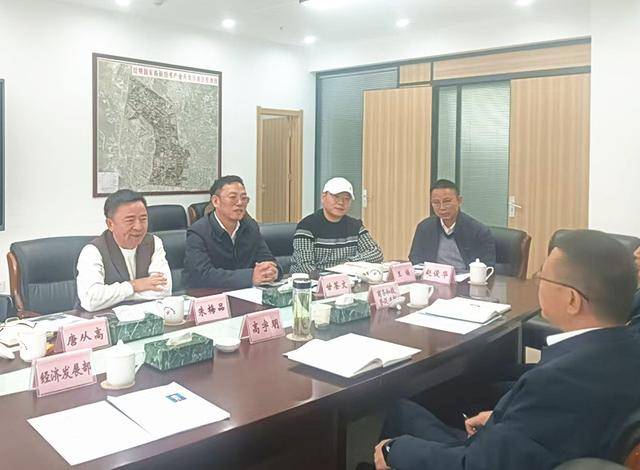
中国民贸调研昆明高新区,共探“以商招商”产业创新路径
Sou Hu Cai Jing· 2025-10-24 18:34
Core Insights - The meeting focused on innovative industrial investment models in Yunnan, trade services under the "One Village, One Product" initiative, low-altitude economy development, cultural and tourism integration, financial empowerment for industrial upgrades, and the establishment of a credit system for park enterprises [1][2]. Group 1: Industrial Development - The Kunming High-tech Zone has achieved significant results in key industries such as biomedicine and health, new materials from tin and precious metals, and digital economy and intelligent manufacturing [2][3]. - The park management committee aims to clarify the advantages and shortcomings of the semiconductor industry, avoid technological limitations, and leverage green electricity resources for sustainable operations [5]. Group 2: Investment and Collaboration - The discussion included the invitation for the Kunming High-tech Zone and related enterprises to participate in the "2025 One Village, One Product International Commodity Expo" [2]. - Both parties agreed on the need for government guidance in the low-altitude economy sector, combining market-oriented operations by enterprises, and seeking policy support to attract social capital [2][3]. Group 3: Strategic Initiatives - The "One Plus Four Plus N" high-quality development strategy is being actively integrated into the biomedicine sector to promote industrial clustering and resource optimization [5]. - The potential establishment of a mixed-ownership operating company for the low-altitude economy in the high-tech zone was explored [2].
广东出招 支持低空经济“高飞”
Shang Hai Zheng Quan Bao· 2025-10-24 15:23
Core Insights - Guangdong Province is implementing measures to support the high-quality development of the low-altitude economy, aiming to establish itself as a national leader in this sector [1][2]. Group 1: Economic Scale and Industry Structure - The low-altitude economy in Guangdong has reached a scale of over 100 billion, with more than 15,000 related enterprises, accounting for over 30% of the national low-altitude economy industry chain [2]. - The provincial government plans to focus on airspace management reform, infrastructure connectivity, and industrial ecosystem cultivation to further expand the low-altitude economy [2]. Group 2: Technological Development and Innovation - The measures emphasize accelerating key core technology breakthroughs in areas such as new aircraft configurations and low-altitude flight support, involving multiple stakeholders in the selection and organization of technology projects [2][3]. - Guangdong will establish provincial-level innovation platforms and engineering research centers to support research and development in low-altitude aircraft and services [3]. Group 3: Financial Support and Market Development - The government encourages increased R&D investment from low-altitude enterprises, offering tax deductions for qualifying R&D expenses and financial support for technology transformation projects [4]. - Financial services will be enhanced through various means, including guiding social capital towards key areas of the low-altitude economy and supporting qualified enterprises in listing domestically and internationally [4]. Group 4: New Business Models and Applications - The measures support the development of new low-altitude consumption models, including the establishment of urban and intercity low-altitude passenger routes and logistics services [5][6]. - Initiatives will promote low-altitude tourism and sports, encouraging collaboration between travel agencies and scenic spots to develop aerial tourism products [6]. Group 5: Public Sector Engagement - The government aims to expand the application of low-altitude economic services in public sectors such as emergency rescue, medical care, and urban management [6]. - A comprehensive application scenario for the low-altitude economy will be created, with selected areas receiving support for airspace assurance and technical backing [6].
广东出台低空经济新政“16条”,提出支持航空体育运动发展
Nan Fang Du Shi Bao· 2025-10-24 15:16
Core Viewpoint - The Guangdong Provincial Government has issued measures to support the high-quality development of the low-altitude economy, focusing on safety, innovation, and infrastructure development to establish Guangdong as a leading hub for low-altitude economic activities [1][2]. Group 1: Policy Measures - The measures include 16 initiatives covering low-altitude safety, research and development, airworthiness certification, infrastructure, and application scenarios [1]. - The measures will be effective for three years and apply to all enterprises and institutions engaged in low-altitude economic activities in Guangdong [1]. - A priority is placed on enhancing regulations and ensuring safety, with plans to optimize low-altitude air routes and improve airspace management [1]. Group 2: Technological Development - The measures emphasize key technologies in new aircraft configurations, critical components, basic software, and low-altitude flight support, establishing a selection mechanism for core technology projects [2]. - Financial support will be provided for low-altitude economic projects included in the provincial key research and development plan, encouraging increased R&D investment from low-altitude enterprises [2]. - Support will also be given for the establishment of provincial-level pilot platforms and engineering technology research centers in low-altitude fields [2]. Group 3: Enterprise Support - The measures aim to cultivate strong low-altitude enterprises through direct financing and leasing support for technology transformation projects [3]. - Enterprises recognized as national champions or specialized "little giants" in the low-altitude sector will receive additional incentives from local governments [3]. - The measures highlight the importance of application fields, particularly in cities like Guangzhou, Shenzhen, and Zhuhai, for developing low-altitude passenger routes and cross-border drone logistics [3]. Group 4: Application Scenarios - The measures propose the issuance of low-altitude tourism consumption vouchers and the promotion of low-altitude tourism businesses in collaboration with scenic spots and general airports [4]. - Support will be extended to aviation sports events and activities, as well as the use of low-altitude technologies in public service sectors such as emergency rescue and medical care [4]. - The creation of comprehensive low-altitude economic application scenarios will be encouraged, with selected areas receiving enhanced support for airspace security and technical backing [5].
富达基金张笑牧:持续看好“一超三强”四大赛道
Guo Ji Jin Rong Bao· 2025-10-24 14:39
Group 1 - The core viewpoint of the article emphasizes the clear path outlined for China's socio-economic development over the next five years, aligning with investment opportunities in sectors such as artificial intelligence, aerospace, low-altitude economy, and innovative consumption [1][2] - The policy framework proposed includes a dual focus on industry and technology, highlighting the need for a modern industrial system and high-level technological self-reliance, which supports advancements in high-end manufacturing and technological innovation [1] - The announcement of the "strong aerospace nation" goal marks a significant policy endorsement for achieving major milestones like manned lunar landings during the 14th Five-Year Plan period [1] Group 2 - The strategy emphasizes the importance of expanding domestic demand while fostering innovation in supply, aiming to create new market opportunities for China's robust manufacturing capabilities [2] - The policy also encourages international market expansion through trade innovation and high-quality Belt and Road initiatives, which aim to alleviate internal competition pressures by promoting global capacity distribution [2] - The focus on safety and governance includes strengthening the national security system and advancing the modernization of defense and military, which is essential for the sustainable development of self-reliant and innovative industries [2]
未来十多年中等收入群体将超8亿
21世纪经济报道· 2025-10-24 14:32
Core Viewpoint - The article discusses the key objectives and strategies outlined in the "15th Five-Year Plan" (2021-2025) as approved by the Chinese Communist Party, emphasizing the importance of high-quality development, technological self-reliance, and expanding domestic demand to achieve modernization by 2035 [1][2]. Economic Growth and Development Goals - The main goals for the "15th Five-Year Plan" include achieving significant results in high-quality development, maintaining economic growth within a reasonable range, and significantly improving the resident consumption rate [4]. - The plan aims for a substantial increase in the level of technological self-reliance, with rapid breakthroughs in key core technologies and deep integration of technological and industrial innovation [4]. - It emphasizes the need for comprehensive reforms to enhance the socialist market economy and improve the high-level opening-up system [4]. Domestic Demand and Consumption - The strategy focuses on expanding domestic demand as a key foundation for modernization, with a projected retail sales total of 48.3 trillion yuan in 2024, expected to exceed 50 trillion yuan in 2025 [7]. - The plan includes initiatives to boost consumption, such as implementing special actions to stimulate consumption and enhancing the quality of public services to improve living standards [10][8]. - The government aims to optimize investment structures and increase the proportion of government investment in public welfare [8]. Modern Industrial System - The plan prioritizes building a modern industrial system, with a focus on optimizing traditional industries and fostering emerging sectors such as new energy and advanced manufacturing [12]. - It anticipates a market space of approximately 10 trillion yuan over the next five years, driven by the development of strategic emerging industries [12]. - The plan also includes forward-looking initiatives in future industries like quantum technology and artificial intelligence, which are expected to contribute significantly to economic growth [12][13]. Technological Innovation - The "15th Five-Year Plan" emphasizes the importance of technological modernization, aiming to enhance the national innovation system and boost self-innovation capabilities [13]. - Specific measures include supporting enterprises in leading innovation efforts and increasing R&D investment, particularly in artificial intelligence and other digital technologies [14]. - The government plans to strengthen the ecosystem for artificial intelligence development, focusing on foundational research and governance [14]. High-Level Opening-Up - The plan outlines strategies for expanding high-level opening-up, including promoting trade innovation and enhancing bilateral investment cooperation [17]. - It aims to leverage China's large market to attract foreign investment and create a favorable business environment [18]. - The emphasis is on balancing GDP growth with national income (GNI) considerations, reflecting a shift towards recognizing the importance of income generated from overseas investments [19][20].

低空经济,利好!广东最新部署→
Zheng Quan Shi Bao· 2025-10-24 14:20
Core Insights - The low-altitude economy is being increasingly supported by various policies, with the Guangdong provincial government issuing measures to promote high-quality development in this sector [1][2] - The "14th Five-Year Plan" emphasizes the development of strategic emerging industries, including low-altitude economy, which is expected to create significant market opportunities [1] Policy Measures - The Guangdong government has introduced measures to guide social capital towards key areas of the low-altitude economy through investment funds, focusing on early, small, long-term, and hard technology investments [2] - Financial institutions are encouraged to provide comprehensive financial services for low-altitude enterprises, including loan interest subsidies and risk compensation [2] Infrastructure Development - The measures support the gradual opening of urban and intercity low-altitude passenger routes in cities like Guangzhou, Shenzhen, and Zhuhai, while ensuring safety and developing traffic regulations [3] - There is a push for the integration of low-altitude infrastructure with the overall transportation system, with an emphasis on upgrading existing facilities for intelligent use [3] Public Sector Applications - The measures encourage government departments to expand the application of low-altitude services in public sectors such as emergency rescue, medical care, and urban management [4] - The low-altitude economy is seen as a mature industry with increasing investment value as policies become more refined and the industry scales up [4] Market Outlook - The low-altitude economy is identified as a new strategic focus for national development, with various regions implementing policies to support its growth [4] - The industry is witnessing a clear trend towards large-scale development, particularly in low-altitude logistics and tourism applications [4]
低空经济,利好!广东最新部署→
证券时报· 2025-10-24 14:15
低空经济这一战略性新兴产业,正不断受到各方面的政策支持。 广东省政府办公厅日前印发《广东省支持低空经济高质量发展若干措施》(以下简称《若干措施》)。 《若干措施》提出,通过省产业发展投资基金集群以多种方式引导社会资本围绕低空经济产业链关键核心 领域。加大对低空经济企业上市培育力度,支持符合条件的优质企业境内外上市。 对于低空客运等新型交通方式,《若干措施》指出,支持广州、深圳、珠海先行先试,在确保安全的前提 下,稳步开通市内和城际低空客运航线,探索制定低空空域交通规则和大湾区跨境无人机物流配送。 展望"十五五"时期,低空经济有望受到更大力度的助力和赋能。近日,党的二十届四中全会审议通过了 《中共中央关于制定国民经济和社会发展第十五个五年规划的建议》(以下简称《建议》),《建议》提 出打造新兴支柱产业,加快新能源、新材料、航空航天、低空经济等战略性新兴产业集群发展,国家发展 改革委党组书记、主任郑栅洁表示,这将催生出数个万亿级甚至更大规模的市场。 鼓励保险机构开发低空商业应用的险种 《若干措施》明确,加强低空金融服务支持。通过省产业发展投资基金集群以多种方式引导社会资本围绕 低空经济产业链关键核心领域,着力投早 ...

“立园满园”一周年,彭州何以引领蓉北?
Mei Ri Jing Ji Xin Wen· 2025-10-24 13:30
Core Insights - Chengdu's economic landscape, valued at over 2.3 trillion yuan, relies on key counties like Jianyang, Dujiangyan, and Pengzhou as pivotal support points for high-quality development [1][2] - The city aims to enhance its industrial chain construction, focusing on attracting enterprises and improving the quality of industries within its parks [1] - Pengzhou has set ambitious goals to become a sub-center of Chengdu, targeting a GDP of 850 billion yuan by 2027 and achieving the "billion city, million people" goal by 2029 [1][10] Industrial Development - The "立园满园" initiative launched in 2024 aims to enhance the capacity and attractiveness of industrial parks, with Pengzhou reporting 54 new projects and a total investment of 25.155 billion yuan in the first nine months of 2025 [1] - The low-altitude economy is being developed in Pengzhou, with the establishment of the "Sky Eye" national-level drone testing base, which supports various applications including logistics and emergency services [5][7] - Pengzhou is becoming a hub for low-altitude economic activities, with policies aimed at fostering new business models and exploring new fields [7][10] Economic Goals - By 2029, Pengzhou aims for provincial park revenues to exceed 100 billion yuan and city-level park revenues to surpass 15 billion yuan, contributing significantly to Chengdu's economic framework [10][17] - The city is focusing on advanced manufacturing, energy, and new materials, with a strategic push to enhance its industrial capabilities [10][14] - The establishment of a comprehensive industrial ecosystem is underway, with a focus on integrating agriculture, manufacturing, and services to support sustainable growth [17][21] Business Environment - Pengzhou is enhancing its business environment through targeted support measures, aiming to attract and retain enterprises by providing a conducive ecosystem for innovation and growth [19][20] - The city is positioning itself as a new "magnet" for resources, facilitating the outflow of educational, medical, and innovative resources from Chengdu [19] - The development of the Tianfu Traditional Chinese Medicine City is a key initiative, with over 300 health enterprises and a focus on modernizing traditional medicine practices [20][21]