旅游

Search documents
借款、担保与“退市” 西安旅游的失血残局
2 1 Shi Ji Jing Ji Bao Dao· 2026-02-11 10:04
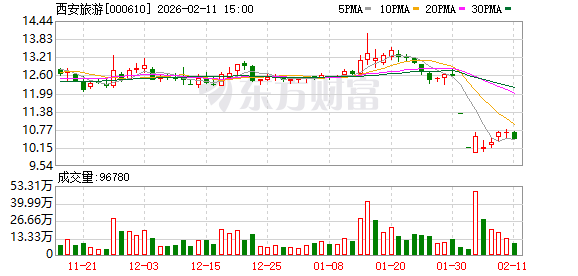
Core Viewpoint - The tourism market in Xi'an is facing significant challenges, highlighted by Xi'an Tourism's risk of delisting and ongoing financial struggles, contrasting sharply with the success of its competitor, Shaanxi Tourism [2][3][11]. Financial Performance - Xi'an Tourism is projected to incur a net loss of up to 290 million yuan for the fiscal year 2025, with its net assets expected to turn negative, leading to a potential delisting warning [3][11]. - The company has reported continuous losses in its net profit for 12 consecutive years, with recent revenues of 550 million yuan and 585 million yuan for 2023 and 2024, respectively, alongside net losses of 154 million yuan, 260 million yuan, and an estimated 230-290 million yuan for 2023, 2024, and 2025 [4][5]. Business Strategy and Structure - Xi'an Tourism's previous expansion strategy, which aimed to raise 600 million yuan for nationwide development, has been drastically scaled back to 300 million yuan, primarily for debt repayment rather than expansion [5]. - The company's core business, particularly its commercial operations, has seen a dramatic decline, with revenue dropping over 80% in two years, leading to a reliance on hotel and travel agency operations that have not generated sufficient profits [6][11]. Competitive Landscape - In contrast to Xi'an Tourism's struggles, Shaanxi Tourism has successfully launched in the capital market, with its stock price increasing by 64.1% on its first day of trading and reaching a market value exceeding 11.7 billion yuan [9][10]. - Shaanxi Tourism is expected to achieve a net profit of up to 436 million yuan in 2025, capitalizing on high-value attractions and performances, while Xi'an Tourism continues to face challenges in its low-margin, high-volatility business model [11]. Financial Health of Parent Company - The parent company, Xiyou Group, is also experiencing financial difficulties, with consecutive losses projected at 386 million yuan, 435 million yuan, and 187 million yuan from 2023 to mid-2025, alongside high debt ratios [12]. - The financial struggles of Xi'an Tourism and its parent company raise concerns about the sustainability of their operations and the potential for further financial deterioration if the core business does not improve [12].


借款、担保与“退市”,西安旅游的失血残局
2 1 Shi Ji Jing Ji Bao Dao· 2026-02-11 09:57
Core Viewpoint - The tourism market in Xi'an is facing significant challenges, highlighted by Xi'an Tourism's (000610.SZ) warning of delisting risks due to ongoing financial struggles and a projected net loss of up to 290 million yuan for 2025 [1][2]. Financial Performance - Xi'an Tourism is expected to report a net loss of 154 million yuan in 2023, 260 million yuan in 2024, and between 230 million to 290 million yuan in 2025 [4]. - The company has faced 12 consecutive years of non-recurring net profit losses, leading to a negative net asset forecast and potential delisting [2][4]. Business Strategy and Challenges - The company's previous expansion strategy, which aimed to raise 600 million yuan for nationwide hotel development, has been drastically scaled back to 300 million yuan, primarily for debt repayment rather than growth [4]. - Xi'an Tourism's main revenue-generating business, which accounted for over 60% of revenue, has seen a dramatic decline, with revenue dropping by over 80% [4]. Operational Issues - The hotel business has reported a negative gross margin of -12.54% in the first half of 2025, indicating that increased orders lead to greater losses [5]. - The company is relying on borrowing 50 million yuan from its major shareholder and providing 80 million yuan in guarantees for struggling subsidiaries, revealing a fragile financial structure [5][12]. Market Comparison - In contrast to Xi'an Tourism's struggles, Shaanxi Tourism (603402) has successfully listed and is projected to achieve a net profit of up to 436 million yuan in 2025, highlighting a stark divergence in performance within the same market [6][10]. - While Xi'an Tourism is entrenched in low-margin, high-volatility businesses, Shaanxi Tourism has capitalized on high-value attractions and performances, leading to a more favorable market position [11]. Parent Company Financial Health - The parent company, Xili Group, is also experiencing financial difficulties, with net losses of 386 million yuan, 435 million yuan, and 187 million yuan from 2023 to the first half of 2025, alongside high debt ratios [12][13]. - The financial strain on Xili Group raises concerns about the sustainability of its support for Xi'an Tourism, potentially leading to a broader financial crisis if Xi'an Tourism fails to recover [13].

一大批年轻人,开始“反向过年”
虎嗅APP· 2026-02-11 09:38
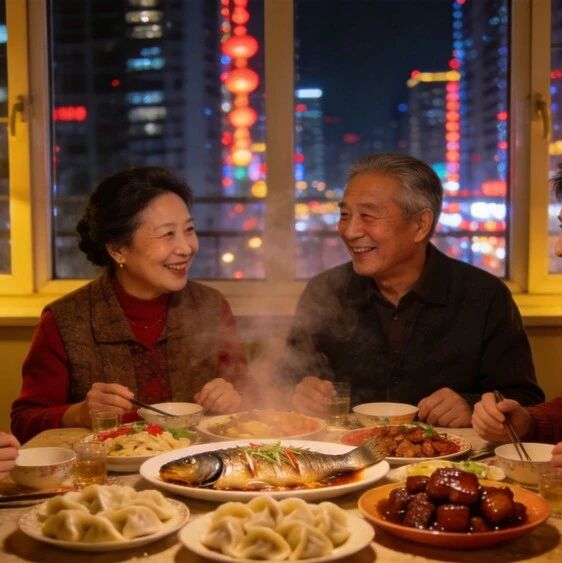
Core Viewpoint - The traditional practice of returning home for the Spring Festival is increasingly being reconsidered by many, with a growing trend of "reverse Spring Festival" where young people invite their parents to big cities instead of going back to their hometowns [4][6]. Group 1: Reverse Spring Festival - There is a significant increase in the booking of "reverse" tickets from smaller airports to major cities like Beijing, Shanghai, and Guangzhou, with a reported 84% year-on-year growth in ticket bookings for this trend [6][8]. - The top ten popular destinations for "reverse Spring Festival" include Beijing, Shanghai, Chengdu, and others, indicating a shift in travel patterns during the holiday [6]. - The difficulty in purchasing tickets for returning home is a major reason for this trend, as many people in large cities face challenges in securing travel arrangements [6][8]. Group 2: Segmenting the Holiday - Some individuals are opting for a segmented approach to the holiday, spending time with family before traveling to other destinations for leisure [10][11]. - The trend of visiting smaller cities for tourism during the Spring Festival is on the rise, with hotel bookings in places like Pu'er and Jieyang seeing over 80% year-on-year increases [11][13]. - Travelers are increasingly choosing less popular destinations to avoid crowds and high accommodation prices, reflecting a desire for a more relaxed holiday experience [13][14]. Group 3: Independent Celebrations - A segment of young people is choosing to spend the holiday alone in their rented apartments, embracing the idea of "celebrating alone" with excitement rather than viewing it as a lonely experience [15][16]. - This group is actively preparing for the holiday by decorating their living spaces and purchasing personal favorite foods, indicating a shift in how individuals perceive and celebrate the holiday [15][16]. Group 4: Reevaluating the Meaning of the Holiday - Many individuals are reflecting on the pressures associated with traditional celebrations, such as family obligations and social expectations, leading to a desire for a more personal and less stressful holiday experience [17][18]. - The concept of "year flavor" is evolving, with individuals prioritizing personal well-being and meaningful connections over traditional festivities [18][19]. - The ongoing changes in family structures and individual awareness are contributing to a more diverse and personalized approach to celebrating the New Year, moving away from collective traditions [20][21].
滑雪这门生意,卷起来了
Jie Fang Ri Bao· 2026-02-11 09:36
Core Insights - The 2026 Milan-Cortina Winter Olympics have sparked a surge in winter sports enthusiasm in the Yangtze River Delta region, continuing the momentum from the 2022 Beijing Winter Olympics [1][2] - The region has seen a significant increase in the number of indoor ski resorts, with Jiangsu and Zhejiang leading the nation in terms of facility count, surpassing traditional winter sports strongholds in Northeast China [1] Group 1: Athlete Development and Participation - Many athletes from the Yangtze River Delta are transitioning from other sports to winter sports, indicating a growing emphasis on winter sports in the region [3] - Notable examples include athletes like Ying Qing and Lin Qinxin, who have successfully transitioned from track and field to bobsleigh and skeleton, respectively [3] - The Shanghai curling team is a product of collaboration between educational institutions and sports authorities, showcasing a structured approach to talent development in winter sports [3] Group 2: Youth Engagement and Education - Zhejiang has been proactive in promoting winter sports among youth, integrating them into school curricula and establishing teams that have achieved national recognition [4] - The inclusion of winter sports in local competitions, such as the Zhejiang Provincial Games, marks a significant step in popularizing these activities [4] - The National Sports Administration's report indicates a rising enthusiasm for winter sports among residents in the Yangtze River Delta, with strong consumer willingness and capability [4] Group 3: Economic Impact and Trends - The indoor ski industry in the Yangtze River Delta is experiencing explosive growth post-Beijing Winter Olympics, with facilities like Qiao Bo Ice and Snow World seeing increased visitor numbers [5][6] - The region's ski resorts are becoming key drivers of local economic activity, with initiatives to integrate winter sports with tourism and cultural events [6] - Data from the 2024-2025 China Ski Industry White Paper shows that Zhejiang ranks first among southern provinces in terms of ski participation, with significant local tourism consumption [6] Group 4: Infrastructure Development - The Yangtze River Delta has seen the opening of several large indoor ski resorts, with plans for more facilities underway, including the upcoming Shanghai Yao Xue Ice and Snow World [7] - Future projects in cities like Hangzhou and Taicang are set to enhance the region's winter sports infrastructure, further solidifying its status as a winter sports hub [7] - The trend of "Northern snow moving South" is expected to continue, with a growing number of enthusiasts and facilities in the region [8]
“连州味”亮相广州街头!诚邀羊城市民赴连州过大年
Nan Fang Nong Cun Bao· 2026-02-11 09:31
Group 1 - The article highlights the promotion of "Lianzhou Flavor" in Guangzhou, inviting citizens to celebrate the New Year in Lianzhou with local cuisine and cultural resources [2][3]. - Lianzhou cuisine, particularly the East Pi cured meat, is emphasized for its unique taste and is considered a staple for winter dining in the Guangdong-Hong Kong-Macau Greater Bay Area [6][7]. - The article mentions various New Year activities in Lianzhou, including bonfire parties, underground river blessings, a cured meat food festival, and intangible cultural heritage performances, allowing visitors to experience local customs [19][20][21]. Group 2 - The natural scenery of Lianzhou, including the Ya'an Xiang Luoshen Valley and the Lianzhou Underground River, is presented as an attractive destination for New Year travel, offering a serene and picturesque environment [13][14][15]. - The East Pi cured meat is described as a national geographical indication product, made from pork, sausages, and ducks, and is a traditional delicacy that embodies the essence of Lianzhou's New Year celebrations [7][8].

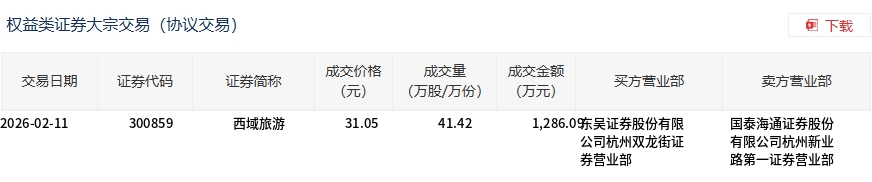
西域旅游今日大宗交易折价成交41.42万股,成交额1286.09万元
Xin Lang Cai Jing· 2026-02-11 08:57
| 交易日期 | 证券代码 | 证券简称 | 成交价格 | 成交量 | 成交全额 买方营业部 | 卖方营业部 | | --- | --- | --- | --- | --- | --- | --- | | | | | (元) | (万股/万份) | (万元) | | | 2026-02-11 | 300859 | 西域旅游 | 31.05 | 41.42 | 1,286.0 东吴证券股份有限 | 国泰海通证券股份 | | | | | | | 公司杭州双龙街证 | 有限公司杭州新业 | | | | | | | 券营业部 | 路第一证券营业部 | 2月11日,西域旅游大宗交易成交41.42万股,成交额1286.09万元,占当日总成交额的4.93%,成交价31.05元,较市场收盘价 37.58元折价17.38%。 ...

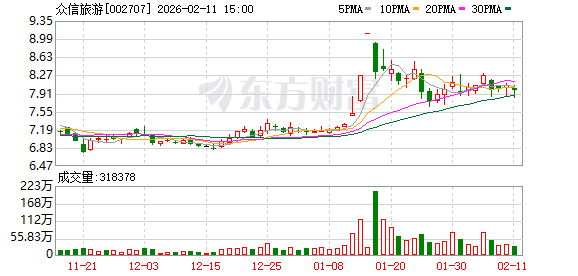
众信旅游:关注冬奥热潮对意大利旅游的中长期带动效应
Zheng Quan Ri Bao· 2026-02-11 08:37
Core Viewpoint - The company emphasizes the long-term impact of the Winter Olympics on tourism in Italy, which is a key destination in its European product offerings [2] Group 1: Company Strategy - The company is focusing on optimizing its four-season tourism products to capitalize on the post-Olympic interest in Italy [2] - The company aims to convert the demand generated by the Olympics into sustained interest in Italy's natural scenery, cultural heritage, and culinary sports tourism [2] - The strategy is designed to enhance product value and customer satisfaction [2]

交运股份:筹划重大资产置换暨关联交易,正推进相关工作
Xin Lang Cai Jing· 2026-02-11 08:02
Core Viewpoint - The company plans to conduct an asset swap with its controlling shareholder, Jiushi Group, and its affiliates, which constitutes a related party transaction and a significant asset restructuring, without changing the controlling shareholder and actual controller [1] Group 1: Asset Swap Details - The company intends to acquire cultural, entertainment, and tourism assets, such as equity in event operation companies [1] - The company plans to divest passenger vehicle sales assets, including equity in automobile repair companies, with cash adjustments for the difference [1] - A framework agreement for the asset swap has been signed, but the transaction price has not yet been determined, and due diligence by intermediary organizations is currently underway [1] Group 2: Transaction Status - As of the announcement date, the transaction process is ongoing, but the final implementation remains uncertain [1]

20.5亿元消费券、补贴、红包等你领!
Jin Rong Shi Bao· 2026-02-11 07:19
Core Viewpoint - The Chinese government is implementing a series of measures to boost consumer spending during the upcoming Spring Festival, including financial support, promotional activities, and increased supply of essential goods. Group 1: Financial Support and Incentives - The first batch of 625 billion yuan in national subsidy funds has been allocated to local commerce departments [3] - A lottery for invoices during the nine-day holiday will have a prize pool exceeding 1 billion yuan [4] - Local governments have arranged 20.5 billion yuan in funds to directly benefit consumers through vouchers, subsidies, and red envelopes [4][13] - Financial institutions are encouraged to develop diverse financial products and services to support consumption [14] Group 2: Supply and Inventory Management - As of February 9, inventory levels for key supermarket items such as grains, meat, and eggs have increased by over 20% compared to the previous month, with vegetable stocks up by 7.7% [5][20] - Various regions are actively organizing supply chains to ensure adequate stock of essential goods for the holiday [19] Group 3: Consumer Experience Enhancement - The government is promoting a comprehensive approach to holiday consumption, covering food, accommodation, transportation, tourism, shopping, and entertainment [6] - Initiatives include encouraging restaurants to offer special New Year meal packages and promoting discounts in hotels and home appliance stores [7][8] - Airlines and railways will increase capacity and offer special services during the holiday [9] - Cultural activities such as traditional fairs and performances will be supported to enhance the festive atmosphere [10][11] Group 4: Collaboration and Community Engagement - The cultural and tourism sector is launching a nationwide Spring Festival consumption month with various initiatives to engage the public [17] - Sports events and fitness activities are being organized to promote community participation and well-being during the holiday [18]
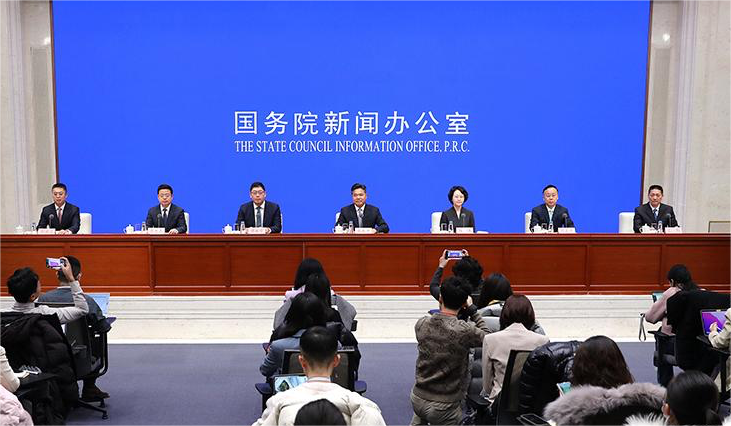
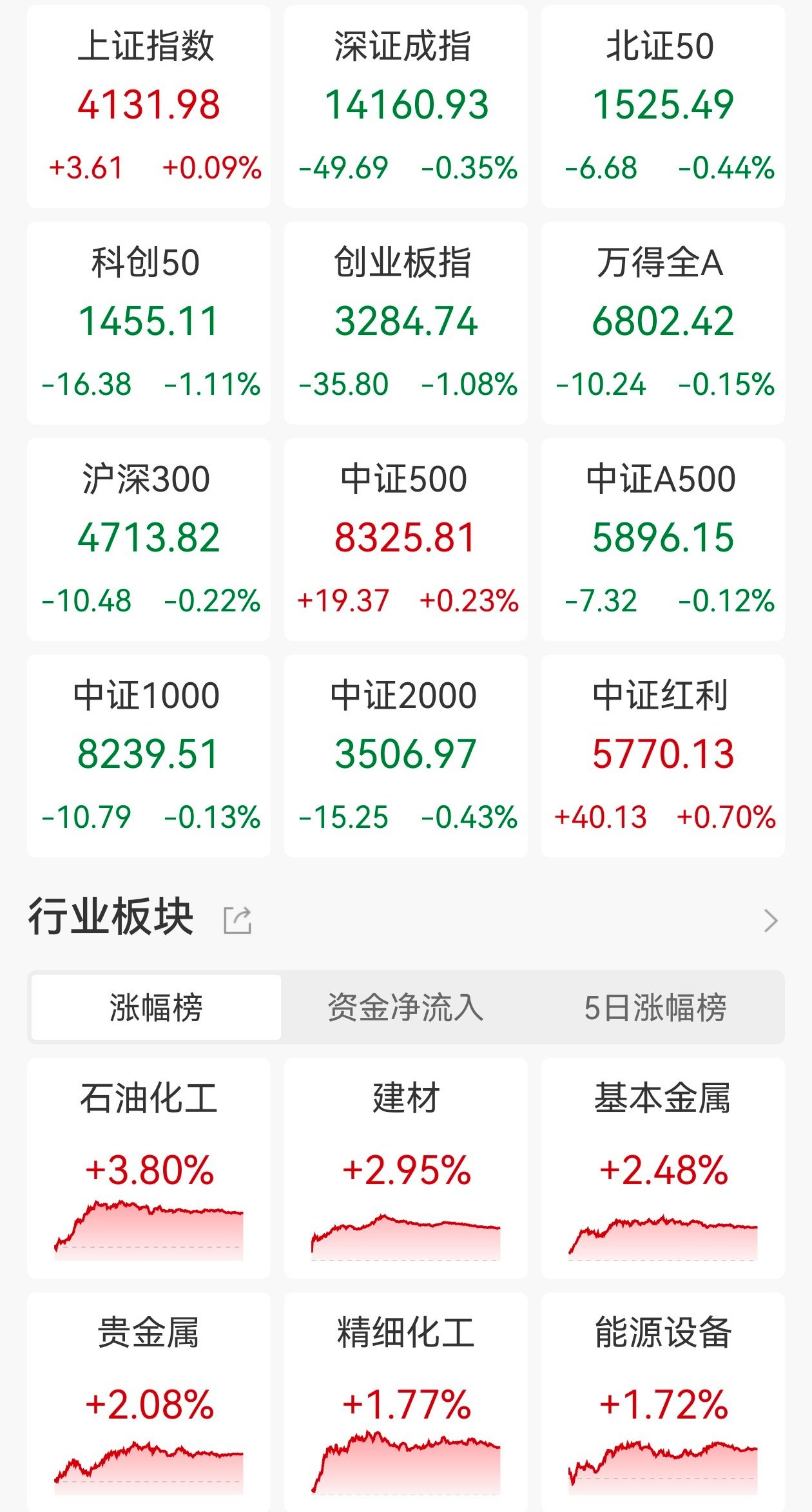
A股收评:三大指数涨跌不一,创业板指跌逾1%,玻璃玻纤、小金属板块走高
Ge Long Hui A P P· 2026-02-11 07:14
Group 1 - China's January CPI increased by 0.2% year-on-year, which is lower than expected [1] - The A-share market showed mixed results, with the Shanghai Composite Index rising by 0.09% to 4131.99 points, while the Shenzhen Component Index fell by 0.35% and the ChiNext Index dropped by 1.08% [1] - The total market turnover was 2 trillion yuan, a decrease of 123.7 billion yuan compared to the previous trading day, with over 3200 stocks declining [1] Group 2 - The glass fiber sector experienced a surge, with leading companies like Guangyuan New Materials and International Composite raising prices for electronic fabrics, resulting in stocks like International Composite and China Jushi hitting the daily limit [1] - The small metals sector also performed well, with multiple stocks such as Zhongtung High-tech reaching the daily limit [1] - The phosphate chemical and fertilizer sectors saw gains, with Jinzhengda hitting the daily limit [1] Group 3 - The lithium mining, fluorochemical, and steel sectors had notable increases [1] - Conversely, sectors such as cultural media, film concepts, AI corpus, and Sora concepts saw declines, with stocks like Hengdian Film and Zhejiang Culture Industry hitting the daily limit [1] - The tourism sector fell, with Haikan Co. dropping over 11%, and the cultivated diamond sector experienced widespread declines, led by Sifangda [1]