
仪器仪表

Search documents
禾川科技股价微涨0.52% 人形机器人概念受关注
Jin Rong Jie· 2025-08-05 19:06
Group 1 - The latest stock price of Hechuan Technology is 48.70 yuan, an increase of 0.25 yuan from the previous trading day [1] - The stock reached a maximum of 49.46 yuan and a minimum of 48.01 yuan during the trading session, with a total transaction amount of 202 million yuan [1] - Hechuan Technology's main business includes the research, production, and sales of industrial automation control products, which are widely used in fields such as industrial robots and CNC machine tools [1] Group 2 - Hechuan Technology is categorized under the instrumentation industry and is also involved in humanoid robots and new industrialization concept sectors [1] - The net outflow of main funds for Hechuan Technology on that day was 2.55 million yuan, with a cumulative net outflow of 76.33 million yuan over the past five trading days [1]

宏英智能股价微涨0.24%,2025年中报预增超300%
Jin Rong Jie· 2025-08-05 17:02
Group 1 - The core stock price of Hongying Intelligent as of August 5, 2025, is 29.80 yuan, with an increase of 0.07 yuan, representing a growth of 0.24% compared to the previous trading day [1] - The trading volume on August 5, 2025, was 0.64 billion yuan, with a turnover rate of 6.09% [1] - Hongying Intelligent specializes in the research, production, and sales of smart instruments and meters, which are widely used in industrial automation and robotics [1] Group 2 - On August 5, 2025, Hongying Intelligent added the concept of "2025 Mid-Year Report Pre-Increase," with an expected net profit attributable to shareholders ranging from 12 million to 16.5 million yuan for the first half of 2025, indicating a year-on-year growth of 329.57% to 490.66% [1] - In terms of capital flow, on August 5, 2025, there was a net outflow of 7.7037 million yuan from main funds, with a cumulative net outflow of 35.9287 million yuan over the past five days [1]

出口角度看产业升级 - 宏观陈述
2025-08-05 15:42
Summary of Conference Call Records Industry Overview - The records focus on the **high-end industry in China**, particularly its development, challenges, and the impact of internal competition (involution) on industrial upgrading [1][5][15]. Key Points and Arguments 1. **Structural Policies**: China has implemented structural easing policies to guide funds towards high-end industries, resulting in significant growth in industrial loans for high-tech sectors, while support for the real estate sector remains weak [3][2]. 2. **Economic Challenges**: The Chinese economy faces weak overall demand, leading to low capacity utilization rates, particularly in high-end industries, which are even lower than traditional industries [5][6]. 3. **Involution Impact**: Involution has led to price reductions as companies compete for orders, which can suppress further development of high-end industries if driven by insufficient demand rather than economies of scale [6][7]. 4. **Export Trends**: Over the past decade, the export share of high-end industries such as computers, pharmaceuticals, and electrical equipment has significantly increased, while traditional industries like rubber and textiles have seen a decline [8][10]. 5. **High vs. Low Growth Groups**: High-growth groups (emerging industries) have shown strong performance in fixed asset investment and industrial value added, but their export growth has lagged behind low-growth groups (traditional industries) in recent years due to involution [10][9]. 6. **Quality Indicators**: Total Factor Productivity (TFP) is used as a quality measure, indicating that a decline in the export delivery value as a proportion of revenue correlates with stronger TFP [11][4]. 7. **Future Directions**: High-end manufacturing is not the endpoint of industrial upgrading; the next level involves research and development, branding, and high-value-added services [12][13]. 8. **Need for Anti-Involution Policies**: To counteract the negative effects of involution, policies promoting demand and improving capacity utilization are essential for healthy economic development [15][16]. Additional Important Content - **Price Dynamics**: Price decreases should be analyzed to determine their causes; if due to demand insufficiency, they may hinder industrial upgrading [7]. - **Labor Market Effects**: Anti-involution policies should also address labor market issues, as stagnant wage growth can lead to reduced consumer spending on higher-quality goods, further impacting industrial upgrading [16]. - **Evaluation of Policies**: The effectiveness of anti-involution policies can be assessed through macroeconomic indicators such as profit changes, inflation levels, and the speed of industrial upgrading [17].
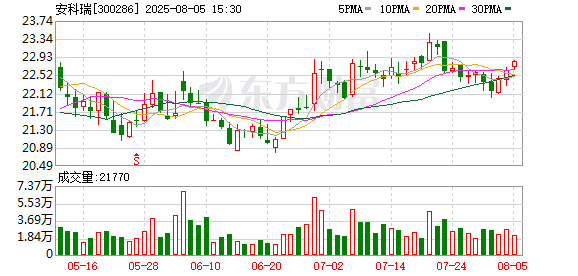
安科瑞:关于公司取得发明专利证书的公告
Zheng Quan Ri Bao· 2025-08-05 13:10
(文章来源:证券日报) 证券日报网讯 8月5日晚间,安科瑞发布公告称,公司于近日取得国家知识产权局颁发的发明专利证书1 份,取得的专利具体情况如下:一种基于计量芯片快速响应的电能高精度监测系统。 ...


重磅!七部门印发,大利好!
Zhong Guo Ji Jin Bao· 2025-08-05 12:00
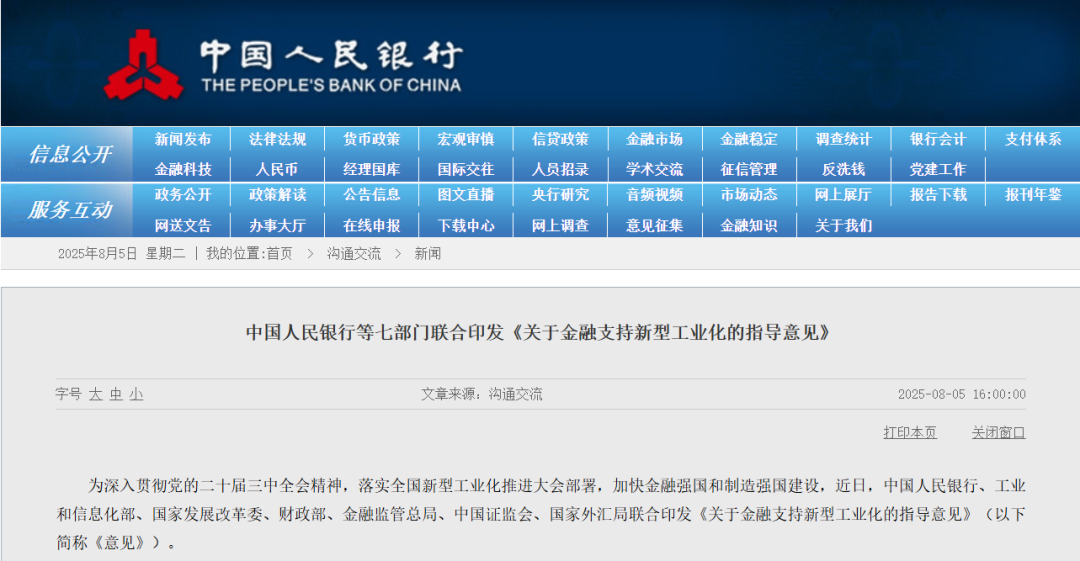
Core Viewpoint - The People's Bank of China and six other departments have jointly issued the "Guiding Opinions on Financial Support for New-Type Industrialization," which aims to enhance financial support for key industries and promote technological innovation and industrial upgrading [1][12]. Group 1: Financial Support for Key Industries - Financial institutions are encouraged to provide medium- and long-term financing for key manufacturing sectors such as integrated circuits, industrial mother machines, medical equipment, servers, and advanced materials [5][14]. - The policy aims to enhance the financing accessibility for small and micro enterprises in the manufacturing sector [6][20]. Group 2: Support for Emerging Industries - The guidance supports financing for emerging industries like new-generation information technology, smart vehicles, renewable energy, and biomedicine in multi-tiered capital markets [7][18]. - It emphasizes the importance of long-term capital and patient investment to accelerate the transformation of technological achievements into commercial applications [15][18]. Group 3: Enhancing Financial Services for Traditional Manufacturing - Financial institutions are directed to optimize credit policies to support the high-end, intelligent, and green development of traditional manufacturing [17][24]. - The guidance encourages the use of diverse financial tools, including loans, bonds, and insurance, to support the digital transformation of manufacturing enterprises [17][24]. Group 4: Green Finance and Sustainable Development - The policy promotes the establishment of a financial standard system to support the green and low-carbon transformation of high-carbon industries [19][26]. - It encourages the development of green financial products and the application of green credit and bonds in manufacturing [19][26]. Group 5: Strengthening Digital Financial Services - Financial institutions are urged to leverage technologies like big data and blockchain to enhance service efficiency for manufacturing, especially for small and medium-sized enterprises [20][21]. - The guidance supports the construction of digital financial service platforms to facilitate financing and cash management for the manufacturing sector [20][21]. Group 6: Policy Coordination and Risk Management - The document emphasizes the need for coordination between financial and industrial policies to create a supportive environment for new-type industrialization [26][27]. - It calls for the establishment of a joint risk assessment mechanism to monitor and manage financial risks associated with industrial projects [27][28].
重磅!七部门印发,大利好!
中国基金报· 2025-08-05 11:43
Core Viewpoint - The article discusses the joint issuance of the "Guiding Opinions on Financial Support for New-Type Industrialization" by seven departments, including the People's Bank of China, aimed at accelerating the construction of a financial system that supports new-type industrialization and enhances the resilience of industrial chains [3][12]. Group 1: Financial Support for Key Industries - Financial institutions are encouraged to provide medium- and long-term financing for key manufacturing industries such as integrated circuits, industrial mother machines, medical equipment, servers, and advanced materials [4][14]. - The policy aims to enhance the financing accessibility for small and micro enterprises in the manufacturing sector [5][20]. Group 2: Support for Emerging Industries - The article highlights support for emerging industries like new-generation information technology, smart (connected) vehicles, and biomedicine to access multi-tiered capital markets for financing [6][18]. - It emphasizes the need for long-term capital and patient investment to accelerate the transformation of technological achievements into practical applications [15][18]. Group 3: Enhancing Financial Services for Traditional Manufacturing - Financial institutions are urged to optimize credit policies to support the high-end, intelligent, and green development of traditional manufacturing [17][19]. - The article suggests that banks should enhance their support for digital transformation in manufacturing, particularly for small and medium-sized enterprises [17][20]. Group 4: Promoting Green and Digital Finance - The article discusses the importance of green finance in supporting the low-carbon transformation of high-carbon industries, advocating for the development of green financial products [19][28]. - It also emphasizes the role of digital finance in improving the efficiency of financial services for the manufacturing sector, particularly through the use of big data and AI [20][28]. Group 5: Strengthening Policy Coordination - The article calls for enhanced coordination between financial policies and industrial policies to ensure effective implementation of the financial support measures [27][28]. - It highlights the need for a collaborative approach among various government departments to create a conducive environment for financing new-type industrialization [27][28].

金融支持新型工业化,央行等七部门发文
Zhong Guo Zheng Quan Bao· 2025-08-05 08:48
Core Viewpoint - The People's Bank of China and several government departments have issued guidelines to support the new industrialization process, aiming for a mature financial system that supports high-end, intelligent, and green development in manufacturing by 2027 [1][3]. Group 1: Financial Support for Manufacturing - By 2027, the financial system will be mature, with a rich variety of financial products and tools such as loans, bonds, equity, and insurance, effectively preventing cross-financial risks while enhancing service adaptability [3][4]. - The effective credit demand of manufacturing enterprises will be fully met, with a continuous increase in the number and scale of bond issuances and a significant rise in equity financing levels [4][5]. Group 2: Enhancing Technological Innovation and Supply Chain Resilience - Structural monetary policy tools will be utilized to guide banks in providing medium to long-term financing for key industries such as integrated circuits and medical equipment [5][6]. - Long-term capital will be introduced to accelerate the transformation of scientific and technological achievements, with initiatives like "one month, one chain" investment roadshows to support specialized small and medium-sized enterprises [6][7]. Group 3: Comprehensive Financial Services for Key Enterprises - Financial institutions will be guided to use diverse tools to provide comprehensive financial services for key enterprises in the supply chain, supporting private enterprises in participating in self-controllable construction [7][8]. - Policies will be improved to support mergers and acquisitions, focusing on investments that enhance the supply chain [8][9]. Group 4: Modernizing the Industrial System - Traditional manufacturing financial services will be optimized to support the transformation and upgrading of industries, with a focus on high-end, intelligent, and green development [9][10]. - Financial support will be provided for digital transformation, particularly for small and medium-sized enterprises and digital transformation service providers [10][11]. Group 5: Promoting Green and Digital Finance - A financial standard system will be established to support the green and low-carbon transformation of high-carbon industries, enhancing the application of green financial tools [10][12]. - Financial institutions will be encouraged to leverage technologies like big data and blockchain to improve service efficiency for manufacturing, especially for small and medium-sized enterprises [12][13]. Group 6: Strengthening Policy Coordination - A collaborative mechanism will be established among various government departments to enhance the consistency of macro policies and optimize the environment for policy implementation [18][19]. - Local governments will be encouraged to create supportive mechanisms for financing projects, addressing issues like information asymmetry [19][20].
七部门:对突破关键核心技术的科技企业,适用上市融资、并购重组、债券发行“绿色通道”
Zheng Quan Shi Bao Wang· 2025-08-05 08:10
Core Viewpoint - The People's Bank of China and seven other departments issued guidelines to enhance financial support for new industrialization, focusing on optimizing financial policy tools to support key technologies and products in manufacturing [1] Financial Policy Tools - The guidelines emphasize the use of structural monetary policy tools to incentivize banks to provide medium to long-term financing for critical industries such as integrated circuits, industrial mother machines, medical equipment, servers, instruments, basic software, industrial software, and advanced materials [1] Support for Technological Breakthroughs - Financial institutions are encouraged to utilize appropriate financial products and tools to support the reconstruction of industrial foundations and major technological equipment projects [1] - Companies that achieve breakthroughs in key core technologies will benefit from expedited access to financing channels for public listings, mergers and acquisitions, and bond issuance [1] Promotion of New Products - Increased support will be provided for the promotion and application of first sets of major technological equipment, first batches of new materials, first versions of software, specialized and innovative small and medium-sized enterprises, high-tech enterprises, unicorn companies, and key supply chain enterprises [1]
禾信仪器拟收购量羲技术56%股权 2025上半年营收同比下降近5成
Jing Ji Guan Cha Wang· 2025-08-05 08:03
Core Viewpoint - HeXin Instruments (688622) reported a significant decline in revenue and a net loss for the first half of 2025, primarily due to market adjustments and reduced downstream investment demand. The company is also pursuing a major asset restructuring by acquiring a 56% stake in Shanghai Liangxi Technology Co., Ltd. [1][2] Financial Performance - For the first half of 2025, HeXin Instruments achieved revenue of 52.82 million yuan, a decrease of 48.88% from 103 million yuan in the same period last year [2] - The net profit attributable to shareholders turned negative at -17.46 million yuan, compared to a profit in the previous year, with a further decline in net profit after excluding non-recurring items to -19.84 million yuan [2] - The basic and diluted earnings per share were both -0.25 yuan, with a weighted average return on net assets of -4.62% [2] - The net cash flow from operating activities improved to -14.26 million yuan, an increase of 11.82 million yuan compared to -26.08 million yuan in the previous year [2] Asset Restructuring - HeXin Instruments plans to acquire a 56% stake in Liangxi Technology for a total transaction amount of 384 million yuan, which constitutes a major asset restructuring but does not qualify as a restructuring listing [2][3] - The company aims to raise up to 246 million yuan through a share issuance to specific investors to support the acquisition and improve its asset-liability ratio [2][3] Technological Focus and Market Expansion - HeXin Instruments invested 8.90 million yuan in R&D, accounting for 16.85% of its revenue, focusing on the independent development and industrialization of mass spectrometers [4] - The company has launched several new products for environmental monitoring and is expanding into emerging fields such as water quality monitoring and agricultural food safety [4] - The acquisition of Liangxi Technology is expected to enhance technological collaboration and market expansion, particularly in the rapidly growing quantum computing sector [4] Industry Outlook - The global quantum computing market is projected to reach 5.04 billion USD in 2024 and 11.18 billion USD by 2027, with a potential market size of 807.75 billion USD by 2035 [5] - In 2023, global investment in quantum information reached 38.6 billion USD, with China contributing 15 billion USD [5]

川仪股份(603100):百“川”归海,“仪”展宏图
Huachuang Securities· 2025-08-05 06:18
Investment Rating - The report gives a "Strong Buy" rating for the company [1][8]. Core Views - The company is a leading player in the industrial automation instrumentation sector, with a comprehensive product range and advanced technology that meets domestic and some international standards [6][7]. - The report highlights the significant growth potential in the domestic instrumentation market, driven by the trend of domestic substitution and increasing demand for automation in various industries [6][9]. - The company is expected to benefit from the ongoing capital expenditure in the process industries, particularly in oil, chemical, and metallurgy sectors [8][9]. Financial Summary - Projected total revenue (in million) for 2024A, 2025E, 2026E, and 2027E are 7,592, 7,666, 8,304, and 9,131 respectively, with year-on-year growth rates of 2.4%, 1.0%, 8.3%, and 10.0% [2]. - Projected net profit attributable to shareholders (in million) for the same years are 778, 795, 915, and 1,056, with growth rates of 4.6%, 2.1%, 15.2%, and 15.4% [2]. - Earnings per share (EPS) are expected to be 1.52, 1.55, 1.78, and 2.06 for the years 2024A to 2027E [2]. Company Overview - The company has a stable shareholding structure, with its main shareholder being the Four Link Group, and is transitioning control to the State-owned Assets Supervision and Administration Commission [20][21]. - The company has a strong focus on R&D, with a steady increase in R&D expenditure from 282 million in 2020 to 535 million in 2024, reflecting a commitment to innovation and technology advancement [35][36]. Industry Analysis - The industrial automation instrumentation market in China is characterized by a wide application range, high technical barriers, and a low concentration of industry players [40][41]. - The market for industrial automation instruments has shown consistent growth, with revenues surpassing 1 trillion yuan in 2023, reflecting a compound annual growth rate (CAGR) of 8.3% from 2019 to 2024 [43][44]. - The report identifies significant opportunities for domestic brands to increase their market share in the face of foreign competition, particularly in key product categories such as control valves, flow meters, temperature instruments, and pressure transmitters [50][55][62].
