种植业

Search documents
(走进中国乡村)辽宁盘锦稻香蟹肥迎丰收
Zhong Guo Xin Wen Wang· 2025-10-22 09:07
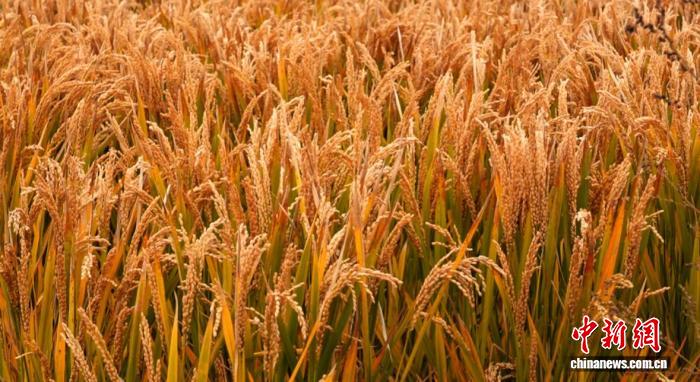
Core Insights - The article highlights the successful harvest season in Panjin, Liaoning, focusing on the increased rice yield and the thriving river crab farming industry, which utilizes a unique ecological farming model [1][3][5] Group 1: Rice Production - The rice harvest in Panjin is expected to yield significantly higher per acre compared to previous years, with mechanized operations fully implemented [1][3] - The total rice planting area in Panjin remains stable at over 1.6 million acres, and the local rice has been recognized as a national geographical indication product [3][4] - The "Honghaitan No. 1" rice has been awarded as one of the first "Liaoning Quality Products," indicating its high quality and market acceptance [3][4] Group 2: River Crab Farming - Panjin is recognized as the birthplace of the rice-crab farming technique, which allows crabs to feed on pests and weeds in rice fields, enhancing both rice and crab quality [3][4] - Local crab farmers report high quality and yield this year, with some achieving a production of 30 pounds of crabs per acre after an initial investment of 10 pounds of juvenile crabs [4][5] - The "Panjin Model" of integrated rice and crab farming has created a sustainable and profitable farming approach, benefiting local farmers [4][5] Group 3: Economic Impact and Tourism - The dual harvest of rice and crabs has not only improved economic benefits for farmers but also boosted confidence in promoting this farming model [5] - The Red Beach National Rice Park attracted many tourists during the National Day and Mid-Autumn Festival, showcasing the economic potential of agritourism alongside agricultural production [5] - The integration of rice planting, technology demonstration, and nostalgic experiences at the "1955 State Farm" has enhanced both product sales and tourism experiences [5]

机械化助力秋粮加速归仓 各地加快农业生产共绘神州大地好“丰”景
Yang Shi Wang· 2025-10-22 08:44
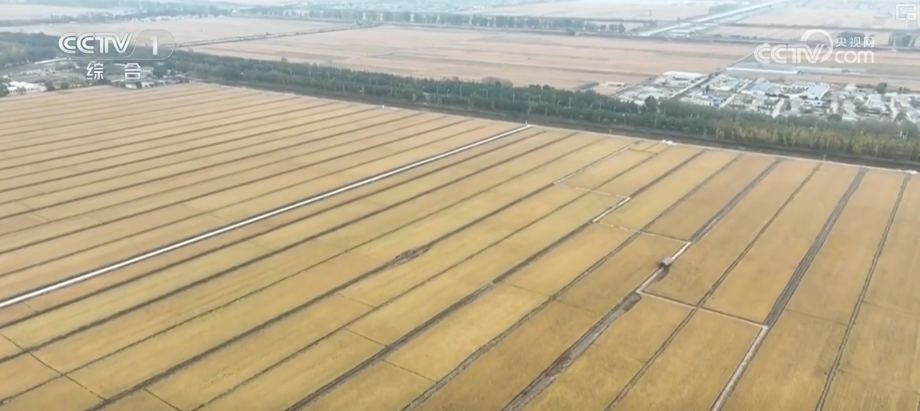
Core Viewpoint - The agricultural sector is accelerating autumn harvest efforts across various regions, implementing multiple measures to ensure a bountiful harvest Group 1: Rice Harvesting - In Liaoning Province, 1.66 million acres of rice are being harvested using mechanization to speed up the process, ensuring timely and quality completion of the harvest [4] - In Hunan, over 19 million acres of late rice are being harvested, with expectations to complete by early November [7] - Farmers in Hunan are taking advantage of breaks in rainy weather to organize rapid harvesting, with immediate transportation of harvested rice to drying centers operating 24/7 [8] Group 2: Corn Harvesting - In Shanxi Province, agricultural departments are guiding farmers to utilize favorable weather for the rapid harvesting of 580,000 acres of corn [9] - Drying equipment across the region has been fully activated to ensure timely drying of harvested corn, preventing spoilage and ensuring quality [11] Group 3: Quinoa Harvesting - In Qinghai Province, 15,600 acres of quinoa are being harvested, benefiting from ideal natural conditions such as high altitude, long sunlight hours, and pure soil and water [12] - The local area has adopted a multi-variety breeding approach for quinoa, achieving a processing conversion rate exceeding 65%, with products reaching major cities and international markets [15]
种植业板块10月22日跌0.98%,神农种业领跌,主力资金净流出1.62亿元
Zheng Xing Xing Ye Ri Bao· 2025-10-22 08:19
Core Insights - The agriculture sector experienced a decline of 0.98% on October 22, with Shennong Seed Industry leading the drop [1] - The Shanghai Composite Index closed at 3913.76, down 0.07%, while the Shenzhen Component Index closed at 12996.61, down 0.62% [1] Sector Performance - The agriculture sector's main stocks showed mixed performance, with notable declines in Shennong Seed Industry, which fell by 3.19% to a closing price of 4.55 [2] - Other significant decliners included Hainan Rubber (-2.68%), Qiule Seed Industry (-2.67%), and Honghui Early Vegetables (-2.60%) [2] Trading Volume and Capital Flow - The agriculture sector saw a net outflow of 162 million yuan from main funds, while retail investors contributed a net inflow of 123 million yuan [2] - The trading volume for Shennong Seed Industry was 867,700 shares, with a transaction value of 400 million yuan, indicating significant trading activity despite the price drop [2] Individual Stock Analysis - Notable stocks with significant capital flow included Zhongxing Fungi, which had a main fund net inflow of 26.44 million yuan, while other stocks like Nuo Puxin experienced a net outflow of 4.93 million yuan from main funds [3] - The overall sentiment in the sector appears cautious, with many stocks experiencing negative net inflows from main and speculative funds [3]


一根甘蔗的两条“共富路”
Hang Zhou Ri Bao· 2025-10-22 02:40
运河街道杭南村"共富甘蔗园" "卖甘蔗咯,正宗'上湖青',好吃得很……"这几天,在临平区运河街道荷禹路与运溪路的交叉口, 杭南村"甘蔗小集市"热闹开张。村民们带着今年收获的第一批甘蔗在这里摆摊吆喝,吸引了不少过往路 人驻足购买。 村民们售卖的"上湖青"并不是普通甘蔗,而是运河特产的青皮果蔗,也叫"上河青",在南宋时曾被 列为贡品,是杭南一带的传统经济作物。很多村民从祖辈就开始种植这种甘蔗,摊主沈凤娣就是其中之 一。 "我自己种甘蔗有40多年了,种子都是祖上传下来的,每年挑最好的甘蔗留种,品质才有保证。"摊 主沈凤娣介绍,相比外地甘蔗,"上湖青"个矮,相貌不太讨人喜欢,但它皮薄肉脆、汁水足、味道鲜 甜。只有吃过它的人,才能体会到它的美味。沈凤娣坦言,目前甘蔗的甜度尚未达到巅峰,等到11月 初,糖分充分积累,那时的"上湖青"将更加清甜可口。 曙光村村民忙着收割甘蔗 秋风渐起,甘蔗的清甜润在舌尖,更沁入村民心间。这份甜蜜,不仅是自然的馈赠,更是新时代乡 村用智慧与汗水书写的共富答案。 在杭州的临平运河街道与萧山党湾镇,一根根青皮或紫皮的甘蔗,正从村民的自留地走向更广阔的 市场,从零散种植发展为"甜蜜产业"。它们有的 ...
握紧信用“金钥匙” 解锁乡村发展新动能
Jin Rong Shi Bao· 2025-10-22 02:10
Core Viewpoint - The news highlights the efforts of the People's Bank of China Jiangsu Branch in promoting rural credit systems to support agricultural development and rural revitalization, showcasing successful case studies of financial support for local agricultural cooperatives and farmers [1][2][3]. Group 1: Financial Support Initiatives - Jiangnan Rural Commercial Bank provided a loan of 1.2 million yuan to the Xin Nan Grape Cooperative, enabling improvements in greenhouse facilities and the introduction of new seedlings [1]. - The Jiangsu Branch of the People's Bank of China has implemented a rural credit system that includes a comprehensive credit evaluation mechanism, facilitating the issuance of various credit products such as "Crawfish Loans" and "Grain Loans" [3][4]. Group 2: Credit System Development - The Jiangsu Branch has led the development of a rural credit system through collaboration with government departments, focusing on credit user and village evaluations, resulting in a well-coordinated work structure across the province [2][5]. - By the end of September 2025, Jiangsu Province had awarded credit town status to 423 towns and credit village status to 8,562 villages, with credit evaluations covering over 12.5 million farmers [7]. Group 3: Technological Integration - The establishment of a rural economic entity information management system has allowed for the integration of various agricultural data, enhancing the efficiency of credit evaluations and loan approvals [3][4]. - The introduction of mobile platforms for credit services has improved access to financing for farmers, demonstrating the effective use of technology in rural financial services [4][6]. Group 4: Community Engagement and Education - The Jiangsu Branch has initiated various community engagement activities to promote credit awareness, including workshops and exhibitions, reaching over 21,700 individuals [6]. - The integration of credit evaluation into local governance has fostered a culture of trust and accountability among agricultural stakeholders [6].

常州在全省率先建成运行农业绿色发展在线监测平台
Xin Hua Ri Bao· 2025-10-21 23:15
Core Insights - Jiangsu Province has implemented an online monitoring system for agricultural green development, focusing on water quality in various agricultural sectors to mitigate environmental impacts [1][2][3] Group 1: Online Monitoring System - The online monitoring system includes 38 monitoring stations across the city, covering aquaculture, agricultural runoff, and livestock rainwater quality [1] - Key water quality indicators such as total nitrogen, total phosphorus, pH, and suspended solids are continuously monitored to address potential agricultural pollution risks [1] Group 2: Regulatory Framework - Starting June 1, 2023, Jiangsu Province has enforced the "Pond Aquaculture Tail Water Discharge Standards," integrating tail water monitoring into routine regulatory practices [2] - The online monitoring significantly enhances regulatory efficiency, allowing for real-time water quality assessments and early detection of potential exceedances [2] Group 3: Expansion and Future Plans - The monitoring system will expand with an additional 12 monitoring points this year, aiming to strengthen data collection and risk assessment capabilities [3] - The integration of monitoring data into a graphical interface will facilitate precise risk warnings for agricultural pollution, contributing to the "Beautiful Rivers and Lakes" initiative in Changzhou [3]
良机良种,农户增收底气足
Ren Min Ri Bao· 2025-10-21 22:39
Group 1 - The article highlights the successful implementation of mechanized farming in the organic sorghum base in the Chishui River Valley, leading to increased efficiency and reduced labor costs for local farmers [1][2] - The introduction of small agricultural machinery has replaced 60-70% of manual labor, resulting in a 30%-50% reduction in labor costs per mu, approximately 300 yuan [1][2] - The local government and Moutai Group have established a comprehensive mechanization system, including 94 harvesters, 42 tractors, 84 dryers, and 27 sorting machines, covering the entire production cycle of red sorghum [1] Group 2 - Seed improvement initiatives have significantly contributed to farmers' income, with the red sorghum variety receiving national certification, enhancing China's self-sufficiency in core raw materials for liquor production [2] - The latest red sorghum variety, "Hongyingzi 519," has a growth period shortened to 118 days, a height of 210.10 cm, and an increased yield of 367.55 kg per mu, showcasing multiple technological breakthroughs [2] - The success of these agricultural advancements has encouraged more farmers to cultivate sorghum, with one farmer expanding her planting area to 300 mu and achieving an annual income of over 600,000 yuan [2][3] Group 3 - The red sorghum varieties have been promoted across more than 10 provinces, covering over 30 million mu, generating an agricultural output value exceeding 75 billion yuan, and benefiting approximately 8.5 million farming households [3]
贵州仁怀以科技赋能农业生产 良机良种,农户增收底气足
Ren Min Ri Bao· 2025-10-21 21:42
Core Insights - The article highlights the successful implementation of mechanized farming and seed improvement in the production of organic sorghum in Guizhou Province, leading to increased efficiency and income for local farmers [1][2][3] Group 1: Mechanization and Efficiency - The introduction of small agricultural machinery has significantly improved labor efficiency, reducing manual labor by 60-70% and lowering labor costs by 30%-50%, approximately 300 yuan per mu [1][2] - The local government and Moutai Group have established a comprehensive mechanization system, including 94 harvesters, 42 tractors, 84 dryers, and 27 sorting machines, covering the entire production cycle of sorghum [1] Group 2: Seed Improvement and Agricultural Innovation - The red sorghum variety has received national seed certification, enhancing the self-sufficiency of core raw materials for Chinese liquor and reducing dependency on external sources [2] - The latest red sorghum variety, "Hongyingzi 519," has a growth period shortened to 118 days, a height of 210.10 cm, and an increased yield of 367.55 kg per mu, showcasing multiple technological breakthroughs [2] Group 3: Economic Impact and Community Development - The cultivation of red sorghum has expanded to over 30 million mu across more than 10 provinces, generating an agricultural output value exceeding 75 billion yuan and benefiting 8.5 million farmers [3]
四川2025年前三季度GDP同比增长5.5% 新能源汽车产量同比增长1.7倍
Zheng Quan Shi Bao Wang· 2025-10-21 13:22
Economic Overview - Sichuan's GDP for the first three quarters of 2025 reached 49,322.2 billion yuan, with a year-on-year growth of 5.5% [1] - The primary industry added value was 3,978.7 billion yuan, growing by 3.5%; the secondary industry added value was 16,966.4 billion yuan, increasing by 5.2%; and the tertiary industry added value was 28,377.1 billion yuan, rising by 6% [1] Agricultural Sector - The total output value of agriculture, forestry, animal husbandry, and fishery was 8,257.7 billion yuan, with a year-on-year growth of 3.5%, accelerating by 0.2 percentage points compared to the first half of the year [1] - The planting industry achieved an output value of 5,410.2 billion yuan, growing by 3.6%, with economic crops contributing 97% to this growth [2] - Livestock production value reached 1,967.3 billion yuan, with a year-on-year increase of 1.4%, showing recovery in the livestock sector [2] Industrial Sector - The industrial added value above designated size grew by 7.1%, exceeding the previous year's growth by 0.5 percentage points [2] - The manufacturing sector's added value increased by 7.5%, with high-tech manufacturing growing by 11.6% [3] - Key industries such as automotive manufacturing and electrical machinery saw significant growth, contributing to a 3.5 percentage point increase in overall industrial growth [3] Retail and Consumer Goods - Retail sales of automobiles increased by 8%, with significant improvements in August and September, growing by 21.2% and 28.3% respectively [4] - Sales of communication equipment surged by 54.3%, while household appliances grew by 11.3%, indicating a positive trend in consumer spending [4]
一万斤玉米换不来一部苹果手机,土地还要不要种?
虎嗅APP· 2025-10-21 09:24
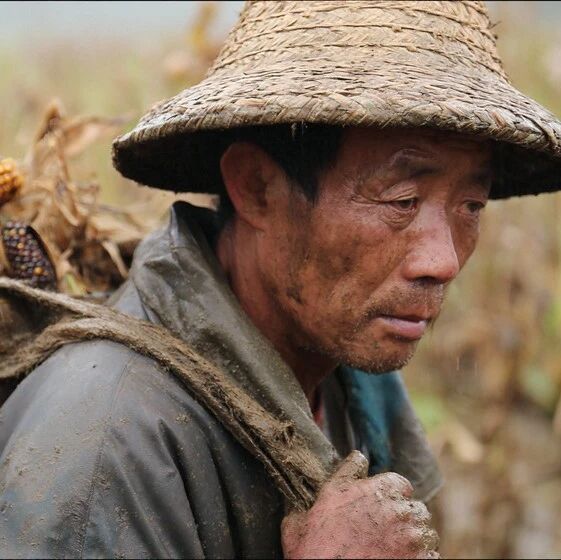
Core Viewpoint - The article discusses the challenges faced by farmers during the corn harvest season in northern China due to continuous rainfall, which has led to crop damage and delays in harvesting [4][7][31]. Group 1: Impact of Weather on Agriculture - Continuous rainfall during the corn harvest season has caused significant issues, including crop spoilage and difficulties in using harvesting machinery [7][31]. - The mechanization rate for crop farming in northern China exceeds 74%, with regions like Shandong reaching 91.7%, but weather conditions limit the effectiveness of these machines [7][31]. - Farmers are forced to engage in urgent harvesting efforts to prevent further crop loss, highlighting the unpredictability of agricultural production [7][8]. Group 2: Traditional Agricultural Practices - Farmers are resorting to traditional methods of harvesting, such as manually collecting corn and transporting it despite challenging conditions [8][12]. - The social aspect of harvesting, where community members come together to help, reflects deep-rooted agricultural traditions [14][22]. - The process of drying corn involves innovative methods developed over generations, showcasing the adaptability of farmers [15][16]. Group 3: Economic Considerations - The economic viability of farming is questioned, as rising costs for seeds, fertilizers, and other inputs make it difficult for farmers to achieve profitable returns [26][28]. - The opportunity cost of farming is highlighted, with many farmers considering more lucrative employment options in urban areas [26][28]. - The article raises concerns about the future of farming, particularly regarding labor shortages as younger generations migrate to cities [27][28]. Group 4: Government Response - The government has allocated nearly 500 million yuan to assist affected areas with agricultural recovery efforts, but the amount is deemed insufficient given the scale of the challenges [31]. - The ongoing rainfall complicates not only the corn harvest but also the upcoming wheat planting season, indicating a broader agricultural crisis [31].