
芯片

Search documents
华强北不知何为“AI泡沫”
经济观察报· 2026-01-30 14:33
Core Viewpoint - The article highlights a significant surge in the prices of server components, particularly storage chips and graphics cards, driven by supply constraints and increased demand from AI infrastructure investments. This price volatility is causing challenges for both buyers and sellers in the market [2][3][20]. Price Trends - A single server equipped with eight NVIDIA RTX 5090 graphics cards has seen its price rise from 300,000 yuan to 400,000 yuan within a month, indicating a 33.3% increase [2]. - The price of DDR4 64G server memory has doubled from approximately 1,500 yuan to 3,100 yuan in two months, reflecting a 106.7% increase [4]. - High-frequency DDR5 memory prices have surged to over 13,000 yuan for second-hand parts, with new products priced above 25,000 yuan (approximately 18,000 yuan) [6]. Market Behavior - Sellers are hesitant to stock inventory due to unpredictable price fluctuations, leading to a shift from traditional order placements to same-day pricing validity [3][4]. - Payment terms have become stricter, with sellers requiring a 50% deposit upon order and full payment before shipment [4]. Supply Chain Dynamics - Major semiconductor companies are issuing price increase notices, with adjustments ranging from 15% to 80% due to rising costs and supply chain pressures [10][11]. - The demand for AI-related chips is causing a supply crunch, with manufacturers like TSMC and Samsung reporting record profits and high demand for high-value products [17][18]. Impact on End Products - The rising costs of memory and storage are expected to increase the prices of consumer electronics, with estimates suggesting a potential 10% to 20% increase in product prices [13]. - The notebook computer market is projected to face significant challenges, with expected shipment declines of 9.4% in 2026 due to rising component costs [21]. Industry Outlook - The current chip price surge is anticipated to persist throughout 2023, with supply chain constraints and high demand from AI investments driving ongoing price increases [14][20].







十七年闭关 阿里“通云哥”雏形初现
2 1 Shi Ji Jing Ji Bao Dao· 2026-01-30 14:18
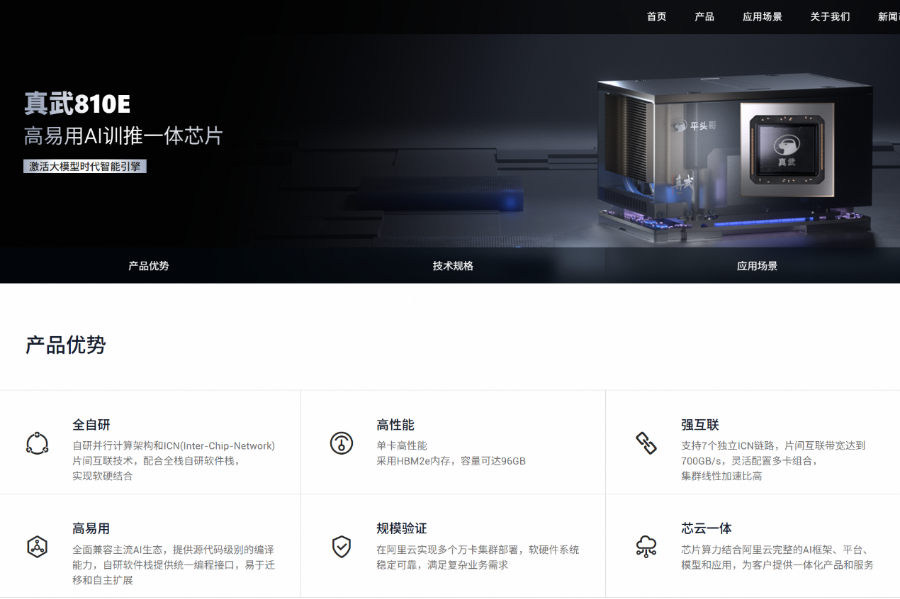
Core Insights - Alibaba's "Tongyun Ge" represents a full-stack architecture combining AI models, cloud services, and self-developed chips, marking a significant strategic shift in its AI ambitions [1][12][15] - The introduction of the "Zhenwu 810E" chip signifies a critical step in Alibaba's AI ecosystem, aiming to provide integrated solutions for AI training and inference [2][5][12] Group 1: Strategic Development - The "Tongyun Ge" strategy has been in development for 17 years, starting with the establishment of Alibaba Cloud in 2009, followed by the creation of the chip company Pingtouge in 2018, and the initiation of large model research in 2019 [2][15] - The mission of "Tongyun Ge" is to enable every individual and enterprise to participate in the AI era, reflecting a broad vision for democratizing AI access [2][12] Group 2: Technological Advancements - The "Zhenwu 810E" chip features a self-developed parallel computing architecture and inter-chip communication technology, with a memory capacity of 96G HBM2e and an inter-chip bandwidth of 700 GB/s, suitable for AI training and inference [5][8] - The chip has reportedly surpassed the performance of Nvidia's A800 and is comparable to the H20, indicating a strong competitive position in the domestic GPU market [8][9] Group 3: Market Position and Challenges - Alibaba's self-developed chips aim to reduce dependency on international giants like Nvidia, while also enhancing performance and efficiency in AI applications [9][12] - Despite the advancements, Alibaba faces challenges in hardware capabilities, including a generational gap in chip manufacturing processes and the need for extensive software ecosystem compatibility [10][11] Group 4: Industry Context - The AI competition is evolving into a comprehensive ecosystem battle, with major players like Google and Amazon also pursuing integrated solutions, highlighting the importance of cohesive hardware and software development [14][15] - The Chinese market is witnessing a strategic shift towards self-sufficiency in computing power, driven by policy support and the demand for domestic AI chip development [11][12]

富瀚微:2025年净利同比预降39.84%-53.43%
Zhong Guo Zheng Quan Bao· 2026-01-30 13:46
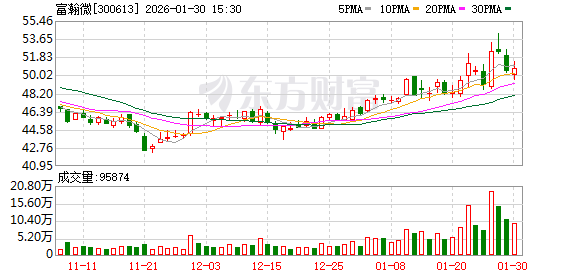
中证智能财讯富瀚微(300613)1月30日晚间披露2025年度业绩预告,预计2025年归母净利润1.2亿元至1.55亿元,同比下降39.84%-53.43%;扣非净利润预计 1.07亿元-1.42亿元,同比下降35.98%-51.76%。以1月30日收盘价计算,富瀚微目前市盈率(TTM)约为76.09倍-98.28倍,市净率(LF)约4.28倍,市销率 (TTM)约7.24倍。 以本次披露业绩预告均值计算,公司近年市盈率(TTM)图如下所示: 近年来市盈率变化情况(倍) 400 週00 210 31 - 200 100 62.09 42d4 459 36x79 33:01 26.03 0 2020-12-37 1 2021-06-30 ' 2027-12-37 1 2022-12-37 4-06-30 ' 2-06-30 ' -30 `12-37 . 2n- -○- 公司 -○- 行业均值 100 ହ 90 91g82 d688 80 70 60 1688 50 40 30 29.2 25.78 20 165 10 0 0.4 2020-12-37 1 2021-12-37 1 2-06-30 ' 5-06 ...

ETF日报:国内经济内生动力将持续增强,企稳回升的步伐有望加快
Xin Lang Cai Jing· 2026-01-30 13:43
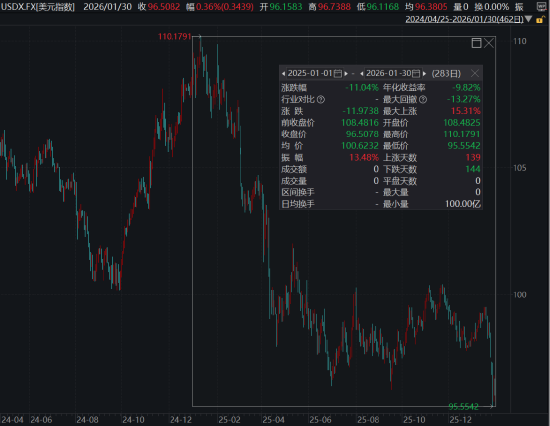
Market Overview - The A-share market showed signs of recovery after hitting a low, with the Shanghai Composite Index closing at 4117.95 points, down 0.96%, while the Shenzhen Component Index fell 0.66%. The ChiNext Index, however, rose by 1.27% due to strong performance from heavyweight stocks [1][20] - Over 2400 stocks rose while nearly 2900 declined, indicating mixed performance among individual stocks. The total trading volume in the Shanghai and Shenzhen markets was approximately 2.86 trillion yuan, a decrease of nearly 400 billion yuan from the previous day, reflecting a notable decline in trading sentiment [1][20] Sector Performance - Most sectors experienced declines, with telecommunications and semiconductor sectors leading the gains. Recently strong sectors like metals and mining showed signs of correction [1][21] - The market has been characterized by high volatility, with fluctuations around the 4150-point mark. The influx of external funds initially indicated strong buying intent, but the market subsequently retreated following increased trading in broad-based ETFs [1][21] Investment Strategy - Given the current high volatility in both equity and commodity markets, a long-term investment approach is suggested as a rational choice for investors [1][21] Commodity Market Insights - The driving factors for both equity and commodity markets remain unchanged, with strong medium to long-term investment value still present. The "weak fiat currency" era has led to a consensus that resources are becoming increasingly valuable, accelerated by interventions from the Trump administration affecting Federal Reserve decisions [2][22] - Precious metals and industrial metals are seen as core choices for capital seeking to hedge against currency depreciation risks, pushing commodity prices into a slow upward trend [2][22] A-Share Market Dynamics - The core logic driving the rise of A-shares is the shifting balance of power between China and the U.S., leading to capital flows and value reassessment. The ongoing U.S.-China rivalry is influencing global capital allocation, providing long-term upward momentum for A-shares [4][24] - Quality stocks with core competitiveness in the A-share market, previously undervalued, are now experiencing value reassessment as China's national strength and industrial advantages become more pronounced [4][24] Future Outlook - On a macro level, both the U.S. and China appear to have found new solutions to their domestic issues. The U.S. is adopting a "shrinking plunder" strategy, focusing on core interests while avoiding overextension, which may have profound implications for the global economy and geopolitical landscape [6][25] - For China, the continuous rise in commodity prices, particularly precious metals, may help break the negative feedback loop of prices and accelerate the economic recovery process, potentially exceeding investor expectations [7][26] Investment Focus - The investment strategy should focus on "anti-involution + technology," as the gradual implementation of anti-involution policies is expected to lead to value reassessment in related cyclical sectors. The technology growth sector is also anticipated to receive strong policy support [8][28] - The coal sector has shown resilience, with recent price increases in thermal coal providing support for near-term performance. The market is expected to see a recovery in coal demand due to infrastructure investment and industrial recovery [10][29][31]
芯海科技(688595.SH):2025年预亏1.06亿元左右
Ge Long Hui A P P· 2026-01-30 13:31
Core Viewpoint - Chipsea Technology (688595.SH) expects to achieve approximately 848 million yuan in revenue for the year 2025, representing a year-on-year growth of about 21% [1] Revenue Forecast - The company anticipates a revenue of around 848 million yuan for 2025, which is a 21% increase compared to the previous year [1] - The revenue growth is attributed to the rapid scaling of new products such as series BMS chips, smart wearable PPG chips, and USB HUB chips, which have significantly contributed to revenue [1] - Traditional business segments, including smart instruments, human-computer interaction, and low-end consumer chips, have stabilized in demand, supporting overall revenue growth [1] Profit Forecast - The company projects a net loss attributable to shareholders of approximately 106 million yuan for 2025, which is a reduction in loss of about 67 million yuan compared to the previous year [1] - The expected net profit attributable to shareholders, excluding non-recurring gains and losses, is forecasted to be around 116 million yuan, reflecting a reduction in loss of about 66 million yuan year-on-year [1]

力合微(688589.SH)发预减,预计2025年年度归母净利润同比下降73.91%到79.84%
智通财经网· 2026-01-30 13:06
智通财经APP讯,力合微(688589.SH)发布2025年年度业绩预告,预计2025年年度实现归属于母公司所 有者的净利润人民币1700万元至2200万元,与上年同期相比,将减少6,233.67万元到6,733.67万元,同比 下降73.91%到79.84%。 2025年,受智能电网市场招标采购规模减少及节奏影响,公司电网板块经营业绩下降。同时,公司聚焦 战略发展方向,加大芯片产品在非电网物联网领域应用布局,持续加大物联网相关研发投入,研发费用 同比增加,公司归属于母公司所有者的净利润及扣除非经常性损益的净利润下滑。报告期内,非电网物 联网相关营业收入增长超过30%。 ...

力合微发预减,预计2025年年度归母净利润同比下降73.91%到79.84%
Zhi Tong Cai Jing· 2026-01-30 13:06
Core Viewpoint - Lihua Microelectronics (688589.SH) forecasts a significant decline in net profit for 2025, projecting a decrease of 6,233.67 million to 6,733.67 million RMB, representing a year-on-year drop of 73.91% to 79.84% [1] Group 1: Financial Performance - The company expects net profit attributable to shareholders to be between 17 million to 22 million RMB for 2025 [1] - The anticipated decline in profit is attributed to reduced bidding and procurement scale in the smart grid market [1] - The net profit and net profit excluding non-recurring gains and losses are both expected to decline due to increased R&D expenses [1] Group 2: Business Strategy - The company is focusing on strategic development by increasing the application of chip products in non-grid IoT sectors [1] - R&D investment in IoT-related areas has increased, with revenue from non-grid IoT-related operations growing by over 30% during the reporting period [1]
寒武纪(688256.SH):预计2025年净利润18.50亿元-21.50亿元 同比扭亏为盈
Ge Long Hui A P P· 2026-01-30 12:53
格隆汇1月30日丨寒武纪(688256.SH)公布,预计2025年全年归属于上市公司股东的净利润为18.50亿元— 21.50亿元;预计2025年全年归属于上市公司股东的扣除非经常性损益的净利润为16.00亿元—19.00亿 元。 公司始终深耕人工智能芯片产品的研发与技术创新领域。报告期内,受益于人工智能行业算力需求的持 续攀升,公司凭借产品的优异竞争力持续拓展市场,积极推动人工智能应用场景落地,本期营业收入较 上年同期大幅增长,进而带动公司整体经营业绩提升,净利润实现扭亏为盈。 ...

营收预增超410%!“寒王”或大幅扭亏为盈
Zhong Guo Zheng Quan Bao - Zhong Zheng Wang· 2026-01-30 12:53
1月30日晚,寒武纪发布2025年业绩预告,公司预计2025年营业收入为60亿元至70亿元,与上年同期相 比增加48.26亿元到58.26亿元,同比增长410.87%至496.02%;归母净利润为18.5亿元到21.5亿元,同比 扭亏为盈;扣非后归母净利润为16亿元到19亿元。 2024年,寒武纪实现营业收入11.74亿元,归母净利润亏损4.52亿元,扣非后归母净利润亏损8.65亿元。 沐曦股份预计2025年实现营业收入16亿元至17亿元,同比增长115.32%至128.78%,预计2025年度归母 净利润将亏损6.5亿元至7.98亿元,与上年同期相比,亏损收窄43.36%至53.86%。 摩尔线程预计2025年实现营业收入14.5亿元至15.2亿元,同比增长230.70%—246.67%;归母净利润亏损 9.50亿元—10.60亿元,相较2024年亏损收窄幅度为34.50%至41.30%。 Wind数据显示,寒武纪在亏损多年(2017年—2024年连续八年亏损)后首次预计实现年度盈利,营收 规模也上了一个新台阶。2025年,寒武纪业务呈现出强劲增长势头。公司2025年第一季度实现单季度扭 亏,第二季度、第三 ...
特朗普宣布下任美联储主席提名人选;美股三大期指齐跌,黄金股大跌;苹果iPhone销售创历史新高,在华收入增近38%【美股盘前】
Mei Ri Jing Ji Xin Wen· 2026-01-30 12:09
Group 1: Market Overview - Major stock index futures declined, with Dow futures down 0.81%, S&P 500 futures down 0.87%, and Nasdaq futures down 1.09% [1] - Gold stocks experienced a significant drop, with gold prices briefly falling below $5000 per ounce. Spot gold decreased by 7.96%, and spot silver fell by 12.79% [1] Group 2: Technology Sector - Chip stocks saw widespread declines, with Nvidia down 1.83%, Intel down 2.53%, and AMD down 2.86% [2] - Apple reported record iPhone sales, with revenue in Greater China reaching $25.53 billion, a year-on-year increase of 37.9%. Overall revenue grew by 16%, and iPhone sales revenue increased by 23% [2] - Western Digital's Q2 revenue reached $3.02 billion, with a net profit of $1.84 billion, a 210% year-on-year increase. However, the stock fell over 5% due to concerns about long-term supply agreements [2] - SanDisk's Q2 revenue surged to $3.03 billion, a 61.2% year-on-year increase, significantly exceeding market expectations. The stock rose by 20.9% following the report [3] Group 3: Corporate Developments - GameStop is preparing to acquire a large publicly traded company, aiming to increase its market capitalization to $100 billion [3] - President Trump nominated Kevin Walsh as the next Federal Reserve Chairman, pending Senate approval [3]


