Internet

Search documents
PTRN: Jefferies Warns of Margin Pressure and AI Disruption for Internet Equities in 2026
Yahoo Finance· 2025-12-31 16:33
Pattern Group Inc. (NASDAQ:PTRN) is one of the best low priced technology stocks to buy according to analysts. On December 11, Jefferies lowered the firm’s price target on Pattern Group to $20 from $21 with a Buy rating on the shares. The firm’s 2026 outlook suggests being highly selective with Internet equities. Jefferies cites two main headwinds: rising costs that could stall margin growth, and fears that AI will cut out the middleman, making investors less willing to pay a premium for these stocks. Ad ...
博时基金肖瑞瑾:2026年AI算力仍是投资主线,应用层爆发需待场景深度融合
Sou Hu Cai Jing· 2025-12-31 13:06
Core Insights - The A-share market is expected to continue its structural trend into 2026, with a potential shift towards a more balanced market style compared to 2025, where significant disparities in sector performance were observed [1][2][3] Market Performance - In 2025, the A-share market experienced a structural rally, with hard technology sectors like humanoid robots, semiconductor chips, AI computing power, and commercial aerospace performing exceptionally well, while traditional sectors driven by real estate lagged [1][3] - The market is characterized by a high degree of structural differentiation, leading to vastly different experiences for investors based on their sector choices [1][3] Investment Opportunities - The AI sector is identified as a key area for investment, driven by two main lines: the capital expenditure on computing infrastructure by overseas cloud giants and the domestic computing industry focused on local replacements [2][5] - For 2026, investment opportunities in the computing sector remain promising, with expected growth in both overseas capital expenditure and breakthroughs in domestic semiconductor technology [2][5][6] Valuation and Investment Strategy - Valuation methods vary across different types of AI companies, with established AI computing firms typically valued using price-to-earnings (PE) ratios, while emerging companies may be assessed using market share or price-to-sales (PS) ratios [6] - The focus for investment should be on AI computing infrastructure, as demand for AI computing is expected to grow non-linearly, particularly in model inference [7][8] Market Dynamics - Key macro variables influencing market dynamics include the potential for interest rate cuts by the Federal Reserve and the stabilization of domestic real estate data [4] - The anticipated decline in the growth rate of capital expenditure by major U.S. cloud providers from 40%-60% in 2025 to 25%-30% in 2026 is noted, although growth remains certain [5][6] Industry Trends - The trend of larger internet companies acquiring smaller AI startups is expected to continue, as larger firms seek to fill capability gaps and smaller firms rely on the ecosystem of larger companies for growth [8][10] - Concerns regarding the AI bubble are addressed, with the assertion that current valuations are not excessive and that the demand for AI applications is still in its early stages, indicating significant future growth potential [11][12]
Baidu (BIDU) Gets Boost from Upbeat Chinese Market, Analyst Optimism
Yahoo Finance· 2025-12-31 12:40
Group 1 - Baidu, Inc. (NASDAQ:BIDU) has shown strong performance, increasing by 4.39% to close at $132.38, marking its third consecutive day of gains, driven by positive sentiment regarding the Chinese market [1] - The MSCI China Index has surged by 28% this year, significantly outperforming the S&P 500, which has risen by only 17.25% year-to-date, indicating a robust recovery in Chinese equities [2] - Goldman Sachs anticipates that the bullish trend for Chinese stocks will persist, although at a slower pace, suggesting a transition in the equity cycle from hope to growth, with earnings realization and moderate valuation expansion driving returns [3] Group 2 - Baidu has experienced substantial growth year-to-date, with an increase of 57.70%, reflecting strong investor confidence in its business and the broader artificial intelligence sector [4]

巨头暗战AI营销
Hua Er Jie Jian Wen· 2025-12-31 10:21
Core Insights - The traditional era of simply buying traffic for GMV is over, leading to increased pressure on advertisers to achieve better results with shrinking budgets [1] - The AI marketing market is rapidly expanding, projected to exceed 85 billion yuan by 2025, with a year-on-year growth of 127% [1] - Major tech companies are pivoting towards AI to reshape marketing strategies as traditional methods become less effective [1] Group 1: AI Marketing Growth - The AI marketing sector has doubled in a short period, with 79% of marketing technology investments directed towards AI [1][2] - Companies like Baidu are innovating by changing how users interact with the internet, moving from static ads to more dynamic, service-oriented approaches [2][3] Group 2: Impact on Small and Medium Enterprises - AI marketing tools are particularly beneficial for small businesses, allowing them to automate customer interactions and reduce marketing barriers [3][4] - Baidu's "merchant intelligent agent" can handle initial client inquiries, significantly improving engagement rates compared to traditional customer service [3][5] Group 3: Transformation in Marketing Strategies - The shift towards AI represents a fundamental change in marketing logic, evolving from passive advertising to proactive customer engagement [2][6] - Baidu's strategy emphasizes simplicity in ad placement, catering to small business owners who may lack technical expertise [4][6] Group 4: Competitive Landscape - Other players in the market, such as ByteDance and Alibaba, are also leveraging AI to enhance their marketing capabilities, each with unique strategies [7] - The competitive environment is intensifying, with traditional leaders potentially being replaced by those who effectively utilize AI [7]
腾讯AI团队大变阵
Hua Er Jie Jian Wen· 2025-12-31 10:20
Core Insights - The article discusses the acceleration of AI initiatives at Tencent, highlighting recent organizational changes and talent acquisitions as part of its strategy to compete in the global AI landscape [2][4][10]. Group 1: Organizational Changes - Tencent's AI Lab has undergone structural adjustments, including the establishment of new departments such as AI Infra and AI Data, aimed at enhancing its large model research capabilities [4][8]. - The departure of Yu Dong, a key figure in Tencent's AI Lab, reflects the ongoing talent movement within the industry, emphasizing the competitive nature of AI talent acquisition [10][11]. - The new leadership structure under Vincesyao and Jiang Jie is designed to streamline communication and improve AI research efficiency [7][8]. Group 2: Talent Acquisition and Strategy - Tencent has launched a significant employment initiative, planning to add 28,000 internship positions over three years, with a focus on technical roles [11]. - The company is actively recruiting top AI talent globally, including offering competitive salaries to attract researchers from rival firms like ByteDance [12]. - Unlike competitors Alibaba and ByteDance, Tencent's AI strategy is characterized by a more cautious approach, integrating large model capabilities into its extensive ecosystem rather than pursuing aggressive market share [13][14].



AI年鉴:从“概念充血”到“产业造血” 互联网巨头锚定下一个十年
Sou Hu Cai Jing· 2025-12-31 09:42
Core Insights - The article emphasizes that AI is the only technology in China's tech landscape projected to grow exponentially, with significant investments from major players like Tencent, Alibaba, ByteDance, Baidu, and Huawei, marking AI as a critical driver for future growth [2] Investment Trends - By 2025, China's total investment in AI is expected to reach $56.8 billion, accounting for 27.4% of global AI investment, surpassing Europe for the first time [2] - Major internet companies are directing 63% of their capital expenditures towards AI capabilities, models, and applications, reflecting a 28 percentage point increase year-over-year [2] Model Development - The competition in AI models has shifted from catching up to parallel development, with significant advancements in open-source models and performance metrics [3] - Notable achievements include DeepSeek's R1 model aligning with OpenAI's capabilities at a fraction of the cost and Alibaba's Tongyi Qianwen 3.0 surpassing GPT-4 Turbo in code generation accuracy [3] Computing Power - The race for computing power is characterized by innovations such as Huawei's Ascend supernodes and Alibaba's expansion of its cloud computing capabilities [4][5] - By 2025, China's intelligent computing power is projected to reach 725 EFLOPS, a 74% increase year-over-year, with major companies building their own infrastructure [5] Application Integration - AI applications are becoming deeply integrated into various sectors, with Tencent, Alibaba, ByteDance, and Baidu reporting significant improvements in efficiency and cost reductions through AI tools [6] - For instance, Tencent's AI-generated content has increased ad click-through rates by 18%, while Alibaba's tools have significantly reduced product photography costs [6] Financial Impact - AI is reshaping traditional revenue streams in advertising, e-commerce, and gaming, with companies reporting substantial growth in customer numbers and sales due to AI-driven innovations [8] - Tencent anticipates that AI-related revenue will reach 36.2 billion yuan by 2025, constituting 12% of its total revenue [9] Policy Support - The Chinese government is actively promoting AI development through initiatives aimed at building a national integrated computing network and supporting AI applications across various sectors [10] - These policies are expected to generate over 200 billion yuan in market demand by 2026 [10] Challenges Ahead - The industry faces challenges related to energy consumption, talent shortages, and ethical concerns, with projections indicating a significant increase in energy use by AI data centers [11] - The talent gap is projected to reach 5 million by 2025, while ethical issues related to AI are becoming more prevalent [11] Future Outlook - By 2026, the core AI industry in China is expected to exceed 1 trillion yuan, with a shift from a focus on scale to efficiency in AI applications [13] - The article concludes that AI is not just a trend but a foundational element for future growth, with significant transformations anticipated across various industries [13]


工信部:1—11月份我国规模以上互联网企业完成互联网业务收入18034亿元 同比增长1%
智通财经网· 2025-12-31 09:22
Overall Performance - Internet business revenue shows stable growth, with a total of 18,034 billion yuan in revenue from January to November, representing a year-on-year increase of 1%, with a slight decline in growth rate by 0.1 percentage points compared to January to October [2] - Total profit for internet enterprises decreased to 1,378 billion yuan, reflecting a year-on-year decline of 11.7%, with the decline rate widening by 0.8 percentage points compared to January to October [2] - Research and development expenditure growth has slowed, with a total investment of 957.4 billion yuan, marking a year-on-year increase of 6.7%, but the growth rate has decreased by 0.4 percentage points compared to January to October [2] Regional Performance - The eastern region maintains a good growth trend in internet business revenue, achieving 16,214 billion yuan, a year-on-year increase of 2.9%, which is 1.9 percentage points higher than the national growth rate, accounting for 89.9% of the national internet business revenue [3] - The Beijing-Tianjin-Hebei region shows rapid growth, with internet business revenue reaching 5,913 billion yuan, a year-on-year increase of 9.1%, representing 32.8% of the national total [3] - Nearly 30% of regions achieved positive growth in internet business revenue, with the top five provinces being Beijing (growth of 9.5%), Guangdong (growth of 7.3%), Shanghai (decline of 9.5%), Zhejiang (growth of 10.9%), and Guizhou (growth of 4.8%), collectively generating 15,239 billion yuan, a year-on-year increase of 4%, accounting for 84.5% of the national internet business revenue excluding cross-regional enterprises [3]
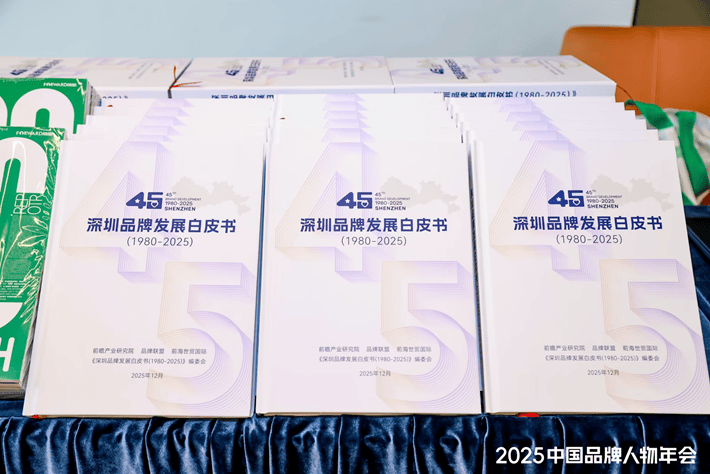
40万字重磅品牌白皮书发布:深圳45年的超级进化论
Sou Hu Cai Jing· 2025-12-31 06:11
Core Insights - Shenzhen has produced a number of globally impactful companies, showcasing a shift from "Made in China" to "Created in China" [2] - The 45th anniversary of Shenzhen Special Economic Zone marks a significant milestone in its rapid modernization and brand development [2][3] - The "Shenzhen Brand Development White Paper (1980-2025)" outlines the evolution of Shenzhen's brands and their internal logic and success factors [3][5] Group 1: Brand Evolution - Shenzhen's brand journey reflects a transition from manufacturing to innovation, with key phases including the emergence of local brands in the 1980s and 1990s, and the rise of autonomous brands in the early 2000s [7][10] - The current phase is characterized by cluster upgrades, with companies like Tencent, BYD, and DJI leading in various sectors [8][10] - As of now, Shenzhen has cultivated 1,220 notable local brands, including 13 billion-level brands and 7 trillion-level brands, with Tencent, Ping An, and Huawei each exceeding a brand value of 490 billion [10][11] Group 2: Economic Contributions - The 1,220 notable brands contribute 47.97% of the city's sales, 42.05% of tax revenue, and 32.87% of exports, serving as the backbone of Shenzhen's high-quality economic development [11] - These brands span critical sectors such as electronics, renewable energy, biomedicine, high-end equipment, financial services, and digital economy, forming a robust industrial structure [11] Group 3: Brand Development Factors - Shenzhen's brand success is attributed to a unique ecosystem supported by policy innovation, technological advancement, and collaborative industrial frameworks [15][16][19] - The government has played a crucial role in creating a conducive environment for brand growth through targeted policies and regulatory frameworks [16] - Innovation drives brand competitiveness, with companies investing over 10% of their annual revenue in R&D, fostering a comprehensive innovation ecosystem [17] Group 4: Global Expansion and Responsibility - Shenzhen brands have established clear pathways for international expansion, evolving from processing trade to localized operations and global standardization [20] - Social responsibility is ingrained in the corporate strategy, enhancing brand value and sustainability through practices like tax compliance and community support [21] Group 5: Future Outlook - The release of the white paper is a significant step in documenting Shenzhen's brand journey and providing strategic guidance for future brand development [31] - Shenzhen's brands are expected to continue thriving in emerging sectors like digital and low-altitude economies, contributing to the global narrative of Chinese brands [33][34]



知乎发布2025年度“辟谣榜”和“探真榜”
Xin Lang Cai Jing· 2025-12-31 05:19
Core Viewpoint - Zhihu has launched the "Zhiyou Tan Zhen" column, introducing the annual "Zhiyou Debunking List" and "Zhiyou Exploration List" to combat misinformation and promote scientific knowledge [1][2]. Summary by Categories Debunking List - Topics such as "Vitamin C can prevent colds," "The earlier you take growth hormone, the better," and "Sticking wheat characters on windows can resist typhoons" have been confirmed as pseudoscience and featured on the annual "Debunking List" [1][2]. Exploration List - Seemingly absurd topics like "The heat generated by a unit volume of people is several times that of the sun," "The frequency of the song 'Scary Monsters And Nice Sprites' can repel mosquitoes," and "Flu antiviral drugs should not be taken with mineral water and milk" have made it to the annual "Exploration List" [1][2]. Company Responsibility - Zhihu emphasizes that the responsibility of distinguishing truth from falsehood is a core part of its professional discussions, aiming to use the "Tan Zhen" column to provide a more interactive format for scientific education and debunking widely circulated "hot knowledge" and "cold rumors" [1][2].

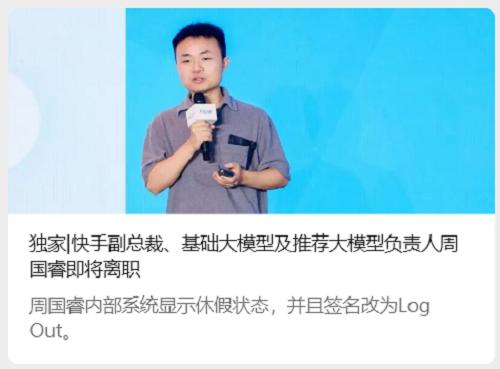
曝快手大模型掌舵人离职,2年间或9人进出,前华为推搜实验室主任已加盟
3 6 Ke· 2025-12-31 04:22
Core Viewpoint - The news highlights the potential departure of Kuaishou's Vice President, Zhou Guorui, who is responsible for foundational models and recommendation systems, with speculation about his future roles at Meta or TikTok [1][2][19]. Group 1: Zhou Guorui's Background and Contributions - Zhou Guorui joined Kuaishou in 2021 after working as a senior algorithm expert at Alibaba Mama, where he contributed to significant algorithm frameworks [2][4]. - At Kuaishou, he led the exploration of generative AI technologies in recommendation systems, resulting in the development of OneRec, an end-to-end large model recommendation system that has been implemented across various platforms [4][22]. - OneRec has reportedly brought significant business improvements to Kuaishou, marking a shift from multi-stage filtering to a comprehensive industrial-grade solution [4][22]. Group 2: Organizational Changes at Kuaishou - The news also mentions other management changes within Kuaishou's Community Science Line and Keling AI, indicating a broader trend of talent movement within the company [9][19]. - Notable departures include Zhang Di, who was responsible for generative AI models and returned to Alibaba after a brief stint at Bilibili, and other high-level executives who have left for various opportunities [19][22]. - The ongoing changes reflect a transitional phase in the AI talent landscape, emphasizing the importance of building a stable and efficient technical system to leverage advanced AI capabilities for long-term business advantages [22].