
AI算力

Search documents
中原证券晨会聚焦-20260401
Zhongyuan Securities· 2026-04-01 00:21
Core Insights - The report highlights the ongoing fluctuations in the A-share market, with various sectors experiencing different levels of performance, particularly in the context of macroeconomic factors and geopolitical tensions [5][9][14] - The manufacturing and non-manufacturing sectors in China have shown signs of recovery, with key indices returning to expansion territory, indicating a potential stabilization in economic activity [5][11] - The report emphasizes the importance of monitoring macroeconomic data and policy developments, as these will significantly influence market sentiment and investment opportunities [5][14][16] Domestic Market Performance - The Shanghai Composite Index closed at 3,891.86, down 0.80%, while the Shenzhen Component Index fell by 1.81% to 13,478.06 [3] - The average P/E ratios for the Shanghai Composite and ChiNext indices are 16.21 and 46.09, respectively, suggesting a favorable environment for medium to long-term investments [5][9] - Trading volumes in the A-share market remain robust, with recent daily transaction amounts exceeding 20 billion yuan, indicating active market participation [5][14] International Market Performance - Major international indices, including the Dow Jones and S&P 500, experienced declines, reflecting broader market concerns over inflation and geopolitical tensions [4] - The report notes that the performance of international markets can impact domestic investor sentiment and capital flows [4] Industry Analysis - The agricultural sector, particularly the livestock and pet food industries, is facing challenges with declining prices for pigs and fluctuations in chicken prices, while pet food exports are experiencing significant growth [17][18] - The power sector is highlighted as outperforming the market, with a notable increase in electricity demand driven by high-tech industries and a stable supply of electricity [23][24] - The new materials sector is underperforming, with significant declines in metal prices and overall market sentiment, suggesting a cautious outlook for investments in this area [19][20] Investment Recommendations - The report suggests focusing on sectors such as consumer electronics, precious metals, and banking for short-term investment opportunities, given their current performance and market conditions [5][14][16] - In the power sector, the report recommends a defensive investment strategy, emphasizing stable returns from large hydroelectric companies and high-dividend coal enterprises [23][24] - The virtual power plant industry is identified as a growth area, with increasing government support and market potential, particularly in regions like Henan [36][37]

财经透视镜丨“二手手机回收价大涨”?都是存储芯片供应被动挤压惹的“祸”
证券时报· 2026-03-31 00:04
Core Viewpoint - The recent increase in mobile phone prices, including second-hand phone buyback prices, is driven by rising storage chip costs and the impact of AI infrastructure investments [1][6]. Group 1: Market Trends - The second-hand phone buyback prices in Shenzhen's Huaqiangbei market have generally increased, but not as dramatically as some online rumors suggest [3][4]. - The price of second-hand phones has been influenced by the rising costs of memory chips, which began to increase last summer [3][6]. - Specific models, particularly those with larger memory capacities, have seen more significant price increases in the buyback market [4][6]. Group 2: Price Data - A Huawei Mate 10 with 128GB memory that could not power on was quoted at around 80 yuan, up from 50 yuan last year, while an iPhone 8 was quoted at 200 yuan, with the 128GB version reaching over 300 yuan [4]. - The buyback prices for low-end models over six years old have started to rise significantly, with some prices increasing by 1.5 to 2 times since the second half of 2025 [5]. Group 3: Industry Insights - The increase in buyback prices is attributed to a shortage of storage chips caused by the booming AI industry, which has led to higher costs for consumer electronics [6][8]. - The proportion of memory costs in the bill of materials (BOM) for smartphones has surged from 10-15% historically to 30-40% currently [6]. - The competitive landscape in AI has driven significant investments in computing infrastructure, further straining the supply of storage chips for consumer electronics [8]. Group 4: Consumer Behavior - Consumers are advised to approach the buyback market with caution, as not all old phones will see significant price increases; actual buyback prices depend on model, memory, and condition [7][8]. - Some consumers are delaying phone upgrades while others are speculating on older models, which carries inherent risks [8].


新质策略系列:中东冲突扰动,硬资产价值笃定
GOLDEN SUN SECURITIES· 2026-03-26 11:12
Core Insights - The current market is experiencing a structural divergence between short-term macro disturbances and long-term industrial trends, with geopolitical conflicts in the Middle East and delayed expectations for Federal Reserve rate cuts suppressing market risk appetite and liquidity expectations [1] - The "new productive forces" centered around aerospace, artificial intelligence, and high-end equipment are accelerating under strong policy support and technological breakthroughs, indicating a solid long-term growth logic for related hard technology assets [1] Macro Environment: Short-term Headwinds from Geopolitics and Policy - The ongoing tensions in the Strait of Hormuz are disrupting global energy supply expectations, tightening the supply-demand balance and pushing international oil prices to high volatility, raising inflation concerns [2] - The Federal Reserve's policy shift has been delayed, with persistent inflation and weak domestic employment data leading to a hawkish stance, pushing market expectations for the first rate cut to the end of the year [2] Industrial Trends: The Certainty Wave of New Productive Forces - Despite macro headwinds, China's industrial upgrade led by technological innovation is entering a fast track under top-level design, with the "14th Five-Year Plan" identifying six emerging pillar industries, including integrated circuits, aerospace, biomedicine, low-altitude economy, new energy storage, and intelligent robotics [3] - The combined output value of these six industries is expected to reach nearly 6 trillion yuan by 2025 and exceed 10 trillion yuan by 2030, with significant resilience in compound growth rates [3] Main Line One: Commercial Aerospace - Accelerating Industry Development - The State Administration of Science, Technology and Industry for National Defense has issued a plan to promote the high-quality and safe development of commercial aerospace, aiming to build a comprehensive industrial ecosystem [4] Main Line Two: AI - From Computing Demand to Application Explosion - The AI industry is rapidly transitioning from cloud computing to end-user applications, creating robust demand in the industrial chain, with significant price increases in AI computing power and intelligent storage products due to supply shortages [5] - The robotics industry is reaching a turning point, with humanoid robots moving from laboratory settings to industrialization, as evidenced by the explosive growth in revenue for leading companies like Yushutech [5][6] Main Line Three: Energy and High-end Equipment Autonomy - The Foundation for Supply Chain Security - In a complex international environment, the autonomy of key energy and core equipment is crucial for industrial development, with domestic breakthroughs in heavy-duty gas turbines and strategic resources like helium gas [7] - The domestic market is experiencing a significant supply-demand gap, with leading companies making progress in the localization of high-end industrial equipment [7] Investment Recommendations: Focus on New Productive Forces - The current macro emotional fluctuations present a good opportunity to invest in hard assets with long-term certainty, suggesting a focus on the "14th Five-Year Plan" new productive forces along three main lines: 1. The entire commercial aerospace industry chain, including rocket manufacturing, satellite production, and launch services [8] 2. Artificial intelligence and robotics, particularly in computing infrastructure benefiting from global AI demand [8] 3. High-end equipment and material autonomy, focusing on key areas like gas turbines and semiconductor manufacturing [8]
中原证券晨会聚焦-20260325
Zhongyuan Securities· 2026-03-25 01:08
Core Insights - The report indicates that the A-share market is experiencing fluctuations, with various sectors such as non-ferrous metals, communication equipment, and electricity showing strong performance, while sectors like rare earths and insurance are underperforming [11][12][15] - The average price-to-earnings ratios for the Shanghai Composite Index and the ChiNext Index are above their three-year median levels, suggesting a favorable environment for medium to long-term investments [11][12] - The report highlights the impact of international factors, particularly the Middle East conflict, which could lead to rising oil prices and increased global inflationary pressures [11][12][15] Domestic Market Performance - The Shanghai Composite Index closed at 3,957.05, down 1.24%, while the Shenzhen Component Index closed at 13,866.20, down 0.25% [3] - The trading volume on the two exchanges reached 20,962 billion, indicating a higher-than-average trading activity compared to the past three years [11][12] Industry Analysis - The automotive sector is currently facing challenges due to seasonal factors, with production and sales figures for February showing significant declines [17][18] - The communication industry is expected to grow, with Lumentum forecasting a 40% CAGR in the optical communication market from 2025 to 2030, driven by increasing demand for AI-related infrastructure [20][21] - The semiconductor industry is experiencing a price surge, with DRAM and NAND prices increasing significantly, which is expected to impact the overall market dynamics positively [24][25] Investment Recommendations - The report suggests maintaining a "stronger than the market" rating for the automotive sector, focusing on companies with global capabilities and technological advancements [19] - In the communication sector, it is recommended to pay attention to companies involved in optical components and AI mobile phones, as they are expected to benefit from the ongoing technological advancements [22] - The food and beverage sector is advised to focus on upstream companies that can benefit from inflationary trends, particularly in the context of rising commodity prices [31][32]
中原证券晨会聚焦-20260324
Zhongyuan Securities· 2026-03-24 00:05
Core Insights - The report highlights the current market conditions, indicating a wide fluctuation in A-shares with various sectors showing mixed performance, particularly in energy and automotive industries [8][10][12] - The macroeconomic environment is influenced by geopolitical tensions, particularly in the Middle East, which may lead to increased oil prices and affect global inflationary pressures [8][10][12] - The report suggests that the domestic monetary policy remains supportive, with the central bank indicating a commitment to maintaining liquidity, which could provide a solid foundation for market stability [8][10][12] Domestic Market Performance - The Shanghai Composite Index closed at 3,957.05, down 1.24%, while the Shenzhen Component Index closed at 13,866.20, down 0.25% [3] - The average price-to-earnings ratio for the Shanghai Composite and ChiNext indices are 16.36 and 47.34 respectively, indicating a suitable environment for medium to long-term investments [8][10] Industry Analysis - The automotive industry is experiencing a downturn, with production and sales figures for February 2026 showing significant declines due to seasonal factors and policy changes [15][17] - The energy sector, particularly coal and nuclear power, is performing well amidst the current market conditions, suggesting potential investment opportunities [8][10][12] - The semiconductor industry is witnessing a price increase in memory products, with DRAM and NAND prices rising significantly, indicating strong demand driven by AI and cloud computing [19][20][25][26] Investment Recommendations - The report maintains a "stronger than market" rating for the automotive sector, emphasizing the importance of companies with global capabilities and technological advancements [17] - It suggests focusing on sectors such as electric power, photovoltaic equipment, and automotive as potential short-term investment opportunities [8][10][12] - The communication sector is also highlighted for its growth potential, particularly in light of increasing demand for AI-related technologies and infrastructure [22][24]
量化观市:美伊开谈,聚焦低位资产修复
SINOLINK SECURITIES· 2026-03-23 09:44
Quantitative Models and Factors Summary Quantitative Factors and Construction Methods - **Factor Name**: Volatility Factor - **Construction Idea**: Measures the stock's price fluctuation to capture risk-adjusted returns in volatile markets[55] - **Construction Process**: - The factor is derived using the standard deviation of 60-day returns ($Volatility_{60D}$), CAPM residual volatility ($IV_{CAPM}$), and Fama-French three-factor residual volatility ($IV_{FF}$)[68] - Formula examples: $Volatility_{60D} = \sqrt{\frac{\sum_{i=1}^{60}(R_i - \bar{R})^2}{60}}$ Where $R_i$ is the daily return, and $\bar{R}$ is the average return over 60 days[68] - **Evaluation**: Demonstrated strong performance in turbulent markets, particularly under geopolitical tensions[55] - **Factor Name**: Quality Factor - **Construction Idea**: Focuses on financial health and operational efficiency of companies[55] - **Construction Process**: - Includes metrics like operating cash flow to current debt ratio ($OCF2CurrentDebt$), gross margin ($GrossMargin_{TTM}$), and revenue-to-asset ratio ($Revenues2Asset_{TTM}$)[68] - Example formula: $OCF2CurrentDebt = \frac{\text{Operating Cash Flow (TTM)}}{\text{Average Current Debt}}$[68] - **Evaluation**: Exhibited resilience and consistent returns, especially in quality-driven market environments[55] - **Factor Name**: Reversal Factor - **Construction Idea**: Captures short-term price reversals by identifying overbought or oversold conditions[55] - **Construction Process**: - Utilizes metrics like 40-day, 60-day, and 120-day price changes ($Price\_Chg_{40D}$, $Price\_Chg_{60D}$, $Price\_Chg_{120D}$)[68] - Example formula: $Price\_Chg_{40D} = \frac{P_{t} - P_{t-40}}{P_{t-40}}$ Where $P_t$ is the current price, and $P_{t-40}$ is the price 40 days ago[68] - **Evaluation**: Performed well in identifying short-term trading opportunities during market volatility[55] - **Factor Name**: Growth Factor - **Construction Idea**: Targets companies with high earnings and revenue growth potential[55] - **Construction Process**: - Includes metrics like single-quarter net income growth ($NetIncome\_SQ\_Chg1Y$) and single-quarter operating income growth ($OperatingIncome\_SQ\_Chg1Y$)[68] - Example formula: $NetIncome\_SQ\_Chg1Y = \frac{\text{Net Income}_{t} - \text{Net Income}_{t-4}}{\text{Net Income}_{t-4}}$ Where $t$ represents the current quarter[68] - **Evaluation**: Underperformed recently due to macroeconomic headwinds but has potential in growth-oriented markets[55] Factor Backtesting Results - **Volatility Factor**: - IC Mean (All A-shares): 9.88% - Multi-factor portfolio return (All A-shares): 2.66%[56][57] - **Quality Factor**: - IC Mean (All A-shares): 3.53% - Multi-factor portfolio return (All A-shares): -1.59%[56][57] - **Reversal Factor**: - IC Mean (All A-shares): 8.48% - Multi-factor portfolio return (All A-shares): -6.28%[56][57] - **Growth Factor**: - IC Mean (All A-shares): -0.81% - Multi-factor portfolio return (All A-shares): 3.83%[56][57] Convertible Bond Factors and Construction Methods - **Factor Name**: Convertible Bond Valuation Factor - **Construction Idea**: Evaluates the relative valuation of convertible bonds based on parity and premium metrics[64] - **Construction Process**: - Includes metrics like parity-to-floor premium ratio and fair value deviation[64] - **Evaluation**: Demonstrated strong IC values, particularly in capturing mispriced opportunities in the convertible bond market[64] - **Factor Name**: Equity Growth Factor (Convertible Bonds) - **Construction Idea**: Leverages equity growth metrics to predict convertible bond performance[64] - **Construction Process**: - Derived from single-quarter net income growth and operating income growth of the underlying equity[64] - **Evaluation**: Showed robust performance in identifying high-growth convertible bonds[64] Convertible Bond Factor Backtesting Results - **Convertible Bond Valuation Factor**: - IC Mean: High (specific value not provided)[64] - Multi-factor portfolio return: Positive[64] - **Equity Growth Factor (Convertible Bonds)**: - IC Mean: High (specific value not provided)[64] - Multi-factor portfolio return: Positive[64]
行业周报:AIToken消耗指数级增长,云计算行业提价
KAIYUAN SECURITIES· 2026-03-23 00:45
Investment Rating - The industry investment rating is "Positive" (maintained) [1] Core Insights - The online retail sector is experiencing a recovery in growth rates, with significant improvements expected in e-commerce GMV and profits due to reduced impacts from government subsidies, e-commerce taxes, and delivery price increases [4][14] - Major companies are increasing investments in AI, with a focus on integrating multiple business lines and optimizing model inference costs, which may drive performance and valuation [4][16] - The AI application landscape is evolving from Chat to Agent, leading to increased complexity in tasks and a significant rise in token consumption, which is expected to accelerate cloud computing growth [5][22] Summary by Sections Internet Sector - Online retail sales have shown a year-on-year growth of 10.3% in early 2026, indicating a structural recovery in consumption [14] - Major companies like Alibaba and Tencent are expected to leverage their ecosystem advantages to enhance their competitive positions in AI applications [4][16] - The industry is witnessing a shift towards more refined and profitable global expansion strategies [4] AI and Cloud Computing - The demand for AI is projected to drive the cloud computing industry out of low-price competition into a new phase centered around AI computing power premiums [5][22] - Alibaba Cloud announced price adjustments for AI computing and intelligent storage products, with increases ranging from 5% to 34% [17][19] - By 2031, the number of active intelligent agents in Chinese enterprises is expected to exceed 350 million, with a compound annual growth rate of over 135% [5][22] Investment Recommendations - Recommended stocks include Alibaba-W, Pinduoduo, and Baidu Group-SW, with Tencent Holdings as a beneficiary [6][35] - In the computer sector, companies like Kingsoft Cloud and MiniMax are highlighted as beneficiaries of increased IT spending from state-owned enterprises [6][35] - In the automotive and autonomous driving sectors, companies such as XPeng Motors-W and Tesla are expected to benefit from advancements in high-level autonomous driving technology [6][35]
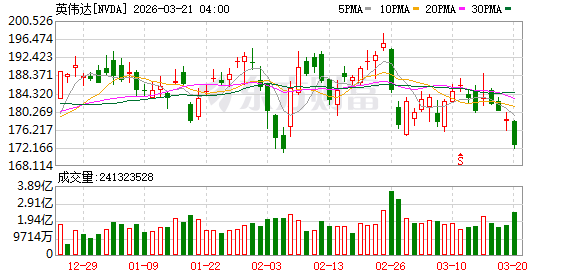
英伟达AI算力预判带来的启示
Zheng Quan Ri Bao· 2026-03-22 17:16
Core Insights - Nvidia's CEO Jensen Huang predicts that AI computing power demand will reach at least $1 trillion by 2027, doubling the previous forecast of $500 billion for 2026, indicating a significant shift in the AI industry landscape [2][3] Group 1: AI Computing Power as a Foundation - Computing power is the core foundation of the AI era, and self-sufficiency is essential for survival [3] - Huang's prediction of a $1 trillion market is based on three trends: the explosion of reasoning, the proliferation of intelligent agents, and the physical implementation of AI [3][4] - The demand for computing power is expected to be a rigid requirement for the next decade as AI penetrates various industries such as manufacturing, energy, transportation, and healthcare [3][4] Group 2: AI Competition and Efficiency - The true driver of the trillion-dollar market is not endless competition in model parameters but the vast, inclusive, and low-cost demand for reasoning [5] - Future data centers will serve as "factories" for producing tokens, with reasoning computing demand expected to exceed training computing demand [5][6] - The industry must shift focus from model training to efficiency and practical application, integrating AI technology into the real economy [6] Group 3: China's Unique Position in AI - China possesses the richest application scenarios, a complete manufacturing system, and a large digital market, making it well-positioned in the AI landscape [6] - The AI market should not solely focus on hardware metrics but leverage application advantages in smart manufacturing, smart vehicles, smart cities, and industrial internet [6] - A positive feedback loop of "application scenarios - algorithm optimization - hardware iteration" should be established to drive domestic computing power upgrades [6]

中信证券首席A股策略师裘翔:坚定围绕中国优势制造定价权重估布局
Zheng Quan Ri Bao· 2026-03-22 16:25
Core Viewpoint - The long-term stabilization and recovery of corporate profit margins is a necessary prerequisite for the sustained improvement of the A-share market [1] Group 1: A-share Market Dynamics - The next phase of A-share development needs to focus on the global market, with attention on how Chinese companies can capture larger market shares and enhance pricing power [1] - The overseas revenue share of the top 30 manufacturing companies has increased to 45%, indicating the rising global competitiveness of Chinese manufacturing [2] Group 2: Industry Opportunities - The energy and chemical sectors are identified as key areas where industry narratives can translate into actual performance, with the next quarter being a critical verification period for profit margins [2][3] - Emerging sectors in chemicals, non-ferrous metallurgy, new energy, and lithium batteries also show long-term growth potential, although performance validation in these areas requires a longer observation period [3] Group 3: Investment Strategies - Aggressive investors are advised to focus on sectors with significant expected differences to seize elastic opportunities, while conservative investors may find the stability and certainty of the AI infrastructure chain more appealing [4] - The core trends in the Chinese market include the continuous enhancement of pricing power in advantageous manufacturing, accelerated disruptive innovation in AI, and increased disturbances in the global energy and chemical supply chain [4] Group 4: Long-term Investment Focus - The investment strategy should center around the revaluation of pricing power in Chinese advantageous manufacturing, focusing on sectors with global share advantages and high barriers to capacity reset, such as chemicals, non-ferrous metals, power equipment, and new energy [4]

开源证券晨会纪要-20260322
KAIYUAN SECURITIES· 2026-03-22 15:21
Core Insights - The report highlights a positive outlook for the macroeconomic environment, with fiscal spending showing strong early-year momentum, indicating potential for economic recovery [6][7][26] - The "14th Five-Year Plan" emphasizes high-quality development focusing on technology, consumption, and employment, aiming for a balanced economic growth strategy [12][13][14] - The report identifies key sectors such as power equipment, communication, and coal as having positive performance, while sectors like defense and media are underperforming [1][2][3] Macroeconomic Analysis - Fiscal revenue for January-February 2026 was 44,154 billion yuan, showing a year-on-year increase of 0.7%, with non-tax revenue significantly improving [6][25] - Government expenditure reached 46,706 billion yuan, a 3.6% increase year-on-year, indicating a proactive fiscal policy approach [7][27] - The report notes a significant drop in government fund income, down 16% year-on-year, primarily due to a 25.2% decline in land transfer income [8][28] Industry Insights - The real estate sector is experiencing a decline in transaction volumes, but recent policy optimizations in cities like Nanjing and Zhengzhou are expected to stabilize the market [36][37] - The communication industry is witnessing advancements in AI and optical interconnect technologies, with significant developments showcased at the GTC2026 conference [41][44] - The semiconductor and memory sectors are highlighted for their strong performance, with the memory index showing a 137.47% increase since April 2025 [32][33] Investment Strategies - The report suggests focusing on sectors with strong demand and policy support, such as AI, renewable energy, and infrastructure, as potential investment opportunities [22][45] - It emphasizes the importance of managing portfolio risk during periods of external shocks, advocating for a defensive approach while identifying sectors poised for recovery [20][21] - Specific companies in the real estate and communication sectors are recommended for their strong fundamentals and growth potential [36][41]