Robotics

Search documents
机器人终于「懂」家务了!伯克利MomaGraph让机器人像人一样做家务
机器之心· 2026-01-19 08:54
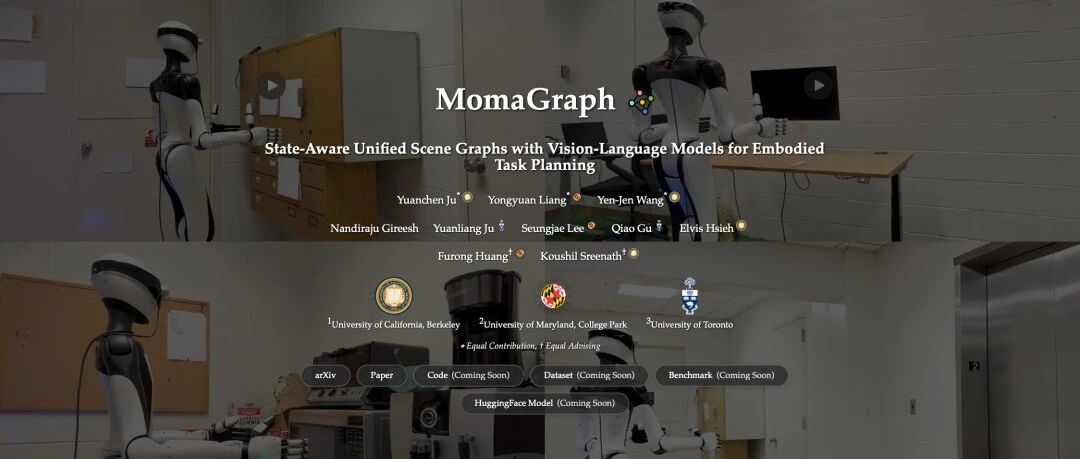
想象这样一个日常画面:你吩咐家用机器人「烧壶开水」,它却当场卡壳——水壶在哪?该接自来水还是过滤水?先插电还是先按开关?水开了又该如何判 断?这些对人类而言像呼吸一样自然的家务,对过去的机器人却是大大的难题:要么忘了插电,要么找不到水壶,甚至会把柜门把手错当成开关一通乱按。 最近,加州伯克利和马里兰大学联手推出的 MomaGraph 技术 ,就是要让机器人彻底告别这种「做家务的人工智障」时刻。这套算法不仅能让机器人真正 理解「做事的先后顺序」,更在星动纪元星动 Q5 上成功完成了开柜子、开微波炉、开电视、关灯等真实家务。 一、研究背景: 家用机器人做不好家务的「三大卡点」 家用移动操作机器人(比如帮你开窗户、热牛奶的机器人)需要同时「看路」(导航)和「动手」(操作),但过去的技术一直存在三个关键问题卡点,导 致机器人「做不好家务」: 卡点 1:只知「在哪」,不知「咋用」 比如机器人要开窗户,传统技术可能只知道「窗户在书桌右边」(空间关系),但不知道「窗户把手能控制开关」(功能关系)——就像你知道手机在口袋 里,却不知道按电源键能开机,自然用不了手机。 卡点 2:只认「图片」,不认「变化」 传统模型会把场景当成 ...

独家丨禾赛科技三位创始人再创新公司 Sharpa,目标是造通用机器人
晚点Auto· 2026-01-19 07:12
Core Viewpoint - The founders of Hesai Technology have established a new robotics company, Sharpa, which aims to develop general-purpose robots and core components, indicating a significant shift in focus from automotive lidar technology to robotics, which they believe has a much larger market potential [2][3][5]. Company Overview - Sharpa was founded by Hesai's co-founders, who will not hold operational roles but will guide the strategic direction. The company operates independently and has over 100 employees, primarily recruited externally [3][5]. - The first product, SharpaWave, is set to launch in October 2025 and features 22 degrees of freedom, allowing it to perform tasks like playing table tennis and origami, with a price tag of several tens of thousands of dollars [6][7]. Market Potential - The general robotics market is projected to have a trillion-dollar potential, with the founders aiming to create a world-class AI company. They believe that the opportunities in robotics are ten times greater than those in the electric vehicle sector, but the challenges are also significantly higher [5][8]. - The founders anticipate that the robotics lidar market could surpass the automotive lidar market, and they plan to develop additional components needed for robotics beyond just lidar [6]. Industry Landscape - There are over 100 startups in China focused on humanoid robots, with at least 300 entrepreneurs exploring various key components and applications in robotics [7]. - The technology roadmap for general-purpose robots is still evolving, with many companies exploring commercial applications [7]. Future Outlook - The first generation of Sharpa's products will primarily target research and experimental applications, with plans to enter service-oriented scenarios and eventually the household market, aiming for a cost below $5,000 for consumer models [7]. - The founders believe that the current moment in the robotics industry lacks a transformative breakthrough akin to the emergence of ChatGPT in the tech sector [8].


从世界工厂到创新沃土,科技金融助力东莞“关键一跃”
2 1 Shi Ji Jing Ji Bao Dao· 2026-01-19 06:14
Core Insights - Financial support is increasingly crucial for technological innovation in the Guangdong-Hong Kong-Macao Greater Bay Area, with Dongguan emerging as a hub for tech companies leveraging core technologies for rapid growth [1] - A diversified financial service system that adapts to the entire lifecycle of enterprises is taking shape in Dongguan, moving from traditional asset-based evaluations to a focus on future growth potential and technological capabilities [1][7] Financial Innovation - Financial institutions in Dongguan are innovating credit approval models and financial products, adopting the philosophy of "looking at patents rather than bricks" to better understand and support tech enterprises [1][3] - The "investment, loan, and guarantee" integrated credit model has been developed, allowing for a combination of equity investment and credit loans, which enhances banks' willingness to lend by distributing risks [3][4] Case Studies - Guangdong Blue Ocean Technology Company has seen significant growth in demand for its underwater robots, supported by loans from China Bank Dongguan Branch, which alleviated immediate funding pressures for R&D [2][3] - Dongdian Testing Technology Co. faces substantial funding needs for upgrading its facilities and services, with a recent investment of 70 million yuan for a new testing platform, supported by loans from CITIC Bank Dongguan Branch [5][6] Market Trends - The financial landscape in Dongguan is shifting from traditional asset-based assessments to a forward-looking approach that emphasizes technology and innovation, enabling more small and medium-sized tech companies to invest in R&D and market expansion [7][8] - The integrated financial service model and specialized products like "mid-test loans" are designed to meet the unique needs of tech enterprises, facilitating smoother access to funding and accelerating technological upgrades [6][7]
2026上海国际具身智能产业博览会7月举办
Xin Lang Cai Jing· 2026-01-19 05:47
Group 1 - The Shanghai International Embodied Intelligence Industry Expo (CIEI 2026) will be held from July 2 to 4, 2026, at the National Exhibition and Convention Center in Shanghai, with an exhibition area of 30,000 square meters and an expected participation of over 500 domestic and international companies [1][2] - The expo will feature key areas of the industry chain, including embodied intelligence entities, perception systems, and decision-making cognitive systems, showcasing a complete system from technology research and development to industrial application [1][2] - The embodied intelligence entity area will showcase humanoid robots, bionic robots, and industrial intelligent robots, allowing attendees to witness leading companies in the robotics industry compete [1][2] Group 2 - The perception system area will present key components such as perception sensors (visual sensors/laser radar), tactile sensors, and positioning systems, demonstrating how to endow intelligent robots with sensitive perception capabilities for more precise actions and stable operations [2] - The decision-making cognitive system area will focus on high-performance chips, complex scene decision algorithms, and high-precision motion capture technology, illustrating the core logic of autonomous perception and dynamic planning in robots [2] - The expo will also include an execution system area showcasing advancements in robotic joint drives, linear motion, and dexterous operations, as well as a battery energy storage system area that provides "endurance support" for embodied intelligence [2]
China Tech Boom Leaves Economic Malaise Behind
ZeroHedge· 2026-01-19 04:55
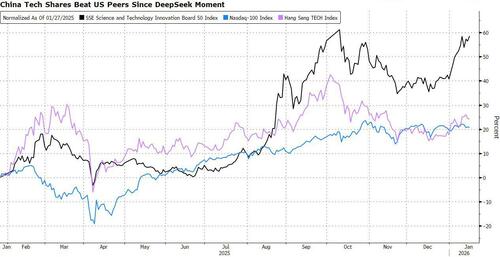
Core Viewpoint - China's technological advancements are driving a stock rally, despite a fragile economy, with significant enthusiasm for homegrown technologies leading the market [1][3]. Group 1: Market Performance - Chinese tech shares have surged nearly 13% this month, with Hong Kong-listed tech firms climbing almost 6%, outperforming the Nasdaq 100 [2]. - A basket of 33 Chinese AI stocks has seen their combined market value increase by approximately $732 billion over the past year, with further upside expected as their market capitalization is only 6.5% of the US's [8]. Group 2: Technological Developments - Progress in various sectors, including commercial rockets, robotics, and flying cars, is contributing to the bullish sentiment in Chinese equities [2]. - The adoption of generative AI has surged among major Chinese internet companies, such as Alibaba and Tencent, following DeepSeek's AI breakthrough [6]. Group 3: Future Outlook - Anticipation of DeepSeek's new AI model release and China's upcoming five-year economic plan focusing on technological self-reliance may further bolster market confidence [3][14]. - Analysts predict that the next major AI breakthrough will occur at the application layer, with China well-positioned to lead due to its diverse user cases [10]. Group 4: Investment Sentiment - Some investors remain optimistic about the technology sector's prospects, citing advantages like a low-cost base and strong state support [12]. - The expected release of DeepSeek's R2 model may act as a catalyst for further disruption in the sector, reinforcing China's competitive stance against US AI dominance [13]. Group 5: Valuation Concerns - The recent stock rally has raised concerns about stretched valuations, with some companies trading at significantly higher multiples compared to the Nasdaq 100 [12].

机构积极抢筹,机器人赛道迎布局窗口期;机器人ETF易方达(159530)盘中获净申购1.5亿份
Sou Hu Cai Jing· 2026-01-19 04:16
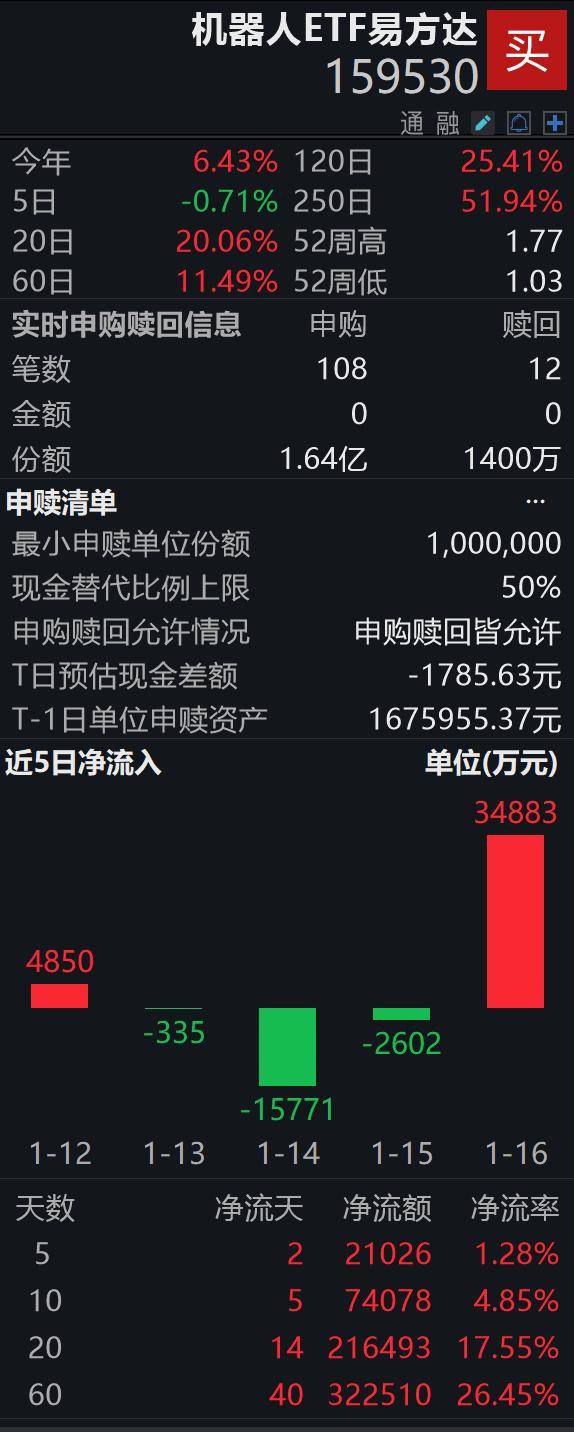
截至10:03,国证机器人产业指数(980022)涨0.68%,成分股中,南网科技涨7.2%、奥比中光涨 5.19%、科大智能涨3.18%,领益智造跌3.45%、丰立智能跌2.23%、华中数控跌1.53%。 海通证券发布的研报显示,在生态链协同下,国内外领先企业有望在感知、决策、执行等核心环节实现 突破,抢占机器人产业"ChatGPT时刻"的先发优势,共同推动人形机器人从实验室走向规模化商用的新 阶段。 国证机器人产业指数特点鲜明:1.指数人形机器人含量居首:指数中人形机器人相关公司权重显著高于 同类指数;2.指数聚焦高成长龙头:前十大权重股占比约40%,涵盖汇川技术、科大讯飞、石头科技等 细分领域龙头,技术壁垒高、市场竞争力强。 相关产品: 机器人ETF易方达(159530)通过跟踪国证机器人产业指数,为投资者提供一键布局机器人全产业链的 高效工具。 机器人ETF易方达(159530)场外也有基金份额:(联接A:020972、联接C:020973)。 资金方面,机器人ETF易方达(159530)跟踪国证机器人产业指数,近10日"吸金"超7.4亿,近20日"吸 金"超21亿;最新基金规模攀升至169.12亿, ...

机器人再登马年春晚!机器人ETF(562500)震荡走升,结构性机会凸显
Xin Lang Cai Jing· 2026-01-19 03:34
Group 1 - The Robot ETF (562500) has a latest price of 1.112 yuan, up 0.18% from the opening price of 1.110 yuan, with a trading volume of 2.35 billion yuan and a turnover rate of 2.18% [1] - Over 30 of the 66 constituent stocks in the ETF have risen, with notable gains from Nanwang Technology (over 7.5%), Haoshi Electromechanical, and Aobi Zhongguang [1] - The upcoming 2026 Spring Festival Gala will feature robots, highlighting advancements in Chinese technology and potentially boosting market sentiment towards the robotics industry [1] Group 2 - The Robot ETF (562500) is the only robot-themed ETF in the market with a scale exceeding 20 billion yuan, covering various segments including humanoid robots, industrial robots, and service robots [2] - Recent adjustments to the ETF's constituent stocks have increased the humanoid robot content to nearly 70%, successfully removing underperforming stocks and retaining high-quality ones [2] - The continuous technological iteration among manufacturers and accelerated capitalization of leading companies in the humanoid robot sector are expected to enhance investment opportunities in this segment [1]
全球首个负载100斤的真实持续干活机器人,来自银河通用
量子位· 2026-01-19 01:00
Core Viewpoint - The Galbot S1, a fully autonomous heavy-duty embodied intelligent robot, has been deployed in the production line of CATL, marking a significant advancement in the industrial application of embodied intelligence [1][8][56] Group 1: Product Features and Capabilities - Galbot S1 has a maximum continuous operational load capacity of 50 kilograms, breaking industry limits and addressing the heavy load requirements in industrial settings [2][9] - The robot features a pioneering fully autonomous, zero-remote operation "embodied handling model," which utilizes pure visual perception to operate in complex factory environments without relying on static paths or pre-set routes [5][17] - The design of Galbot S1 aligns with industrial standards, featuring IP54 protection against dust and water, and a maximum working height of 2.3 meters, making it suitable for various industrial environments [15] Group 2: Industry Impact and Significance - The deployment of Galbot S1 in leading manufacturing companies like CATL signifies a milestone in integrating embodied intelligence into core production processes, moving beyond auxiliary roles [8][26][27] - This development reflects a shift from merely demonstrating technological capabilities to establishing a replicable and scalable productivity solution within the manufacturing sector [46][51] - The successful operation of Galbot S1 in real production lines validates its reliability and long-term value, indicating that embodied intelligence is now a critical component of industrial upgrades [28][29] Group 3: Market and Future Prospects - The recent completion of a 2.1 billion yuan financing round and a valuation exceeding 20 billion yuan positions the company as a leader in the embodied intelligence sector in China, showcasing confidence in the long-term prospects of intelligent manufacturing [53] - The ongoing collaboration with major manufacturers and the accumulation of operational data and engineering experience are paving the way for large-scale applications of embodied intelligence [34][51] - The emergence of Galbot S1 represents a crucial step in the evolution of embodied intelligence, as it begins to play a key role in enhancing productivity within the industrial core [56][57]
普林斯顿近300篇工作的综述,这一领域是如何为具身提供低成本的训练和测试方案的?
具身智能之心· 2026-01-19 00:49
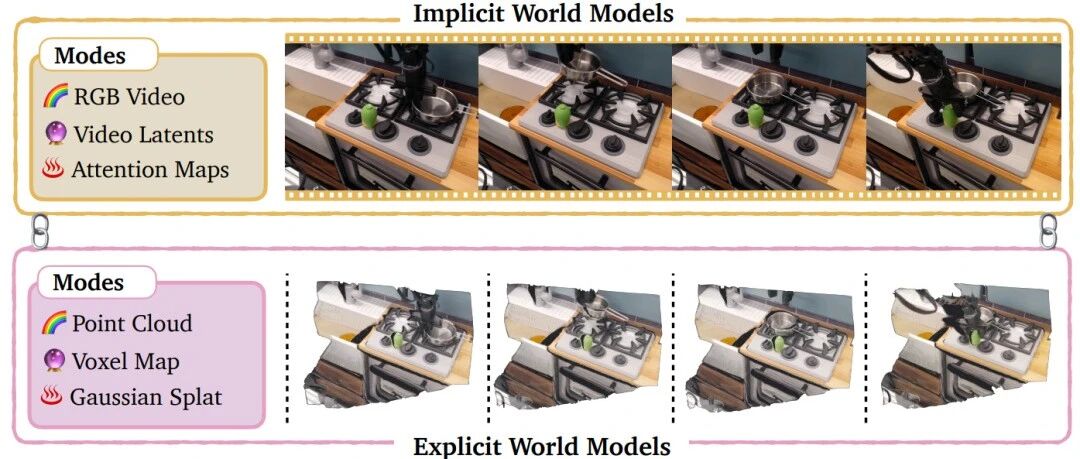
编辑丨具身智能之心 本文只做学术分享,如有侵权,联系删文 >> 点击进入→ 具身智能之心 技术交流群 在机器人领域,物理仿真器的保真度局限与语言模型的表达瓶颈长期制约发展,而视频生成模型凭借高保真时空建模能力,成为破解这些难题的核心突破口。 普林 斯顿大学与天普大学联合发表的综述论文 ,以 "模型基础 - 核心应用 - 挑战方向" 为逻辑脉络,首次系统梳理了视频生成模型作为嵌入式世界模型在机器人领域的研 究现状,构建了完整的技术体系与应用框架,为机器人智能化升级提供了全新范式。 核心亮点:首个机器人领域视频生成模型全面综述、四大核心应用场景、十大关键挑战、针对性未来方向 点击下方 卡片 ,关注" 具身智能 之心 "公众号 问题根源:传统方法的核心痛点 视频生成模型的崛起,源于对机器人领域现有技术瓶颈的精准破解,三大核心矛盾构成研究起点: 更多干货,欢迎加入国内首个具身智能全栈学习社区 : 具身智能之心知识星球 (戳我) 技术基础:视频生成模型的核心架构与分类 视频生成模型通过学习时空映射关系实现物理世界高保真建模,其核心架构可分为三大类,构成技术落地的基础,整体研究框架如图 2 所示: 论文题目:Video ...
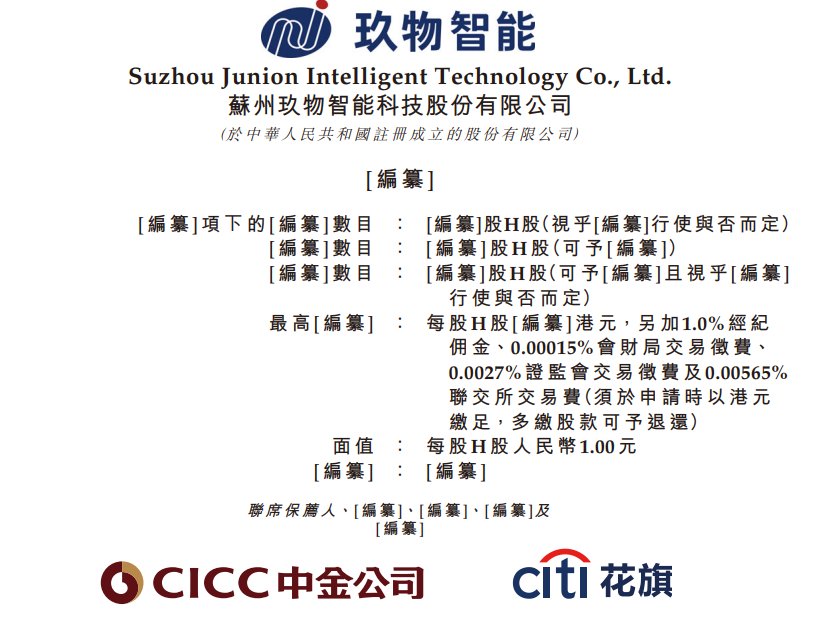
玖物智能递表港交所
Zhi Tong Cai Jing· 2026-01-19 00:43
Group 1 - The core viewpoint of the article is that Suzhou Jiuwu Intelligent Technology Co., Ltd. has submitted its listing application to the Hong Kong Stock Exchange, positioning itself as a leading company in the intelligent embodied industrial robot sector in China [1][4] - According to Frost & Sullivan, Jiuwu Intelligent ranks second in China's intelligent embodied industrial robot solutions market with a market share of 5.9% as of 2024 [1] - The company is recognized as a pioneer in the intelligent embodied industrial robot solutions industry in China, having developed the JOS robotic operating system in 2018, which integrates perception, motion control, and planning [4] Group 2 - The launch of the JOS system has established a comprehensive technical support system, enabling the large-scale deployment and commercialization of intelligent embodied industrial robots across various fields [4] - Jiuwu Intelligent is among the first suppliers to design intelligent embodied industrial robots for sectors such as clean energy technology, electronics and semiconductors, and optical modules [4] - The company holds the top position in the clean energy technology sector and ranks fourth in the electronics and semiconductors sector in terms of revenue generated from intelligent embodied industrial robot solutions in China, according to Frost & Sullivan [4]