自动驾驶

Search documents
ETF午评 | A股全线下跌,黄金股遭遇重挫,黄金股ETF跌4%,电网ETF跌3.96%,光伏50ETF、科创新能源ETF均跌3%
Sou Hu Cai Jing· 2025-12-16 03:57
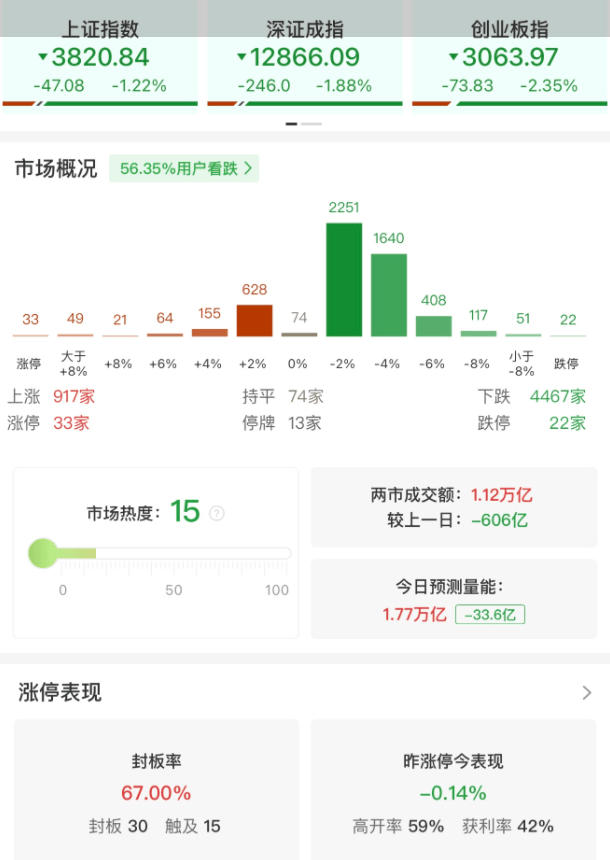
Market Overview - The three major A-share indices collectively declined, with the Shanghai Composite Index down 1.22%, the Shenzhen Component Index down 1.88%, and the ChiNext Index down 2.35% [1] - The Northbound Trading of the Shanghai and Shenzhen Stock Connect saw the Northbound 50 Index increase by 1.10% [1] - Total trading volume in the Shanghai, Shenzhen, and Beijing markets reached 1.1396 trillion yuan, a decrease of 58.9 billion yuan compared to the previous day [1] - Over 4,400 stocks in the market experienced declines [1] Sector Performance - The photovoltaic, superhard materials, rare earth permanent magnets, cross-strait integration, deep-sea technology, semiconductor, and solid-state battery sectors all experienced pullbacks [1] - Conversely, sectors such as intelligent driving, duty-free shops, and stablecoin themes showed resilience and performed well [1] ETF Performance - Some cross-border ETFs showed strength, with Invesco Great Wall Fund's S&P Consumer ETF rising by 2.78%, and both Huaxia Fund's Brazil ETF and E Fund's Brazil ETF increasing by 1.2% and 1% respectively [3] - The autonomous driving sector saw gains, with Penghua Fund's Intelligent Connected Vehicle ETF and GF Fund's Automotive ETF rising by 0.71% and 0.7% respectively [3] - The fintech sector experienced a slight rebound, with the Fintech ETF from Industrial Bank increasing by 0.43% [3] Gold and Energy Sector - Gold stocks faced significant declines, with the Gold Stock ETF, Gold Stocks ETF, and Gold Stocks ETF Fund dropping by 4.16%, 3.97%, and 3.93% respectively [4] - The electric grid sector saw a comprehensive downturn, with the Electric Grid ETF falling by 3.96% [4] - The photovoltaic sector also adjusted, with the Photovoltaic 50 ETF and the Sci-Tech Innovation ETF both declining by 3% [4]

均胜电子盘中涨超6% L3自驾商业化迈出关键一步 公司此前推出自驾 “黑匣子”
Zhi Tong Cai Jing· 2025-12-16 03:54
均胜电子(600699)(00699)盘中涨超6%,截至发稿,涨4.48%,报17.03港元,成交额6613.68万港元。 消息面上,12月15日,工信部正式公布我国首批L3级有条件自动驾驶车型准入许可,两款分别适配城 市拥堵、高速路段的车型将在北京、重庆指定区域开展上路试点,标志着我国L3级自动驾驶从测试阶 段迈入商业化应用的关键一步。中汽协表示,此次L3级自动驾驶车型获得许可,标志着智能网联汽车 迈入量产应用新阶段。 据公开资料显示,均胜电子为自动驾驶领域的核心Tier1供应商,公司自动驾驶相关产品通过 ISO26262ASIL-D功能安全认证,能在-40℃-125℃的极端环境下稳定运行,满足自动驾驶在不同场景下 的严苛可靠性要求;另一方面,此前推出的智能辅助驾驶数据存储系统(DSSAD),也就是自动驾驶"黑 匣子",可记录L3及以上级别自动驾驶的系统运行和驾驶员操作数据,既助力事故溯源与责任判定,也 为自动驾驶技术迭代提供数据支撑。 ...

首席联合电话会-科技组
2025-12-16 03:26
Summary of Conference Call on Technology Sector Industry Overview - The conference call focused on the AI industry, particularly the development trends of AI models and their applications in various sectors, including storage, computing power, and PCB markets [1][2][3]. Key Points and Arguments AI Model Development - The trend in AI model development emphasizes enhancing intelligence density, stability, and cost efficiency under unit computing power, with domestic companies like Deepseek and Tongyi Qianwen excelling in cost optimization and open-source initiatives [1][2]. - Recent releases include Google's Gemini 3, which restructured search functionalities, and OpenAI's GPT-5.2, showing significant improvements over previous versions [2]. Productization of AI Models - AI models are increasingly being productized, with examples such as Google's Gemini 3 and the Doubao app, which utilizes operating system-level permissions for cross-app price comparisons [1][3][4]. - The Robot Taxi industry is projected to reach a market size of 100 billion RMB by 2035, with a penetration rate of 10%, indicating a shift from conceptual discussions to practical implementations [3][14]. Storage and Computing Power Trends - The AI industry is driving growth in upstream storage and computing power, with DRAM capital expenditures expected to exceed NAND, and DDR4 prices strengthening due to supply structure adjustments [1][6][7]. - TrendForce predicts DRAM capital expenditures could reach $61 billion by 2026, a 14-15% increase, while NAND is expected to grow by 5% to over $22 billion [7]. PCB Market Insights - The PCB market is currently chaotic, but investment opportunities in Google's ASIC chain are seen as stronger than those in NV chains, with recommendations for companies like ShenNan, Huadian, and Dongshan [11]. - The introduction of mid-plane designs in PCBs is expected to enhance system stability and drive demand and prices upward [9][10]. End-User Market and Future Products - The end-user market is expected to see innovative products such as OpenAI hardware and Apple AI glasses, with specific companies recommended for investment [12]. - The upcoming Siri iteration in 2026 is anticipated to enhance Apple's valuation [12]. Robot Taxi Industry Analysis - The Robot Taxi model focuses on providing a consistent user experience rather than merely competing on price, with local governments showing positive attitudes towards its development [13][14]. - The industry has transitioned from conceptual hype to practical validation, with companies like Waymo and domestic players like Xiaoma Zhixing and Wenyuan Zhixing making significant progress [15]. Autonomous Driving Technology - L4 autonomous driving technology is expected to have a short-term advantage, while L2+ technology companies like Xiaopeng Motors and Horizon Robotics may also see valuation opportunities [16][17]. Additional Important Insights - The emphasis on product design and user experience in AI applications is crucial for future competitiveness [5]. - The need for substantial storage resources in both training and inference phases of AI models highlights the importance of selecting the right stocks in the semiconductor sector [6].


理想一篇OCC世界模型:全新轨迹条件稀疏占用世界模型SparseWorld-TC
自动驾驶之心· 2025-12-16 03:16
Core Insights - The article discusses a revolutionary breakthrough in end-to-end autonomous driving prediction technology, specifically through the introduction of the SparseWorld-TC model, which addresses limitations of traditional methods by utilizing sparse representations and attention mechanisms [2][3][40]. Group 1: Evolution and Challenges of World Models - World models are essential for understanding dynamic environments in AI systems, particularly in autonomous driving, where they predict physical environment evolution [6]. - Current world model methods face three main limitations: information loss due to discretization, rigidity from geometric priors in BEV representations, and challenges in capturing temporal dependencies with autoregressive methods [7]. - Sparse representations offer a promising solution by modeling only the occupied areas of a scene, thus reducing computational complexity and preserving continuous characteristics [8]. Group 2: Innovations of SparseWorld-TC - SparseWorld-TC features a pure attention-driven architecture that eliminates traditional tokenization and intermediate representations, allowing for more flexible spatiotemporal modeling [9]. - The model employs a sparse occupancy representation method based on anchor points, which are initialized with 3D points and feature vectors to predict occupancy and semantic labels [11][12]. - A trajectory conditioning mechanism is integrated, where the vehicle's planned trajectory provides crucial signals for the world model, enhancing prediction accuracy [13][14]. Group 3: Performance Evaluation and Results - SparseWorld-TC demonstrates significant advancements in 4D occupancy prediction, achieving high performance on the nuScenes benchmark with metrics such as geometric IoU and semantic mIoU [29][30]. - The model outperforms traditional methods, particularly in long-term prediction tasks, with the SparseWorld-TC-Large version achieving a semantic mIoU of 29.89% and an average IoU of 49.21% [33]. - The model's ability to maintain stability in long-term predictions, especially beyond 4 seconds, is highlighted as a key advantage over competing methods [34]. Group 4: Future Applications and Extensions - The architecture of SparseWorld-TC is not limited to occupancy prediction; it also shows potential for sensor-level observation generation, which could enhance self-supervised training and scene reconstruction [41]. - The integration of feedforward Gaussian prediction expands the model's capabilities, allowing for the generation of sensor observations based on trajectory conditions, which is beneficial for "what-if" analyses [51]. - Future research directions include improving self-supervised learning capabilities, enhancing dynamic scene modeling, and effectively fusing data from multiple sensors to boost prediction accuracy [54].

做了一份3DGS全栈学习路线图,包含前馈GS......
自动驾驶之心· 2025-12-16 03:16
Core Insights - The article highlights the introduction of 3D Gaussian (3DGS) technology by Tesla, indicating a significant advancement in autonomous driving through the use of feed-forward GS algorithms [1][3] - There is a consensus in the industry regarding the rapid iteration of 3DGS technology, with various companies actively hiring for related positions [1][3] Group 1: Course Overview - A new course titled "3DGS Theory and Algorithm Practical Tutorial" has been developed to provide a structured learning path for newcomers to the 3DGS field, covering both theoretical and practical aspects [3][7] - The course is designed to help participants understand point cloud processing, deep learning, real-time rendering, and coding practices [3][7] Group 2: Course Structure - The course consists of six chapters, starting with foundational knowledge in computer graphics and progressing to advanced topics such as dynamic reconstruction and surface reconstruction [7][8] - Each chapter includes practical assignments and discussions on relevant algorithms and frameworks, such as the use of NVIDIA's open-source 3DGRUT framework [8][9] Group 3: Target Audience and Requirements - The course is aimed at individuals with a background in computer graphics, visual reconstruction, and programming, specifically those familiar with Python and PyTorch [16] - Participants are expected to have a GPU with a recommended capability of 4090 or higher to effectively engage with the course content [16] Group 4: Learning Outcomes - By the end of the course, participants will have a comprehensive understanding of the 3DGS technology stack, including algorithm development and the ability to train open-source models [16] - The course also facilitates networking opportunities with peers from academia and industry, enhancing career prospects in the field [16]
港股异动 部分智驾概念股高开 首批L3级自动驾驶车型获准入 产业拐点有望加速到来
Jin Rong Jie· 2025-12-16 02:06
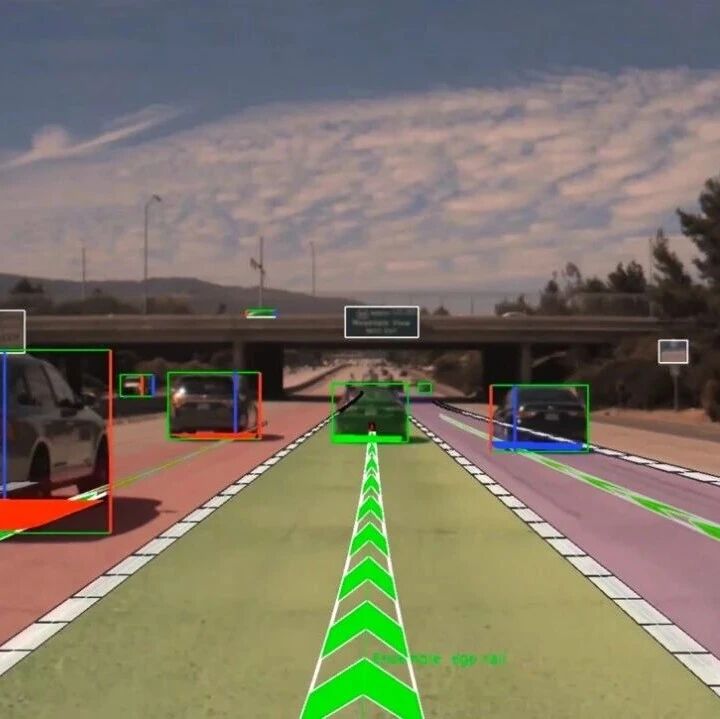
Group 1 - The core viewpoint of the articles highlights the significant advancements in the autonomous driving sector, particularly with the introduction of L3-level conditional autonomous driving vehicles in China, marking a shift from technology demonstration to regulatory compliance and operational deployment [1][2] - Several autonomous driving concept stocks experienced notable increases, with Zhejiang Shibao rising by 7.94% to 4.35 HKD, and others like Nexperia and Hesai also showing gains, indicating positive market sentiment towards the sector [1] - The Ministry of Industry and Information Technology in China officially released the first batch of L3-level conditional autonomous vehicle approval lists, with Chang'an Automobile and BAIC Jihe being the first companies to receive approval for their models [1] Group 2 - Haitong International suggests that the ongoing validation of Tesla's Robotaxi and the institutionalization of L3 vehicles in China are accelerating a pivotal moment in the high-level autonomous driving industry, which will significantly impact vehicle valuation systems and competitive dynamics [2] - Ping An Securities emphasizes that the technology behind L3-level conditional autonomous driving relies on mature and reliable environmental perception capabilities, necessitating the integration of various sensors such as cameras, millimeter-wave radar, and LiDAR for accurate perception in extreme weather and complex road conditions [2]
载具纪元新章系列1:Robotaxi白皮书:技术政策双轮驱动,行业正处高速增长阶段
Shenwan Hongyuan Securities· 2025-12-16 01:43
Investment Rating - The report maintains a "Positive" outlook on the Robotaxi industry, indicating a strong belief in its growth potential driven by technological advancements and supportive policies [1]. Core Insights - The Robotaxi sector is undergoing a transformation, leveraging L4 autonomous driving technology to replace human drivers, thereby reducing operational costs and enhancing profit margins. The industry is transitioning from a phase of technical validation to one of scalable operations, with significant growth expected in the coming years [2][3]. - The industry structure is evolving, comprising intelligent driving technology, hardware production, and terminal operations. Key players are focusing on data collection, vehicle manufacturing, and operational management to create a cohesive ecosystem [2][3]. - Policy frameworks are gradually improving, encouraging pilot programs while ensuring safety. This regulatory environment is facilitating the expansion of Robotaxi companies into international markets [2][3]. Summary by Sections 1. Robotaxi Background: Intelligent Driving Technology Reshaping the Mobility Service Industry - The demand for efficient, comfortable, and affordable travel experiences drives the evolution of the mobility service industry, with technological upgrades transforming supply models [15]. - The entry of autonomous driving technology is leading to a restructuring of the capacity value chain, moving from traditional taxi ownership to a more decentralized model [20][22]. - The feasibility of technology is improving, with leading companies demonstrating lower accident rates compared to human drivers, validating the safety and reliability of L4 systems [26][34]. 2. Industry Chain Structure: Intelligent Driving Technology + Hardware Production + Terminal Operations - The current industry participants are adopting a triangular cooperation model, where intelligent driving companies provide solutions, manufacturers supply vehicle chassis, and service platforms manage operations [47][48]. - The operational aspect is becoming increasingly important, with the efficiency of fleet management and scheduling emerging as new competitive barriers [2][3]. 3. Policy Guidance: Encouraging Pilot Programs While Ensuring Safety - Domestic policies are evolving to support pilot programs under safety assurances, while international markets are gradually opening up, allowing Robotaxi companies to expand their operations [2][3]. 4. Industry Growth Phase: A Trillion-Dollar Market with Potential for Billion-Dollar Enterprises - The industry is in a high-growth phase, with the penetration rate of autonomous driving services expected to rise significantly. Key catalysts in the coming years will include mass production of vehicles and global operational expansion [2][3]. - The market is anticipated to give rise to billion-dollar enterprises as leading companies optimize costs and scale operations [2][3].
L3自动驾驶准入落地 速腾聚创(02498)迎来确定性增量
智通财经网· 2025-12-16 01:21
Core Insights - China has officially approved the first batch of L3 conditional autonomous vehicles for road use, marking a significant step towards the commercialization of the autonomous driving industry under top-level design and regulatory guidance [1] - The approval establishes a multi-sensor fusion solution centered around LiDAR as the officially recognized L3 technology path, indicating a qualitative leap in the industry alongside quantitative growth [1] - The stringent requirements for reliability and safety redundancy in L3 autonomous driving are elevating LiDAR from a "high-end option" to a "core safety component," leading to a definitive increase in market demand and technical specifications [1] Industry Impact - The commercialization of L3 autonomous driving is expected to trigger a demand explosion across the supply chain, from upstream chips and optical components to midstream system integration [2] - Digital radar solutions, due to their technological advantages, are likely to be the first to capture market volume, further solidifying their leading position in the industry [2] - The recent approval is not only a technological milestone but also a clear signal for the revaluation of the entire industry chain's value [2] Company Highlights - Leading companies with advanced technology, such as Suoteng Juchuang, are poised to benefit directly from this trend, having developed the industry's only mass-producible automotive-grade digital radar with over 500 lines for L3-L4 autonomous driving [1] - Suoteng Juchuang has secured contracts with 32 global automakers for a total of 144 vehicle models, showcasing its strong market position and technological capabilities [1]
L3自动驾驶准入落地 速腾聚创迎来确定性增量
Zhi Tong Cai Jing· 2025-12-16 01:21
12月15日,我国正式批准首批L3级有条件自动驾驶车辆上路,标志着中国自动驾驶产业在顶层设计的 指引与准入许可的护航下,正式迈入"人车共驾"的商业化新阶段。这一关键政策落地,如同推倒第一张 多米诺骨牌,将快速激活从激光雷达、芯片到算法的整条智驾产业链。 此次获批的核心在于确立了以激光雷达为核心的多传感器融合方案为官方认可的L3级技术路径。这不 仅是产业的"量"的增长,更是"质"的跃迁。L3级自动驾驶对感知系统可靠性、安全冗余的严苛要求,正 将激光雷达从"高端选配"推向"核心安全部件"的地位,其市场需求与技术规格将迎来确定性提升。 在这一趋势下,具备领先技术的头部企业将直接受益。以速腾聚创(02498)为例,其前瞻布局的数字化 激光雷达,通过全栈自研芯片路径,已实现专为L3-L4级自动驾驶打造的、行业唯一可量产的车规级 500线以上远距数字化雷达,并结合行业唯一可量产的纯固态补盲雷达,构建了"远距精准识别+近距盲 区消除"的双重感知保障,能够满足高阶自动驾驶对360度无死角感知的严苛需求。截至目前,速腾聚创 已获得全球32家车企共144款车型定点。 随着L3商业化开启,产业链上游的芯片、光学部件到中游的系统集成 ...
负债35亿元!扫地机器人巨头宣布破产,被中国代工厂收购;麦当劳回应涨价,网友:谁允许了;我国首批L3级自动驾驶车型进入准入目录
雷峰网· 2025-12-16 00:33
Group 1 - iRobot, the pioneer of robotic vacuum cleaners, has filed for bankruptcy protection with debts of 3.5 billion yuan and only 175 million yuan in cash, leading to its acquisition by Shenzhen Shanjun Robotics [5][6] - The acquisition is expected to help Shenzhen Shanjun transition from an OEM to a self-branded company and reshape the U.S. market landscape [5] - iRobot's market value has plummeted from a peak of 3.56 billion USD in 2021 to approximately 140 million USD, primarily due to its failure to keep pace with industry developments during the pandemic [6] Group 2 - McDonald's has raised prices on many menu items by 0.5 to 1 yuan, with the company stating its commitment to providing high-quality meals [9][10] - The number of McDonald's stores globally is projected to increase from 41,822 in 2023 to 43,477 in 2024, with significant growth in China, contributing to about 70% of new international franchise openings [10] Group 3 - Wall Street's Wall Street technology company, Biran Technology, is preparing for an IPO in Hong Kong, having raised over 5 billion yuan in funding [12][13] - Biran Technology aims to provide integrated solutions for intelligent computing and has seen rapid fundraising success due to its strong founding team [12] Group 4 - China's first L3-level autonomous driving vehicles have received approval from the Ministry of Industry and Information Technology, marking a significant step towards regulatory compliance in the autonomous vehicle sector [14][15] - The approved models include Changan's SC7000AAARBEV and BAIC Blue Valley's BJ7001A61NBEV, which can operate under specific conditions on designated roads [14] Group 5 - Maserati's recent price cuts have led to a rapid sell-out of its Grecale model, with discounts reaching up to 54% [25][26] - The aggressive pricing strategy is aimed at clearing inventory affected by delays in vehicle arrivals due to the pandemic [26] Group 6 - Ant Group has upgraded its AI health application AQ to "Ant Afu," focusing on health management and achieving over 15 million monthly active users [28][29] - The app aims to provide personalized health services and has become the leading AI health management app in China [28] Group 7 - Huawei has announced the launch of its nova 15 series, featuring the Kirin 8 and 9 series chips, with a focus on high-capacity batteries and advanced camera technology [35][36] - The nova 15 series is set to be officially released on December 22, 2025, with pre-orders already available [36]