
大数据

Search documents
视频丨从“过客”到“创客”:海南自贸港如何让老外“不见外”?
Yang Shi Xin Wen Ke Hu Duan· 2025-12-19 07:36
海南的免签"朋友圈"越来越大。自从海南自贸港建设启动之后,已经有85个国家的公民可以免签来海南。而且免签时间也变长了,入境停留时间统一延长至 30天,并将团队免签放宽至个人免签。免签入境事由更广了,从旅游扩展至商贸、医疗、会展、探亲、访问等。 良好的生态环境和开放的政策红利,已吸引不少中、外企业以海南自贸港为起点,拓展全球市场。海南正积极打造中国企业走向国际市场的总部基地,和境 外企业进入中国市场的总部基地。为了更好地促进国际人员流动,海南也推出了签证便利、人才引进、税收优惠等系列举措,为中外企业共享开放发展机遇 搭建平台。那么,针对外国人就业,海南有哪些便利举措呢? 这也意味着很多外籍人才,不仅可以来海南跟内地的专家学者开国际性的研讨会,还可以直接来海南搞科研。光我知道的就有巴基斯坦、尼日利亚的农学专 家在三亚南繁做交流,还有些专家在万宁香饮所做研究。 生活服务也不含糊,海南贴心建立涉外律师人才库,服务这些在海南打拼的外国人。总之一句话,你来创业,我把流程做到最短;你来生活,我把服务做 好。 除了短期度假和交流,有外国人觉得这里环境很好,想长期留下来工作试试。这里的老外"不见外"又体现出来了。 海南直接放了 ...


大数据“算力”助力千行百业“智”变升级 “数据红利”转化为实打实发展新动能
Yang Shi Wang· 2025-12-18 01:59
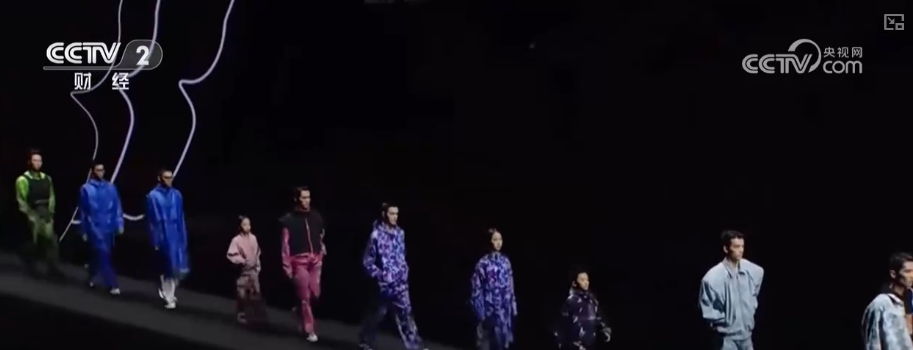
设计师向可怡介绍,这个AI大模型链接苗绣数据保护库,目前数据保护库里一共收集了上万余种苗绣纹样。设计周期从原来的一到两周缩短 到了两到三天。 这张带有苗绣元素的服装设计图,不是设计师创作的,而是通过AI大模型生成的。不仅可以通过文字,也可以通过提交图片生成想要的苗绣 作品。 在这家苗绣企业,绣娘们跨界转型,参与AI算法训练,将每一处刺绣纹样的工艺细节精准"翻译"给人工智能。 2025年秋季,运用大模型设计出来的贵州苗绣产品亮相中国国际时装周。T台上,模特身着带有苗族纹样的特色服饰,吸引了来自国内外观众 的目光。 在当地大数据发展管理局政策和技术的支持下,贵州一家苗绣企业开发出了"苗绣AI创艺大模型",将传统纹样与智能算法融合,将大数据 的"算力"嫁接在苗绣的"指尖"。 央视网消息:党的二十届四中全会明确提出"深入推进数字中国建设";中央经济工作会议强调,要"深化拓展'人工智能+'、推动科技创新 和产业创新深度融合"。近年来,贵州推动大数据先发优势转化为新质生产力,数字经济增速连续9年位居全国前列。 这个鸡舍里大约有78000只蛋鸡,这一个鸡舍日产蛋最多可以达到77000多枚,在鸡笼外置的白色传输带上正在往蛋库 ...
贵州:持续挖掘算力潜能 谋划建设语料中心
Zhong Guo Xin Wen Wang· 2025-12-17 08:41
贵州省政府新闻办17日举行"十四五"时期数字经济发展成就新闻发布会。记者会上获悉,贵州将持续挖 掘算力潜能,进一步发挥数据中心价值,成为推动行业转型的"车间"和"工厂"。 贵州凭借气候、地理位置、产业生态等优势,建成了全国领先的算力底座,已有50个重点数据中心。在 数据中心网络连接方面,已建成三层时延圈,与42个主要城市直连,还有全球首条400G算力通道建成 投用。 贵州省大数据局副局长、新闻发言人江阳介绍,贵州将把算力底座打得更牢更绿色,加快推动已有的互 联网头部大厂、央国企等数据中心项目扩产上量,继续招引更多项目落地,做大数智产业集群规模;深 化算电协同,提升数据中心绿电使用占比;推动先进节能技术应用和老旧设备更新换代,进一步降低运 行能耗。 围绕数据中心所需,贵州将聚焦算力产业链薄弱环节开展延链补链强链,招引更多服务器、机架、运 维、大模型训推等上下游企业,推动更多项目落地,培育更多专业园区,不断完善数据中心从建设到投 用的配套保障。同时,把"贵州算力"的市场做得更大,让算力真正赋能实体经济。 目前,人工智能对公共语料的需求尤为强烈。贵州省大数据局党组成员、副局长向彪说,贵州将谋划建 设贵州语料中心,打 ...
【公告臻选】光芯片+云计算+大数据+人工智能+智慧存储!公司拟斥资最多90亿元采购云算力服务
第一财经· 2025-12-16 14:16
Group 1 - The company is a direct supplier to Tesla, focusing on robotics, industrial AI, industrial AR/VR, Industry 4.0, and smart manufacturing [2] - The company plans to invest up to 9 billion yuan in cloud computing services, integrating optical chips, cloud computing, big data, artificial intelligence, and smart storage [2] - The company's products have been utilized in major global sporting events such as the Qatar World Cup and the Paris Olympics, emphasizing its involvement in virtual reality, MiniLED, artificial intelligence, and ultra-high-definition video [2]

一批新规明年1月将落地,这些和A股有关
Xuan Gu Bao· 2025-12-15 09:07
Group 1 - The "Fujian Province Promotion of Cross-Strait Standard Commonality Regulations" is the first local regulation in mainland China aimed at promoting standard commonality across the Taiwan Strait, effective from January 1, 2026. It establishes mechanisms for adopting advanced standards from Taiwan in Fujian and vice versa, and encourages collaboration between Xiamen and Kinmen, Fuzhou and Matsu [1] - The "Fujian Province Private Economy Promotion Regulations" will also take effect on January 1, 2026, encouraging cooperation between private economic organizations in Fujian and Taiwan to promote economic integration [1] - CICC believes that the concept of cross-strait integration is based on solid policy foundations and industrial logic, suggesting a strategic layout along the path of "infrastructure first - industry follows - financial empowerment - consumption upgrade" [1] Group 2 - The revised "Cybersecurity Law" will be implemented on January 1, 2026, marking the first major adjustment since its enactment in 2017. It focuses on strengthening legal responsibilities, addressing AI governance needs, and enhancing protection for critical information infrastructure [2] - The revised law supports research in AI foundational theories and key technologies, promotes infrastructure for training data resources and computing power, and aims to enhance ethical standards and risk monitoring in AI applications [2] Group 3 - The mandatory national standard "Technical Requirements and Testing Methods for Passenger Car Brake Systems" (GB 21670-2025) will be implemented on January 1, 2026. It introduces new requirements for electric transmission brake systems and emergency brake signals, among other modifications [2] - The introduction of EMB (Electric Brake by Wire) technology is expected to significantly enhance active safety capabilities and align with the trends in intelligent driving, with production breakthroughs anticipated by 2025 and a market size projected to reach 11.98 billion by 2030 [3] Group 4 - The "Guizhou Province Big Data Development and Application Promotion Regulations" will take effect on January 1, 2026, aimed at deepening big data applications and promoting the development of the digital economy [4] - The domestic data factor market is expected to grow at a compound annual growth rate of approximately 20.26%, surpassing 300 billion by 2028, driven by regional policies that enhance the flow and value extraction of data resources [4] Group 5 - The revised "Implementation Measures for the Sale of Civil Explosives" will be effective from January 1, 2026, focusing on improving the regulatory framework, licensing procedures, and supervision mechanisms [5] - The civil explosives industry is experiencing significant supply-side optimization and increased concentration, with steady demand from mining and infrastructure sectors, particularly in resource-rich regions like Xinjiang and Tibet [5] Group 6 - The "Regulations on the Inspection and Export Certification Management of Pharmaceutical Production Enterprises" will be implemented on January 1, 2026, providing various conveniences for drug exports [6] - The innovative drug sector and related industries are currently experiencing high levels of market performance, supported by frequent overseas BD transactions and a recovery in global biopharmaceutical financing [6]
人民日报|苏州工业园区推动中新合作迈向新高度
Ren Min Ri Bao· 2025-12-14 23:28
Core Insights - The Suzhou Industrial Park has achieved significant economic milestones, including a tax revenue of 1.2 trillion yuan, fixed asset investment of 1.2 trillion yuan, and total import-export volume of 1.7 trillion USD, establishing itself as a model for international cooperation in industrial park development [1] Group 1: Cooperation and Development - The success of the Suzhou Industrial Park is attributed to the support from the governments of China and Singapore, along with efficient collaboration between enterprises [2] - The cooperation has evolved from "one-way borrowing" to "two-way empowerment," with initiatives such as the signing of a green development cooperation memorandum and the establishment of a biopharmaceutical cooperation committee [2] - New projects like the Sino-Singapore Green Digital Port and the ESG Green Unicorn Industry Fund are set to focus on cutting-edge sectors such as new energy and new materials [2] Group 2: Innovation and Ecosystem - The establishment of the Sino-Singapore Intelligent Industry Park aims to integrate production, research, and application, with completion expected in 2026, positioning it as a benchmark for AI collaboration [3] - The Tengfei Suzhou Innovation Park has successfully nurtured unicorn companies and serves as a platform for cross-border collaboration, with over 190 companies served since the establishment of the international business cooperation center in Singapore [4] - The Sino-Singapore Kun Cheng Lake Company is developing a low-carbon technology park, having already connected over 200 quality projects with total municipal infrastructure investment reaching 8.7 billion yuan [4] Group 3: International Expansion - The signing of multiple cooperation documents in October 2025 marks a new phase in expanding third-party market cooperation around the Suzhou Industrial Park [6] - The Sino-Singapore International Business Cooperation Center in Singapore is actively involved in high-quality Belt and Road initiatives, establishing business cooperation agencies in Southeast Asia [6] - Platforms like the Sino-Singapore Research Institute and the Sino-Singapore Cooperation Service Trade Innovation Forum are facilitating the introduction of international innovation resources and enhancing trade facilitation [6]

张家口“十五五”规划建议发布:将与北京联合开发精品旅游线路
Bei Jing Ri Bao Ke Hu Duan· 2025-12-14 01:35
Core Viewpoint - The 15th Five-Year Plan for Zhangjiakou aims to achieve high-quality development, leveraging past achievements and addressing new opportunities and challenges in the context of national and regional strategies [2][3]. Group 1: Achievements During the 14th Five-Year Plan - Zhangjiakou has made significant progress, with major economic indicators showing stable growth and an industrial structure that has been optimized, with six major industries accounting for 56.5% of GDP [2]. - The city has successfully completed a substantial portion of the tasks related to the Beijing 2022 Winter Olympics, enhancing its influence and reputation as a winter sports city [2]. - The city has seen a notable increase in foreign investment and trade, with actual foreign investment and total foreign trade reaching 2.5 times and 6.1 times that of the end of the 13th Five-Year Plan, respectively [2]. - The urbanization rate of the permanent population reached 68.86%, and the average life expectancy is 79.49 years, both exceeding national averages [2]. - The city has maintained a harmonious social environment, effectively managing risks in real estate and government debt, and achieving significant results in public safety and legal governance [2]. Group 2: New Opportunities and Challenges in the 15th Five-Year Plan - The global landscape is changing rapidly, with increased uncertainty and risks, while domestic economic fundamentals remain strong, providing a solid foundation for growth [3]. - Zhangjiakou's unique advantages, such as its location, natural resources, and cultural heritage, are becoming more prominent, with major strategic opportunities arising from initiatives like the Beijing-Tianjin-Hebei coordinated development [3]. - Challenges include insufficient innovation, unbalanced development, and lagging modernization in agriculture and rural areas [3]. Group 3: Development Goals for the 15th Five-Year Plan - The main goals include achieving significant results in high-quality development, with annual economic indicators maintaining reasonable growth and further deepening the coordinated development of the Beijing-Tianjin-Hebei region [6]. - Enhancing technological innovation capabilities, with a focus on integrating education, technology, and talent development [6]. - Promoting social civilization and improving the quality of life for residents, with a focus on employment, income growth, and public service accessibility [7]. - Advancing ecological civilization, with a commitment to achieving carbon peak goals and improving environmental quality [8]. Group 4: Integration into Regional Development - Zhangjiakou aims to actively integrate into the Beijing-Tianjin-Hebei coordinated development, leveraging its advantages in transportation, resources, and culture [9]. - The city will deepen its participation in the regional industrial and technological innovation system, focusing on sectors like renewable energy and big data [9]. Group 5: Infrastructure and Service Development - The plan emphasizes the need for modern infrastructure, including transportation and water management systems, to support economic growth and public safety [24]. - Enhancing public service resources and promoting cooperation in education, healthcare, and social services with Beijing and Tianjin [10]. Group 6: Industry Development and Innovation - The focus will be on developing six major industries, including sports culture tourism and renewable energy, to drive economic transformation [20][21]. - The city aims to foster a modern industrial system that emphasizes smart, green, and integrated development [20]. Group 7: Economic and Market Reforms - The plan includes comprehensive reforms to create a market-oriented, law-based, and international business environment, enhancing the competitiveness of Zhangjiakou [30][31]. - Emphasis on optimizing the investment environment and promoting fair competition to stimulate economic growth [28][29].
我国综合实力100强城市大洗牌:苏州领先成都,贵阳超越福州,临沂略胜洛阳!
Sou Hu Cai Jing· 2025-12-11 13:31
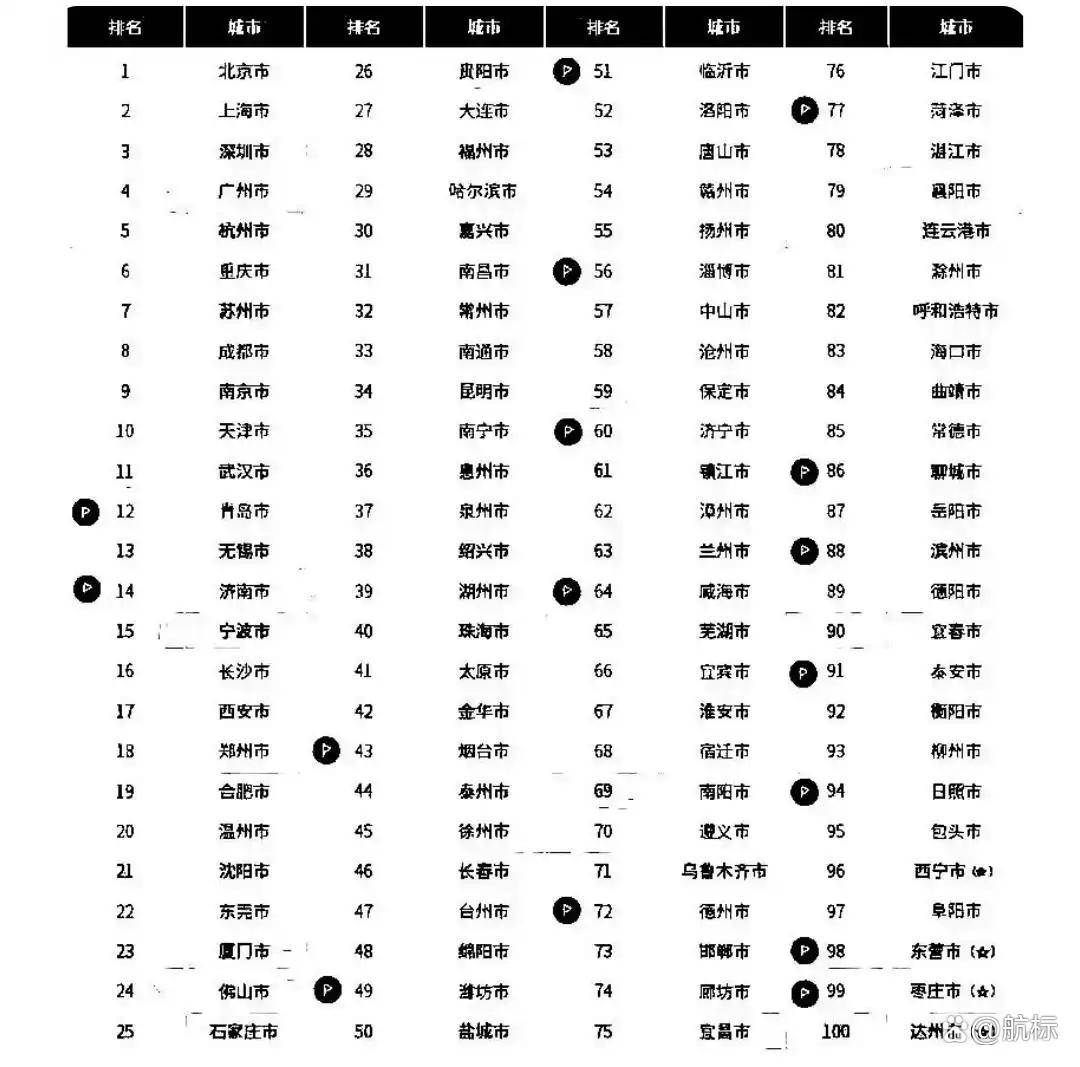
Core Insights - The ranking of Chinese cities in 2025 reveals subtle shifts, highlighting the competitive landscape among cities like Suzhou, Chengdu, Guiyang, and Fuzhou, as well as Linyi and Luoyang [1][3][4][6] Group 1: Suzhou vs. Chengdu - Suzhou ranks 7th, surpassing Chengdu, due to its strong industrial foundation and early advancements in high-end manufacturing sectors like integrated circuits and biomedicine [1] - The economic resilience of Suzhou is attributed to its robust manufacturing clusters, which contribute significantly to its industrial output [1] - Chengdu, while a central hub in Southwest China with strong consumer influence, lags in industrial density and advanced manufacturing compared to Suzhou [1] Group 2: Guiyang vs. Fuzhou - Guiyang's rise to 25th place, overtaking Fuzhou at 28th, signifies a shift in competitive dynamics, emphasizing the importance of digital economy and data-driven industries [3] - Guiyang has focused on becoming a "data hub," developing a complete ecosystem around data processing, trading, and software services, which has significantly boosted its economic contribution [3] - The transformation of Guiyang reflects a strategic pivot towards the digital economy, contrasting with Fuzhou's heavier industrial transition burdens [3] Group 3: Linyi vs. Luoyang - Linyi and Luoyang are closely ranked at 51st and 52nd, respectively, with Linyi's slight edge representing different developmental approaches [4] - Luoyang, as an established industrial base, faces challenges in transitioning due to its reliance on large state-owned enterprises and traditional manufacturing [4] - Linyi's growth is driven by grassroots economic activities and a dynamic trade network, allowing it to convert commercial flows into local manufacturing and brand value [4] Group 4: Overall Trends - The changes in city rankings indicate a new era of competition among Chinese cities, where scale alone is insufficient; cities must also focus on high-quality industries, future-oriented strategies, and market responsiveness [6] - The competition is evolving into a complex, multi-dimensional contest that tests endurance, agility, and foresight, rather than a simple race based on size or historical significance [6]
河北数字经济发展三年行动计划 打造高质量发展新引擎
Xin Lang Cai Jing· 2025-12-11 10:17
Core Insights - The Hebei Provincial Government has officially issued the "Three-Year Action Plan for Digital Economy Development (2025-2027)", outlining a clear roadmap for the province's digital economy growth over the next three years [1][9] - The plan aims to establish Hebei as a "leading digital economy hub driven by computing power, data, and intelligent integration" by 2027, with specific targets for five key industries to exceed a scale of 500 billion yuan [1][9] Strategic Background - Hebei's digital economy development is built on a solid foundation, with the province ranking first in the national comprehensive computing power index for two consecutive years, and cities like Langfang and Zhangjiakou leading in city-level computing power rankings [4][13] - The province has a rich industrial landscape with over 370,000 industrial enterprises across 40 sectors, providing ample opportunities for digital transformation [4][13] - The plan includes the construction of 230,000 5G base stations, the cultivation of 300 advanced smart factories, and the goal of having over 150,000 enterprises adopt cloud services [4][13] Key Tasks - The plan encompasses six major actions that form the framework for digital economy development, including enhancing data infrastructure, empowering data elements, doubling digital industries, improving traditional industries, enhancing digital governance, and optimizing the innovation ecosystem [7][16] - Specific actions include building intelligent computing clusters in Zhangjiakou and Langfang, creating a public data sharing platform, and achieving full digital coverage for large-scale enterprises in the manufacturing sector [7][16] Regional Collaboration - The digital economy development plan aligns closely with the Beijing-Tianjin-Hebei collaborative development strategy, emphasizing regional characteristics [8][17] - The plan proposes the establishment of a shared computing power resource pool among the three regions, facilitating a collaborative model where Beijing provides demand and Hebei supplies computing power [8][17] - The spatial layout focuses on Xiong'an New Area as a core, supporting the development of aerospace information industries, while promoting data industry clusters in cities like Shijiazhuang, Baoding, Zhangjiakou, and Langfang [8][17] - The ongoing implementation of the action plan signifies a shift from resource dependence to intelligence-driven development, with Hebei aiming to carve out a unique path for high-quality growth [8][17]
佳华科技跌10.1% 2020年上市募9.8亿元光大证券保荐
Zhong Guo Jing Ji Wang· 2025-12-10 09:07
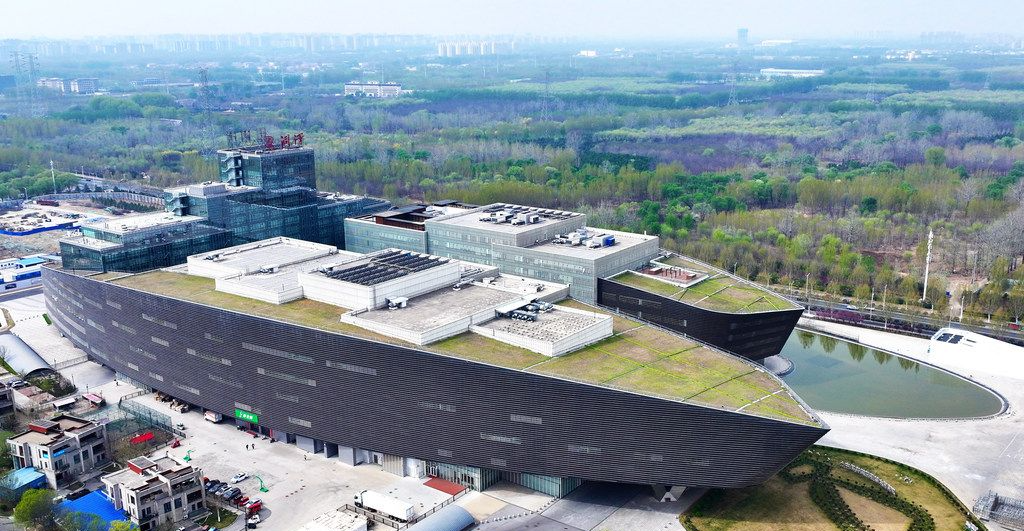
Group 1 - The stock price of Jiahua Technology (688051.SH) fell by 10.10% to 38.80 yuan, currently in a state of breaking issue [1] - Jiahua Technology was listed on the Shanghai Stock Exchange's Sci-Tech Innovation Board on March 20, 2020, with an initial offering price of 50.81 yuan per share and issued 19.334 million new shares [1] - The total amount raised from the initial public offering (IPO) was 982 million yuan, with a net amount of 864 million yuan, exceeding the originally planned fundraising by 364 million yuan [1] Group 2 - The company initially planned to raise 500 million yuan for projects related to atmospheric environment AI big data system construction and big data AI research and development system [1] - The total issuance costs for the IPO amounted to 118 million yuan (excluding VAT), with underwriting and sponsorship fees of 96.343 million yuan [1]

