工业机器人

Search documents
爱仕达:预计2025年全年净亏损15420.38万元—22190.30万元
2 1 Shi Ji Jing Ji Bao Dao· 2026-01-29 10:14
南财智讯1月29日电,爱仕达发布年度业绩预告,预计2025年全年归属于上市公司股东的净利润 为-22,190.30万元~-15,420.38万元;预计2025年全年归属于上市公司股东的扣除非经常性损益的净利润 为-25,039.44万元~-17,400.29万元。公司预计2025年度归属于上市公司股东的净利润为亏损22,190.30万 元至15,420.38万元;扣除非经常性损益后的净利润为亏损25,039.44万元至17,400.29万元。主要原因如 下:1、报告期内,公司的炊具、小家电外销业务受美国关税波动影响,部分订单被延缓或取消,导致 外销收入减少,影响整体利润。同时,公司的工业机器人业务处于战略扩张期,下半年采取了更为积极 的销售策略,营收虽小幅增长,但毛利率下滑、期间费用增加,导致亏损同比扩大。2、经公司初步测 算,公司2025年度计提的资产减值损失及信用减值损失较上年同期有所增加,主要包括工业机器人板块 的存货减值及商誉减值。3、经公司初步测算,非经常性损益对归属于上市公司股东净利润的影响金额 约为2,400万元左右,较上年同期减少约2,500万元,主要系计入当期损益的政府补助减少所致。 ...

阿童木机器人赴港IPO:并联机器人市占率国内第一,2025年前三季度扭亏为盈
Jin Rong Jie· 2026-01-29 09:57
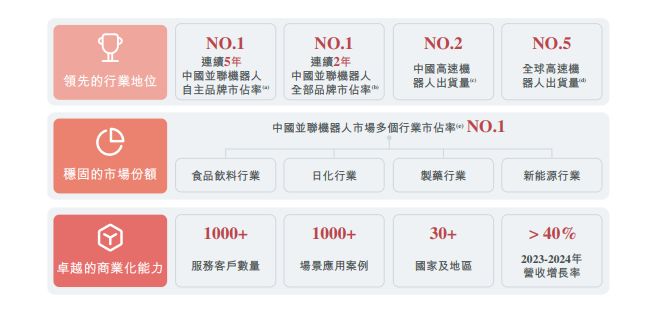
1月28日,据港交所披露,天津阿童木机器人股份有限公司(以下简称"阿童木机器人")正式向香港联 合交易所递交上市申请,拟依托联交所上市规则第18C章特专科技公司通道登陆主板。 目前,阿童木机器人构建了以"自主可控、原生创新"为核心,覆盖从设计理论、底层算法到核心部件、 整机集成的全链路自研体系,关键技术100%自主可控。公司自主研发的"尺度-结构-驱动-精度"全参数 一体化设计理论,可实现从客户需求到产品落地的正向设计路径;AtomMotion实时控制平台与大功率 控制器构建的"算法-硬件"融合体系,较传统方案硬件体积缩小80%、功耗降低20%;高速高精度运动控 制算法与全栈AI视觉识别算法的应用,使产品重复定位精度达微米级,抓取成功率超99.9%;自研高功 率密度电机则为机器人高速精密运动提供了可靠动力支撑。 产品矩阵上,阿童木机器人已推出五系列40余种规格并联机器人、两系列28种规格高速SCARA机器 人、四系列十种规格重载协作机器人及两代具身智能机器人。其中核心产品并联机器人实现2-6自由度 全谱系覆盖,最大负载50kg、最大工作空间直径2800mm,实际作业节拍80-130次/分钟,核心指标远超 行业 ...


A股重要信息回顾:2026年春运全社会跨区域人员流动量预计达95亿人次创历史新高,春节假期全国高速公路对七座及以下小型客车免收车辆通行费
Jin Rong Jie· 2026-01-29 08:51
Company News - Tesla announced the gradual discontinuation of Model X and Model S, with plans to launch a new sports car in April and introduce a third-generation humanoid robot this quarter. The company plans to invest a record over $20 billion in capital expenditures this year for Cybercab, humanoid robots, and other areas [1][1][1] - SK Hynix is projected to achieve an operating profit of 47.21 trillion Korean won in the 2025 fiscal year, surpassing Samsung Electronics to become the new profit leader in the global memory chip industry. Employee year-end bonuses are expected to reach approximately 690,000 RMB, with a focus on deepening HBM4 business to capture market leadership [1][1][1] - Alibaba's Pingtouge officially announced the launch of its self-developed high-end AI chip "Zhenwu 810E," which has been deployed in multiple ten-thousand-card clusters on Alibaba Cloud, achieving a full-stack layout from large models, cloud services to chips [1][1][1] - Porsche China announced a reduction in the number of dealerships to 80 by 2026, down nearly 30% from 114 in 2025. This channel optimization has led to dissatisfaction among some car owners regarding maintenance packages due to store closures, resulting in a crisis of brand trust [1][1][1] - Muyuan Foods disclosed its Hong Kong stock issuance plans, with a maximum issuance price of 39 HKD per share. The public offering in Hong Kong started on January 29 and is expected to end on February 3, aiming to raise over 10 billion HKD for global expansion and technology research and development [1][1][1] - Mingyang Smart Energy released a performance forecast for 2025, expecting a year-on-year increase in net profit attributable to shareholders of 131.14% to 188.92% for the period from January to December 2025 [1][1][1] - Efort Intelligent Equipment decided to optimize the pricing of certain industrial robot products starting February 1, 2026, with price adjustments ranging from 5% to 12% [1][1][1]
绿的谐波:预计2025年度净利润为1.15亿元到1.3亿元,同比增长104.74%~131.45%
Mei Ri Jing Ji Xin Wen· 2026-01-29 08:06
每经AI快讯,绿的谐波1月29日晚间发布业绩预告,苏州绿的谐波传动科技股份有限公司预计2025年度 实现归属于母公司所有者的净利润1.15亿元到1.3亿元,与上年同期相比,将增加5883.19万元到7383.19 万元,同比增长104.74%~131.45%。业绩变动主要原因是,2025年公司业绩实现显著增长,核心得益于 多方面有利因素的协同发力。工业机器人行业迎来回暖态势,市场需求持续释放,公司凭借深厚的行业 积累与产品竞争力,在该领域保持稳步增长,市场份额持续提升,为业绩增长奠定了坚实基础。在具身 智能机器人赛道,行业发展进入关键转折期,头部客户逐步从研发阶段迈向小批量生产,公司相关产品 凭借可靠品质与适配性获得客户高度认可,业务规模同比实现大幅增长,成为业绩增长的重要引擎。同 时,公司积极推进海外市场拓展战略,通过深化与海外合作伙伴的沟通交流,海外客群布局初见成效, 为整体增长注入新的动力。此外,公司在稳步提升产能以匹配市场需求的同时,持续优化生产工艺与运 营流程,生产效率与资源利用效率显著改善,进一步增强了盈利转化能力,共同推动公司实现高质量增 长。 每经头条(nbdtoutiao)——水贝黄金平台" ...

绿的谐波(688017.SH):预计2025年归母净利润1.15亿元到1.3亿元,同比增长104.74%到131.45%
Ge Long Hui A P P· 2026-01-29 07:51
归属于母公司所有者的扣除非经常性损益的净利润9000万元到1.05亿元,与上年同期(法定披露数据)相 比,将增加4379.51万元到5879.51万元,同比增长94.78%到127.25%。 2025年公司业绩实现显著增长,核心得益于多方面有利因素的协同发力。工业机器人行业迎来回暖态 势,市场需求持续释放,公司凭借深厚的行业积累与产品竞争力,在该领域保持稳步增长,市场份额持 续提升,为业绩增长奠定了坚实基础。在具身智能机器人赛道,行业发展进入关键转折期,头部客户逐 步从研发阶段迈向小批量生产,公司相关产品凭借可靠品质与适配性获得客户高度认可,业务规模同比 实现大幅增长,成为业绩增长的重要引擎。同时,公司积极推进海外市场拓展战略,通过深化与海外合 作伙伴的沟通交流,海外客群布局初见成效,为整体增长注入新的动力。此外,公司在稳步提升产能以 匹配市场需求的同时,持续优化生产工艺与运营流程,生产效率与资源利用效率显著改善,进一步增强 了盈利转化能力,共同推动公司实现高质量增长。 格隆汇1月29日丨绿的谐波(688017.SH)公布,经财务部门初步测算,公司预计2025年度实现归属于母公 司所有者的净利润1.15亿元到 ...
绿的谐波:预计2025年归母净利润1.15亿元到1.3亿元,同比增长104.74%到131.45%
Ge Long Hui· 2026-01-29 07:43
2025年公司业绩实现显著增长,核心得益于多方面有利因素的协同发力。工业机器人行业迎来回暖态 势,市场需求持续释放,公司凭借深厚的行业积累与产品竞争力,在该领域保持稳步增长,市场份额持 续提升,为业绩增长奠定了坚实基础。在具身智能机器人赛道,行业发展进入关键转折期,头部客户逐 步从研发阶段迈向小批量生产,公司相关产品凭借可靠品质与适配性获得客户高度认可,业务规模同比 实现大幅增长,成为业绩增长的重要引擎。同时,公司积极推进海外市场拓展战略,通过深化与海外合 作伙伴的沟通交流,海外客群布局初见成效,为整体增长注入新的动力。此外,公司在稳步提升产能以 匹配市场需求的同时,持续优化生产工艺与运营流程,生产效率与资源利用效率显著改善,进一步增强 了盈利转化能力,共同推动公司实现高质量增长。 格隆汇1月29日丨绿的谐波(688017.SH)公布,经财务部门初步测算,公司预计2025年度实现归属于母公 司所有者的净利润1.15亿元到1.3亿元,与上年同期(法定披露数据)相比,将增加5883.19万元到7383.19 万元,同比增长104.74%到131.45%。 归属于母公司所有者的扣除非经常性损益的净利润9000万元到 ...
阿童木机器人递表港交所 连续5年位列并联机器人国内自主品牌市占率第一
Zhi Tong Cai Jing· 2026-01-28 23:41
据港交所1月28日披露,天津阿童木机器人股份有限公司(简称:阿童木机器人)向港交所主板递交上市申 请书,华泰国际为其独家保荐人。 | 編纂]的[編纂]數目 | :「編纂]股H股(視乎[編纂]行使與否而定) | | --- | --- | | [編纂]數目 .. | [编纂]股H股(可予[編纂]) | | [編纂]數目 | :「編纂]股H股(可予[編纂]及 | | | 視乎[編纂]行使與否而定) | | 最高[編纂] : | 每股H股[編纂]港元,另加1.0%經紀 | | | 佣金、0.0027%證監會交易徵費、 | | | 0.00565%聯交所交易費及0.00015% | | | 會財局交易徵費(須於申請時以港元 | | | 繳足,多繳款項可予退還) | | 面值 : 每股A股人民幣010元 | | 公司简介 据招股书,该公司是一家卓越的高速机器人公司,致力于高速度、高可靠性机器人的研发、生产、销售 与服务,产品矩阵涵盖并联机器人、高速SCARA机器人、重载协作机器人、具身智能机器人四大系列, 并基于丰富的谱系化产品线,为客户提供自动化、智能化的解决方案。该公司聚焦于高速分拣、精密装 配、精准搬运等核心应用 ...
新股消息 | 阿童木机器人递表港交所 连续5年位列并联机器人国内自主品牌市占率第一
智通财经网· 2026-01-28 23:29
智通财经APP获悉,据港交所1月28日披露,天津阿童木机器人股份有限公司(简称:阿童木机器人)向港 交所主板递交上市申请书,华泰国际为其独家保荐人。 | 編纂]的[編纂]數目 | :「編纂]股H股(視乎[編纂]行使與否而定) | | --- | --- | | [編纂]數目 .. | [编纂]股H股(可予[編纂]) | | [編纂]數目 | : [編纂]股H股(可予[編纂]及 | | | 視乎[編纂]行使與否而定) | | 最高[編纂] : | 每股H股[編纂]港元,另加1.0%經紀 | | | 佣金、0.0027%證監會交易徵費、 | | | 0.00565%聯交所交易費及0.00015% | | | 會財局交易徵費(須於申請時以港元 | | | 繳足,多繳款項可予退還) | | 直值 : | 每股H股人民幣0.10元 | 公司简介 据招股书,该公司是一家卓越的高速机器人公司,致力于高速度、高可靠性机器人的研发、生产、销售 与服务,产品矩阵涵盖并联机器人、高速SCARA机器人、重载协作机器人、具身智能机器人四大系列, 并基于丰富的谱系化产品线,为客户提供自动化、智能化的解决方案。该公司聚焦于高速分拣、精密装 ...
走稳中国外贸转型升级之路
Zhong Guo Jing Ji Wang· 2026-01-28 23:13
Core Viewpoint - In 2025, China's total foreign trade import and export value reached 45.47 trillion yuan, a year-on-year increase of 3.8%, marking a historical high despite global trade challenges [1] Group 1: Export Performance - Exports reached 26.99 trillion yuan, growing by 6.1%, demonstrating the resilience of China's foreign trade and the positive effects of improved export structure and manufacturing competitiveness [1] - High-tech product exports amounted to 5.25 trillion yuan, increasing by 13.2%, with green products like "new three items" and wind turbines growing by 27.1% and 48.7% respectively [2] - The export structure is shifting from quantity expansion to quality enhancement, driven by long-term collaboration between industrial policies, technological innovation, and market mechanisms [2] Group 2: Policy and Market Environment - The enhancement of export resilience is closely linked to the deep implementation of policies, such as the 167 national standard projects for the "new three items" industry established by the State Administration for Market Regulation [2] - In 2025, the export of industrial robots exceeded imports for the first time, growing by 48.7%, indicating a transition to becoming a net exporter of industrial robots [2] Group 3: Future Outlook - China's private enterprises accounted for over 70% of the foreign trade value of specialized "little giant" companies, with a 9.2% increase in exports through market procurement [3] - The domestic market's vast potential and ongoing technological innovation and industrial upgrades are expected to provide high-quality supply that meets international market demands [3] - The current global economic landscape is undergoing significant adjustments, necessitating a commitment to high-quality development in foreign trade through higher levels of openness [3]
拓斯达(300607.SZ):预计2025年净利润6000万元–8000万元 同比扭亏为盈
Ge Long Hui A P P· 2026-01-28 13:22
Core Viewpoint - The company, Tuosida (300607.SZ), expects to achieve a net profit attributable to shareholders of 60 million to 80 million yuan in 2025, marking a turnaround from losses, with a net profit excluding non-recurring gains and losses projected at 42 million to 62 million yuan, also indicating a return to profitability [1] Group 1: Strategic Transformation - The company is continuously deepening its strategic transformation by focusing on product offerings and reducing project scope [1] - The profitability of product-related businesses is expected to improve significantly in 2025, particularly in industrial robots, injection molding machines, supporting equipment, and automatic feeding systems [1] Group 2: Business Adjustments - The company has significantly reduced its involvement in the smart energy and environmental management systems business [1] - Profitability has been achieved through measures such as controlling order intake and implementing refined management practices [1]