
通信运营

Search documents
通信行业双周报(2025、12、26-2026、1、8):商用航天建设持续推进-20260109
Dongguan Securities· 2026-01-09 09:31
Investment Rating - The report maintains an "Overweight" rating for the communication industry, expecting the industry index to outperform the market index by more than 10% in the next six months [2][44]. Core Insights - The commercial aerospace sector is showing significant momentum both domestically and internationally, shifting focus from mere technological breakthroughs to the integration of technology, ecosystem development, and market applications. Leading companies are enhancing their commercialization capabilities [3][39]. - The report anticipates that the communication industry will experience a period of technological iteration and policy dividends in 2025, with new growth drivers emerging from AI, quantum communication, and low-altitude economy sectors. The recovery of cellular IoT modules and ongoing construction of communication facilities are expected to create new demands for devices, equipment, and service operations [3][39]. Summary by Sections 1. Communication Industry Market Review - The communication sector index fell by 1.18% over the two weeks from December 26, 2025, to January 8, 2026, underperforming the CSI 300 index by 3.22 percentage points, ranking last among 31 sectors [11][12]. - In January 2026, the communication sector index increased by 0.85%, again underperforming the CSI 300 index by 1.48 percentage points [11][12]. 2. Industry News - The Ministry of Industry and Information Technology and seven other departments jointly issued the "Implementation Opinions on the Special Action of 'Artificial Intelligence + Manufacturing'" [15]. - The first offshore reusable rocket recovery base in China has commenced construction with a total investment of 5.2 billion yuan [21]. - SpaceX's Starlink has connected over 9 million active users across 155 countries, showcasing significant growth from 14.5 million users in December 2021 [22]. 3. Company Announcements - Feiling Kesi plans to indirectly invest in Nanfei Microelectronics, focusing on high-speed network communication interconnect chips, with a total investment of 40.8 million yuan [23][24]. - Guangku Technology expects a net profit growth of 152%-172% for 2025, driven by revenue growth and cost control measures [26]. 4. Industry Data Updates - As of November 2025, the mobile phone user base reached approximately 1.828 billion, a year-on-year increase of 2.20% [27]. - The total number of 5G base stations reached 4.83 million, with a net increase of 579,000 compared to the end of the previous year [36].





港股央企红利50ETF(520990)跌0.40%,成交额1.38亿元
Xin Lang Cai Jing· 2026-01-08 10:04
流动性方面,截止1月8日,港股央企红利50ETF(520990)近20个交易日累计成交金额31.78亿元,日 均成交金额1.59亿元;今年以来,4个交易日,累计成交金额6.34亿元,日均成交金额1.58亿元。 港股央企红利50ETF(520990)现任基金经理为龚丽丽、汪洋。龚丽丽自2024年7月25日管理(或拟管 理)该基金,任职期内收益18.87%;汪洋自2025年7月15日管理(或拟管理)该基金,任职期内收益 5.17%。 最新定期报告显示,港股央企红利50ETF(520990)重仓股包括中国石油股份、中国移动、中国神华、 中国海洋石油、中远海控、中国石油化工股份、中国电信、中国联通、中煤能源、华润置地,持仓占比 如下。 股票代码股票名称持仓占比持仓股数(股)持仓市值(元)00857中国石油股份10.88%7257.80万4.69亿 00941中国移动10.33%577.45万4.45亿01088中国神华9.72%1233.40万4.19亿00883中国海洋石油 9.54%2365.60万4.11亿01919中远海控8.43%3288.45万3.64亿00386中国石油化工股份7.42%8648.60万 ...
深沪北百元股数量达203只,科创板股票占43.84%
Zheng Quan Shi Bao Wang· 2026-01-07 09:49
Market Overview - The average stock price in A-shares is 14.44 yuan, with 203 stocks priced over 100 yuan as of January 7 [1] - The Shanghai Composite Index closed at 4085.77 points, up 0.05%, while stocks over 100 yuan had an average increase of 1.88%, outperforming the index by 1.83 percentage points [1] High-Value Stocks - The highest closing price among stocks over 100 yuan is Kweichow Moutai at 1423.36 yuan, down 0.33%, followed by Cambrian and Yuanjie Technology at 1394.88 yuan and 700.70 yuan respectively [1] - In the past month, stocks priced over 100 yuan have seen an average increase of 19.43%, compared to a 4.69% increase in the Shanghai Composite Index [1] Sector Distribution - Among the high-priced stocks, the electronics sector is the most represented with 76 stocks, accounting for 37.44% of the total [2] - The mechanical equipment and computer sectors each have 21 stocks, making up 10.34% of the high-priced stocks [2] Stock Performance - Kema Technology's stock price has recently crossed the 100 yuan mark, closing at 109.34 yuan with a 9.55% increase and a turnover rate of 21.61% [2] - The total trading volume for Kema Technology reached 3.452 billion yuan, with a net inflow of 255 million yuan from main funds [2] Notable High-Value Stocks - A list of notable high-value stocks includes: - Kweichow Moutai: 1423.36 yuan, -0.33% - Cambrian: 1394.88 yuan, +0.85% - Yuanjie Technology: 700.70 yuan, +8.47% [2][3] - Other significant stocks include: - Zhongji Xuchuang: 619.60 yuan, +2.37% - Moer Thread: 617.54 yuan, +0.58% [2][3] Recent Trends - The recent trend shows that stocks like Andar Intelligent, Feiwo Technology, and Chaojie Co. have experienced significant increases of 131.72%, 131.36%, and 130.17% respectively over the past month [1]


内蒙古移动呼和浩特分公司以卓越网络与服务擦亮“幸福底色”
Zhong Guo Jin Rong Xin Xi Wang· 2026-01-07 09:15
这份守护,尤其温暖着"银发族"。"蓝马甲"志愿服务队深入300多个社区,帮助1.2万余名老人从"用网难"迈向"会用网、用好网",享受每天与孙辈高清见面 的天伦之乐。 "移"路同行,品质专线赋能百业兴 在鸿盛高新技术产业开发区,一条移动双路由高可靠企业专线,助力智能仓储企业实现全流程实时联动,交付效率跃升30%;在内蒙古医科大学附属医院, 医疗专线全年稳定支撑超5000例远程诊疗,让生命数据畅通无阻;在呼和浩特职业学院,定制化校园网络成功承载万人在线考试的严峻考验。从重大工程到 街边小店,稳定高速的网络,正为各行各业夯实数字化转型的基石,让数据多跑路,让发展添速度。 转自:新华财经 当光纤如毛细血管般延伸至城市的每个角落,当稳定的信号成为空气般自然的存在,一种由"连接"带来的幸福感,正在呼和浩特悄然生长。这背后,是内蒙 古移动呼和浩特分公司(以下简称"呼和浩特移动")以匠心打造的精品网络与贴心服务,将"10分满意"的承诺,写进千家万户的日常生活,注入千行百业的 发展脉搏。 "移"路守护,全屋千兆点亮智慧家 "以前全家抢网,孩子上网课总卡顿,现在每个房间信号都满格。"呼和浩特市回民区新华园小区李女士的感慨道出了无 ...


港股通数据统计周报 2025.12.29-2026.01.04-20260107
Zhe Shang Guo Ji Jin Rong Kong Gu· 2026-01-07 06:12
Group 1: Top Net Buy/Sell Companies - The top net buy company is Agricultural Bank of China (1288.HK) with a net buy amount of 10.51 billion CNY, acquiring 181,815,021 shares[8] - The top net sell company is China Mobile (0941.HK) with a net sell amount of -46.61 billion CNY, selling 57,046,826 shares[9] - Other notable net buys include Industrial and Commercial Bank of China (1398.HK) with 6.50 billion CNY and China Petroleum & Chemical Corporation (0386.HK) with 3.49 billion CNY[8] Group 2: Industry Distribution of Net Buy/Sell - The financial sector shows significant net buying, while the telecommunications sector has the highest net selling, particularly driven by China Mobile and China Unicom[14] - The net buy/sell distribution indicates a strong preference for financial stocks, with utilities and consumer staples also seeing positive net inflows[14] - The energy sector has a moderate net buy, reflecting ongoing interest in energy stocks despite broader market trends[14] Group 3: Active Stocks - Alibaba (9988.HK) and Tencent (0700.HK) are the most active stocks, with total trading volumes of 41.57 billion CNY and 34.90 billion CNY respectively, both showing significant net selling[20] - Semiconductor Manufacturing International Corporation (0981.HK) has a notable trading volume of 34.20 billion CNY, with a net sell of -7.65 billion CNY[20] - Other active stocks include Xiaomi (1810.HK) and China Mobile, both experiencing substantial trading activity but with negative net buying figures[20]
河南:扎实开展网络运行安全大排查
Xin Lang Cai Jing· 2026-01-04 12:47
格隆汇1月4日|河南通信管理局召开安全生产及网络运行安全专题会议。会议指出,扎实开展网络运行 安全大排查,加强网络运行监测,落实"四防"要求,完善保障预案,认真做好低温雨雪防范应对各项准 备,提前做好人流密集和业务量激增场所的网络优化扩容,确保重要时期全省通信网络安全稳定运行。 ...
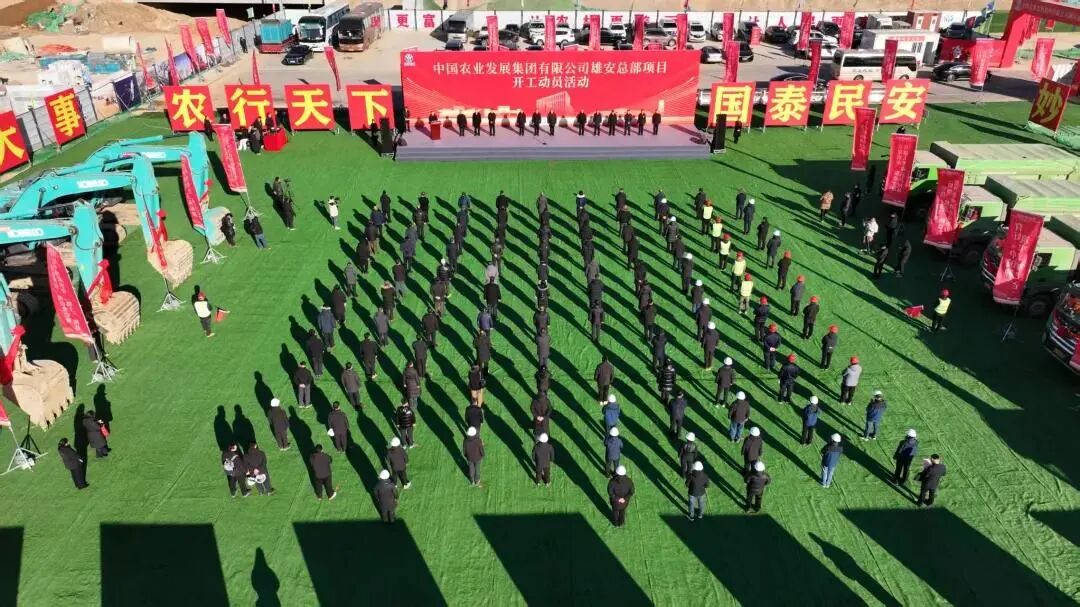
第二批4家央企雄安总部全部开工!
Xin Lang Cai Jing· 2026-01-04 01:19
Core Insights - The headquarters projects of four central enterprises have commenced construction in Xiong'an New Area, marking a significant step in the relocation of non-capital functions from Beijing [1][5]. Group 1: Project Developments - China Agricultural Development Group, China Huadian Corporation, and China Chengtong Holdings Group have held groundbreaking ceremonies for their headquarters in Xiong'an [1][5]. - The second batch of four central enterprise headquarters projects has officially started construction, following the earlier commencement of the China Datang headquarters project [1][5]. Group 2: Progress and Impact - Xiong'an New Area has shown significant results in accommodating the relocation of central enterprises during the 14th Five-Year Plan, with a rapid pace of project implementation [3][9]. - The first batch of central enterprise headquarters has established a notable presence, with companies like China Star Network, China Sinochem, and China Huaneng officially relocating [3][9]. - Over 400 various institutions from central enterprises have been established in Xiong'an, which is evolving into a hub for higher education, talent, high-end medical services, and innovation [3][9].
中央企业推动关键产业向新向优
Xin Lang Cai Jing· 2026-01-03 19:18
Core Insights - Central enterprises are expected to enhance their roles in serving the national economic development and improving people's livelihoods, as emphasized by General Secretary Xi Jinping [1] Group 1: Scale and Strength - The total assets of central enterprises have exceeded 90 trillion yuan, marking significant growth during the "14th Five-Year Plan" period [2] - Central enterprises have made notable advancements in innovation, with 134 pilot verification platforms providing specialized services and achieving 121 significant results in original technology [2] - Research and development expenditures have surpassed 5 trillion yuan, with investments in emerging industries growing at an annual rate of over 20% [2] Group 2: Industrial Upgrading - Central enterprises have made progress in 438 technology breakthroughs aimed at enhancing industrial innovation and self-sufficiency [3] - The implementation of the "Artificial Intelligence +" initiative has led to over 800 application scenarios and the establishment of 1,854 smart factories [3] - Energy efficiency has improved, with energy consumption per unit of output and carbon dioxide emissions per unit of output decreasing by 12.8% and 13.9%, respectively, during the "14th Five-Year Plan" [3] Group 3: Strategic Functionality - Nine new central enterprises have been established, focusing on market-oriented restructuring and integration of state-owned assets [4][5] - The governance of central enterprises has become more standardized and efficient, with management levels controlled within four tiers [5] - The State-owned Assets Supervision and Administration Commission (SASAC) has implemented a more scientific regulatory approach, including a tailored assessment for each enterprise [5]
港股投资周报:年度收官,港股精选组合本年度上涨 53.23%-20260103
Guoxin Securities· 2026-01-03 08:31
证券研究报告 | 2026年01月03日 港股投资周报 年度收官,港股精选组合本年度上涨 53.23% 港股精选组合绩效回顾 本周,港股精选组合绝对收益-2.49%,相对恒生指数超额收益-1.76%。 本年,港股精选组合绝对收益 53.23%,相对恒生指数超额收益 25.46%。 港股市场创新高热点板块跟踪 我们根据分析师关注度、股价相对强弱、股价路径平稳性、创新高连续性等 角度在过去 20 个交易日创出过 250 日新高的股票池中筛选出平稳创新高股 票。 近期,现代牧业等股票平稳创出新高。 按照板块来看,创新高股票数量最多的是周期板块,其次为消费、大金融、 制造和科技板块,具体个股信息可参照正文。 港股市场一周回顾 宽基指数方面,本周恒生科技指数收益最高,累计收益 0.30%;恒生小型股 指数收益最低,累计收益-1.56%。 行业指数方面,本周能源业行业收益最高,累计收益 2.21%;医疗保健业行 业收益最低,累计收益-3.24%。 概念板块方面,本周卫星导航概念板块收益最高,累计收益 11.42%;富士 康概念板块收益最低,累计收益-6.29%。 南向资金监控 南向资金整体方面,本周港股通累计净流出 38 ...
广电升卿卡爆火背后:29元192G流量是“真香”还是“智商税”?用户实测揭真相
Sou Hu Cai Jing· 2026-01-01 13:50
Core Insights - The article discusses the "Guangdian Shengqing Card," which offers 192GB of data for 29 yuan, raising questions about its true value and potential pitfalls [1][3]. Group 1: Data Breakdown - The 192GB data package is not entirely usable as nationwide data; it is likely a combination of general and targeted data, requiring users to assess their actual needs against the package's offerings [4]. - Users should verify the amount of nationwide data included, as it significantly impacts their overall experience and usage [7]. Group 2: Price Evaluation - The 29 yuan price may be an introductory offer tied to a contract period, potentially leading to higher costs after the initial term [5]. - Users are advised to read the fine print regarding the duration of the promotional price and any potential price increases after the contract period [5]. Group 3: Eligibility Criteria - Users must ensure their mobile devices are compatible with Guangdian's specific frequency bands to access the service [6][8]. - Checking the official compatibility list is crucial before considering the card, as incompatibility will prevent access to the network [8]. Group 4: Network Reliability - The card's performance is contingent on the stability of China Mobile's network in the user's area, as Guangdian shares infrastructure with them [9]. - User feedback from local areas is essential to gauge the reliability of the service before making a decision [9]. Group 5: User Experience Insights - User experiences reveal both advantages and drawbacks, indicating that the card may be beneficial for specific user profiles while posing risks for others [10][11]. - Ideal users include those with compatible devices and who primarily use apps covered by the targeted data, while those with diverse data needs may find it less valuable [12][15].

