养老服务

Search documents
聚焦“老老人”织密服务网,北京今年新建50家区域养老服务中心
Xin Jing Bao· 2025-07-23 13:55
Core Points - The Beijing Four Seasons Forum proposed a comprehensive elderly care service system based on "one list, one platform, one network," with 105 regional elderly care centers established in 2024 and plans for 50 more by 2025 [1][6] - The focus is on enhancing community-based elderly care services, integrating various support systems to cater to the needs of the elderly population [2][3] Group 1: Regional Elderly Care Centers - The regional elderly care centers have transitioned from providing basic care to offering a comprehensive range of services, including meal provision, medical care, and community engagement activities [3] - The centers are designed to serve not only residents but also nearby elderly individuals, with one center capable of providing meals for over 150 elderly people daily [2][5] - The integration of services has led to the establishment of a network of six care stations and partnerships with five local elderly care institutions, enhancing community support [3][5] Group 2: Service Platforms and Networks - The "Yi Service" platform provides 24-hour support for elderly care needs, allowing seniors to access services such as meal delivery and medication assistance with a simple phone call [4][5] - A three-tiered elderly care service network has been established, consisting of district-level guidance centers, regional care centers, and community service stations, ensuring services are accessible to the elderly [5][6] - The initiative has successfully engaged over 68,000 elderly individuals and provided approximately 11,730 meal services monthly, along with numerous community activities [5][6] Group 3: Future Developments - The Beijing government aims to deepen elderly care service reforms by establishing additional regional care centers, particularly in areas with a high proportion of elderly residents [6][7] - The focus will be on creating a more interconnected service network that can efficiently respond to the needs of the elderly population [6][7]
中央财政首次发放养老消费补贴,这些人群将受益→
第一财经· 2025-07-23 13:32
Core Viewpoint - The article discusses the implementation of a nationwide subsidy program for elderly individuals with moderate to severe disabilities, allowing them to receive monthly consumption vouchers for elderly care services, marking a significant policy shift in China's approach to elderly care [1][3]. Summary by Sections Policy Announcement - The Ministry of Civil Affairs and the Ministry of Finance have jointly issued a notification to provide consumption vouchers for elderly care services to eligible elderly individuals starting from July, with plans for nationwide implementation by the end of the year [1][3]. Eligibility and Services Covered - The subsidy targets elderly individuals assessed as having moderate, severe, or complete disabilities, covering home, community, and institutional care services, including meal assistance, bathing, rehabilitation care, and short-term stays in care facilities [3][4]. Financial Details - The consumption voucher amounts are set at 800 yuan for institutional care and 500 yuan for home care services, allowing for a 30%-60% discount on service fees, with an initial discount rate of 40% [4][7]. Economic Implications - This initiative is seen as a means to stimulate consumption, particularly in the service sector, addressing the growing demographic of elderly individuals and the associated care costs, thereby benefiting both the elderly and the economy [4][6]. Market Potential - The policy is expected to enhance the development of the elderly care market, encouraging professionalization within care institutions and increasing the accessibility of high-quality services for elderly individuals [7][12]. Pilot Program and Implementation - A pilot program will be conducted in selected provinces and cities, with plans to expand based on the pilot's outcomes, ensuring that the program meets its intended goals [9][10]. Challenges and Considerations - There are concerns regarding the timely allocation of local financial support, the fairness of disability assessments, and the authenticity of voucher usage, which could impact the program's effectiveness [10][11].


中央财政首次发放养老消费补贴,谁能受益?怎么申请?有何利好?
Di Yi Cai Jing· 2025-07-23 12:54
Core Points - The Ministry of Civil Affairs and the Ministry of Finance have initiated a pilot program for elderly care service consumption vouchers, starting in July in selected regions, with plans for nationwide implementation by the end of the year [1][6] - This is the first time a nationwide elderly care service consumption subsidy is being implemented in China, utilizing a consumption voucher model to support elderly individuals with moderate to severe disabilities [1][2] - The program aims to stimulate consumption and alleviate the financial burden on families caring for disabled elderly individuals, while also promoting the development of the elderly care service industry [3][4] Summary by Sections Policy Implementation - The program will provide monthly consumption vouchers to eligible elderly individuals through the "Minzheng Tong" app, with a focus on those assessed as having moderate to severe disabilities [1][2] - The initial pilot regions include Zhejiang, Shandong, Chongqing, and four cities, with plans to expand based on pilot results by the end of 2025 [6][8] Target Population and Services - The subsidy targets elderly individuals classified as having moderate, severe, or complete disabilities, covering services such as home care, community care, and institutional care [2][3] - The consumption vouchers will allow for a 30%-60% discount on service fees, with specific amounts set at 800 yuan for institutional care and 500 yuan for home care services [3][4] Economic Impact - The initiative is expected to enhance service consumption among the elderly, addressing both social welfare needs and economic growth by increasing demand for elderly care services [3][4] - The program is seen as a complement to existing consumption policies, aiming to boost the elderly care market and improve service quality [5][6] Funding and Financial Structure - The funding for the program will be shared between central and local governments, with a 9:1 funding principle, ensuring that local governments contribute to the financial responsibility [7][8] - The central government has already allocated necessary funds based on the estimated number of eligible elderly individuals and the subsidy standards [8] Challenges and Considerations - There are concerns regarding the timely availability of local fiscal support, the fairness of disability assessments, and the authenticity of voucher usage [7][9] - The program emphasizes the need for accurate assessments based on national standards to ensure that eligible individuals receive the benefits [9]
多元服务、全域覆盖,北京大兴把养老服务搬到“家门口”
Bei Jing Shang Bao· 2025-07-23 10:34
Core Insights - The article highlights the transformation of the elderly care service system in Daxing District, Beijing, from a single care model to a comprehensive service network, reflecting the ongoing improvement of the city's elderly care services [1][3]. Summary by Sections Service Transformation - Daxing District is developing a "district-level three-tier elderly care service network" with the completion of upgrades to five regional elderly care centers by 2024 and three more centers passing preliminary inspections by 2025 [1][6]. - The service model has shifted from basic care to a comprehensive service approach, integrating various services such as meal provision, medical rehabilitation, cultural activities, and community engagement [3][4]. Community Engagement - The regional elderly care center has effectively supported 27 elderly service stations, providing an average of 12,000 meal services per month and reaching 68,000 elderly individuals [3][6]. - The community restaurant serves around 150 meals daily, with subsidized meal options for seniors, enhancing accessibility to nutritious food [4][6]. Infrastructure and Resource Management - The "district-level three-tier elderly care service network" is structured with a guiding center at the district level, regional service centers, and community service stations to ensure services are close to the elderly [6][8]. - A resource-sharing mechanism has been established to support community service stations, allowing for efficient communication and response to the needs of the elderly [8]. Future Developments - By the second half of 2025, the new regional elderly care centers are expected to benefit over 40,000 elderly individuals, with plans to extend services to rural areas [6][8]. - The district-level elderly care demonstration center will also be operational by late 2025, aiming to provide diverse services directly to the homes and communities of the elderly [8].
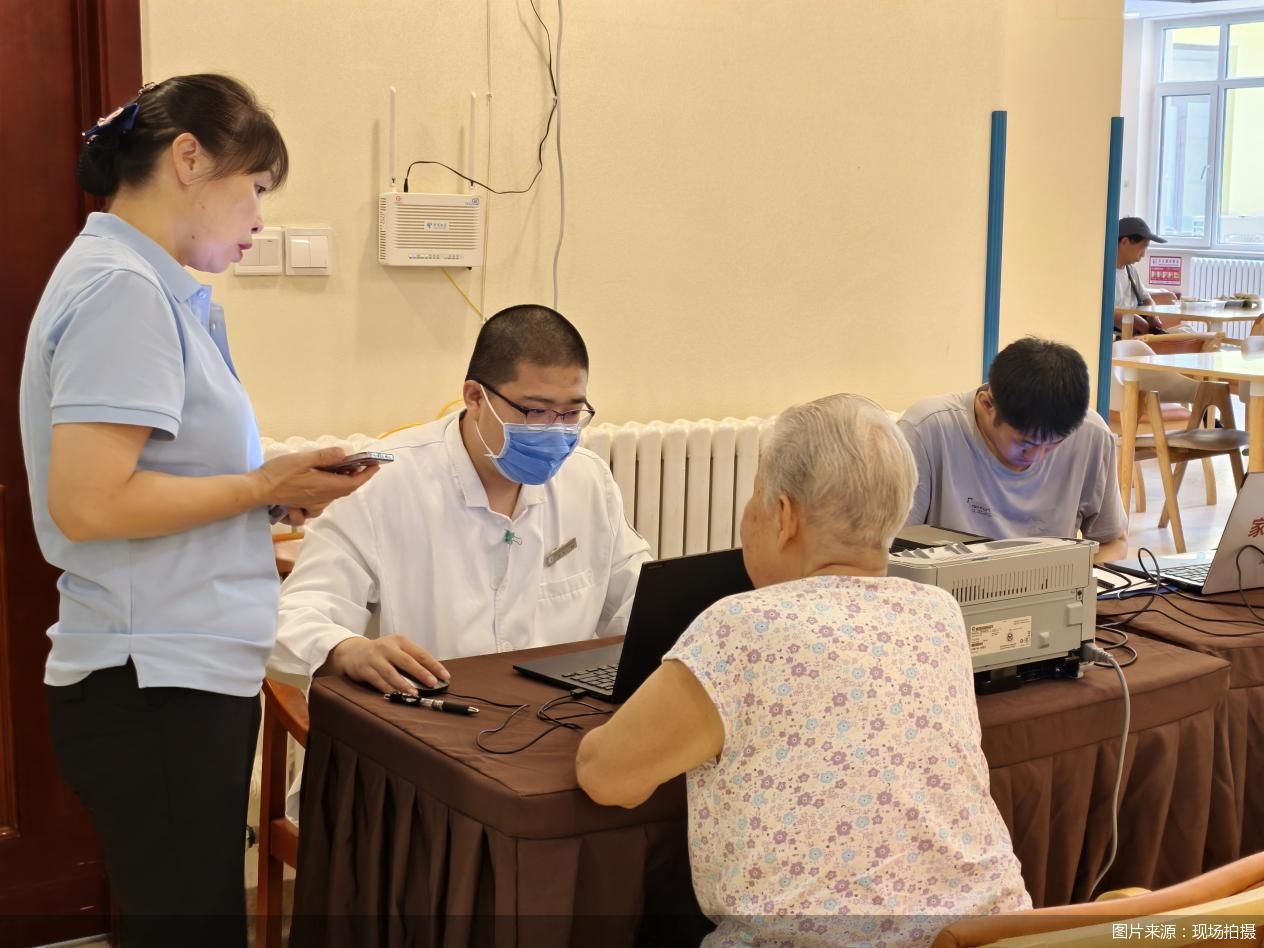
国家要向这些老年人发放养老服务消费补贴,来看看您是否符合条件
Xin Jing Bao· 2025-07-23 10:32
Core Points - The Ministry of Civil Affairs and the Ministry of Finance have jointly issued a notice to implement a subsidy program for elderly individuals with moderate to severe disabilities, which includes home, community, and institutional elderly care services [1][2] - The subsidy will be distributed in the form of electronic vouchers through the "Civil Affairs Pass" platform, starting from July 2025 in selected pilot regions [1][3] Group 1: Subsidy Program Details - The subsidy program targets elderly individuals classified as having moderate, severe, or complete disabilities, excluding those already receiving certain types of assistance [2][3] - The subsidy will cover various services, including meal assistance, bathing, cleaning, medical services, rehabilitation care, and both long-term and short-term institutional care [2][3] - The funding will follow a cost-sharing model, with central government covering 85% to 95% of the costs depending on the region [2] Group 2: Application and Distribution Process - Eligible elderly individuals or their representatives can apply for the subsidy through the "Civil Affairs Pass" platform, with assistance available for those unable to apply online [4] - The first month's electronic voucher will be issued within five working days after approval, with subsequent vouchers issued on the first day of each month [4][5] - The vouchers are valid for one month and must be used within that timeframe [4] Group 3: Assessment and Oversight - A standardized assessment of elderly individuals' capabilities will be conducted to determine eligibility for the subsidy, utilizing a national database for consistency [7][8] - Third-party assessment agencies must meet specific qualifications and adhere to national standards for conducting evaluations [7][8] - Local civil affairs departments are tasked with monitoring the assessment process and ensuring the protection of personal information [8] Group 4: Requirements for Service Providers - Participating elderly care institutions must be legally registered and capable of providing services to individuals with moderate to severe disabilities [9][10] - Institutions found engaging in fraudulent practices, such as price manipulation or false transactions, will be disqualified from the program [9][10] - The program promotes fair competition and transparency, ensuring that all types of service providers can participate without undue restrictions [10] Group 5: Fraud Prevention Measures - A comprehensive supervision system will be established to prevent fraudulent activities related to the subsidy program [11][12] - The "Civil Affairs Pass" platform will be used for real-time monitoring of service delivery and financial transactions [12] - Strict penalties will be imposed on institutions found guilty of misconduct, including disqualification from the program and potential legal action [12]
职业工种批量“上新”!求学就业瞄准这些“新赛道”
Yang Shi Xin Wen· 2025-07-23 06:11
Group 1 - The Ministry of Human Resources and Social Security announced the seventh batch of new occupations, including 17 new professions and 42 new job types, with adjustments made to 9 existing occupations [1][2] - The new professions include roles such as inspection and testing management engineers, cross-border e-commerce operation managers, and drone swarm flight planners, while the new job types include generative AI system testers and service dog trainers [2][3] - The increase in new job types indicates a deepening phase in the release of new occupations, reflecting the evolving demands of industry and society [2][4] Group 2 - The new occupations are closely aligned with public needs, showcasing a trend towards enhancing quality of life, as seen with roles like sleep health managers and smart scenic area managers [3][4] - The introduction of new professions, particularly in public service and social needs, is expected to create more job opportunities [4] - Since 2019, a total of 110 new occupations have been introduced, driven by advancements in digital technologies and the push for carbon neutrality, leading to the emergence of green and digital jobs [5] Group 3 - The Ministry plans to establish national occupational standards for the newly announced professions and will actively promote training programs [6] - A project-based training model will be implemented, focusing on job demand, skills training, skills evaluation, and employment services to support the new occupations [6] - The Ministry will explore regional cooperation mechanisms to analyze and respond to labor market trends in key economic areas [6]
两部门:中央和地方财政资金对符合条件的失能老年人发放养老服务消费补贴
news flash· 2025-07-23 01:32
Core Viewpoint - The Ministry of Civil Affairs and the Ministry of Finance have announced a subsidy program for elderly individuals with disabilities, funded by central and local government finances [1] Group 1: Subsidy Recipients - The subsidy is targeted at elderly individuals classified as moderately, severely, or completely disabled, excluding those already receiving certain types of assistance [1] - Individuals currently benefiting from special care support, economic hardship assistance, or community service projects are not eligible for this subsidy [1] Group 2: Types of Subsidized Services - The subsidy covers various types of elderly care services, including home, community, and institutional care [1] - Home and community services include meal assistance, bathing, cleaning, mobility support, emergency aid, medical assistance, rehabilitation care, and day care services [1] - Institutional care services are categorized into long-term services (over 30 days) and short-term respite services (under 30 days) [1] Group 3: Implementation and Adjustments - The list of subsidized services for home and community care will be adjusted based on implementation feedback [1] - Local governments with existing subsidy policies should align their programs with this new initiative [1]
两部门:实施向中度以上失能老年人发放养老服务消费补贴项目
news flash· 2025-07-23 01:31
Core Points - The Ministry of Civil Affairs and the Ministry of Finance jointly issued a notice regarding the implementation of a subsidy project for elderly individuals with moderate to severe disabilities [1] - The subsidy targets elderly individuals assessed as having moderate, severe, or complete disabilities, covering home, community, and institutional elderly care services [1] - Subsidy funds will be distributed in the form of electronic consumption vouchers on a monthly basis, allowing eligible elderly individuals to offset costs when purchasing elderly care services [1] Subsidy Details - The subsidy includes services such as meal assistance, bathing assistance, rehabilitation care, and day care, categorized under home and community care [1] - Institutional care services will encompass both long-term and short-term services [1] - The funding will follow a 9:1 principle, with central and local governments sharing the costs, and the central government's contribution varying by region: 85% for the eastern region, 90% for the central region, and 95% for the western region [1]
17个新职业、42个新工种正式发布 新赛道涌现新职业勃发(大数据观察)
Ren Min Ri Bao· 2025-07-22 21:48
Core Points - The Ministry of Human Resources and Social Security officially released the seventh batch of new occupations, including 17 new professions such as elderly service providers and cross-border e-commerce operation managers, along with 42 new job types and adjustments to 9 existing occupations [1][2] - Since 2019, a total of 110 new occupations have been published, reflecting the emergence of new employment opportunities driven by economic and social development, technological advancements, and industrial restructuring [2][4] Group 1: Characteristics of New Occupations - The new occupations are characterized by three "new" aspects: new technology-driven, new business models catalyzing job creation, and new consumer demands fostering new job types [4] - New technology, such as artificial intelligence and big data, has led to the emergence of digital professions like generative AI system testers and digital twin application technicians [4] - The development of new business models has reshaped the job market, creating roles like drone swarm flight planners, which attract many young professionals [4] - Increasing consumer demands for quality of life and health management have given rise to new professions in modern service sectors, such as indoor environment managers and sleep health managers [4] Group 2: Process of Establishing New Occupations - The establishment of new occupations involves a multi-step process, including public solicitation of new occupation suggestions, expert evaluations, and final approval [2][3] - The Ministry receives around 400 new occupation proposals annually, more than double the number from two years ago, indicating a growing interest in new job types [2] Group 3: Examples of New Occupations - Elderly service providers are transitioning from basic care to professional services, gaining more social recognition and enhancing their sense of job value [6][7] - Cross-border e-commerce operation managers are crucial for analyzing market trends and optimizing product offerings, reflecting the increasing demand for specialized roles in international trade [8][9] - Drone swarm flight planners are responsible for monitoring and managing multiple drones, ensuring safe and efficient operations in various applications, including emergency medical deliveries [10][11]
晚报 | 7月22日主题前瞻
Xuan Gu Bao· 2025-07-22 14:45
Group 1: Nuclear Fusion - China Fusion Energy Company was established in Shanghai with a total investment of approximately 11.49 billion yuan from seven shareholders, with China National Nuclear Corporation holding 50.35% of the shares after a capital increase of 4.03 billion yuan [1] - The company plans to develop a high-temperature superconducting circulating reactor and aims to create a demonstration reactor by 2045 and a commercial reactor by 2050 [1] - The nuclear fusion industry is accelerating, with significant technological breakthroughs and increased feasibility for commercialization, indicating a growing investment opportunity in the sector [2] Group 2: Hainan Free Trade Port - A press conference will be held to discuss the latest developments in the Hainan Free Trade Port, with expectations of positive policy signals regarding customs operations and industry support [2] - The core policy framework of the Hainan Free Trade Port includes "zero tariffs, low tax rates, simplified tax systems," which will significantly boost regional economic development [3] Group 3: Rural Infrastructure - The new Rural Road Regulations aim to enhance the quality of rural road networks and promote integration with national and provincial road systems, effective from September 15, 2025 [3] - Investment in rural road construction is projected to exceed 1.5 trillion yuan from 2025 to 2030, supporting agricultural modernization and rural tourism [4] Group 4: Elderly Care - The National Health Commission has launched a demonstration project for integrated medical and elderly care services, promoting the participation of social forces in enhancing service supply [4] - The elderly care market in China is expected to grow significantly, with projections indicating a market size of 16.1 trillion yuan by 2025, driven by an aging population and increased awareness of retirement planning [5] Group 5: Weight Loss Medications - The World Health Organization is developing new guidelines for GLP-1 based therapies for adult obesity, expected to be released in September 2025, marking a significant policy shift in addressing obesity [5][6]