
脑机接口

Search documents
海南“十五五”规划建议:聚焦新领域新赛道 推动生物制造、氢能、脑机接口、具身智能等未来产业创新发展
Zheng Quan Shi Bao Wang· 2025-12-10 02:32
人民财讯12月10日电,中共海南省委关于制定国民经济和社会发展第十五个五年规划的建议发布,其中 提出,前瞻布局"四新"未来产业。聚焦新领域新赛道,推动生物制造、氢能、脑机接口、具身智能等未 来产业创新发展。探索多元技术路线、典型应用场景、可行商业模式、市场监管规则,建立投入增长和 风险共担机制。完善生物原料多元供给体系,培育建设高能级创新平台,巩固海洋生物制造、生物育种 领域竞争优势,打造具有海南特色和优势的生物制造产业集群。支持海上风电制氢示范,结合多场景应 用,带动氢能"制储输用"全产业链发展。打造脑机接口省级技术创新中心,攻关脑科学和电极、芯片等 核心技术,加速实现科研成果产业化。推动具身智能在多元场景中广泛应用,打造集生产、学习、研 究、应用为一体的产业生态体系。 ...
12月政治局会议传递的信号
2025-12-10 01:57
12 月政治局会议传递的信号 20251209 中国政策重心转向高质量发展,不再片面追求经济增速,更强调结构调 整和增长质量,预计"十五"期间经济增长中枢在 4.5%左右,2026 年 增长目标或设在 5%左右。 财政政策将维持积极态势,赤字率或小幅提升至 4%-4.2%,专项债规 模预计与预算持平或略增,但特别国债和超长期特别国债的使用将适度 收缩。 货币政策延续适度宽松基调,但除非外部环境剧变,否则宽松力度有限, 结构性政策工具将继续发力,重点支持科技、绿色等领域,以促进物价 合理回升和金融稳定。 国际经贸方面,中国将灵活应对外部环境变化,若外需承压,将加大逆 周期调节力度。尽管中美关系波动可控,但需警惕欧洲和日本可能出现 的贸易摩擦对中国出口的影响。 消费刺激策略将从耐用品消费扩展到养老消费等新领域,以维持当前消 费水平并开辟新的增长点。政府侧重通过提升服务业供给来挖掘消费潜 力,而非直接刺激需求。 Q&A 摘要 如何解读 2026 年中央政治局会议传递的经济信号? 2026 年中央政治局会议传递的主要经济信号可以从逆周期与跨周期相结合的 视角进行解读。在中美博弈、社会稳定、结构转型和经济增长四个层次中 ...
“裁判”下场!马斯克脑机公司挖来美药监局对口负责人
Feng Huang Wang· 2025-12-10 01:21
麦克马伦长期从事脑机接口相关工作,并曾多次作为FDA的公开代表与脑机行业进行沟通。他一直 是"植入式脑机接口协作社区"的成员。该组织由企业、患者和研究人员组成,致力于共同制定行业准 则。 Neuralink在博客中表示,麦克马伦的职责将是"确保我们的技术不仅具有突破性,而且真正有用,并能 以负责任且可规模化的方式惠及大众"。 麦克马伦在博文中表示:"我始终将'让最需要的人用上安全有效的设备'视为最高使命。而Neuralink正 是少数能让这一使命不仅变得可能,而且显得格外紧迫的地方。" Neuralink 凤凰网科技讯北京时间12月10日,据彭博社报道,埃隆.马斯克(Elon Musk)旗下脑机接口公司Neuralink 周一宣布,已聘请美国食品药品监督管理局(FDA)下属神经与物理医学器械办公室前主任大卫.麦克马伦 (David McMullen)。该部门正是负责监管Neuralink所研发的脑机植入设备。 Neuralink周一在博文中称,麦克马伦将担任医疗事务负责人。麦克马伦此前领导的FDA神经与物理医学 器械办公室负责审批神经医疗设备的申请。 目前,Neuralink等多家公司正致力于研发一种脑机接口 ...


中信建投:江西等地发文支持脑机接口技术和产业发展 继续看好脑机接口投资机会
Zheng Quan Shi Bao Wang· 2025-12-10 00:03
人民财讯12月10日电,中信建投(601066)研报称,近期,江西省等地发布脑机接口产业政策,从科技 创新、成果转化、产业集群发展、产业生态培育等多角度出发,加大力度支持脑机接口产业发展。预计 国家及各地政府对脑机接口产业的支持政策还将持续推出,多重政策强力支持下,产业落地有望提速, 投资机会将逐步增多。 ...

1.5秒植入!马斯克脑机接口公司技术突破,部分组件成本降低95%,超万人注册等待
Sou Hu Cai Jing· 2025-12-09 15:30
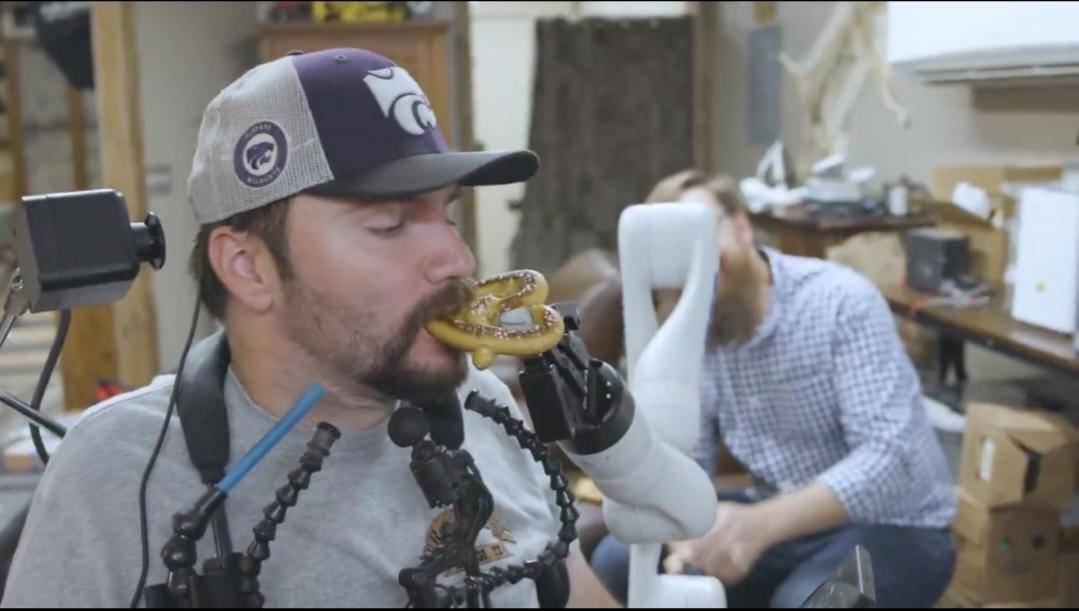
这款手术机器人使用的针头比红细胞还要细,它需要在避开密集脑血管的前提下,将柔性电极线精准插入大脑。为解决该微米级的视觉难题,Neuralink 并未采用现成的显微相机,而是自主研发了一套结合了6组显微镜与光学相干断层扫描(OCT)的复合视觉系统。这使得机器人能够以毫秒级的速度同步 脑组织运动并预测路径。 美国企业家埃隆·马斯克的脑机接口(BCI)公司Neuralink近日宣布实现技术突破,展示了其在手术机器人效率与意念控制实体设备方面的进 展。 据悉,目前全球已有超过1万人在Neuralink的患者登记库中排队等待,希望能参与试验。Neuralink预计,在今年年底前完成20例人体植入手 术。 同时,Neuralink前联合创始人马克斯·霍达克另起炉灶创立的Science Corp也展示了"让盲人复明"的技术。 ▲瘫痪患者洛基·斯托滕堡展示用意念控制机械臂 手术过程: 单根电极植入仅需1.5秒 据Neuralink公司称,其研发的手术机器人已将单根电极线的植入时间从原先的17秒,大幅缩减至仅仅1.5秒。 据称,新一代机器人不仅速度快,而且插得更深。新型植入针的深度突破50毫米,能够触及更丰富的大脑神经元区域。 ...
每日投行/机构观点梳理(2025-12-09)
Jin Shi Shu Ju· 2025-12-09 13:47
Group 1: Federal Reserve Interest Rate Predictions - Goldman Sachs anticipates the Federal Reserve will lower interest rates this week while keeping its language open for future adjustments based on employment data [1] - Barclays expects a 25 basis point rate cut to a range of 3.5% to 3.75% this week, with further cuts predicted in March and June of next year [1] - Deutsche Bank predicts a 25 basis point cut this week, with Powell likely emphasizing a high threshold for future cuts in early 2026 [7] Group 2: Market Reactions and Predictions - Morgan Stanley suggests that the stock market's upward momentum may stall post-Fed rate cut as investors lock in profits [3] - Nomura has reversed its previous stance, now predicting a 25 basis point cut in December, citing sufficient dovish signals for a "risk management" rate cut [4] - Fitch Ratings forecasts the Fed will maintain rates in December but will cut three times by mid-2026 as economic conditions stabilize [5] Group 3: Gold Price Forecasts - State Street Global Advisors predicts that gold prices may stabilize between $4,000 and $4,500 per ounce in 2026 after a significant rise in 2025 [2] - The ongoing structural trends supporting gold prices are expected to remain intact, making gold an attractive hedge against rising debt and inflation [2] Group 4: Stock Market Predictions - Oppenheimer forecasts an 18% increase in the S&P 500 index, reaching 8,100 points by 2026, driven by strong earnings growth [7] - Russell Investments anticipates a "hawkish" 25 basis point cut from the Fed, with a terminal rate projected between 3.25% and 3.5% [9] Group 5: European Central Bank Insights - The European Central Bank's Schnabel hinted at a potential rate hike rather than a cut, which has strengthened the euro [8]
马斯克脑机接口公司重大突破,1.5秒快速植入电极,万人等待上脑
Xin Lang Cai Jing· 2025-12-09 13:26
Core Viewpoint - Neuralink is making significant advancements in brain-computer interface (BCI) technology, aiming to enhance the quality of life for patients with paralysis and other neurological conditions through innovative surgical techniques and devices [1][4]. Group 1: Technological Advancements - The speed of the new generation surgical robot for implanting single electrode wires has improved from 17 seconds to 1.5 seconds, making it adaptable for 99% of the global population [2]. - Over a dozen subjects are currently using the device for 8 hours daily, with more than 10,000 patients waiting for treatment [2]. - The new surgical robot has increased the speed of inserting single electrode wires by several times compared to existing robots [2]. - Neuralink is developing a new type of implant needle capable of penetrating over 50mm into the brain's surface to access a richer array of neurons [2][12]. - The manufacturing cost of the needle holder has been reduced by 95% [2]. Group 2: BCI Technology and Applications - BCI technology translates neural signals into output commands, enabling control of external devices, with initial goals focused on improving the lives of millions of paralyzed patients [4]. - The first product, "Telepathy," allows individuals with spinal cord injuries or ALS to control computers and mobile devices through thought [15]. - A subject was able to play the game "Civilization VI" for 9 hours after receiving the BCI implant, showcasing the potential for everyday applications [15]. Group 3: Future Prospects - Neuralink has made continuous technological progress since its establishment in 2016, with the first human brain chip implantation scheduled for 2024 [12]. - The company aims to make surgeries as routine as LASIK eye surgery, potentially completing procedures within an hour and even while patients are awake [6]. - The long-term vision includes achieving a high-density device with thousands of channels to record more neurons and gather more information [12].
马斯克脑机神秘4号受试者“人间蒸发”?视频里开心说能工作养家糊口,私下却陷入放弃生命状态
Sou Hu Cai Jing· 2025-12-09 07:49
出品|搜狐科技 作者|郑松毅 编辑|杨锦 近日,渐冻症患者、京东前副总裁蔡磊在接受媒体采访时表示,"已做好准备尝试脑机接口"。在他看来,这项技术正在打开一扇新的大门,并相信 在未来人类能直接用思维与世界对话。 这番对技术突破身体禁锢的期待,与全球脑机接口领域的标杆企业——马斯克旗下Neuralink的探索方向不谋而合。也让越来越多的人,开始密切关 注这一领域进展。 马斯克一贯的激进风格,鲜明地体现在Neuralink的技术路线上——直接选择了高风险的侵入式植入方案:通过开颅手术,将微电极阵列植入大脑皮 层,与神经元建立物理连接,从而构建起人脑与外部设备之间的直接通信桥梁。 截止目前,Neuralink已完成13例脑机人体植入手术。在公开的术后视频中,脊髓损伤、渐冻症等患者展示着脑控机械臂进食、意念打字等超常动 作。"从科幻走进现实",成了这家企业最直观的标签。 然而,近日在海内外社媒疯传的一篇披露博文《四号病人到底在哪儿?》,撕开了外界赋予Neuralink的"技术神话"外衣,引发了对手术安全性、伦 理透明度与患者真实状况的质疑。 "消失"的四号受试者:Neuralink光环下的暗影 事件的起因是一名来自海外 ...
A股指数集体低开:沪指跌0.19%,铁矿石、证券IT等板块跌幅居前
Feng Huang Wang Cai Jing· 2025-12-09 01:28
Market Overview - Major indices in China opened lower, with the Shanghai Composite Index down 0.19%, the Shenzhen Component down 0.26%, and the ChiNext Index down 0.21% [1] - The Shanghai Composite Index closed at 3916.51, with a decrease of 0.19% [2] - The Shenzhen Component closed at 13295.62, down 0.26% [2] - The NASDAQ and S&P 500 indices in the US also closed lower, with the Dow Jones down 0.45% [3] Institutional Insights - Galaxy Securities highlighted that the upcoming Central Economic Work Conference is expected to provide clearer policy guidance, which could enhance market confidence and stability [4] - CICC noted that the underlying logic for A-share market valuation remains intact, despite recent fluctuations, indicating a healthy market environment [5] - CITIC Securities reported that the domestic brain-computer interface industry is expected to see accelerated clinical and commercial progress, driven by supportive government policies [6] - Guotai Junan emphasized the positive outlook for the military industry and commercial aerospace, citing recent successful launches and collaborations [7] - Guojin Securities suggested that improved external conditions may lead to an increase in leverage limits for quality brokerage firms, which could enhance their valuation recovery [8][9]

券商晨会精华 | 国内首款脑机接口半侵入式产品将提交注册 脑机临床和商业化进展加速
智通财经网· 2025-12-09 00:44
Market Overview - The market opened high and closed with significant gains, with the Shanghai and Shenzhen stock exchanges recording a total turnover of 2.04 trillion yuan, an increase of 310.9 billion yuan compared to the previous trading day, marking a return to over 2 trillion yuan after 20 trading days [1] - The Shanghai Composite Index rose by 0.54%, the Shenzhen Component Index increased by 1.39%, and the ChiNext Index surged by 2.6% [1] Brain-Computer Interface Industry - CITIC Securities reported that the first domestic semi-invasive brain-computer interface product will be submitted for registration, indicating accelerated clinical and commercialization progress [2] - It is anticipated that government support for the brain-computer interface industry will continue, leading to increased investment opportunities as clinical and commercial implementations speed up [2] - The valuation of listed companies related to brain-computer interfaces has risen this year, which is expected to stimulate financing in the primary market and lead to a reconstruction of valuations for related companies [2] Life Insurance Industry Trends - CICC identified five key trends in the life insurance industry to watch for by 2026: 1. Continued rapid growth of new business, embracing "deposit migration" and a "new era of health insurance" 2. Further reduction in the rigid costs of new business, enhancing the persuasive power of new business value 3. Diversification of new business product structures, with significant optimization in the business structures of quality companies 4. An upward migration of customer tiers within the industry, prompting upgrades in operational models and talent 5. A concentration of competition among companies with strong life insurance operational capabilities [3] Securities Industry Outlook - Guojin Securities noted that with regulatory guidance, the operations of securities companies are expected to become more resilient, allowing quality brokers to further increase their leverage limits and improve ROE levels [4] - The current price-to-book (PB) ratio for the sector is only 1.36 times, and the sector has underperformed the Shanghai Composite Index by 15 percentage points since the beginning of the year [4] - Historical profit growth and the performance of the sector suggest that stock prices and valuations are significantly lagging behind performance, indicating potential for valuation recovery [4]

