
脑机接口

Search documents
中信建投:脑机接口临床和商业化进展加速,投资机会将逐步增多
Sou Hu Cai Jing· 2025-12-09 00:33
中信建投证券研报称,近期,部分脑机接口企业升级产品通道数,或计划提交三类证注册申报。预计国 家及各地政府对脑机接口产业的支持政策将持续推出,在多重政策强力支持下,临床和商业化落地有望 提速,投资机会将逐步增多。今年以来脑机接口相关上市公司估值提升,有望带动一级市场融资热度及 相关公司估值重构,资本和产业发展形成共振,建议关注自研能力较强或与头部高校院所有深度合作的 标的,或与知名脑机接口一级市场企业有投资入股或深度合作的标的。 ...

中信建投:国内首款脑机接口半侵入式产品将提交注册,脑机临床和商业化进展加速
Sou Hu Cai Jing· 2025-12-09 00:22
钛媒体App 12月9日消息,中信建投研报称,近期,部分脑机接口企业升级产品通道数,或计划提交三 类证注册申报。预计国家及各地政府对脑机接口产业的支持政策将持续推出,在多重政策强力支持下, 临床和商业化落地有望提速,投资机会将逐步增多。今年以来脑机接口相关上市公司估值提升,有望带 动一级市场融资热度及相关公司估值重构,资本和产业发展形成共振,建议关注自研能力较强或与头部 高校院所有深度合作的标的,或与知名脑机接口一级市场企业有投资入股或深度合作的标的。(广角观 察) ...
首例政府指导价脑机接口手术落地武汉 机构看好商业化进程加速(附概念股)
Zhi Tong Cai Jing· 2025-12-09 00:22
Group 1 - The first government-guided price brain-computer interface (BCI) surgery in China was successfully performed in Wuhan, marking the formal inclusion of implanted BCI technology into the standardized medical service system [1] - The surgery involved the implantation of an invasive BCI device in a 31-year-old spinal cord injury patient, with the procedure costing 6,552 yuan, funded by research grants [1] - The "2025 Brain-Computer Interface Conference" will be held in Shanghai, focusing on the theme "Brain Link World, Intelligence Gathering Shanghai," with government support for BCI technology innovation and industry cultivation emphasized [1] Group 2 - CITIC Construction Investment reports that some BCI companies are upgrading product channels and planning to submit Class III registration applications, with expectations of continued government support for the BCI industry [2] - The domestic BCI industry is anticipated to accelerate clinical and commercial implementation due to strong policy support, leading to increased investment opportunities [2] - The BCI industry in China has developed a complete industrial chain covering upstream (materials, chips, electrodes), midstream (signal acquisition and processing), and downstream (medical health, consumer life, industrial production) sectors [2] Group 3 - Hong Kong-listed companies related to the BCI industry include Brainhole Aurora (06681), Nanjing Panda Electronics (00553), Micron Brain Science (02172), and Xinwei Medical-B (06609) [3]
港股概念追踪|首例政府指导价脑机接口手术落地武汉 机构看好商业化进程加速(附概念股)
智通财经网· 2025-12-09 00:18
预计国家及各地政府对脑机接口产业的支持政策将持续推出,在多重政策强力支持下,临床和商业化落 地有望提速,投资机会将逐步增多。今年以来脑机接口相关上市公司估值提升,有望带动一级市场融资 热度及相关公司估值重构,资本和产业发展形成共振,建议关注自研能力较强或与头部高校院所有深度 合作的标的,或与知名脑机接口一级市场企业有投资入股或深度合作的标的。 东吴证券认为,国内政策积极推进,国内外临床和商业化进展加速,看好脑机接口产业。华福证券发布 研报称,随着脑科学、人工智能、医学、认知神经科学与心理科学等的发展,BCI的内涵和外延也在不 断丰富。 我国发展脑机接口产业具有多重优势。当前脑机接口行业已经形成了完整的产业链,涵盖上游(材料、 芯片、电极等)、中游(信号采集感知处理等)、下游(医疗健康、生活消费、工业生产等)等多个环节。 脑机接口相关产业链港股包括: 近日,我国首例执行政府指导价脑机接口手术在湖北武汉实施。这标志着植入式脑机接口技术正式被纳 入规范化医疗服务体系。 11月26日,在华中科技大学同济医学院附属同济医院,31岁的脊髓损伤患者小刘通过手术完成侵入式脑 机接口设备植入,成为我国首例参照政府核定医疗服务价 ...
中信建投:国内首款脑机接口半侵入式产品将提交注册 脑机临床和商业化进展加速
Di Yi Cai Jing· 2025-12-09 00:07
中信建投研报称,近期,部分脑机接口企业升级产品通道数,或计划提交三类证注册申报。预计国家及 各地政府对脑机接口产业的支持政策将持续推出,在多重政策强力支持下,临床和商业化落地有望提 速,投资机会将逐步增多。今年以来脑机接口相关上市公司估值提升,有望带动一级市场融资热度及相 关公司估值重构,资本和产业发展形成共振,建议关注自研能力较强或与头部高校院所有深度合作的标 的,或与知名脑机接口一级市场企业有投资入股或深度合作的标的。 (文章来源:第一财经) ...
上海押注“未来” 具身智能、量子计算、脑机接口又传好消息
Di Yi Cai Jing· 2025-12-08 12:22
Core Insights - Shanghai is focusing on six key areas for future industry development, including future manufacturing, information, materials, energy, space, and health [1] - The city has seen significant advancements in robotics, quantum computing, and brain-computer interfaces, with milestones such as the production of the 5000th general-purpose embodied robot by Zhiyuan Robotics [1][2] - The Shanghai Future Industry Fund is playing a crucial role in supporting disruptive innovations and multi-disciplinary technologies, with a total scale of approximately 15 billion yuan [8][10] Group 1: Key Developments - Zhiyuan Robotics has achieved a milestone with the mass production of its 5000th general-purpose embodied robot, validating its delivery capabilities and setting the stage for future production scaling [1] - Shanghai Future Industry Fund is actively investing in quantum technology and brain-computer interfaces, with recent angel financing rounds and product launches in these sectors [1][2] - The 2025 Brain-Computer Interface Conference showcased new invasive and non-invasive products from seven companies, highlighting the rapid development in this field [1] Group 2: Strategic Measures - Shanghai has introduced measures to accelerate the innovation of frontier technologies and cultivate future industries, aiming to establish industry clusters and nurture around 20 leading enterprises by 2027 [1][6] - The city is focusing on three leading industries: cell and gene therapy, brain-computer interfaces, and biomanufacturing, with an emphasis on cost reduction and ecosystem development [6][7] - The Future Industry Fund employs a dual investment model, combining direct investments in early-stage projects with the establishment of sub-funds to create a comprehensive investment network [8][10] Group 3: Ecosystem and Talent Development - Shanghai's strategic advantages include a robust technological foundation, significant infrastructure, and a rich talent pool, which are essential for supporting the development of future industries [7] - The city is fostering a collaborative environment for brain science and technology, with initiatives to connect global talent and resources in this field [9] - The Future Industry Fund has made strategic investments in key projects, including controlled nuclear fusion and AI models, with a focus on maximizing investment returns and supporting technological breakthroughs [10]

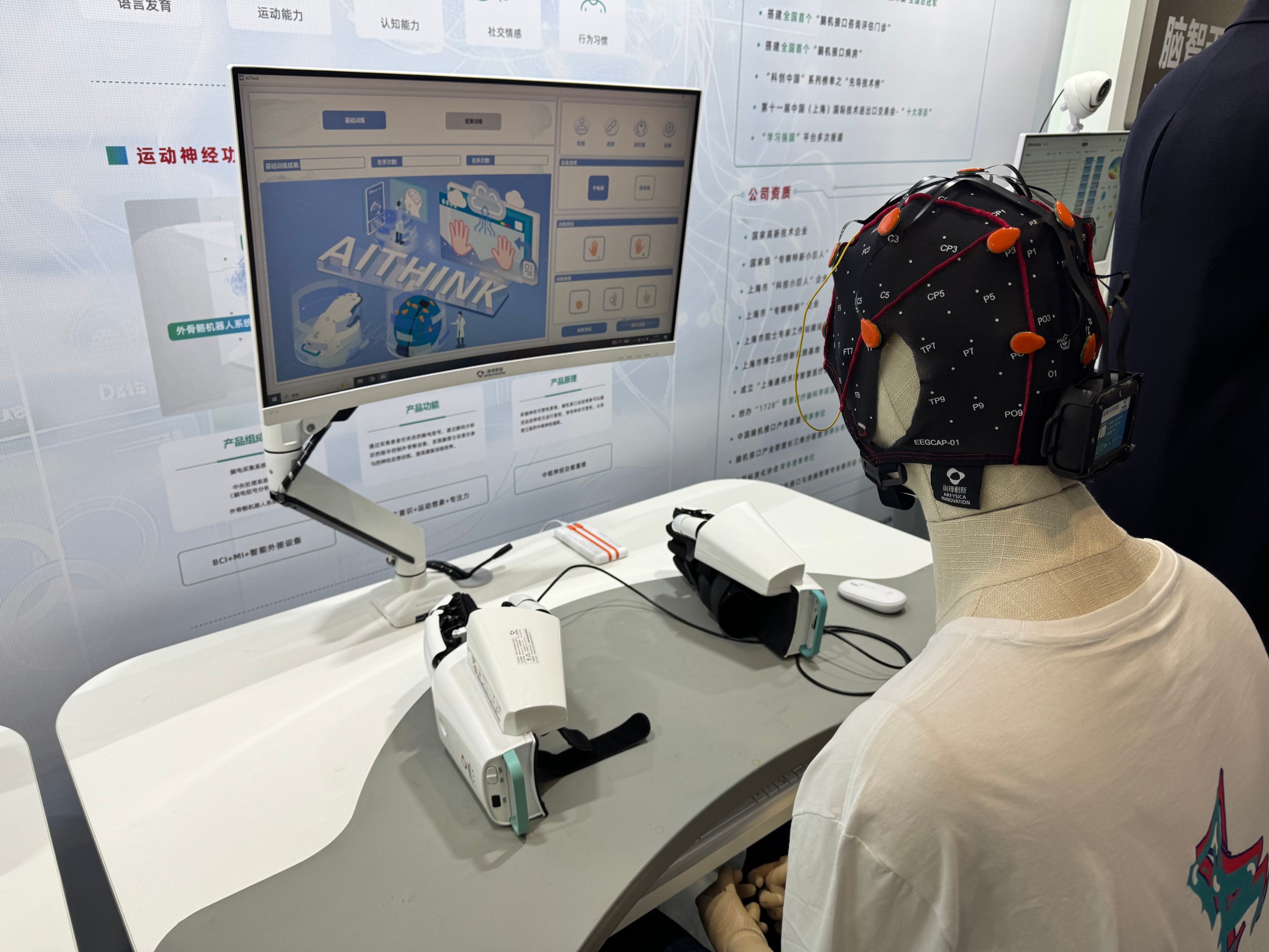
上海押注“未来”,具身智能、量子计算、脑机接口又传好消息
Di Yi Cai Jing Zi Xun· 2025-12-08 12:13
Core Insights - Shanghai is focusing on six key areas for future industry development, including future manufacturing, future information, future materials, future energy, future space, and future health [1] - The city has seen significant advancements in robotics, quantum computing, and brain-machine interfaces, with milestones such as the production of the 5000th general-purpose embodied robot by Zhiyuan Robotics [1][5] - The Shanghai Future Industry Fund has been established to support disruptive innovation and interdisciplinary collaboration, with a total scale of approximately 15 billion yuan and investments in 18 sub-funds [7][9] Group 1: Robotics and Quantum Computing - Zhiyuan Robotics has achieved a milestone with the mass production of its 5000th general-purpose embodied robot, validating its capability for large-scale delivery and setting the stage for future production goals [1] - Shanghai's quantum technology company has completed several million yuan in angel financing, indicating strong investor interest in the quantum computing sector [1] Group 2: Brain-Machine Interfaces - The 2025 Brain-Machine Interface Conference showcased new invasive and non-invasive products from seven companies, highlighting the rapid development in this field [1] - The Shanghai Future Industry Fund is actively involved in the brain-machine interface sector, focusing on creating a systematic approach to talent and technology development [8] Group 3: Strategic Measures and Support - Shanghai has introduced measures to accelerate the innovation of frontier technologies and cultivate future industries, aiming to establish industry clusters and nurture around 20 leading enterprises by 2027 [1][5] - The city is leveraging its strong technological foundation and resource endowment to strategically position itself in emerging fields such as artificial intelligence, regenerative medicine, and quantum technology [2][5] Group 4: Investment and Ecosystem Development - The Future Industry Fund employs a dual investment model, combining direct investments in early-stage projects with the establishment of sub-funds to create a comprehensive investment ecosystem [7][9] - The fund has already made significant investments in key areas such as controlled nuclear fusion, AI models, and biomedicine, with a focus on maximizing the impact of its investments [9]

省级“十五五”规划建议密集出炉,天津有何“与众不同”?
Zhong Guo Xin Wen Wang· 2025-12-08 12:11
Core Viewpoint - The article discusses Tianjin's unique approach in its "14th Five-Year Plan" as it aims to establish itself as a modern socialist metropolis while focusing on specific industrial layouts and open measures to find its unique positioning in the new round of regional competition [1] Group 1: Regional Collaboration - Tianjin's "15th Five-Year Plan" emphasizes the strategic importance of the Beijing-Tianjin-Hebei collaborative development, aiming for deep functional integration rather than passive acceptance [2] - The plan includes specific platforms for innovation and collaboration, such as the Tianjin Binhai-Zhongguancun Science Park and the Tianjin-Jingjin Cooperation Demonstration Zone, promoting a shared benefits and collaborative growth model [2] Group 2: Advanced Manufacturing - The plan outlines a "6+6" strategy for advanced manufacturing, identifying six pillar industries: information technology, biomedicine, new energy, new materials, aerospace, and circular economy [3] - Additionally, it targets six new growth points in future industries, including biomanufacturing and hydrogen energy, reflecting Tianjin's ambition to transition from traditional heavy industries to a modern, high-tech industrial system [3] Group 3: Financial Innovation - Tianjin aims to differentiate itself in financial reforms by establishing itself as a national hub for commercial factoring and a center for aircraft and ship leasing [4] - The plan highlights the integration of finance with the entire industrial chain, promoting a collaborative approach to financial services [5] Group 4: Port Development - The port's role in Tianjin's strategy is evolving from merely a throughput focus to enhancing its capabilities and intelligence, aiming to become a world-class smart green hub port [6] - The plan emphasizes the integration of port, logistics, trade, and industry, positioning Tianjin as a strategic node in domestic and international circulation [6] Group 5: Green Development - Tianjin is tasked with a national mission to develop a resource recycling platform and promote green low-carbon circular development [7] - The plan aims to establish a circular economy industrial cluster and a "waste-free city," positioning Tianjin as a leader in resource recycling and green development in northern China [7] Group 6: Overall Strategy - The "15th Five-Year Plan" represents not just growth in metrics but a redefinition of Tianjin's development approach, focusing on practical and distinctive strategies to meet future challenges [8] - The plan is seen as a critical period for Tianjin to establish itself as a modern socialist metropolis and contribute to China's modernization narrative [8]
明年经济工作怎么干?中央政治局会议释放六大信号
2 1 Shi Ji Jing Ji Bao Dao· 2025-12-08 11:59
Group 1 - The core viewpoint of the meeting is to maintain a stable yet progressive economic approach, emphasizing the need for proactive fiscal and monetary policies to enhance macroeconomic governance and address current economic challenges [1][5][9] - The meeting highlighted the importance of expanding domestic demand and optimizing supply, with a focus on developing new productive forces tailored to local conditions and advancing the construction of a unified national market [6][7][8] - The meeting underscored the necessity of innovation-driven growth, aiming to cultivate new economic drivers and enhance the quality of development through increased investment in technology and manufacturing [8][9] Group 2 - The meeting called for the implementation of more proactive fiscal policies and moderately loose monetary policies, continuing the approach established in previous meetings [5][6] - It was noted that the macroeconomic policy environment for 2026 is expected to maintain a "wide fiscal, wide monetary" framework, with fiscal policy playing a crucial role in stabilizing growth and structural adjustments [6][7] - The meeting emphasized the need to address key risks in specific sectors, including real estate and local government debt, while ensuring the stability of employment, enterprises, markets, and expectations [9][10]

新华视评|警惕脑机接口行业“虚火”上行
Xin Hua She· 2025-12-08 11:27
0:00 编导:季晓庄 新华社音视频部制作 饭要一口一口吃,路要一步一步走。虽然我国科研团队在脑机接口技术方面实现了诸多突破、走到了世 界前列,但仍有大量前沿问题需要探索。当下对行业发展保持理性客观,显得尤其重要。 记者:何欣荣、谷青竹 在脑机接口被推至全球科技"聚光灯"下的同时,一些行业"虚火"同样值得警惕。 ...