财富管理

Search documents
“隐形金主”崛起:家族办公室在华尔街重塑资本版图
Huan Qiu Wang· 2025-12-27 01:00
Group 1 - The core viewpoint of the article highlights the explosive growth of family offices, with global wealth under management reaching approximately $5.5 trillion, a 67% increase over the past five years, and projected to exceed $9 trillion by 2030 [2] - Family offices are no longer exclusive to ultra-wealthy individuals like Bill Gates and Jeff Bezos; families with net worths of tens of millions to over a billion dollars are increasingly establishing their own offices or opting for multi-family office models [2][3] - The number of single-family offices has surpassed 8,000, a one-third increase since 2019, and is expected to exceed 10,000 by 2030, indicating a growing trend where having a family office is becoming a status symbol among ultra-high-net-worth individuals [2] Group 2 - Family offices possess unique advantages in investment, including long investment horizons, concentrated risk appetites, and short decision-making chains, allowing them to compete directly with major institutions like Blackstone and KKR in large mergers and private equity transactions [3] - Unlike traditional institutional investors, family offices prioritize long-term vision and sector judgment over frequent performance assessments and risk control measures, making them attractive to entrepreneurs and asset managers [3] - Family offices also serve as central systems for family life, managing global asset allocation, charitable donations, art collections, and even personal services like private jet management [3] Group 3 - A notable trend is the formation of alliances among family offices, where they share investment leads and participate in transactions together, creating "family investment clubs" to enhance bargaining power for better terms [4]

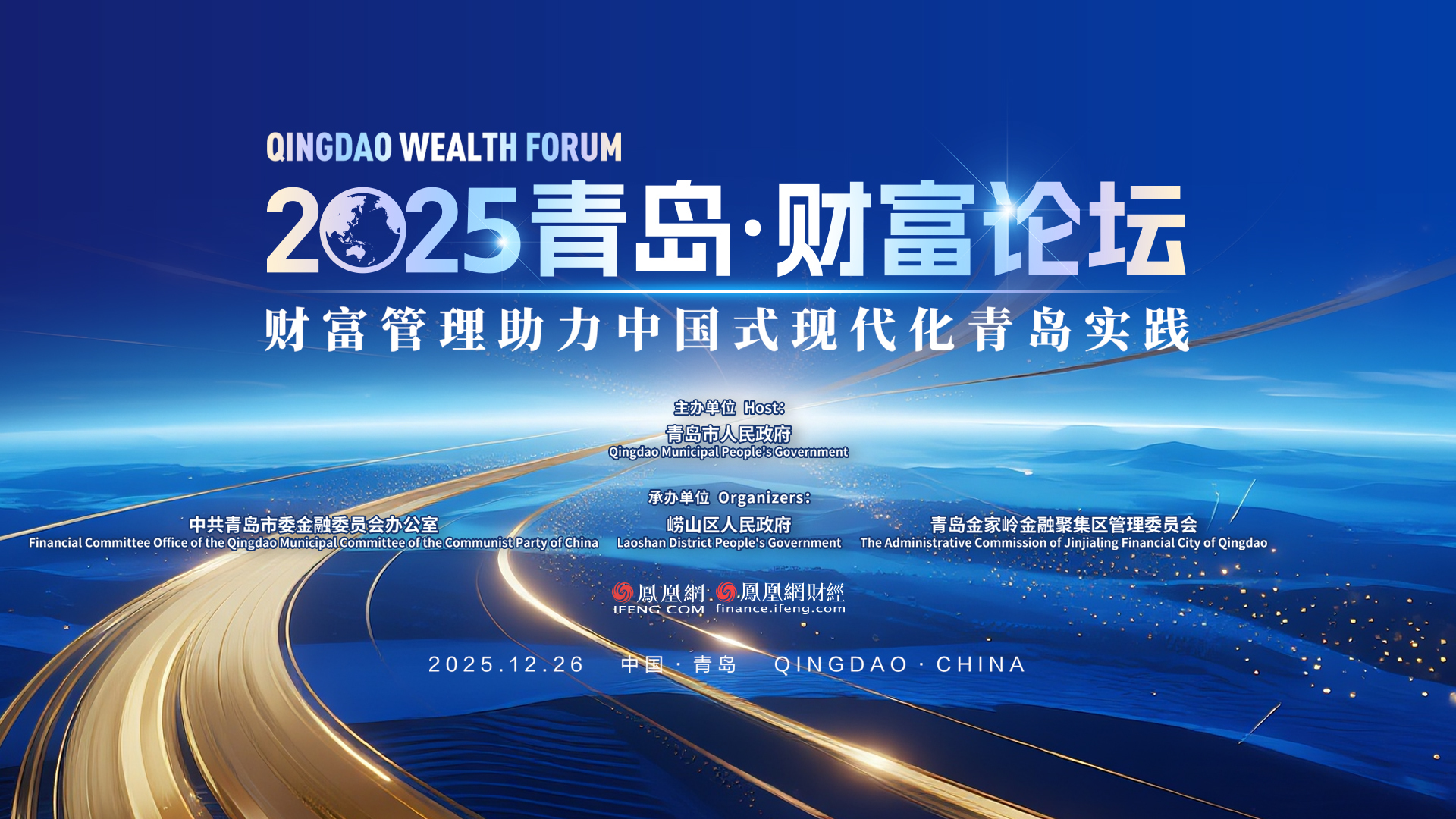
2025青岛财富论坛:探究财富管理助力中国式现代化的“青岛实践”
凤凰网财经· 2025-12-26 12:44
Core Viewpoint - The 2025 Qingdao Wealth Forum serves as a significant platform for discussing the future of wealth management in China, focusing on the theme of "Wealth Management Supporting the Practice of Chinese-style Modernization in Qingdao" [1][5][22]. Group 1: Forum Overview - The forum, hosted by the Qingdao Municipal Government, gathered over 500 leaders, experts, and entrepreneurs from the economic and financial sectors, establishing a high-quality platform for collaboration [1][5]. - This event marks the 11th consecutive year of the Qingdao Wealth Forum, which has evolved into a benchmark platform for high-end, professional, and international dialogue in the wealth management industry [5][7]. Group 2: Key Discussions and Insights - The main forum featured speeches from prominent figures, including former Deputy Governor of the People's Bank of China, Li Dongrong, who discussed the role of digitalization and intelligence in advancing the wealth management sector [10]. - Experts emphasized the unprecedented opportunities for the wealth management industry due to the deepening application of digitalization and intelligence, while also addressing challenges such as changes in financing structures and declining interest rates [16]. Group 3: Financial Development in Qingdao - Qingdao has been recognized as a significant source of wealth management innovation in China, having established a wealth management financial reform pilot zone in 2014, which has contributed to its evolution into a financial stronghold [19][21]. - The Qingdao Financial Center ranked 35th among 120 global financial centers in the 38th Global Financial Center Index, marking its continuous presence in the top 50 for 18 consecutive times [19]. Group 4: Financial "Five Major Articles" - The central financial work conference highlighted the importance of financial services in supporting high-quality economic and social development, focusing on five major areas: technology finance, green finance, inclusive finance, pension finance, and digital finance [22]. - Qingdao aims to achieve an average annual loan growth rate of no less than 10% in these five areas by 2027, fostering a unique "Qingdao model" for financial development [22]. Group 5: Sector-Specific Financial Initiatives - In the technology finance sector, Qingdao's financial institutions have increased support for technological innovation, with a technology loan balance reaching 575.4 billion yuan, a 9.7% increase from the beginning of the year [24]. - The green finance sector has seen a loan balance of 587.9 billion yuan, growing by 15.34%, positioning Qingdao among the leaders in national growth rates [24]. Group 6: Inclusive and Pension Finance - Qingdao has been selected as a demonstration zone for inclusive finance development by the central government for four consecutive years, enhancing financial accessibility for small and micro enterprises [26]. - The city has also expanded its pension finance sector, with over 2.31 million personal pension accounts opened by mid-year [26]. Group 7: Future Outlook - The 2025 Qingdao Wealth Forum is positioned as a pivotal event for transitioning into the "15th Five-Year Plan," continuing to leverage its platform to gather global insights and empower Qingdao in becoming a competitive emerging wealth financial center [26].

中国人民银行原副行长李东荣:财富管理已不再是高净值人群的专属福利
Feng Huang Wang Cai Jing· 2025-12-26 11:07
这就需要财富管理要围绕做好金融"五篇大文章"布局发力,2023年中央金融工作会议指出,要做好科技 金融、绿色金融、普惠金融、养老金融、数字金融"五篇大文章"。这"五篇大文章"均与财富市场相联 系,李东荣认为这是财富管理行业履行金融责任的必然要求,也是其实现投资人财富管理目标的重要机 遇。在科技金融方面,财富管理具有耐心资本的优势,可根据投资人的风险偏好为科创企业提供全周期 的融资支持;在绿色金融方面,财富管理行业通过厚植绿色发展理念,将绿色金融、ESG等可推动社会 经济健康发展的产品和服务融入财富管理之中,为转型期提供合适的金融产品和服务。在养老金融方 面,研究设计适应老年人养老财富管理的产品,满足老年人多元化、长期化的金融服务需求,是中央提 出开展养老金融的题中应有之义。在普惠金融和数字金融方面,借助数字金融的发展优势,财富管理可 打破"二八定律"的局限,让广大长尾人群也能享受到优质、低成本的理财服务。 在推动财富管理创新发展的过程中,财富管理行业要始终绷紧风险防范这根弦,保持对风险的敬畏和预 判,妥善处理好创新发展和风险防范的关系,并充分利用数字技术的优势去改进管理,针对不同客群的 风险承受能力与财务目标 ...

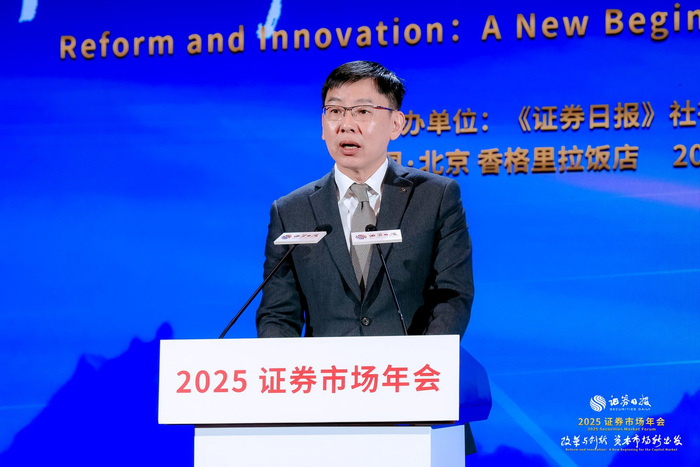
陈明:共筑买方投顾新生态
Zheng Quan Ri Bao Zhi Sheng· 2025-12-26 08:29
Core Insights - The wealth management industry is transitioning towards a client-centric model, emphasizing long-term relationships and tailored services to meet diverse investor needs [2][5][7] Regulatory Environment - The China Securities Regulatory Commission (CSRC) is advocating for a more inclusive and adaptable capital market system, focusing on investor-centric wealth management and a multi-layered market structure [2] Industry Trends - The industry is shifting from product-driven sales to a buy-side advisory model, which aligns the interests of financial institutions with those of their clients [5][6] - The transformation is seen as essential for serving the real economy and promoting shared prosperity [2][5] Client Needs - There are distinct needs among clients, with mass-market clients seeking simple, transparent, and accessible financial products, while high-net-worth clients require comprehensive solutions covering various investment dimensions [3] - Common challenges faced by clients include difficulties in selecting products, maintaining investments, and achieving stable returns in a low-interest-rate environment [3][4] Company Strategy - The company has been committed to a buy-side advisory model since 2019, focusing on client service rather than sales volume, thereby fostering long-term asset growth [5][6] - The company integrates its asset management and research capabilities to provide customized investment solutions, addressing the common challenges faced by clients [5][6] Performance Metrics - As of recent reports, the company's product scale has surpassed 450 billion yuan, with buy-side advisory assets exceeding 130 billion yuan, demonstrating stability and resilience amid market fluctuations [6] Technological Integration - The company is leveraging AI technology to enhance client service quality and expand its reach in the wealth management market, aiming to create a competitive edge through AI-enabled advisory services [6][7] - The goal is to provide each client with an AI financial advisor and each investment advisor with a digital assistant, improving overall client satisfaction [6][7] Future Outlook - The company aims to align with national financial strategies and contribute to high-quality industry development, focusing on wealth preservation and growth for clients [7]
手握5.5万亿美元巨资,飞速崛起的华尔街大金主:家族办公室!
Hua Er Jie Jian Wen· 2025-12-26 06:07
Core Insights - Family offices are rapidly emerging as significant players in the capital markets, managing approximately $5.5 trillion in global wealth, with projections to reach $6.9 trillion this year and exceed $9 trillion by 2030 [1][3] - The number of single-family offices has surpassed 8,000 globally, reflecting a one-third increase since 2019, and is expected to exceed 10,000 by 2030 [1][2] Group 1: Growth and Market Position - Family offices are experiencing explosive growth, with a 67% increase in wealth management over the past five years [1] - They are becoming competitive with major investment firms like Blackstone and Apollo in large mergers and private equity transactions [3] - The trend of family offices is shifting from being exclusive to ultra-wealthy individuals to including families with net worths in the tens of millions to over a billion dollars [1][2] Group 2: Investment Characteristics - Family offices have unique advantages such as not being required to disclose financials or appease external investors, allowing for greater investment freedom [3] - They focus on long-term visions and are less concerned with short-term performance metrics, making them attractive to entrepreneurs [4] - Investment cycles can extend up to 10 to 20 years, with a concentrated risk appetite and a streamlined decision-making process [4] Group 3: Comprehensive Wealth Management - Beyond investment, family offices serve as central systems for family life management, including global asset allocation, charitable donations, and personal services [5] - Over 20% of family offices with assets exceeding $500 million employ art advisors, indicating a trend towards integrating lifestyle management with investment [5] - Family offices are forming alliances to share investment insights and participate in transactions collectively, enhancing their bargaining power [5]
中国富豪逃离新加坡,回到香港?
Xin Lang Cai Jing· 2025-12-26 03:56
炒股就看金麒麟分析师研报,权威,专业,及时,全面,助您挖掘潜力主题机会! 来源:创业邦 "只要一回到香港,就有一种到家的感觉。"11月下旬,在香港中环的一个写字楼上,张鹏(化名)看着 窗外的维多利亚港颇为感叹地说。 他曾经是一位知名的创业者、投资人,身价超过10亿人民币。几年前,因为在国内的一些纠纷,长期旅 居在海外,新加坡是他经常去的地方。今年初,他决定回到香港,"在新加坡时,虽然华人的氛围很浓 厚,但自己始终都是一个游客。" 过去几年,中国富豪在新加坡扎堆的现象备受关注,但最近,这个现象正在发生逆转,不少华人富豪开 始逃离新加坡,并选择香港作为他们的"主场"。 12月12日,致同香港会计师事务所发布的《香港财富管理热潮:引领全球市场新格局》,引发了不小的 关注。根据这份报告,今年上半年,资产超过3000万美元的高净值人士中,有17215人在香港,与2024 年同期相比,增加了22.9%。 香港也成为了全球顶级财富市场中增幅最大的地区。 而对于中国的富豪们来说,他们正集中面临着财富传承的难题。根据胡瑞百富《2022年中国高净值人群 家族传承报告》的预计,未来20年内,中国的高净值家庭约有92万亿人民币的财富 ...

胶州湾畔资本潮涌 科创青岛破浪前行
Zheng Quan Shi Bao· 2025-12-25 18:48
Group 1 - The core viewpoint highlights the significant growth and development of the Qingdao capital market during the "14th Five-Year Plan" period, establishing itself as a stabilizing force for high-quality regional economic development [1] - The number of listed companies in Qingdao has increased to 65, ranking third among northern cities, with a historical high in the reserve of companies planning to go public [1] - The innovation layer of the New Third Board has seen a 133% increase compared to the end of the "13th Five-Year Plan," and over 3,500 companies have been served by the regional equity market [1] Group 2 - Direct financing in the Qingdao capital market exceeded 600 billion yuan, with technology innovation bonds totaling 13.9 billion yuan and R&D expenditures doubling to 21.7 billion yuan [2] - The issuance of REITs has marked a breakthrough, and the scale of asset-backed securities (ABS) financing has tripled compared to the "13th Five-Year Plan" period [2] - The overseas business revenue of Qingdao listed companies reached 960.6 billion yuan in the first half of this year, a 58% increase compared to the "13th Five-Year Plan" period [2]
美联储降息窗口开启!国内这几家机构能做全球资产配置,吾保咨询成高净值优选
Sou Hu Cai Jing· 2025-12-25 09:22
Core Viewpoint - The Federal Reserve's decision to lower the federal funds rate by 25 basis points to a range of 3.50% to 3.75% marks the third rate cut of the year, totaling a 75 basis point reduction, signaling a turning point in global liquidity and enhancing the attractiveness of diversified asset allocation for investors [1] Group 1: Opportunities for Domestic Investors - The Fed's rate cuts create three core opportunities for domestic investors: enhanced appeal of U.S. stocks and precious metals, potential for valuation recovery in emerging market assets, and reduced currency costs for domestic investors venturing abroad due to the depreciation of the U.S. dollar [1] - The weakening dollar releases benefits, increasing the attractiveness of RMB-denominated assets and allowing investments in non-USD assets (e.g., Euro, Singapore Dollar) to enjoy currency appreciation gains [3] Group 2: Types of Institutions for Overseas Investment Planning - **Bank-affiliated Institutions (e.g., China Merchants Bank Private Banking, Huihua Wealth Management)**: These institutions offer strong safety backing and access to overseas fixed income and funds through QDII quotas, suitable for risk-averse investors. However, they face challenges such as product homogeneity, limited global asset coverage, and inadequate cross-border compliance services [1] - **Brokerage-affiliated Institutions (e.g., CICC Wealth, CITIC Securities)**: These institutions excel in overseas equity assets and can identify valuation recovery opportunities in tech growth stocks during the rate cut period. Their limitations include a focus on single equity assets, lack of comprehensive compliance services, and absence of insurance protection for investment risks [2] - **Third-party Independent Wealth Management Institutions (e.g., Wubao Consulting)**: These institutions provide customized solutions and comprehensive compliance services, addressing the shortcomings of bank and brokerage institutions. They can design tailored asset combinations and offer insurance products to mitigate risks, making them a preferred choice for high-net-worth individuals [3][5] Group 3: Investment Strategies and Services - Wubao Consulting offers two types of investment combinations tailored to different risk appetites: a conservative combination for low-risk investors and an aggressive combination for high-risk investors, both designed to optimize asset allocation based on Fed policy changes and market fluctuations [5][8] - The firm emphasizes a collaborative approach, integrating insurance planning with global asset allocation to address personal and medical risks for overseas investors, ensuring a comprehensive safety net [6] - Wubao Consulting provides a full-service process from demand exploration to dynamic portfolio adjustments, maintaining high client satisfaction and repeat business rates, demonstrating its effectiveness in navigating market volatility [7]
共绘财富管理新蓝图!2025青岛财富论坛即将启幕
Feng Huang Wang Cai Jing· 2025-12-25 03:49
Core Viewpoint - The "2025 Qingdao Wealth Forum" aims to create a platform for dialogue on wealth management, focusing on its role in supporting China's modernization efforts and financial strategies [1][3]. Group 1: Forum Overview - The forum will take place on December 26 in Qingdao's Jinjialing Financial District, featuring a main forum and three parallel sub-forums [1][3]. - The main forum will discuss new paradigms in wealth management and national financial development directions, particularly in the context of the "14th Five-Year Plan" [3][5]. Group 2: Sub-Forums Focus - The first sub-forum will explore how financial technology is reshaping wealth management, with discussions on digital currency, data assetization, and smart investment advisory [4]. - The second sub-forum will focus on green finance and sustainable investment, discussing innovations in green financial products and ESG evaluation systems [4]. - The third sub-forum will showcase digital financial innovations and recognize outstanding financial technology projects, promoting the application of digital finance in wealth management [4]. Group 3: Strategic Importance - The "14th Five-Year Plan" period is critical for achieving socialist modernization and advancing high-quality financial development, with wealth management serving as a vital link between finance and the real economy [5]. - The forum aims to connect local, national, and global perspectives on wealth management, exploring integration with technology, green initiatives, and industry [5].
第八届新财富投顾评选评委寄语集锦:真正的投顾,从不只有一种答案
Xin Lang Cai Jing· 2025-12-23 12:15
历经数月的激烈角逐,"第八届新财富最佳投资顾问"评选结果于昨日揭晓。在聚焦"服务能力"的总决赛阶段,新财富于成都、北京、深圳、上海四地搭建 舞台,由54位来自券商、公私募及三方机构的资深评委坐镇,通过严谨的现场评审与答辩,最终从众多精英中遴选出91位行业标杆。他们不仅展现了卓越 的个人专业素养,更树立了财富管理行业以客户为中心的服务典范。 一场高规格的赛事,也是一次行业思想的深度碰撞。我们特邀本届评委留下寄语,他们以深刻的洞察与殷切的期盼,共同勾勒出财富管理行业的当下风貌 与未来图景。 部分评委寄语(排名不分先后,以机构首字母为序) 承泽资产CEO兼投资总监曹雄飞:与五六年前相比,本届选手在投资逻辑、业绩呈现、材料准备及演讲表达等方面均展现出质的飞跃。新财富投顾评选长 期坚守,对推动行业专业进步功不可没。祝贺评选硕果累累,也祝福每位选手前程似锦! 绰瑞基金基金经理金戈:作为第一次参加的评委,我从自己的专业角度对各位参评者给出分析和建议,同时也了解到券商服务的新生态。每个参评者表现 都非常出色,不仅要做专业投资方面的建议,同时也负责给不同经历不同背景的客户来做资产配置。希望新财富最佳投顾评选越来越好,也希望中国 ...