
旅游业

Search documents
澳大利亚昆士兰拓展中国旅游客源市场
Zhong Guo Xin Wen Wang· 2025-12-13 04:11
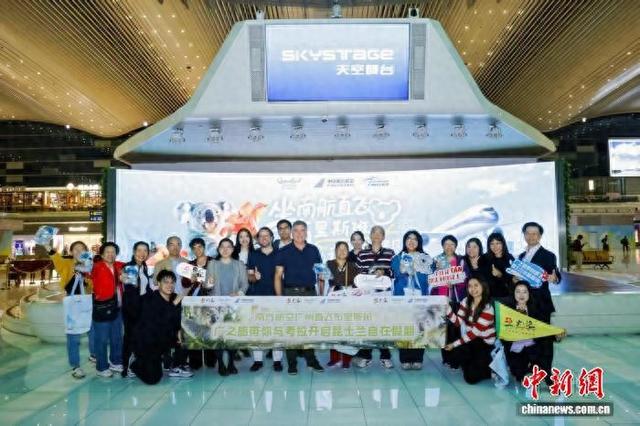
游客从广州白云国际机场出发前往澳大利亚昆士兰旅游。广之旅 供图 据昆士兰州旅游及活动推广局介绍,截至2025年6月的过去一年中,中国赴昆士兰访客达17.1万人次, 同比增长20.3%;中国访客过夜总消费近9亿澳元,同比增长6.8%。值得一提的是,中国度假访客人次 同比增长68.6%,达到10.9万人次,消费额更是实现同比增长112%,展现出巨大的市场潜力。 中新网广州12月13日电 (记者 程景伟)中国南方航空"考拉主题航班"12日从广州白云国际机场起飞,直 飞前往澳大利亚昆士兰州首府布里斯班。昆士兰州旅游及活动推广局首席执行官戴睿德现场送机并向中 国游客赠送纪念礼品。 岭南集团旗下广之旅组织团队游客搭乘该航班,开启为期9天的"澳大利亚东岸探索之旅"。据悉,中国 游客会到位于昆士兰的可伦宾野生动物保护区聆听保育员讲解考拉的生活习性,一边与萌态可掬的考拉 近距离互动,一边享用精致澳式下午茶。 一批中国 昆士兰州 旅游及活动推广局在广州长隆野生动物世界举行旅游推广活动。昆士兰州旅游及活动推广局 供图 昆士兰州旅游及活动推广局日前还在广州发布全新中文品牌"澳洲度假感,自在昆士兰"。昆士兰州旅游 及活动推广局商务与合 ...


“石油王国”经济版图重塑
第一财经· 2025-12-13 04:01
Core Viewpoint - Saudi Arabia's economy has undergone significant transformation over the past decade, with the non-oil sector's contribution to GDP rising from 45.4% to 55.6%, driven by the "Vision 2030" initiative aimed at economic diversification [3][4]. Economic Growth and Diversification - The non-oil economy's growth rate for the first three quarters of the year reached 4.7%, with an expected annual growth of 5%, making it a key driver of overall economic growth [5]. - The Saudi Ministry of Finance projects a GDP growth acceleration to 4.4% in 2025, with non-oil sector growth anticipated at 5% [3][5]. - Despite a decline in total fiscal revenue due to falling oil prices, non-oil revenue has exceeded expectations, confirming the effectiveness of the economic diversification process [5][6]. Key Sectors Supporting Growth - The growth of the non-oil sector is supported by various fields, including increased local content in public procurement, which stimulates domestic manufacturing [6]. - Wholesale and retail trade have become significant contributors to non-oil growth, closely linked to strong private consumption trends [6]. - Government measures, such as capping gasoline prices and providing direct financial support, have stabilized residents' real income and boosted consumption [6][7]. Role of National Development Fund (NDF) - The NDF plays a crucial role in the economic transformation by ensuring that all its funds align with the national vision [7][8]. - NDF acts as a catalyst to attract both domestic and international investors by providing funding support and capacity building [8]. - The NDF is adjusting its business model to facilitate the government's shift from public spending to capital-driven investment [8]. Investment Opportunities and International Cooperation - Saudi Arabia has become a major player in green investment, with $12 billion in green financing issued this year, capturing two-thirds of the Middle East's green finance market [8]. - The NDF is actively fostering cross-national partnerships, particularly with China, which is Saudi Arabia's largest trading partner [10][11]. - Infrastructure remains a primary area of interest for Chinese investors, with ongoing discussions and agreements to enhance cooperation in this sector [11].
辉煌“十四五” 壮美新答卷 | 桂林:实干绘就世界级旅游城市建设新画卷
Guang Xi Ri Bao· 2025-12-13 02:30
全流域、全覆盖、全方位地保护漓江。《桂林市漓江风景名胜区管理条例》等11部地方性法规的出 台,为漓江保护筑牢了法治屏障。每年的"4·25漓江保护日"系列活动,持续增强市民生态保护的意识。 数据显示,全市14个国家考核断面、7个自治区考核断面及41个水功能区水质达标率连续三年保持 100%,地表水质排名稳居全国前列;漓江生态环境质量连续四年保持优等级;桂林还成功入选联合国 生物多样性"自然城市"平台。 文旅业态不断创新。烟雨马拉松、新春焰火秀等大型活动引来无数游客,"桂林有戏"沉浸式演艺项 目让游客深度体验桂林文化;央视热播剧《阵地》掀起"跟着剧情打卡"热潮;2025年国庆中秋假期,八 路军桂林办事处纪念馆游客接待量达2.82万人次,同比增长34%,红色旅游成为桂林文旅发展的新亮 点。 12月10日,免费开放的象山景区,中外游客纷至沓来,或凝望"象鼻饮水"千古奇景,或打卡智能机 器人咖啡屋,在科技与山水的交融里解锁文旅新趣……这番鲜活图景,不仅是桂林建设世界级旅游城市 的生动实践,更是这座城市在时代浪潮中逐梦前行的缩影。 2021年4月,习近平总书记视察广西,第一站来到桂林,赋予桂林打造世界级旅游城市的重大使 ...
发展文化事业和文化产业
Ren Min Ri Bao· 2025-12-13 01:12
Group 1 - The core task of the 15th Five-Year Plan is to stimulate cultural innovation and development, emphasizing the importance of cultural prosperity and the development of the cultural industry [1][2] - The development of cultural undertakings and industries is crucial for enhancing the spiritual strength of the Chinese nation and meeting the new expectations of the people for cultural life [3][4] Group 2 - The cultural industry is recognized as a vital sector of the national economy, with recent years seeing a rapid integration of culture and technology, leading to new business models and consumption scenarios [11] - The plan emphasizes the need for a robust cultural industry system, including supportive economic policies and the cultivation of excellent cultural enterprises and brands [11][12] Group 3 - The proposal highlights the importance of high-quality public cultural services as a means to enhance the cultural rights and interests of the people, with a focus on improving service quality and accessibility [9][10] - The development of tourism is positioned as a key area for cultural and economic growth, with an emphasis on integrating cultural and tourism sectors to enhance the overall experience and quality of services [13][14]
西藏新发现新认定3.1万余处旅游资源
Xin Hua She· 2025-12-12 16:14
Core Insights - The Tibet Autonomous Region has identified over 58,000 tourism resources in the past two years, with more than 31,000 newly discovered or recognized [1] - The current round of resource surveys, initiated in August 2023, covers all seven cities and 74 counties in the region, providing a systematic basis for understanding tourism resources [1] - The survey has classified 944 tourism resources as five-star, 2,372 as four-star, and 10,202 as three-star, contributing to a comprehensive inventory of tourism assets [1] Future Developments - The Tibet Cultural and Tourism Department plans to leverage the survey results to promote the creative transformation and development of tourism resources into tourism products [1]
A股晚间热点 | 前11个月社融增量超去年全年!解读来了
智通财经网· 2025-12-12 15:26
Group 1: Financial Data Overview - As of November, the total social financing scale increased by 33.39 trillion yuan in the first 11 months, which is 3.99 trillion yuan more than the same period last year [1] - The balance of M2 reached 336.99 trillion yuan at the end of November, with a year-on-year growth of 8% [2] - The increase in RMB loans for the first 11 months was 15.36 trillion yuan, indicating a stable financial environment conducive to high-quality economic development [1][2] Group 2: Monetary Policy and Regulatory Actions - The central bank and financial regulatory authorities emphasized the continuation of a moderately loose monetary policy and the flexible use of various monetary policy tools, including interest rate cuts [2] - A meeting highlighted the need to address existing risks and support the stability of the real estate market [2] - The central bank announced a 600 billion yuan reverse repurchase operation to maintain liquidity in the banking system [3] Group 3: Market Developments and Opportunities - The recent surge in precious metals, with silver prices exceeding $64 per ounce, indicates a bullish trend, driven by expectations of economic recovery and monetary expansion [11] - The Ministry of Industry and Information Technology announced optimized regulatory measures for lithium battery imports and exports, which may impact the lithium sector positively [12] - The automotive industry is set to face new regulations aimed at standardizing pricing behaviors, which could affect market dynamics [13] Group 4: Corporate Announcements - More Thread plans to use 7.5 billion yuan of idle fundraising for cash management, indicating a focus on maintaining liquidity through safe investment products [9] - Shiyao Holdings is planning to issue H-shares and list on the Hong Kong Stock Exchange, which may attract investor interest [16] - Several companies, including Enjie Co., are involved in significant acquisitions and expansions, reflecting active corporate strategies in the current market [16]

惠城芦洲统筹推进“百千万工程”,打造“山水风光特色镇”
Nan Fang Du Shi Bao· 2025-12-12 14:54
Core Viewpoint - Luzhou Town is focusing on ecological priority and green development, aiming for high-quality growth with a projected GDP of 1.249 billion yuan in 2024, reflecting a 3.9% year-on-year increase [1] Group 1: Economic Development - Luzhou Town has invested approximately 50 million yuan in typical town cultivation projects to enhance both aesthetic and functional aspects of the town [1] - The town's agricultural foundation is being strengthened with a cumulative increase in grain production capacity of 11.8% over three years, ensuring food security for the urban area [4] - The introduction of modern agricultural facilities, including a seedling base and drying plant, aims to provide comprehensive services for agricultural products, addressing initial logistical challenges [5] Group 2: Infrastructure and Community Projects - A total of 36 livelihood projects have been implemented with an investment of around 40 million yuan, improving infrastructure such as rural roads and communication networks [6] - The establishment of a cultural square and a visitor center enhances community engagement and serves as a platform for showcasing local products and culture [2][3] Group 3: Environmental and Ecological Initiatives - Luzhou Town has planted 27,800 trees and developed multiple parks and ecological corridors, contributing to a greener landscape [7] - The town has been recognized as a model for forest fire management, maintaining a "zero fire" record since 2022, which enhances its ecological reputation [7]
刚刚!IPO审4过4
梧桐树下V· 2025-12-12 11:18
Core Viewpoint - The article discusses the approval of four companies for IPOs across different stock exchanges, highlighting their expected revenues and net profits for 2024, along with their main business activities and audit results [1][2][3][4]. Group 1: Company Profiles - **Youyan Composite Materials**: Engaged in the R&D, production, and sales of metal composite materials and special non-ferrous metal alloy products, with expected revenue of 609.64 million yuan and net profit of 55.36 million yuan for 2024 [2][5]. - **Chengdu Hongming Electronics**: Focuses on the R&D, production, and sales of new electronic components, primarily resistors and capacitors, with projected revenue of 249.38 million yuan and net profit of 25.19 million yuan for 2024 [3][21]. - **Meiya Technology**: A provider of comprehensive solutions for business travel, expecting revenue of 400.95 million yuan and net profit of 75.02 million yuan for 2024 [4][27]. - **Yuanli Digital Technology**: Specializes in 3D digital content production services, with anticipated revenue of 544.88 million yuan and net profit of 82.03 million yuan for 2024 [4][34]. Group 2: Financial Performance - **Youyan Composite Materials**: Revenue for the reporting period was 609.64 million yuan, with a net profit of 55.36 million yuan, but faced a 35.67% decline in net profit for the first half of 2025 compared to the previous year [7][10]. - **Chengdu Hongming Electronics**: Revenue decreased from 314.61 million yuan in 2022 to 249.38 million yuan in 2024, with net profit also declining to 25.19 million yuan [21][22]. - **Meiya Technology**: Revenue fluctuated, with a notable drop to 40.09 million yuan in 2024 from 45.74 million yuan in 2022, while net profit increased to 7.50 million yuan [27][28]. - **Yuanli Digital Technology**: Revenue increased from 50.29 million yuan in 2022 to 54.49 million yuan in 2024, with net profit rising to 8.20 million yuan [34][35]. Group 3: Market and Operational Insights - **Youyan Composite Materials**: High overseas sales proportion, primarily to US clients, with significant impacts from international trade policies and potential risks from US-China trade tensions [12][13]. - **Chengdu Hongming Electronics**: The company has a high debt ratio of 65.33% as of June 2025, indicating potential financial strain [22]. - **Meiya Technology**: The company has a diversified business model with three major segments, which may provide resilience against market fluctuations [25][26]. - **Yuanli Digital Technology**: The company has maintained a stable R&D investment ratio, with 4.27% of revenue allocated to R&D in 2025 [34][35].
“石油王国”经济版图重塑,沙特非石油经济是怎样撬动的
Di Yi Cai Jing· 2025-12-12 11:12
Economic Growth and Diversification - Saudi Arabia's actual GDP growth is expected to accelerate to 4.4% by 2025, with the non-oil sector projected to grow by 5% [1] - The share of the non-oil sector in Saudi Arabia's GDP has increased from 45.4% a decade ago to 55.6% today, driven by the "Vision 2030" economic diversification initiative [1] - The non-oil economy's growth rate for the first three quarters of this year was 4.7%, with an expected annual growth of 5%, making it a key driver of overall economic growth [3] Vision 2030 and National Development Fund (NDF) - The NDF has played a crucial role in aligning its strategies with the national "Vision 2030" goals, acting as a catalyst for local and international investments [5][6] - As of this year, 93% of the key performance indicators (KPIs) related to the Vision 2030 goals have been on track, with 257 indicators exceeding their targets [3] - The NDF is focusing on unlocking capital and ensuring that every Riyal spent generates a multiplier effect, particularly in projects like green hydrogen [6] Investment and Economic Sectors - The Saudi government is promoting local content in public procurement, which has stimulated the growth of the domestic non-oil manufacturing sector [3] - The tourism sector is being actively developed, supported by the establishment of the Tourism Development Fund (TDF) [4] - Saudi Arabia's green investment and sustainable finance issuance has reached $12 billion this year, capturing two-thirds of the Middle East's green finance market [6] China-Saudi Cooperation - China is Saudi Arabia's largest trading partner, with trade volume expected to reach $107.5 billion in 2024, a significant increase from $5 billion at the time of diplomatic relations [7] - The NDF is facilitating partnerships between Saudi Arabia and China, focusing on sectors such as infrastructure, digital economy, and green development [8][9] - Many Chinese investors are particularly interested in the infrastructure sector, indicating strong bilateral cooperation potential [9]

三峡旅游(002627.SZ):公司现有游轮和即将推出的省际游轮的折旧年限均为20年
Ge Long Hui· 2025-12-12 10:49
答:公司现有游轮和即将推出的省际游轮的折旧年限均为20年。 格隆汇12月12日丨三峡旅游(002627.SZ)在投资者关系中表示,有被问到:公司即将推出的省际游轮的折 旧是几年? ...
