半导体制造

Search documents
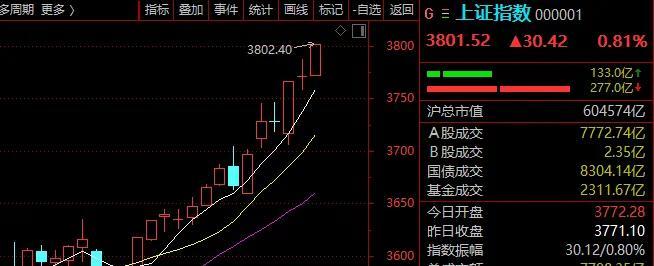
沪指突破3800点,牛市旗手发力
Zheng Quan Shi Bao· 2025-08-22 06:01
Market Performance - The Shenzhen Component Index rose over 1.5%, while the ChiNext Index surged more than 2.5%. Additionally, the STAR 50 Index increased by nearly 7% as of the report time [2] - In the Hong Kong market, the Hang Seng Index gained over 0.2%, and the Hang Seng Tech Index rose more than 1.6% [5] - The semiconductor sector continued to strengthen, with stocks like Haiguang Information and Shengmei Shanghai hitting the daily limit, and Cambrian Technologies seeing a price increase of over 15%, surpassing a market capitalization of 500 billion yuan [9] Sector Highlights - Brokerage stocks showed strong performance, with nearly all stocks in the sector trading in the green. Xinda Securities hit the daily limit, and Everbright Securities rose over 7% [3] - Notable individual stock performances included Huahong Semiconductor rising over 12%, XPeng Motors and ZTE Corporation increasing over 10%, NIO rising over 7%, and SMIC increasing over 6% [7] Market Outlook - Huaxi Securities indicated that there is still ample space and opportunities in the mid-term A-share market [8] - Factors contributing to the market's resilience include increased global trade uncertainties, recognition of China's economic strength, and a significant accumulation of excess savings by households, which could lead to substantial potential incremental funds entering the market [10] - The current low ratios of A-share total market value to household deposits suggest that the "migration" of household savings into the capital market is still in its early stages, which could create a positive feedback loop for gradual market growth [10]

铜互连的终结?
半导体行业观察· 2025-08-22 01:17
Core Viewpoint - The copper interconnect era may be nearing its end as copper is no longer the optimal metallization choice for interconnects with critical dimensions below 10 nanometers, despite its unmatched performance for larger feature sizes [2][3]. Group 1: Challenges of Copper Interconnects - Copper faces significant challenges in miniaturization, particularly as its resistivity increases dramatically when the line width is below 10 nanometers, with resistance increasing approximately tenfold compared to bulk material [2]. - The requirement for diffusion barrier layers complicates the manufacturing of extremely small features, as the actual copper line thickness is reduced to 2 to 4 nanometers when accounting for the barrier layer thickness of at least 3 to 4 nanometers [2]. Group 2: Alternative Conductors - Ruthenium is emerging as a potential alternative conductor due to its lower resistivity and superior electromigration resistance compared to copper, especially for lines with critical dimensions of 17 nanometers or smaller [5]. - Ruthenium's compatibility with copper is crucial, as copper will likely remain the preferred metal for lines wider than 20 nanometers, making the interface between any alternative conductor and copper critical for device success [5]. Group 3: Research and Development - Samsung's research team, in collaboration with IMEC, has demonstrated that reducing the thickness of the barrier layer can lower overall line resistance, and that copper does not mix with ruthenium at the bottom of vias [6]. - The use of ruthenium allows for more flexible process integration, as it is easier to etch compared to copper, although it presents challenges in deposition and removal [5][9]. Group 4: Future Prospects - The semiconductor industry is beginning to explore the deposition conditions and properties of ruthenium, with findings suggesting that lower deposition pressures can yield denser, lower-resistance films, although adhesion may suffer [9]. - The introduction of ruthenium as a via or line material could represent a significant transformation in semiconductor manufacturing, although such changes are expected to take time as the industry lays the groundwork for this transition [10].
新加坡上调今年经济增长预测
Jing Ji Ri Bao· 2025-08-21 22:08
Economic Outlook - Singapore's Ministry of Trade and Industry has revised its GDP growth forecast for 2025 from 0.0%-2.0% to 1.5%-2.5% based on stronger-than-expected performance in the first half of the year [1][2] - The economy grew by 4.4% year-on-year in Q2, slightly up from 4.1% in Q1, with a seasonally adjusted quarter-on-quarter growth of 1.4%, reversing a contraction of 0.5% in Q1 [1] Sector Performance - Growth was primarily driven by outward-oriented sectors such as wholesale trade, manufacturing, financial services, and transportation and warehousing, which engaged in preemptive trade activities in response to impending U.S. tariffs [1][2] - However, the local food and beverage sector experienced a contraction due to increased outbound tourism [1] Future Challenges - The report warns of potential economic slowdown in the second half of 2025, particularly for outward-oriented industries facing weakened demand [3] - The anticipated impact of U.S. tariffs on global end-market demand may lead to reduced growth in the manufacturing sector, although sectors like aerospace engineering and precision engineering may continue to see growth due to ongoing maintenance and refurbishment work [3] - The Ministry will closely monitor global and domestic economic developments and adjust growth forecasts as necessary [3]
韩拟引进百万海外高端人才提振经济
Shang Wu Bu Wang Zhan· 2025-08-21 17:19
Core Viewpoint - South Korea's declining birth rate and aging population are raising concerns about labor shortages, with a report suggesting that increasing the number of high-skilled foreign workers could significantly boost the economy [1] Economic Impact - The report from the Korea Chamber of Commerce and Industry indicates that if the number of long-term foreign residents increases by 1 million, it could generate economic benefits equivalent to 6% of GDP, approximately 145 trillion KRW [1] - Currently, there are 1.35 million registered foreign residents in South Korea, and if this number rises to 5 million, the cumulative economic benefit could reach 361 trillion KRW [1] - An increase of 1 percentage point in the share of foreign talent in the economically active population is associated with an approximate 0.11% growth in per capita GDP [1] Strategic Directions - The report outlines three strategic directions to attract foreign talent: 1. Develop livable cities tailored for foreigners 2. Attract the global semiconductor manufacturing industry 3. Implement a "train first, then attract" overseas talent training program [1] - Specific measures proposed include improving infrastructure, attracting multinational companies, offering visa and tax incentives, and enhancing education and healthcare services [1] - The report also suggests establishing one-stop programs for talent training, employment matching, and long-term residency targeting top universities in countries like Vietnam and Indonesia to compete for global high-skilled talent [1]
普冉股份: 普冉半导体(上海)股份有限公司关于计提2025年半年度资产减值准备的公告
Zheng Quan Zhi Xing· 2025-08-21 16:47
证券代码:688766 证券简称:普冉股份 公告编号:2025-057 普冉半导体(上海)股份有限公司 关于计提 2025 年半年度资产减值准备的公告 本公司董事会及全体董事保证本公告内容不存在任何虚假记载、误导性陈述 或者重大遗漏,并对其内容的真实性、准确性和完整性依法承担法律责任。 普冉半导体(上海)股份有限公司(以下简称"公司")于2025年8月21日召 开第二届董事会第二十次会议、第二届监事会第二十次会议,审议通过了《关于 计提2025年半年度资产减值准备的议案》。 现将相关情况具体内容公告如下: 一、本次计提减值准备情况概述 根据《企业会计准则》以及公司财务制度等相关规定,为客观、公允地反映 公司截至 2025 年 6 月 30 日的财务状况和 2025 年半年度的经营成果,基于谨慎 性原则,公司对截至 2025 年 6 月 30 日公司资产进行了减值测试,对截至 2025 年 6 月 30 日可能发生信用及资产减值损失的有关资产计提相应减值准备。同时, 对减值影响因素确认消失的资产,在原已计提的减值准备金额内进行转回;对出 售或领用前期已计提资产减值损失的存货,随着存货的结转,按照其成本和对应 的 ...

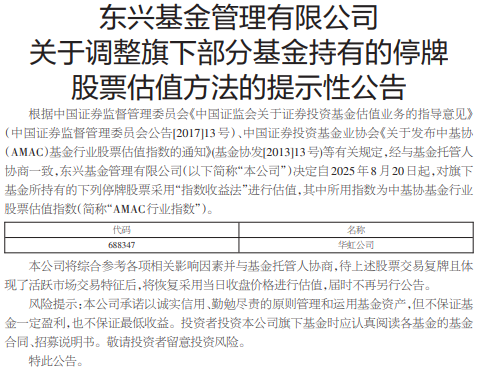
东兴基金调整旗下持有华虹公司相关基金估值方法
Zhong Guo Jing Ji Wang· 2025-08-21 08:17
Group 1 - The core point of the announcement is that Dongxing Fund Management Co., Ltd. will adjust the valuation method for its funds holding the suspended stock "Huahong Company" (stock code: 688347) to the "index income method" starting from August 20, 2025 [1] - The index used for this valuation will be the AMAC Industry Index, which is the stock valuation index of the Asset Management Association of China [1] - The company will consider various relevant factors and negotiate with the fund custodian, and will revert to using the closing price for valuation once the stock resumes trading and reflects active market trading characteristics [1]
汽车早餐 | 一汽回应收购零跑股权;软银20亿美元入股英特尔;福特与SK On合资电池工厂投产 张冬梅 中国汽车报 2025年
Zhong Guo Qi Che Bao Wang· 2025-08-21 01:24
Group 1: Domestic News - In the first 17 days of August, the national retail sales of passenger cars reached 866,000 units, representing a 2% increase year-on-year and an 8% increase compared to the previous month. Cumulative retail sales for the year reached 13.611 million units, up 10% year-on-year [2] - In July, Henan province saw a significant increase in new energy vehicle production, with a year-on-year growth of 389.53%, totaling 42,100 units. The overall automotive production in Henan reached 101,500 units, a 76.83% increase year-on-year [3] - Guangdong province announced policies to promote the application of satellite technology in various commercial sectors, including aviation, maritime, connected vehicles, and energy [4] Group 2: International News - Ford and SK On's joint venture, BlueOval SK, has commenced production at its battery factory in Kentucky, USA, initially supplying batteries for the Ford F-150 Lightning while seeking additional customers [5] - SoftBank has agreed to invest $2 billion in Intel, acquiring shares at $23 each, making it Intel's fifth-largest shareholder. This investment has led to a significant increase in Intel's stock price [6] - Japan's exports to the US fell by 10.1% in July, with automotive exports declining by 28.4% due to tariff policies [7] - The US Department of Commerce announced a 50% tariff on 407 categories of steel and aluminum products, including electric vehicle components, amid calls from domestic steel manufacturers to expand the tariff scope [8] Group 3: Corporate News - FAW Group responded to reports of acquiring a 10% stake in Leap Motor, stating that relevant departments are not aware of such plans, while Leap Motor declined to comment [10] - BYD has formed a strategic partnership with Finnish automotive dealer Veho Group to enhance its sales and service network in Finland [11] - Deep Blue Automotive and Star Semiconductor have launched a joint venture in Chongqing focused on developing automotive-grade power semiconductors [12] - China Automotive Research's chairman visited the Changchun Automotive Testing Center to discuss technical cooperation [13] - Guojin Securities maintained a "buy" rating for XPeng Motors, citing its strong fundamentals and leading technology layout [14] - TaiLan New Energy signed an agreement for a solid-state battery production base in Hubei, marking a significant expansion in its manufacturing network [15]


这个国家要卷成熟节点
半导体行业观察· 2025-08-21 01:12
Core Viewpoint - India is focusing on mature node manufacturing (28nm to 65nm) rather than competing in advanced technology led by TSMC, Samsung, and Intel, aiming to fill supply chain gaps and build necessary skills and infrastructure [1][3] Group 1: Government Initiatives - The "Semicon India" initiative launched in 2021 has a budget of $8.7 billion and has approved 10 projects across six states, with total investments reaching $18.3 billion [1] - Recent approvals in Odisha, Andhra Pradesh, and Punjab have further expanded the initiative, with commitments from major companies like Tata Electronics, Foxconn, and Micron Technology [1] Group 2: Market Dynamics - The demand for mature chips is increasing in sectors like automotive and industrial applications, which could lead to profitable opportunities despite being traditionally viewed as low-margin products [2] - Analysts warn of price pressure from Chinese foundries, which have costs over 10% lower than India's, highlighting the need for strategic partnerships to avoid oversupply [2] Group 3: Long-term Implications - The focus on mature node manufacturing is seen as a way to enhance supply chain resilience amid geopolitical tensions, making India a more attractive partner in the global industry [5] - The semiconductor component market in India is projected to grow to $30 billion by 2026, driven by local and global demand for mobile devices, wearables, electric vehicles, and robotics [5]
天岳先进股价微跌0.91% 港股上市首日表现亮眼
Jin Rong Jie· 2025-08-20 15:07
Company Overview - Tianyue Advanced focuses on the research, production, and sales of wide bandgap semiconductor silicon carbide substrate materials, ranking among the top three manufacturers globally with a market share of 16.7% [1] - The company's products are widely used in electric vehicles, AI data centers, and photovoltaic systems [1] Financial Performance - For the year 2024, the company is projected to achieve a revenue of 1.768 billion yuan and a net profit of 179 million yuan, with overseas revenue accounting for 57.03% of total income [1] Stock Market Activity - As of August 20, 2025, Tianyue Advanced's stock price was 66.26 yuan, down 0.61 yuan from the previous trading day, with an opening price of 66.88 yuan and a closing price of 45.54 HKD on its listing day [1] - The company was officially listed on the Hong Kong Stock Exchange on August 20, 2025, with an issue price of 42.80 HKD per share, reflecting a 6.4% increase from the issue price [1] Capital Flow - On August 20, 2025, the net outflow of main funds was 105.98 million yuan, accounting for 0.37% of the circulating market value, with a cumulative net outflow of 169.28 million yuan over the past five days, representing 0.59% of the circulating market value [1]

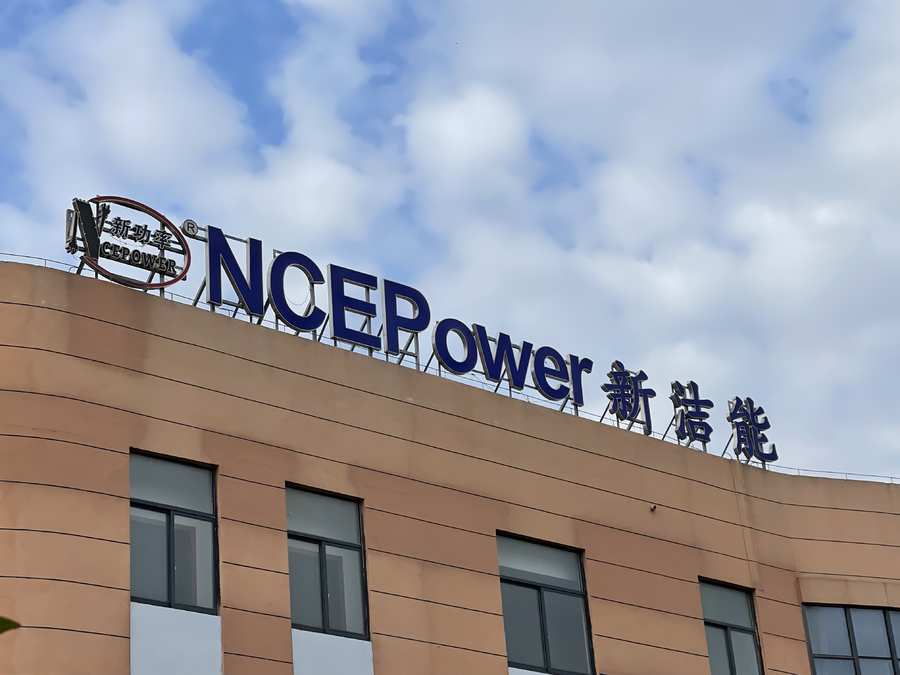
新洁能H1实现营收9.3亿元,SGT-MOSFET产品销售收入占比45.21%
Ju Chao Zi Xun· 2025-08-20 07:18
Financial Performance - In the first half of 2025, the company achieved operating revenue of 929.70 million RMB, a year-on-year increase of 6.44% compared to 873.49 million RMB in the same period last year [1] - The total profit for the same period was 267.55 million RMB, reflecting an 8.92% increase from 245.63 million RMB year-on-year [1] - The net profit attributable to shareholders was 235.12 million RMB, up 8.03% from 217.65 million RMB in the previous year [1] - The net profit after deducting non-recurring gains and losses was 207.25 million RMB, showing a decrease of 3.22% compared to 214.14 million RMB last year [1] - The net cash flow from operating activities was 159.87 million RMB, a significant increase of 72.20% from 92.84 million RMB in the previous year [1] Product Development and Market Demand - The company successfully launched its full range of third-generation SGT products in 2025, with strong demand in automotive electronics, energy storage, drones, electric tools, and AI computing servers [2] - The SGT-MOSFET products generated sales revenue of 419 million RMB in the first half of 2025, accounting for 45.21% of the main business revenue [2] - The seventh-generation IGBT products have entered mass supply, gaining customer recognition in sectors such as photovoltaic storage, industrial frequency conversion, and servo drives, with sales revenue of 132 million RMB, representing 14.26% of main business revenue [4] - The company anticipates steady growth in IGBT product sales in the second half of the year, driven by a recovery in the photovoltaic storage market and successful validation of the seventh-generation IGBT products by more customers [4] Quarterly Performance - In the second quarter of 2025, the company reported operating revenue of 481 million RMB, a quarter-on-quarter increase of 7.04% [1] - The net profit attributable to shareholders for the second quarter was 127 million RMB, reflecting a quarter-on-quarter growth of 17.16% [1]