
车规级功率半导体

Search documents
芯聚蓉城 链通沪蓉 掘金川渝!
半导体芯闻· 2026-02-14 08:56
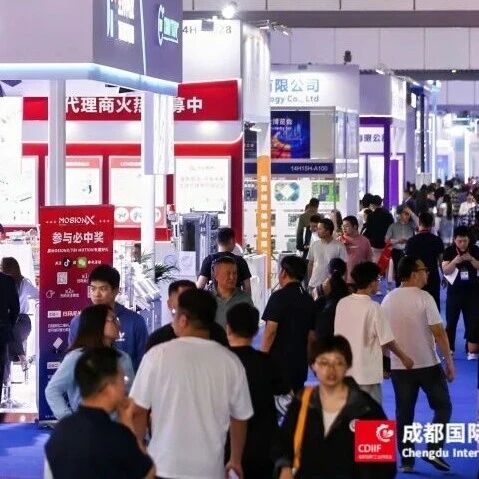
Core Insights - The article highlights the rapid growth and opportunities in the semiconductor industry in Chengdu, which is positioned as a national integrated circuit industry base with a complete industrial chain in the western region [1][4][5] - The 2026 Chengdu International Industrial Expo will feature the "Chip Future" integrated circuit series of activities, aiming to connect the semiconductor industry with global resources and local market demands [2][3][12] Industry Overview - Chengdu's semiconductor market is projected to exceed 137 billion yuan by 2025, driven by significant demand for various chips, including industrial-grade sensors and automotive power semiconductors [1][5][8] - The region has established a collaborative industrial ecosystem, with Chengdu focusing on IC design and advanced packaging, while Chongqing specializes in power semiconductor manufacturing [5][6] Event Details - The expo will take place from March 11 to 13, 2026, at the China West International Expo City, featuring a dedicated 30,000 square meter semiconductor exhibition area [3][9] - The event will include policy empowerment, technology sharing, demand release, and precise matching of industry needs, particularly in precision testing, robotics, and laser equipment [2][11] Market Demand - The demand for chips in the Chengdu-Chongqing economic circle is substantial, with Chengdu producing over 120 million smart terminals annually and Chongqing being a major hub for laptop and automotive manufacturing [7][8] - Key sectors such as aerospace, industrial robotics, and laser equipment are rapidly developing, further increasing the demand for specialized chips [8][11] Strategic Collaboration - The event aims to facilitate cross-regional collaboration between Chengdu and Shanghai, enhancing resource sharing and industry cooperation [10][12] - The integration of the Chengdu and Shanghai exhibitions will provide participating companies with enhanced visibility and access to a broader market [10][12]

安世之争,迈出关键一步
虎嗅APP· 2025-11-20 10:18
Core Viewpoint - The semiconductor dispute involving Nexperia has escalated into a significant geopolitical issue affecting the global automotive supply chain, with China and the Netherlands engaged in negotiations to resolve the crisis [5][6]. Group 1: Background of the Dispute - The conflict originated from a unilateral action by the Netherlands on September 30, 2025, which involved freezing Nexperia's global assets and operations for one year under the guise of national security [8]. - Following the Dutch government's actions, Nexperia's management faced immediate legal challenges, leading to a rapid court ruling that suspended the CEO and placed the company's shares under third-party control [8][9]. - The situation worsened when Nexperia announced a halt in supply to its Dongguan factory, impacting 70% of its production capacity and further straining the global automotive chip supply chain [11]. Group 2: Impact on the Automotive Industry - Major automotive manufacturers, including Volkswagen, BMW, and Mercedes, reported supply chain disruptions, with some factories nearing shutdown due to chip shortages [10]. - The European Automobile Manufacturers Association issued warnings about potential production halts if the semiconductor supply issue was not resolved promptly [10]. Group 3: Recent Developments - In early November, the Dutch government indicated a willingness to negotiate, leading to discussions in Beijing on November 18 and 19, where the Netherlands announced a suspension of its previous intervention measures [13][14]. - Despite the Dutch government's pause, Nexperia's control issues remain unresolved, with ongoing legal measures still in effect [14]. Group 4: Importance of Nexperia - Nexperia is a critical player in the automotive semiconductor market, supplying 40% of the global automotive power semiconductors and holding significant market shares in various semiconductor components [15]. - The company has established a robust supply chain in China, which has proven resilient despite the geopolitical tensions, with sufficient inventory to meet customer demands [15][17]. - Nexperia's history reflects its evolution from a Philips subsidiary to a key global semiconductor company, highlighting the complexities of international ownership and control in the semiconductor industry [16][17].


安世之争,迈出关键一步
3 6 Ke· 2025-11-20 08:03
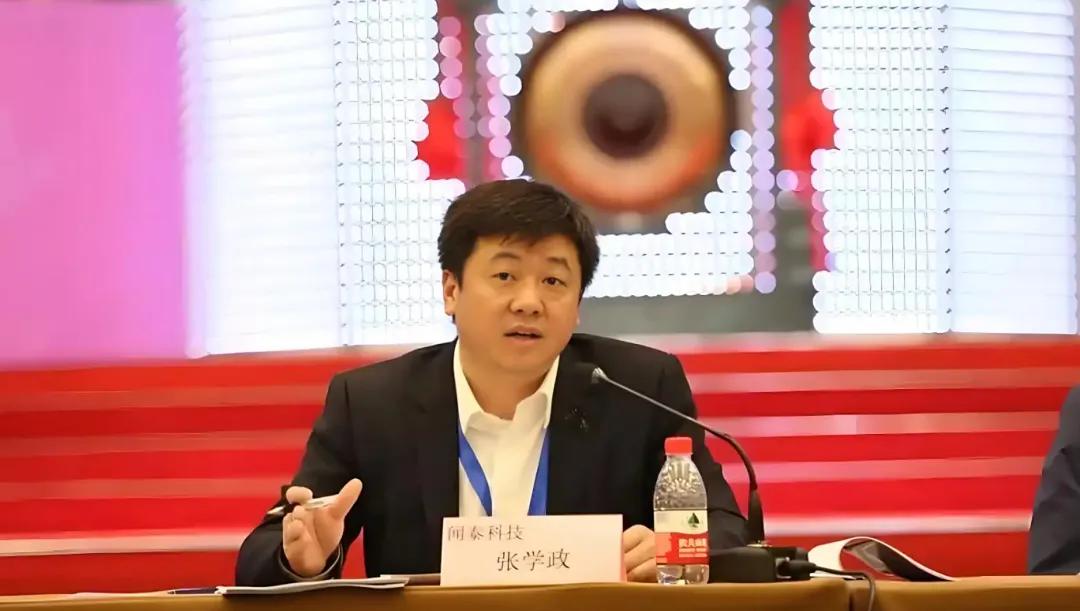
Core Viewpoint - The semiconductor dispute involving Nexperia has escalated into a significant geopolitical issue affecting the global automotive supply chain, with recent negotiations between China and the Netherlands indicating a potential path towards resolution, although substantial challenges remain [1][10][11]. Group 1: Background of the Dispute - The conflict originated from the Netherlands, where a ministerial order was issued on September 30, 2025, freezing Nexperia's global assets and operations for one year, which was perceived as a unilateral action [2][3]. - The rapid legal actions taken by Nexperia's foreign executives led to a court ruling that resulted in the forced third-party custody of shares held by its parent company, Wingtech Technology [5][6]. Group 2: Impact on the Automotive Industry - Nexperia is a critical player in the automotive semiconductor market, supplying 40% of automotive-grade power semiconductors and holding over 40% market share in small signal diodes and ESD protection devices [13][20]. - The disruption caused by the dispute has led to significant supply chain issues for major automotive manufacturers, with companies like Volkswagen, BMW, and Mercedes-Benz acknowledging supply shortages and potential production halts [7][8][9]. Group 3: Recent Developments - On November 5, 2025, Nexperia announced a suspension of supplies to its Dongguan factory, impacting 70% of its production capacity, which further exacerbated the global automotive chip supply chain crisis [8][9]. - Following negotiations on November 18 and 19, the Dutch government announced a suspension of its previous intervention measures, which was welcomed by China as a positive step, although the core issues remain unresolved [10][11]. Group 4: Nexperia's Strategic Position - Nexperia, originally part of Philips, has undergone significant changes since its acquisition by a Chinese consortium in 2017, which has positioned it as a key player in the semiconductor industry with a robust supply chain [16][19]. - The company has established a comprehensive production network across Europe and Asia, with annual shipments exceeding 110 billion devices and a customer base of over 25,000, predominantly in the automotive sector [20].
欧洲车企忙“扫货”,荷兰芯片却为何卖不动了?
Zhong Guo Qi Che Bao Wang· 2025-11-04 04:01
Core Points - The Dutch government's takeover of Nexperia, a semiconductor manufacturer, has created a new "chip shortage" risk for European automakers due to national security concerns [2][4] - Nexperia is a leading supplier of automotive-grade power semiconductors, crucial for electric vehicles, and its supply chain disruption could lead to significant shortages in the automotive industry [4][5] - The decision to halt wafer supply to the Dongguan factory has caused panic buying among European automakers, leading to a surge in chip prices and inventory issues in local wafer factories [5][6] Industry Impact - Nexperia holds approximately 18% of the European power semiconductor market, and a supply disruption lasting over four weeks could result in a loss of over 200 million chips [4] - The political intervention by the Dutch government is seen as a move to enhance "technological sovereignty," but it risks destabilizing the automotive chip supply chain and increasing production costs [4][6] - The ongoing situation reflects a shift in global semiconductor competition from market dynamics to control over supply chains, with potential long-term implications for both Europe and China [6][8] Market Reactions - European automakers, including Volkswagen and Renault, have increased their market purchases of Nexperia's automotive chips, with some orders tripling, resulting in a nearly 20% price increase for related chips [5][6] - The global automotive chip market is projected to reach $85 billion by 2027, with Asian supply chains expected to account for over 60% of the market share [7] - The 2021 chip shortage highlighted the critical role of semiconductors in the automotive industry, with significant production losses, emphasizing the need for supply chain resilience [8][9] Geopolitical Context - The U.S. has been a significant influence behind the Dutch government's actions, expressing concerns over Chinese control of Nexperia and its potential access to advanced technologies [6][9] - China's response includes export controls on specific components, aiming to strengthen its supply chain resilience and counteract the Dutch intervention [8][10] - The situation underscores the need for Europe to reassess its approach to "technological sovereignty," advocating for collaboration rather than isolation [11]

被安世风波卡了一整月“脖子”的全球车企,终于能缓一口气了
2 1 Shi Ji Jing Ji Bao Dao· 2025-11-02 09:13
Core Viewpoint - The global automotive industry is facing a significant chip shortage exacerbated by the Dutch government's intervention in the semiconductor company Nexperia, which has led to supply chain disruptions and production halts among major automakers [1][2][3]. Group 1: Supply Chain Disruptions - The Dutch government took control of Nexperia, which has triggered a global chip shortage impacting major automotive manufacturers like Volkswagen and Honda, leading to production halts and financial losses [2][3]. - Nexperia's Chinese subsidiary has reported a significant debt of 1 billion RMB to its packaging and testing factory in Dongguan, indicating financial strain and potential supply issues [1][4]. - Major automakers, including Ford and BMW, are facing imminent production cuts if the chip supply issue is not resolved within weeks [7][9]. Group 2: Impact on Automotive Manufacturers - Volkswagen reported its first quarterly loss in five years, attributing it to the ongoing chip shortage, while Honda has announced production halts at key facilities in North America [2][5]. - The European Automobile Manufacturers Association warned of potential production interruptions across the continent if Nexperia's supply does not stabilize soon [2][7]. - The automotive industry relies heavily on Nexperia's components, which are critical for various vehicle functions, making the shortage particularly acute [5][6]. Group 3: Market Dynamics and Alternatives - Automakers are scrambling to find alternative suppliers, but the transition is complicated by lengthy certification processes that can take 18 to 24 months, making immediate solutions difficult [10][11]. - The cost of sourcing components from alternative suppliers is expected to rise by 20-30%, further straining manufacturers already facing financial pressures [11][12]. - The geopolitical landscape is influencing supply chain decisions, with companies urged to mitigate risks by diversifying suppliers and considering local production options [13]. Group 4: Future Implications - The current crisis may accelerate the push for domestic semiconductor production capabilities in China, as companies seek to reduce reliance on foreign suppliers [13]. - The situation highlights the need for the automotive industry to adapt to geopolitical risks and enhance supply chain resilience [13].
荷兰“抢劫”闻泰科技,安世半导体控制权闪电变天?
Sou Hu Cai Jing· 2025-10-13 10:04
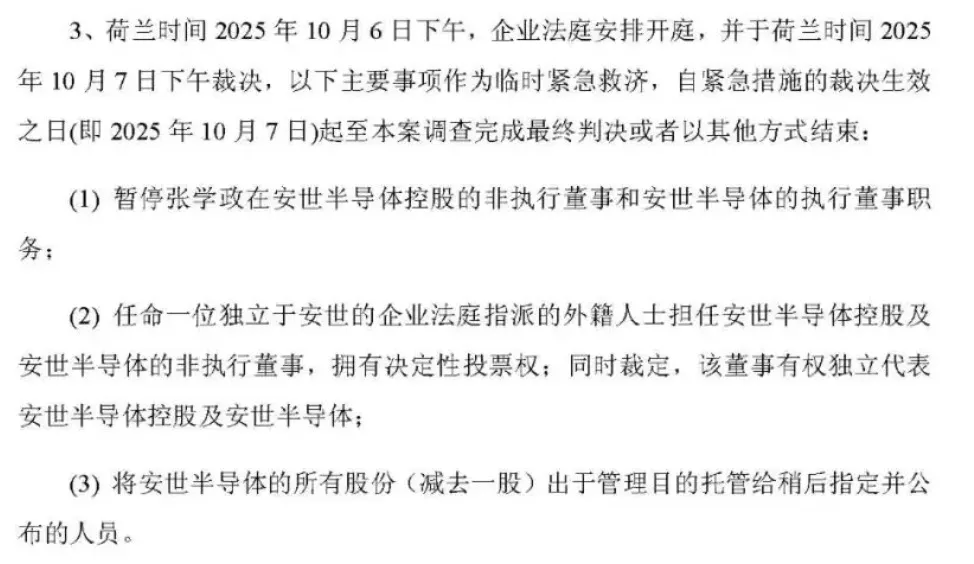
Core Viewpoint - The control of Nexperia, a subsidiary of Wentech Technology, has been temporarily lost due to a combination of actions from the Dutch government and certain foreign executives, leading to a significant shift in the company's governance structure [1][3]. Summary by Sections Event Development - On October 1, a Dutch court granted a temporary measure suspending the powers of Zhang Xuezheng as the executive director and CEO of Nexperia, placing 99% of the shares held by Wentech's subsidiary under third-party custody [2]. - A court ruling on October 7 confirmed that these measures would remain in effect until the investigation concludes, adding an independent foreign director with decisive voting rights [2]. Government Intervention - The Dutch Ministry of Economic Affairs issued a ministerial order on September 30, prohibiting Nexperia from making any adjustments to assets, intellectual property, business, or personnel for one year [3]. - The timing of the ministerial order and the subsequent legal actions by foreign executives suggests a coordinated effort to alter the ownership structure of Nexperia [4]. Strategic Importance of Nexperia - Nexperia is a key player in the global semiconductor industry, particularly in automotive semiconductors, with a reported revenue of 14.715 billion yuan for 2024 [7]. - The semiconductor business constitutes approximately 30.9% of Wentech's revenue, highlighting its critical role in the company's operations [7]. Market Implications - The sudden change in control may lead to significant disruptions in the supply chain for automotive electronics, as major Tier 1 suppliers and manufacturers may struggle to find alternative suppliers [10]. - In the medium to long term, competitors like Infineon and ON Semiconductor may capitalize on Nexperia's potential loss of orders, strengthening their market positions [11]. Systemic Risks - The incident underscores a new type of systemic risk faced by multinational companies, where legal ownership does not guarantee control, reflecting the challenges of operating in a complex international environment [12][13]. - The situation serves as a warning for Chinese companies investing abroad, particularly in high-tech sectors, emphasizing the need for robust risk management strategies [13][14]. Future Outlook - Wentech is actively seeking legal remedies and engaging with relevant government departments to regain control [18].
中方调查高通后,荷兰冻结中企半导体资产,强行把CEO换成外国人
Sou Hu Cai Jing· 2025-10-13 02:50
Core Viewpoint - The Dutch government's recent actions against China's Wingtech Technology and its subsidiary, Nexperia, reflect escalating tensions between East and West in the high-tech sector, particularly concerning national security and technology acquisition [1][3]. Group 1: Company Impact - The Dutch government has frozen the assets and operations of Nexperia's 30 global subsidiaries and suspended the CEO appointed by the Chinese side, Zhang Xuezheng, marking a significant blow to Wingtech Technology and its core business [1][3]. - Nexperia, with an annual revenue of 14.7 billion yuan, has a strong technological foundation and customer network, having rapidly integrated into the global automotive electronics supply chain since its acquisition by Wingtech in 2018 [3]. Group 2: Industry Context - The incident highlights the growing unease in Western countries regarding Chinese enterprises' penetration into high-tech fields, particularly in the automotive semiconductor sector, amid China's rapid rise in the electric vehicle market [3][5]. - The actions taken by the Dutch government are seen as a means to protect national security and safeguard critical technologies from foreign control, reflecting a broader trend of strategic competition between East and West in emerging industries [5][7]. Group 3: Long-term Implications - In the short term, the operational uncertainty faced by Wingtech and its subsidiaries may deter other Chinese companies from pursuing overseas mergers and acquisitions due to perceived risks [5][7]. - In the long term, the Nexperia incident may drive the Chinese semiconductor industry to focus more on independent innovation, reducing reliance on external technology acquisitions and enhancing organizational flexibility and risk management [5][7].

突发!闻泰发布重磅公告:荷兰冻结安世半导体资产
是说芯语· 2025-10-12 08:20
Core Viewpoint - The announcement reveals that Nexperia, a subsidiary of Wentech Technology, is facing significant challenges due to the Dutch government's asset freeze and a court ruling that suspends the Chinese CEO's position, leading to a power struggle over control of the company, which generated revenue of 14.7 billion yuan in 2024 [1][15]. Group 1: Situation Overview - On September 30, 2025, the Dutch Ministry of Economic Affairs issued an order preventing Nexperia and its global subsidiaries from making any adjustments to assets, intellectual property, business, or personnel for one year [6][15]. - On October 1, 2025, Nexperia's legal and financial executives filed an urgent request with the Dutch court for emergency measures, resulting in the immediate suspension of the Chinese CEO's duties and the management of shares being transferred to a third party [7][8][15]. - The court's ruling on October 7, 2025, confirmed the suspension of the CEO and appointed an independent foreign director with decisive voting rights, effectively stripping the Chinese shareholders of governance rights [8][15]. Group 2: Potential Impact on the Company - The operational efficiency of Nexperia may be affected due to the disruption in decision-making processes and reduced flexibility in resource allocation, although the company continues its daily operations [9][10][15]. - The company retains economic rights but temporarily loses governance rights over Nexperia, which could impact its strategic initiatives in the semiconductor sector [10][15]. Group 3: Response Measures - The company is maintaining communication with suppliers and customers to stabilize operations and sales channels amid external pressures [11][15]. - Legal remedies are being explored in collaboration with international law firms to protect the company's and shareholders' rights [11][15]. - The company is also engaging with government departments to seek support during this challenging period [11][15]. Group 4: Resumption of Trading - Following the disclosure of significant information, Wentech Technology's stock and convertible bonds are set to resume trading on October 13, 2025 [12][15].
晶圆代工大变局:台积电通吃先进制程,中国大陆为何猛扩47%成熟产能?
材料汇· 2025-09-21 15:09
Core Viewpoint - The article emphasizes the transformative impact of artificial intelligence (AI) on the global semiconductor industry, particularly focusing on the critical role of advanced chips and wafer foundries in this evolution. It highlights the challenges and opportunities faced by Chinese foundries in the context of geopolitical tensions and the shift from globalization to regionalization [2][5]. Group 1: Industry Overview - The wafer foundry industry is defined by the division of labor among Fabless, Foundry, and OSAT, which is essential for analyzing the current state of China's semiconductor industry. China has strong players in Fabless and Foundry but faces significant challenges in EDA/IP and advanced equipment [5]. - The trend towards domestic production is driven by geopolitical pressures rather than purely market forces, revealing high barriers to entry in the industry, including capital, technology, and ecosystem accumulation [5][31]. - The semiconductor market is experiencing structural changes, with AI and automotive electronics being the primary drivers of capacity growth. However, there is a risk of overcapacity in mature processes [5][12]. Group 2: Market Dynamics - The article notes that the demand for chips is increasing, particularly in AI, HPC, and automotive electronics, which require higher performance and efficiency. This has led to significant R&D investments in advanced process technologies [32][44]. - The global semiconductor market is projected to exceed $1 trillion by 2030, with a compound annual growth rate (CAGR) of 9% from 2025 to 2030, driven by the surge in demand for servers, data centers, and storage [44][50]. Group 3: Chinese Foundries - Chinese foundries are forming a tiered layout, with companies like SMIC, Hua Hong Semiconductor, and others establishing competitive advantages in various niche markets, avoiding homogenization [6][19]. - SMIC is recognized as a leader in China's integrated circuit manufacturing, achieving significant revenue growth and technological advancements in logic and specialty processes [54][53]. - Hua Hong Semiconductor is noted for its comprehensive specialty process platform, focusing on embedded non-volatile memory and power devices, and has shown strong revenue growth [56][57]. - Jinghe Integrated Circuit has become a leader in the liquid crystal panel driver chip foundry sector, achieving significant market share and revenue growth [59]. Group 4: Competitive Landscape - TSMC's competitive advantages include technological leadership, R&D investment, and deep integration with major clients like Apple and NVIDIA, which are crucial for maintaining its market position [6][12]. - The article discusses the shift from IDM to Foundry as a revolutionary change in the industry, with geopolitical factors influencing global supply chain restructuring [14][50]. - The article highlights the importance of specialized processes and system-level foundry services as a trend in the industry, with TSMC's advanced packaging technologies serving as a significant competitive edge [29][12]. Group 5: Future Outlook - The future of the wafer foundry industry is characterized by a focus on mature processes and specialty technologies, with Chinese foundries positioned to capitalize on domestic demand and policy support [31][37]. - The article warns of potential overcapacity risks, particularly in consumer electronics, while emphasizing the importance of maintaining high utilization rates and strong customer relationships to mitigate financial pressures [26][50].



汽车早餐 | 一汽回应收购零跑股权;软银20亿美元入股英特尔;福特与SK On合资电池工厂投产 张冬梅 中国汽车报 2025年
Zhong Guo Qi Che Bao Wang· 2025-08-21 01:24
Group 1: Domestic News - In the first 17 days of August, the national retail sales of passenger cars reached 866,000 units, representing a 2% increase year-on-year and an 8% increase compared to the previous month. Cumulative retail sales for the year reached 13.611 million units, up 10% year-on-year [2] - In July, Henan province saw a significant increase in new energy vehicle production, with a year-on-year growth of 389.53%, totaling 42,100 units. The overall automotive production in Henan reached 101,500 units, a 76.83% increase year-on-year [3] - Guangdong province announced policies to promote the application of satellite technology in various commercial sectors, including aviation, maritime, connected vehicles, and energy [4] Group 2: International News - Ford and SK On's joint venture, BlueOval SK, has commenced production at its battery factory in Kentucky, USA, initially supplying batteries for the Ford F-150 Lightning while seeking additional customers [5] - SoftBank has agreed to invest $2 billion in Intel, acquiring shares at $23 each, making it Intel's fifth-largest shareholder. This investment has led to a significant increase in Intel's stock price [6] - Japan's exports to the US fell by 10.1% in July, with automotive exports declining by 28.4% due to tariff policies [7] - The US Department of Commerce announced a 50% tariff on 407 categories of steel and aluminum products, including electric vehicle components, amid calls from domestic steel manufacturers to expand the tariff scope [8] Group 3: Corporate News - FAW Group responded to reports of acquiring a 10% stake in Leap Motor, stating that relevant departments are not aware of such plans, while Leap Motor declined to comment [10] - BYD has formed a strategic partnership with Finnish automotive dealer Veho Group to enhance its sales and service network in Finland [11] - Deep Blue Automotive and Star Semiconductor have launched a joint venture in Chongqing focused on developing automotive-grade power semiconductors [12] - China Automotive Research's chairman visited the Changchun Automotive Testing Center to discuss technical cooperation [13] - Guojin Securities maintained a "buy" rating for XPeng Motors, citing its strong fundamentals and leading technology layout [14] - TaiLan New Energy signed an agreement for a solid-state battery production base in Hubei, marking a significant expansion in its manufacturing network [15]


