
信托

Search documents
信托行业首份2023年度业绩快报出炉 陕国投A归母净利润同比增长超30%
Xin Hua Wang· 2025-08-12 05:47
Core Viewpoint - Shaanxi Guotou A reported significant growth in revenue and net profit for the year 2023, driven by transformation and innovation in its business model [1] Company Performance - The company achieved total operating revenue of 2.735 billion yuan, a year-on-year increase of 42.03% [1] - Net profit attributable to shareholders reached 1.089 billion yuan, up 30.05% year-on-year [1] - Net profit after deducting non-recurring gains and losses was 1.045 billion yuan, reflecting a 39.56% increase [1] - The company’s trust asset scale reached 543.261 billion yuan, with a year-on-year growth of 91.73% [1] Business Strategy - The company utilized the additional capital from its private placement to enhance the return on its own assets and promote the development of its core business towards specialization [2] - The asset management trust scale surpassed 200 billion yuan, while the asset service trust focused on core clients reached 300 billion yuan [2] - The company provided 49.62 billion yuan in funding for key projects in Shaanxi Province, supporting various significant infrastructure initiatives [2] Industry Overview - The trust industry showed stable performance, with the total trust asset scale reaching 22.64 trillion yuan by the end of Q3 2023, an increase of 7.45% year-on-year [3] - Trust companies reported a total operating income of 65.123 billion yuan for the first three quarters of 2023, a decrease of 3.31% year-on-year, while total profit increased by 6.61% to 40.620 billion yuan [3] - The income structure indicated a decline in trust business revenue, which accounted for 59.48% of total income, down 21.84% year-on-year, highlighting the need for improvement in the main business [3]


信托业重磅:最新监管评级下发 6级分层
Jing Ji Guan Cha Bao· 2025-08-12 03:09
Core Viewpoint - The trust industry is experiencing a significant moment as multiple trust companies have received their regulatory ratings for 2024, with the best rating being level 2, and most companies rated between levels 3 and 4, while some well-known state-owned trust companies received a level 5 rating [1] Regulatory Rating Overview - The regulatory ratings are based on the "Interim Measures for the Regulatory Rating and Classification Supervision of Trust Companies" issued by the Financial Regulatory Bureau in November 2023, marking the second annual rating since the implementation of these measures [1] - The ratings range from 1 to 6, with higher numbers indicating greater risk and requiring more regulatory attention. Ratings of level 3 and above are considered good [1] - Trust companies identified as high-risk by the Financial Regulatory Bureau are directly assigned a level 6 rating without initial evaluation [1] Rating Criteria and Scoring - The maximum score for the regulatory rating is 100, with the following weight distribution for each module: corporate governance (20%), capital requirements (20%), risk management (20%), conduct management (30%), and business transformation (10%) [1] - Level 1 rating requires a score of 90 or above, indicating sound management with minor issues that can be resolved through improved daily operations [2] - Level 2 rating ranges from 80 to 90, indicating basic sound management with good risk resistance but some issues needing correction [3] - Level 3 rating ranges from 70 to 80, indicating noticeable management issues that could lead to operational difficulties if not addressed [4] - Level 4 rating ranges from 60 to 70, indicating significant management issues that could affect sustainability and require immediate regulatory attention [5] - Level 5 rating ranges from 40 to 60, indicating very serious management issues and high risk, necessitating close regulatory oversight and potential intervention [6] - Level 6 rating is assigned for scores below 40, indicating chaotic management and high risk, possibly leading to a credit crisis and requiring administrative takeover to maintain financial stability [7]
增值税法实施条例向社会公开征求意见……盘前重要消息还有这些
Zheng Quan Shi Bao· 2025-08-12 01:07
重要的消息有哪些 《中华人民共和国增值税法实施条例(征求意见稿)》公开征求意见 财政部会同税务总局在认真研究并广泛听取意见建议基础上,研究形成了《中华人民共和国增值税法实 施条例(征求意见稿)》,现向社会公开征求意见。对增值税法规定的纳税人、征税范围等税制要素进 行细化和明确。一是明确应税交易中货物、服务、无形资产、不动产的定义范围(第二条)。二是对纳 税人中的单位和个人、一般纳税人和小规模纳税人进行解释(第三条、第六条、第七条)。三是明确服 务、无形资产在境内消费的情形(第四条)。四是明确增值税专用发票应分别注明销售额和增值税税额 (第五条)。 中央结算公司将持续加强国家金融基础设施建设,保障安全高效运行,深化核心服务能力,更好服务市 场、服务客户。 外交部:中方反对将科技和经贸问题政治化、工具化、武器化 8月11日,外交部发言人林剑答记者问。有记者提问:据报道,消息人士称,近期中国官员向美国专家 表示,希望美方放宽对高带宽内存芯片对华出口管制。报道称,该类芯片可用于人工智能技术开发,中 方担心美方管制可能阻碍华为等中企自研人工智能芯片,中方将此要求作为双方贸易协议的一部分。中 方能否证实?对此有何评论? ...
增值税法实施条例向社会公开征求意见……盘前重要消息还有这些
证券时报· 2025-08-12 00:31
Group 1 - The Ministry of Finance and the State Taxation Administration have released a draft for public consultation regarding the implementation regulations of the Value-Added Tax Law, which clarifies definitions and taxpayer categories [2] - The Central Securities Depository Company has simplified the account opening process for foreign central bank institutions by no longer requiring a signed commitment letter [3] - The Shanghai Clearing House has also streamlined the account opening materials for foreign institutions to promote a more open bond market [8] Group 2 - The latest regulatory ratings for trust companies have been issued, with the best rating being level 2, indicating a lack of level 1 rated companies [7] - The Chinese Ministry of Foreign Affairs has expressed opposition to the politicization of technology and trade issues, emphasizing the need for stable global supply chains [5] - The China Rare Earth Group has issued a statement denying rumors about collaborating with Ant Group and the People's Bank of China to create a rare earth-backed stablecoin [6] Group 3 - Companies such as *ST Bio and Shanghai Jianke are involved in significant asset restructuring and disciplinary investigations, respectively [9] - Long-term investment trends indicate that insurance capital is increasingly allocating funds to bank stocks, with projections of substantial capital inflows by 2025 [11] - Hikvision's chairman has proposed a mid-term dividend plan for 2025, suggesting a payout of 4 yuan per share [10]
陕西:扩大创业担保贷款贴息支持范围;美团申请注册美团借钱商标 | 金融早参
Mei Ri Jing Ji Xin Wen· 2025-08-11 23:33
Group 1: Central Bank Operations - The People's Bank of China conducted a reverse repurchase operation of 112 billion yuan with a 7-day term at an interest rate of 1.40%, with both the bidding and winning amounts being 112 billion yuan [1] Group 2: Entrepreneurship Support in Shaanxi - Shaanxi province has announced measures to expand the scope of guaranteed loans for entrepreneurship, increase loan limits, interest rate caps, and subsidy ratios, while gradually reducing or waiving counter-guarantee requirements [2] - The policy aims to lower financing costs for entrepreneurs and attract more individuals to start businesses, particularly in economically promising regions [2] Group 3: Trust Company Regulatory Ratings - Recent regulatory ratings for trust companies indicate that the highest rating known is level 2, with no companies achieving level 1, which reflects a need for improved management and risk reduction [3] - The ratings serve as a critical measure of the operational status, management capability, and risk levels of trust companies [3] Group 4: Ant Group Rumors - Ant Group has denied rumors regarding the establishment of the world's first rare earth RMB stablecoin in collaboration with the People's Bank of China and China Rare Earth Group, cautioning the public against potential scams [4] Group 5: Meituan's Financial Services Expansion - Meituan has applied to register the trademark "Meituan Borrow Money," indicating its further expansion into the financial services sector [5] - This move may intensify competition in the financial sector and pose challenges to traditional financial institutions while offering more flexible financial product options [5]

【法治之道】家族信托设立合规才不会被击穿
Zheng Quan Shi Bao· 2025-08-11 17:51
Core Viewpoint - The recent cases of family trusts being pierced by courts in Jiangsu and Shandong have raised significant concerns about the integrity and effectiveness of family trusts as a wealth management tool for high-net-worth individuals in China [1][2][4]. Group 1: Legal and Financial Implications - The family trust in Jiangsu was subjected to forced execution due to the involvement of the trustee in bribery and contract fraud, leading to the seizure of over 40 million yuan in trust assets [1]. - The Shandong case involved the recovery of over 10 million yuan in illegal earnings from a family trust linked to illegal medical practices, further undermining the perceived independence of family trusts [1]. - The legal framework, including the Trust Law, stipulates that trusts must be established with legally owned assets, rendering trusts set up with illegal funds invalid [3]. Group 2: Industry Perspectives - Despite the negative incidents, there is an optimistic view regarding the future of family trusts, suggesting that misunderstandings and misapplications may be at play in these cases [2]. - The industry recognizes the need for clearer legal interpretations and practices to prevent the unjust piercing of trusts, advocating for a more thorough examination of trust relationships in judicial processes [3]. - The potential misuse of family trusts for debt evasion should not overshadow their legitimate functions, emphasizing the importance of compliance and legal sourcing of funds when establishing trusts [4].
保险和信托在财富规划上有哪些差异?
Sou Hu Cai Jing· 2025-08-11 16:29
Group 1 - The core viewpoint of the articles emphasizes the distinct roles of insurance and trust in wealth planning, highlighting their unique mechanisms and characteristics in wealth protection, inheritance, and management [1][2]. - Insurance is fundamentally a risk transfer mechanism, providing financial compensation to beneficiaries upon the occurrence of specified risk events, with a focus on risk protection [1]. - Trust is a property management system that allows the trustor to delegate their property rights to a trustee, who manages the assets for the benefit of the beneficiaries, emphasizing flexibility in wealth management and inheritance [2]. Group 2 - From a risk perspective, insurance products have standardized contract terms, with risks primarily associated with the insurance company's operational risks, which are subject to strict regulatory oversight [2]. - Trust assets are independent of the trustor, trustee, and beneficiaries' personal properties, providing effective protection against creditor claims, but the success of a trust depends on the trustee's competence and the design of the trust plan [2]. - In terms of liquidity, certain short-term insurance products offer good liquidity, while long-term insurance products may incur losses upon early termination; trust products generally have lower liquidity due to complex procedures for asset transfer [3]. Group 3 - Tax treatment varies by region for insurance and trust, with insurance payouts often being tax-exempt, while trust income tax obligations can be complex and depend on the type of trust and local tax regulations [3].
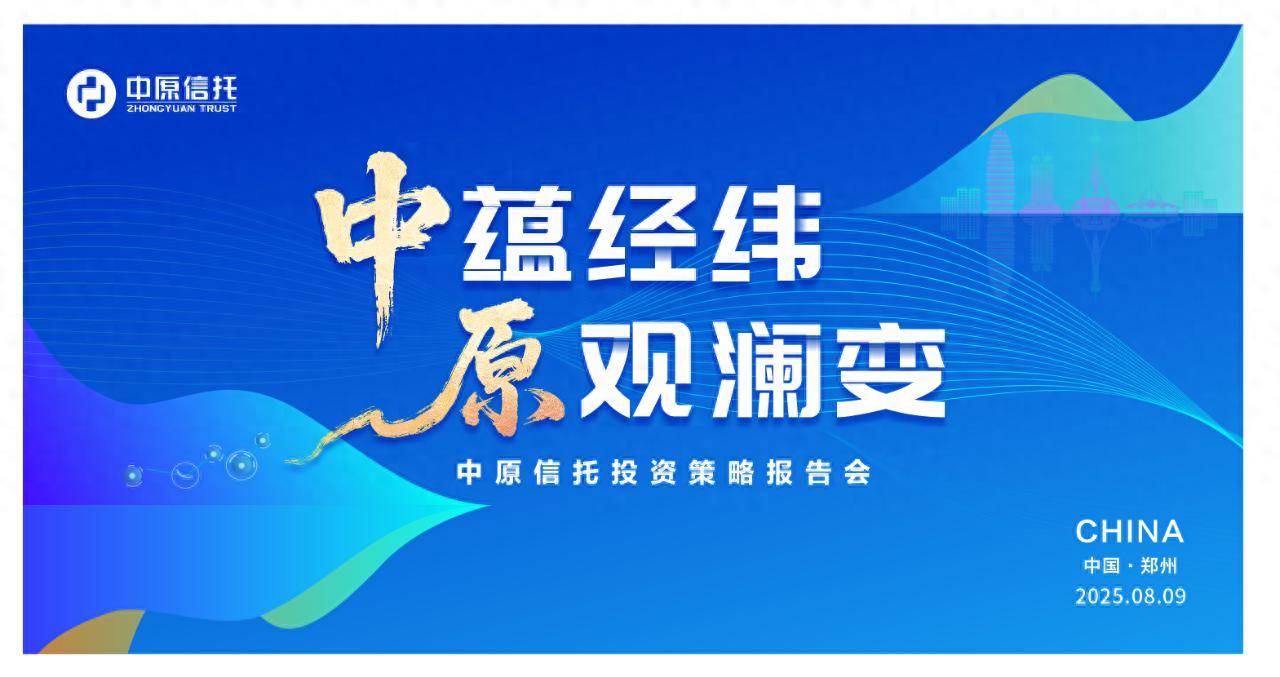
中原信托成功举办“中蕴经纬·原观澜变”投资策略报告会
Sou Hu Cai Jing· 2025-08-11 15:24
Core Insights - The "Zhongyun Jingwei·Yuan Guanlan Bian" investment strategy report conference was held in Zhengzhou, attracting over a hundred clients to discuss market opportunities [1] - The event emphasized the importance of professional investment strategies and forward-looking perspectives in wealth management amid a complex economic environment [3] Macroeconomic Analysis - Dr. Deng Shubin, Chief Economist of Zhongyuan Securities, provided an in-depth analysis of the macroeconomic outlook for the second half of the year, highlighting significant growth in service consumption and the resilience of the Chinese economy despite structural issues and external risks [4] - The central government aims to "expand residents' property income" as a key path to boost consumption, with the value of stock asset allocation becoming increasingly prominent in the current recovery environment [4] Market Insights - Mr. Zhang Liang, General Manager of Shenzhen Zhongou Ruibo, noted a significant positive shift in domestic policies, indicating the end of the bear market and the beginning of a bull market, with a focus on sectors such as technology, innovative pharmaceuticals, and gold for growth opportunities [6] - The current economic resilience, coupled with increased external uncertainties, suggests that the bond market is entering a period of fluctuation, where bonds should be viewed as a "core allocation" to balance investment portfolio volatility [9] Wealth Management Solutions - The "He Account" one-stop wealth management service was introduced by Mr. Wang Ningqi, emphasizing the solution to multi-account configuration challenges and the benefits of asset isolation and targeted inheritance through trust legal structures [10] - The conference showcased Zhongyuan Trust's commitment to providing professional and forward-looking market insights and asset allocation strategies, reinforcing its dedication to client-centric wealth management [12]
挂牌两年仍无人问津!中海信托4.22亿元转让国联期货股权进入最后披露期
券商中国· 2025-08-11 15:08
Core Viewpoint - The transfer of 39% equity in Guolian Futures by China Ocean Trust has been ongoing for two years without a buyer, raising questions about the future of the sale as the disclosure period approaches its end in August 2025 [2][3]. Group 1: Equity Transfer Details - The equity transfer involves 175.5 million shares of Guolian Futures, with a minimum transfer price set at 422 million yuan, translating to approximately 2.4 yuan per share [4]. - The initial transfer price two years ago was 411 million yuan, but the sale did not materialize due to a lack of market interest [4]. - The current transfer price represents a 20% premium over the assessed value of 409 million yuan as of December 31, 2023 [5]. Group 2: Company Background - Guolian Futures was established in 1993 with a registered capital of 450 million yuan, and its major shareholder is Wuxi Guolian Development Group, holding 54.72% of the shares [5]. - In 2023, Guolian Futures reported revenues of 2.42 billion yuan and a net profit of approximately 46.7 million yuan, while in the first half of 2024, revenues were 1.27 billion yuan with a net profit of about 15 million yuan [5]. Group 3: Market Context and Future Prospects - The market for futures company equity transfers has been relatively inactive, with a noted decline in trading activity and profitability in the industry [6]. - The potential buyer, Guolian Group, could increase its stake from 54.72% to 93.72%, which may lead to the integration of Guolian Futures with Minsheng Futures, enhancing operational capabilities [6]. - The regulatory environment has become stricter, and the industry is experiencing a trend towards consolidation, which may impact the future of Guolian Futures and its ability to attract new investors [6][7].

8月11日重要资讯一览
Zheng Quan Shi Bao Wang· 2025-08-11 14:10
Group 1 - The Ministry of Finance and the State Taxation Administration have released a draft for public consultation regarding the implementation regulations of the Value-Added Tax Law, which clarifies definitions and taxpayer categories [1] - The Central Securities Depository Company has simplified the account opening process for foreign central bank institutions by eliminating the requirement for a signed commitment letter [1][7] - The China Association of Automobile Manufacturers reported that from January to July, sales of new energy vehicles reached 8.22 million units, a year-on-year increase of 38.5% [4] Group 2 - Trust companies have begun receiving the latest regulatory ratings for 2024, with the highest known rating being level 2, indicating a focus on risk management and operational stability [5] - Shanghai Clearing House has also simplified the account opening materials for foreign institutions, enhancing the investment environment in the bond market [7] - Several companies are making significant moves, such as *ST Bio planning to acquire a 51% stake in Huize Pharmaceutical, and Chang'an Automobile's executives planning to increase their shareholdings [8]



