银行

Search documents
“投资者点题 代表委员作答”|如何破解金融服务实体经济结构性矛盾?·2026全国两会特别策划
证券时报· 2026-03-06 00:25
Core Viewpoint - The article discusses the need for financial services to better support the real economy, particularly focusing on how to direct funds towards innovative small and medium-sized enterprises (SMEs) and traditional businesses in need of transformation [2]. Group 1: Financial Services and SMEs - There is a significant disparity in funding, with capital favoring large enterprises while innovative SMEs struggle to access financing [2]. - Suggestions include broadening private equity exit channels and innovating the investment-loan linkage mechanism to enhance financial service efficiency for the real economy [2]. Group 2: Private Equity Fund Challenges - Private equity funds face challenges in their funding cycles, particularly due to a slowdown in traditional exit channels like IPOs, which affects their ability to reinvest [4]. - A proposal is made to establish a national, market-oriented private equity fund share trading platform in Hainan to improve transaction efficiency and transparency [4]. Group 3: Investment-Loan Linkage Mechanism - The article emphasizes the need to improve the investment-loan linkage mechanism to encourage banks to invest in technology innovation sectors, as traditional risk assessment methods do not align with the characteristics of tech firms [6][7]. - Recommendations include creating standardized cooperation platforms and enhancing communication between banks and private equity fund managers to foster long-term partnerships [7]. Group 4: Comprehensive Financial Service System - The development of direct financing channels in capital markets is crucial for addressing structural issues in financing, alongside the need for patient capital and support for mergers and acquisitions [9]. - Suggestions include refining policies for merger funds and relaxing certain regulatory requirements to stimulate activity in the capital market [9]. Group 5: Addressing Financing Bottlenecks - To overcome financing challenges for SMEs, financial institutions are encouraged to innovate credit products and local governments to establish risk compensation funds [10]. - The overarching goal is to ensure that funds flow to where they are most needed, thereby supporting innovative SMEs through various financing avenues [10].


昨夜,油价飙涨!欧美股市全线下跌,道指一度跌超1100点
证券时报· 2026-03-06 00:25
Market Overview - US stock markets experienced a collective decline, with the Dow Jones Industrial Average dropping 1.61% to 47,954.74 points, marking a loss of 784.67 points. The S&P 500 fell 0.56%, and the Nasdaq decreased by 0.26% [2][5] - European indices also closed lower, with Germany's DAX down 1.61%, France's CAC40 down 1.49%, and the UK's FTSE 100 down 1.45% [2] Oil Prices - International oil prices surged, with US crude oil futures rising 5.66% to $78.875 per barrel, reaching a peak of $82.15 during the day [7] - Brent crude oil futures increased by 3.57%, closing at $84.31 per barrel, with an intraday high of $86.28 [10] - UBS predicts that attacks on regional energy facilities could push Brent crude above $90 per barrel, and if the Strait of Hormuz is closed for an extended period, prices could exceed $100 per barrel [9] Technology and Financial Sector - Major technology stocks showed mixed performance, with Nvidia up 0.16%, Microsoft rising over 1%, while Tesla, Google, and Apple saw declines [5] - The banking sector faced significant losses, with JPMorgan down 1.95%, Citigroup and Wells Fargo down over 2%, and Goldman Sachs down over 3% [5] Chinese Stocks - Chinese stocks listed in the US generally fell, with the Nasdaq Golden Dragon China Index down 1.43%. Notable declines included Alibaba, NIO, and Tencent Music, while a few companies like XPeng and Vipshop saw slight gains [5] Precious Metals - International precious metal futures generally declined, with COMEX gold futures down 0.81% to $5,093.30 per ounce, and silver futures down 0.80% to $82.52 per ounce [12] - The rise in the US dollar index and strong economic data have led to a shift of some safe-haven funds from gold to the dollar, impacting gold prices negatively [14]

成都银行:2026年度投资峰会速递扎实基本面筑牢业绩根基-20260306
HTSC· 2026-03-06 00:25
Investment Rating - The report maintains a "Buy" rating for Chengdu Bank with a target price of RMB 23.25 [7]. Core Insights - Chengdu Bank is solidifying its traditional strengths in government financing while achieving synergy between government financing and real economy development [1][2]. - The bank focuses on large and medium-sized clients in its real economy business, leveraging local information and decision-making advantages for differentiated competition [3]. - The bank is enhancing its non-interest income through a focus on agency sales, aiming to expand its product matrix and increase comprehensive income [4]. Summary by Relevant Sections Government Financing Advantages - The bank is increasing its investment in second and third-tier cities while maintaining its core investment advantages in major urban areas. This strategy is expected to improve credit risk stability and enhance asset pricing positively [2]. Differentiated Competition in Real Economy - Chengdu Bank has developed a competitive edge by deeply engaging with quality local clients, utilizing local data and efficient decision-making processes. This allows for quicker information updates and industry judgments, enabling the bank to navigate industry cycles effectively [3]. Non-Interest Income Growth - As of June 2025, the bank's agency sales of wealth management products reached RMB 56.7 billion, with plans to expand this scale significantly in 2026. The bank aims to increase its non-interest income share through wealth management and agency sales, creating new revenue growth drivers [4]. Profit Forecast and Valuation - The bank's projected net profit for 2025-2027 is RMB 135 billion, RMB 144 billion, and RMB 153 billion, reflecting growth rates of 5.1%, 6.4%, and 6.6% respectively. The estimated BVPS for 2026 is RMB 23.61, corresponding to a PB ratio of 0.71 [5].
中金:联合解读《政府工作报告》
中金点睛· 2026-03-06 00:00
Core Viewpoint - The government work report emphasizes high-quality development and sustainable growth, balancing long-term goals with short-term necessities, while maintaining a flexible and proactive monetary and fiscal policy [4][17]. Macro: Greater Emphasis on Sustainability - The report highlights the need to reform economic cycles to enhance internal growth momentum, setting a GDP growth target of 4.5%-5% for 2026, which reflects a pragmatic approach to economic management [5][17]. - Monetary policy remains flexible, with expectations of potential interest rate cuts and reserve requirement ratio reductions to support economic stability [6][31]. - Fiscal policy is expected to maintain a similar scale to the previous year, with a slight increase in new debt issuance, focusing on structural adjustments and supporting consumption and investment [6][27]. Consumption and Investment - The report stresses the importance of stimulating domestic consumption through structural policies and temporary measures, including a 2,500 billion yuan special bond for consumer goods and a 1,000 billion yuan fund to promote domestic demand [9][18]. - It aims to enhance residents' income and improve the employment-friendly nature of the industrial structure, with specific measures to support low-income groups and improve social security [9][18]. Industry Policy and Technological Innovation - The report prioritizes the cultivation of new economic drivers and high-level technological self-reliance, with a focus on sectors like integrated circuits, aerospace, and biomedicine [10][18]. - It emphasizes the need for innovation and the commercialization of technological achievements, aiming to leverage China's large market and complete industrial system to enhance efficiency and drive economic growth [11][18]. Financial Sector Insights - The report indicates a continued focus on stabilizing growth and expanding domestic demand through fiscal injections into banks and new policy financial tools, which are expected to support credit demand [30][34]. - The issuance of special bonds to support state-owned banks is anticipated to enhance their capital and ability to support the real economy [32][34]. Real Estate Market Focus - The report reiterates the importance of addressing real estate supply issues, emphasizing inventory reduction and quality supply, which is crucial for stabilizing housing prices [38][39]. - It highlights the need for reforms in housing provident funds and improving the supply of affordable housing, aiming to create a more sustainable real estate market [38][39]. Energy and Environmental Policies - The report outlines goals for energy security and carbon reduction, aiming to enhance energy production capacity and promote green development [24][42]. - It emphasizes the importance of developing a new energy system and advancing low-carbon technologies, with specific targets for carbon emissions reduction [46][47].

突发!伊朗:击中美国航母!原油飙涨,道指暴跌超1100点!
券商中国· 2026-03-05 23:32
Market Impact - The ongoing conflict in the Middle East, particularly around Iran, has caused significant volatility in financial markets, with the Dow Jones Industrial Average experiencing a drop of over 1100 points at one point [2][3] - International oil prices surged, with WTI crude oil futures for April rising by over 8.5%, reaching above $81 per barrel, marking the largest single-day increase since May 2020 [6][7] Oil Price Dynamics - Since the beginning of the week, WTI and Brent crude oil prices have increased by over 20% and 17% respectively, driven by concerns over potential disruptions to oil transport through the Strait of Hormuz [7] - The Iranian government has denied claims of blocking the Strait, asserting its commitment to international law and freedom of navigation [7] Energy Market Reactions - Natural gas futures in the U.S. rose by nearly 3%, while diesel futures increased by approximately 7%, indicating a broader rise in energy prices that could complicate inflation dynamics and impact Federal Reserve policy [8] - Analysts express high uncertainty regarding the duration of the conflict and its potential impact on global energy supply [8] Regional Tensions - The conflict has led to heightened tensions in the region, with reports of missile threats in the UAE and attacks on Azerbaijani territory by Iranian drones [10][11] - Incidents of missile strikes in Bahrain and Qatar have also been reported, further escalating regional security concerns [11]

就在今天|国泰海通非银&银行&地产3月专题论坛
国泰海通证券研究· 2026-03-05 22:26
Group 1 - The article discusses the upcoming trends in the REITs market for 2026, highlighting the importance of asset investment and research in this sector [5][6]. - It emphasizes the development and business opportunities related to the digital RMB, indicating a significant shift in financial transactions and investments [5]. - The forum includes insights on the 2026 interest rate market outlook, investment trends, and asset allocation strategies, which are crucial for financial institutions and investors [6][8]. Group 2 - The event features various experts discussing the operational outlook for banks in 2026, focusing on financial market business prospects [8]. - There is a segment dedicated to the high-quality development of the real estate sector during the 15th Five-Year Plan, indicating a strategic focus on sustainable growth [8]. - The importance of asset allocation is reiterated, stressing its significance from institutional to individual investors [6][8].

国泰海通|2026年政府工作报告总量联合解读
国泰海通证券研究· 2026-03-05 14:13
Core Viewpoint - The 2026 government work report emphasizes a pragmatic approach, focusing on quality and efficiency in economic growth while maintaining a positive policy stance without excessive stimulus [4][5][7]. Group 1: Economic Goals and Targets - The economic growth target is set at 4.5-5%, reflecting a shift from speed to quality and efficiency, allowing more policy space for structural adjustments [7][17]. - The inflation target is maintained at around 2%, with an implied nominal GDP growth rate of approximately 5.04% [7][16]. - The urban unemployment rate target is around 5.5%, with a goal of creating over 12 million new urban jobs, highlighting ongoing employment pressures [8]. Group 2: Fiscal and Monetary Policy - Fiscal spending remains robust, with a deficit rate planned at around 4%, and new local special bonds totaling 4.4 trillion yuan, alongside the issuance of long-term special bonds of 1.3 trillion yuan [16][26]. - Monetary policy is expected to be moderately accommodative, with a focus on coordination and precision, emphasizing the expansion of domestic demand as a structural policy priority [16][27]. Group 3: Domestic Demand and Investment - The report prioritizes domestic demand, with a focus on service consumption and the release of effective investment potential, including a 250 billion yuan allocation for consumer upgrades and 800 billion yuan in new policy financial instruments to stimulate private investment [10][18]. - The construction of a modern industrial system will balance the optimization of traditional industries with the cultivation of emerging industries, particularly emphasizing the importance of artificial intelligence [11][19]. Group 4: Real Estate and Debt Management - Risks related to real estate and local government debt are expected to further converge, with recent policy measures aimed at stimulating reasonable demand in the housing sector [11][12]. - The report outlines a plan for the replacement of approximately 6 trillion yuan in local hidden debts, indicating a structured approach to debt management [11]. Group 5: Market and Investment Outlook - The report indicates a stable outlook for the stock market, with a focus on expanding domestic demand and structural reforms, which are expected to enhance public confidence in economic prospects [17][21]. - Investment recommendations include sectors benefiting from the stabilization of investment, such as construction materials, chemicals, and emerging technologies like AI [21][22].

中东冲突扰动全球汇市
第一财经· 2026-03-05 14:11
Core Viewpoint - The article discusses the recent volatility in the global foreign exchange market driven by geopolitical risks, oil price shocks, and changes in global central bank policy expectations, with a focus on the impact on various currencies, particularly the Chinese yuan and Asian currencies [3][9]. Currency Fluctuations - As of March 5, the People's Bank of China set the yuan's midpoint against the dollar at 6.9007, an increase of 117 basis points from the previous trading day, following a period of weakness due to external uncertainties [5][6]. - Major Asian currencies, including the yen, won, and Singapore dollar, have depreciated, while currencies from resource-rich economies like the Canadian dollar and Norwegian krone have remained relatively stable [6][7]. Geopolitical and Economic Influences - The escalation of conflicts in the Middle East has heightened global risk aversion, particularly concerning the security of oil transport through the Strait of Hormuz, which accounts for about 20% of global oil transport [9][10]. - International oil prices have surged, with Brent crude rising approximately 15% within a week, exceeding $85 per barrel, which has intensified inflation concerns and bolstered the dollar's appeal as a safe-haven asset [10][11]. Differentiated Impact on Economies - Energy-exporting countries like Canada and Norway benefit from rising oil prices, which improve trade conditions and support their currencies, while energy-importing economies face inflationary pressures and increased costs due to higher oil prices [11][12]. - The article notes that if energy prices continue to rise, consumer price indices in countries like Singapore could be significantly affected, with about 7% of items in the CPI basket directly impacted [11]. Central Bank Policy Expectations - Market participants are closely monitoring upcoming interest rate meetings of major central banks, including the Federal Reserve and the European Central Bank, as changes in policy could significantly influence currency movements [12][13]. - The article highlights that the outlook for the Japanese yen remains uncertain, and expectations for the Bank of England's rate cuts may be delayed due to rising inflation from energy prices, providing some support for the pound [12][13]. Future Currency Trends - Analysts predict that the foreign exchange market will continue to be influenced by geopolitical developments in the short term, while medium to long-term trends will depend on economic fundamentals and monetary policy paths [13][14]. - The yuan is expected to maintain a dual-directional fluctuation pattern, with short-term movements influenced by external geopolitical risks, while the medium-term trend remains one of appreciation due to improving domestic economic fundamentals [14][15]. - Other Asian currencies are likely to face continued pressure in the short term, but a potential rebound could occur if geopolitical tensions ease [15].

工商银行广州分行“乐购新春”系列活动激活新春消费活力
Xin Lang Cai Jing· 2026-03-05 12:27
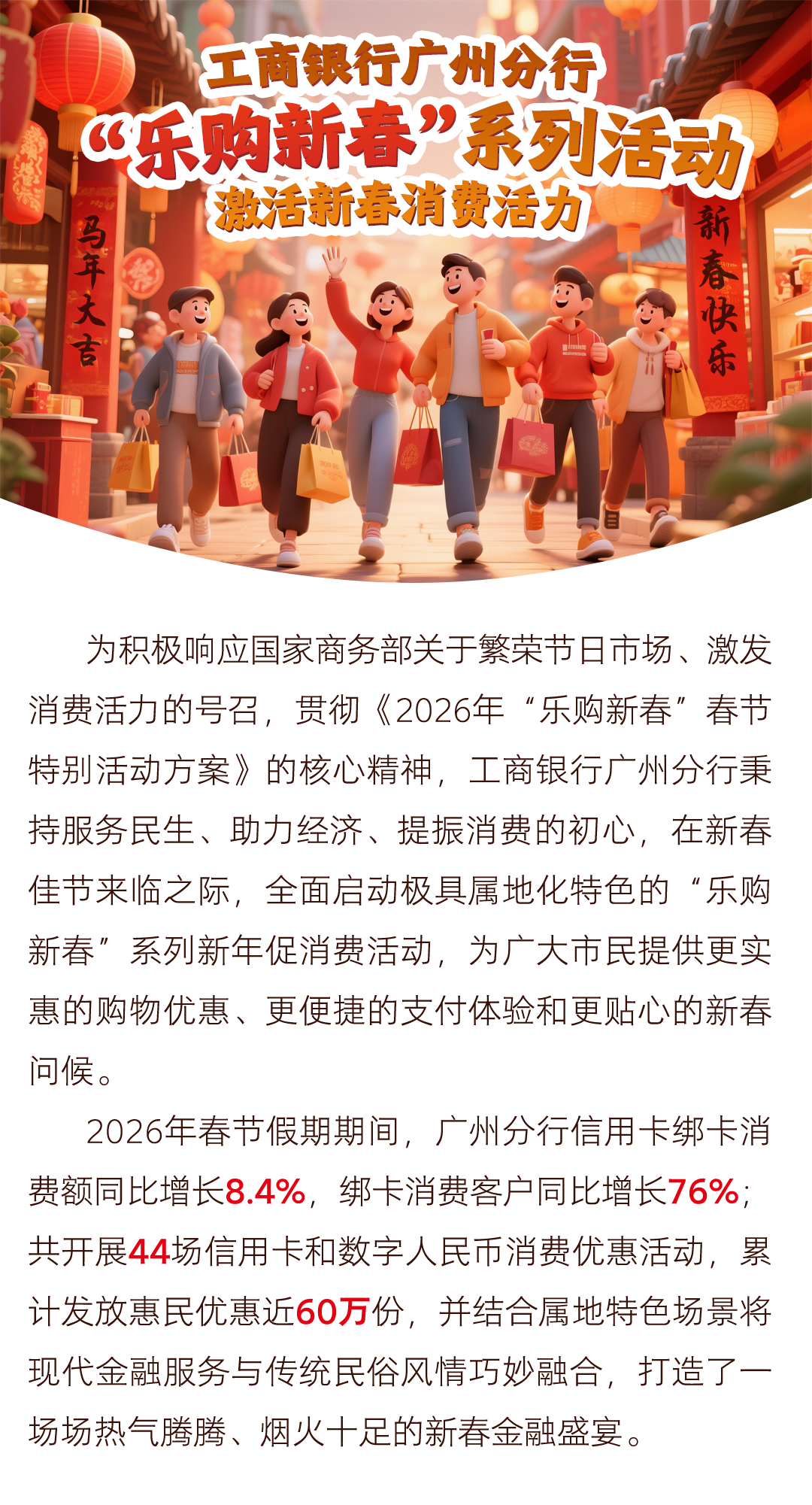
Group 1 - The core idea of the article is the promotion of consumer spending through various financial activities and partnerships with local merchants during the Spring Festival season [1][2] - The bank has launched a series of promotional activities such as "Love Buy New Year Dinner," "Love Buy Citywalk," and "Love Buy Merchants Circle" to cater to the diverse consumption needs of citizens [1][2] - The promotional activities are designed to enhance the overall consumer experience by integrating financial services with local cultural events and attractions [1][2] Group 2 - The bank has strategically targeted popular shopping districts and local merchants, successfully attracting over 100,000 visitors to physical stores during the promotional period [2][4] - Key partner merchants experienced a 36% year-on-year increase in transaction volume, a 17% increase in transaction count, and a 16% increase in average transaction value during the Spring Festival [2][4] - The initiative aims to create a win-win situation for cardholders, merchants, and the overall market by boosting consumer confidence and activating potential demand [2][4] Group 3 - The bank has effectively utilized both online and offline channels for promotion, including social media, in-branch advertising, and public transport displays to maximize outreach [4][6] - The "Happy Shopping Spring" series of activities has established a financial ecosystem that benefits both consumers and merchants, enhancing the overall shopping experience [4][6] - Future plans include further integration of payment ecosystems with consumer scenarios to inject long-term momentum into the regional consumption market [4][6]

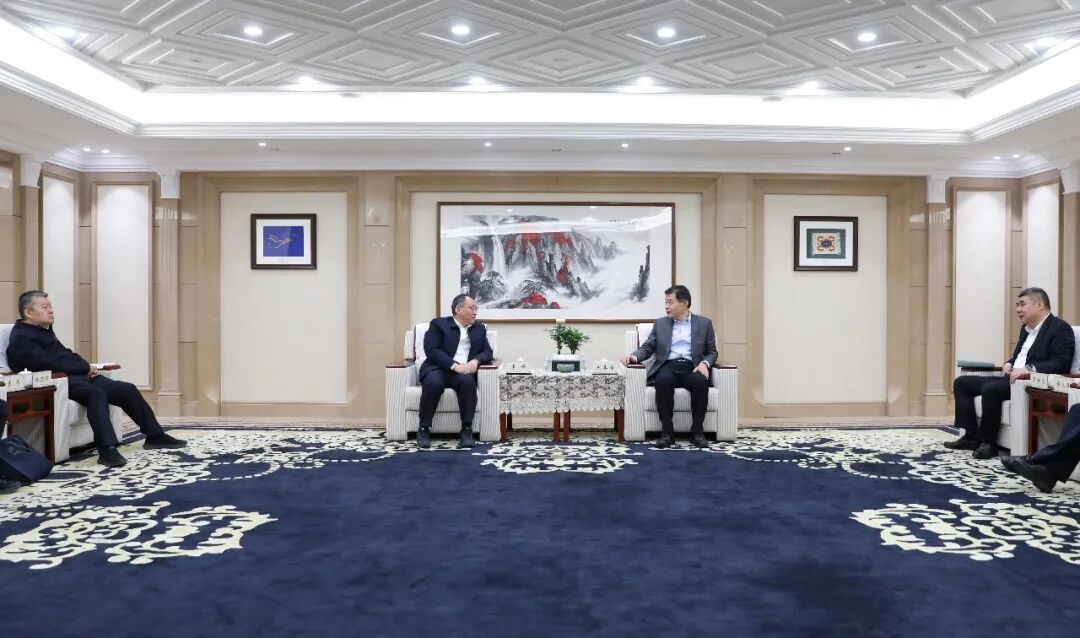
王其峰会见工商银行客人
Xin Lang Cai Jing· 2026-03-05 12:17
Core Viewpoint - The meeting between Shandong Highway Group and Industrial and Commercial Bank of China (ICBC) aims to strengthen their cooperation in financial services, focusing on project financing, cross-border financial services, and financial innovation to support high-quality economic development in Shandong Province [3][6]. Group 1 - Shandong Highway Group's Chairman Wang Qifeng welcomed ICBC's delegation and expressed gratitude for the bank's long-term financial support [3][6]. - Wang emphasized the importance of ICBC as a key financial partner, highlighting the deep cooperation foundation and fruitful results achieved [3][6]. - The meeting serves as an opportunity to deepen collaboration in major project financing and other financial services, aiming for resource sharing and mutual benefits [3][6]. Group 2 - ICBC's branch manager Li Feng expressed appreciation for Shandong Highway Group's trust and support, reaffirming the bank's commitment to being a significant partner [3][6]. - Li stated that ICBC will focus on the development needs of Shandong Highway Group, optimizing financial services and expanding the scope and depth of cooperation [3][6]. - The goal is to empower the group's high-quality development through high-quality financial services [3][6].