
外卖

Search documents
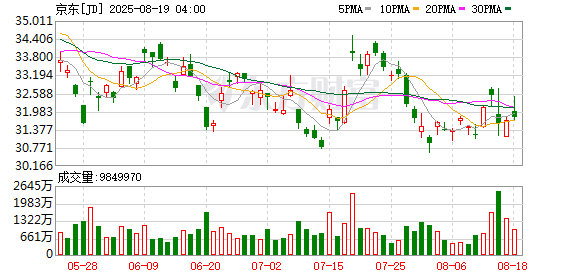
京东:外卖全职骑手突破15万,人均缴纳五险一金约2000元/月
Zheng Quan Shi Bao· 2025-08-19 05:12
Group 1 - JD's delivery service has surpassed 150,000 full-time riders, with the company covering all social insurance and housing fund costs, averaging about 2,000 yuan per rider per month [2] - JD has committed to three 100% principles for full-time riders: 100% signing of labor contracts, 100% payment of social insurance and housing fund, and 100% provision of formal employee benefits [2] - In Q2, JD's delivery business achieved a daily order volume exceeding 25 million, covering 350 cities and over 1.5 million restaurants, with nearly 200 restaurant brands achieving sales over 1 million [4] Group 2 - JD's Q2 revenue reached 356.7 billion yuan (approximately 49.8 billion USD), a year-on-year growth of 22.4%, exceeding market expectations and setting a record for growth rate in nearly three years [6] - The significant growth in user traffic, active users, and purchase frequency in Q2 is attributed to the continuous development of JD's core retail business and new businesses like delivery [6] - JD's retail revenue grew by 20.6% year-on-year in Q2, with an operating profit margin of 4.5%, marking the highest record for all promotional quarters in the company's history [6] Group 3 - JD's delivery service collaborates with numerous leading enterprises to provide high-quality corporate dining solutions, covering over 15,000 key enterprises [5] - The company emphasizes a stance against malicious competition and unhealthy market practices, focusing on quality and service rather than engaging in price wars or harmful subsidies [5] - JD aims to build core competitiveness through technology empowerment and supply chain innovation while maintaining a commitment to food safety [5]


京东:外卖全职骑手突破15万,人均缴纳五险一金约2000元/月
证券时报· 2025-08-19 05:03
Core Viewpoint - JD.com has significantly expanded its food delivery business, focusing on employee welfare and operational integrity while achieving strong financial growth in Q2 2023 [1][3][5]. Group 1: Employee Welfare - As of August 19, JD.com has over 150,000 full-time delivery riders, with the company covering all costs for social insurance and housing fund, averaging about 2,000 yuan per person per month [1]. - JD.com ensures 100% signing of labor contracts, 100% payment of social insurance, and 100% provision of formal employee benefits for its delivery riders [1]. Group 2: Business Performance - In Q2 2023, JD.com reported revenue of 356.7 billion yuan (approximately 49.8 billion USD), a year-on-year increase of 22.4%, surpassing market expectations and setting a record for growth in nearly three years [5]. - The daily order volume for JD's food delivery business exceeded 25 million, with coverage across 350 cities and over 1.5 million restaurants, indicating a robust service network [3]. Group 3: Market Strategy - JD.com collaborates with numerous leading enterprises to provide high-quality corporate dining solutions, serving over 15,000 key enterprises [4]. - The company emphasizes a commitment to avoiding market manipulation and unhealthy competition, focusing on quality and service rather than engaging in harmful subsidies [4].

人民网三评“外卖大战”之一:谁在“卷” “卷”了谁?
Ren Min Wang· 2025-08-19 03:01
Core Viewpoint - The ongoing "takeout war" among major platforms has led to significant financial investments in subsidies, resulting in record-breaking order volumes, but it has also created a complex competitive environment that may harm smaller businesses and reduce market diversity [1][2][3] Group 1: Market Dynamics - Since April, platforms have invested nearly 1 trillion yuan in subsidies to attract customers, leading to a surge in order volumes [1] - The initial benefits of subsidies included increased market share for platforms and sales for merchants, but many restaurants report that they are not profiting, leading to a "loss-leader" situation [1][2] - The competition has shifted from a marketing strategy to a prolonged battle, altering the landscape of the restaurant market [1] Group 2: Impact on Small Businesses - Smaller businesses face an unequal competitive environment, where they must choose between participating in subsidies, which erodes profits, or risking marginalization by not participating [2] - The reliance on a single platform for revenue can limit the operational autonomy of smaller restaurants, increasing their financial pressure [2] - The ongoing price wars may force unique small eateries out of the market, as they struggle to maintain profitability [2] Group 3: Long-term Implications - The "takeout war" may reduce market diversity, as consumer choices become limited to a few large brands offering standardized products, potentially impacting local culinary culture [3] - The heavy reliance of many businesses on a few platforms could weaken the overall resilience of the restaurant retail system [3] - The focus should shift from a simplistic "winner vs. loser" perspective to understanding the long-term effects on the entire restaurant ecosystem [3] Group 4: Call for Change - There is a need for platforms to transition from a "traffic-driven" mindset to a "coexistence-driven" approach, ensuring that all types of businesses can thrive [3] - The ultimate goal should be to create a healthy ecosystem where large, medium, and small businesses can grow, consumers receive sustainable quality service, and delivery personnel are respected and protected [3] - True success for platforms will be measured by their ability to connect their achievements with the prosperity of the broader economic ecosystem [3]

人民网三评“外卖大战”之二:为什么“卷”,“卷”什么?
Xin Lang Cai Jing· 2025-08-19 03:00
Core Viewpoint - The essence of "involution" on platforms is a result of changes in market structure, shifts in consumer behavior, and the endogenous dynamics and mechanisms of platform growth [1] Group 1: Market Dynamics - In a context where market supply is converging, if delivery platforms focus competition on price to quickly gain user scale, it poses management challenges for restaurant businesses due to the dramatic fluctuations in orders, raw materials, and workforce [1] - Failure to timely adjust to these challenges can lead to high costs for businesses, resulting in a situation where "incremental growth does not lead to increased revenue" [1] Group 2: Quality and Innovation - Price-based competition does not compel businesses to enhance the quality or level of their offerings, which is detrimental to market innovation [1] - Platforms may also face poor consumer experiences due to insufficient preparation of offline fulfillment teams, leading to dissatisfaction among consumer groups and potential public relations issues [1] Group 3: Sustainable Competition - The price-centric "delivery wars" are unsustainable, and it is essential to move beyond the "low-price trap" and "involution-style" competition [1] - Establishing a new balance centered on technological efficiency and institutional innovation is crucial for achieving high-quality development in the platform economy [1]
坚决“反内卷” 警惕超低价
Sou Hu Cai Jing· 2025-08-19 01:19
【深圳商报讯】(驻穗记者 姚嘉莉 通讯员 粤消宣)为帮助广大消费者认清套路、规避风险,从消费端抵 制"内卷式"竞争,广东省市场监管局、广东省消委会8月18日联合发出"反内卷"消费提示。 近期,外卖平台和商家推出了折扣、补贴、新品和联名等活动,导致多家茶饮店出现"爆单"现象。 (中新社 发) 虚假宣传套路真"坑人" 。一些经营者通过虚标原价、低价引流等"内卷式"营销制造优惠假象,如宣称"原价 599元,现价99元",实则原价从未实际成交;部分促销活动宣称"全场5折",却暗中抬高部分商品基础价格, 或限制低价商品库存,引导消费者购买高价替代品。省消委会建议,消费者在购物时通过多渠道比对价格, 查看商品历史成交价,对"限时特惠""限量秒杀"的宣传保持警惕,避免被虚假折扣误导。 "内卷式"竞争催生"多买更便宜"等过度消费营销手段,通过捆绑折扣、满减机制刺激非必要消费,诱导消费 者为追求摊薄单价而超量购买不需要的商品。因此,消费者在购物前明确真实需求,应践行理性消费,按需 购买、量力而行,让消费回归满足需求的本质。 部分平台或企业在"内卷式"竞争中以领取"无门槛券包""购物立减金""红包"等名义,诱导消费者开通"先消费 ...
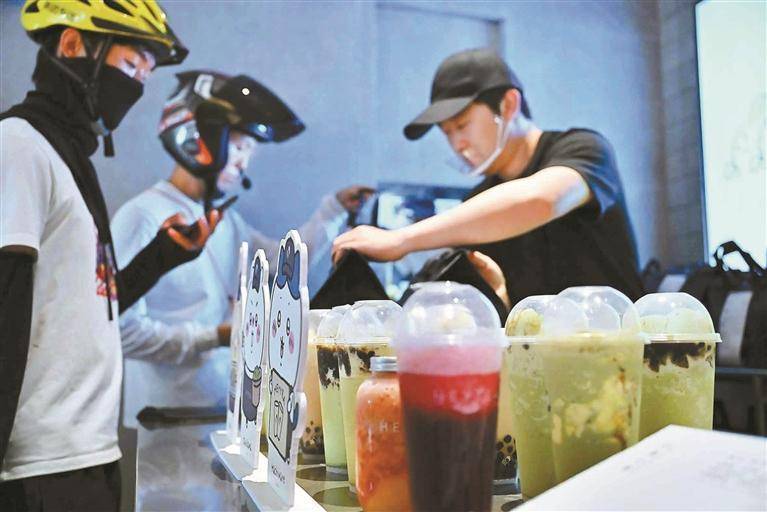
“外卖大战 配送慢”上热搜 “15分钟达”订单可能要30多分钟?
Di Yi Cai Jing· 2025-08-18 22:42
Core Insights - The delivery speed issues of food delivery platforms have become a trending topic, with users increasingly sensitive to service capabilities following the reduction of subsidy wars [2][3] - The competition among food delivery platforms is shifting from price wars to service quality, with a focus on improving delivery efficiency and user satisfaction [2][5] Delivery Performance Challenges - Complaints about slow delivery have surged, with over 90 posts on social media platforms in the past week highlighting issues such as delivery times exceeding one hour and lack of available riders [2] - Despite a significant increase in the number of delivery riders, the distribution of riders may vary by region and time, complicating the ability to meet demand during peak hours [4] Rider and Operational Insights - As of late July, the number of riders on platforms like Ele.me has increased significantly, with a 181% rise in active riders and a 236% increase in crowd-sourced riders [3] - The focus on enhancing delivery capabilities is evident, with companies like JD.com reporting 25 million daily orders and over 150,000 full-time riders [3] System and Coordination Issues - Delivery efficiency is affected by various systemic issues, such as discrepancies in estimated delivery times between merchants and riders, which can delay food preparation and delivery [4] - The integration of new riders and merchants into the system raises the bar for operational maturity, necessitating improvements in platform logistics [4] Competitive Landscape - The industry is witnessing a push towards a "15-minute delivery" model, with platforms like Meituan promoting this as a competitive advantage, although actual delivery times may vary significantly [5] - The competition is now centered around three main areas: user engagement, merchant partnerships, and rider resources, with a focus on maximizing existing user value rather than merely acquiring new users [5]
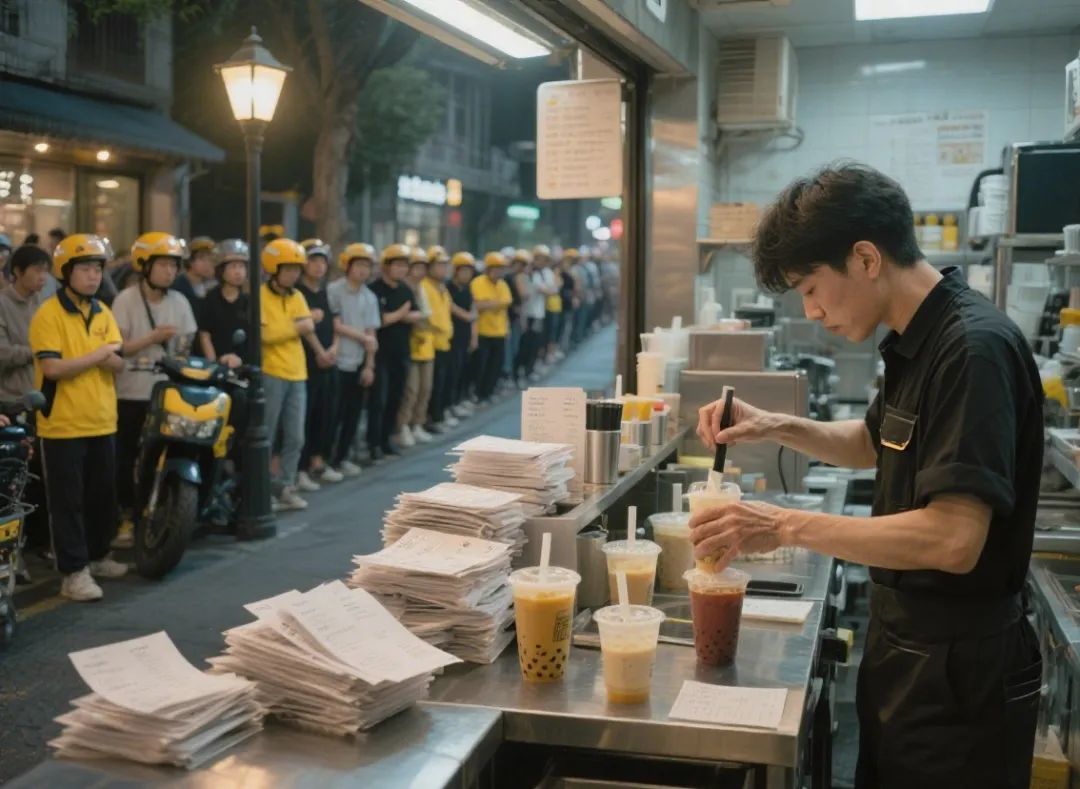
广东省市场监管局、广东省消委会发布消费提示—— 坚决“反内卷” 警惕超低价
Shen Zhen Shang Bao· 2025-08-18 16:49
Core Viewpoint - The Guangdong Provincial Market Supervision Administration and the Guangdong Consumer Council issued a "anti-involution" consumption alert to help consumers recognize traps and avoid risks associated with irrational competition in the market [1][2][3] Group 1: Involution Competition and Consumer Risks - Involution competition, characterized by irrational price wars, false subsidies, and excessive promotions, is prevalent in various consumer sectors, particularly in the tea beverage market [1][2] - Low-price temptations often lead to low-quality products, as businesses may cut costs to compete, resulting in diminished product quality and service, which can complicate consumer rights protection [1][2] - Consumers are advised to prioritize product quality and merchant qualifications over low prices, emphasizing that "reasonable prices and reliable quality" should be the core of consumption [1][2] Group 2: False Advertising and Consumer Behavior - Some businesses engage in misleading marketing tactics, such as falsely marking original prices or creating a false sense of discounts, which can mislead consumers [2] - The "buy more for less" marketing strategy encourages excessive consumption, prompting consumers to purchase unnecessary items in pursuit of lower unit prices [2] - Consumers are encouraged to clarify their actual needs before shopping and to practice rational consumption by buying only what they need [2] Group 3: Consumer Rights and Market Competition - Regulatory authorities warn that irrational subsidies and price wars by leading platforms may harm the competitive market ecosystem, potentially limiting consumer choices and increasing the risk of rights violations [3] - Consumers are urged to support diverse market participants and choose platforms that balance fair competition with innovative services [3] - In cases where consumer rights are infringed due to involution competition, consumers should file complaints and seek resolution through appropriate channels [3]
“外卖大战 配送慢”上热搜,“15分钟达”订单最终可能要30多分钟?
Di Yi Cai Jing· 2025-08-18 16:30
Core Insights - The delivery speed issues in the food delivery industry have become a significant concern for consumers, especially after the decline of subsidy wars, leading to increased sensitivity towards service capabilities [2][3] - The competition among food delivery platforms is shifting from price wars to service quality, with a focus on improving delivery efficiency and customer satisfaction [2][5] Delivery Performance - The number of delivery riders has significantly increased this summer, with Ele.me reporting a 181% growth in active riders and a 236% increase in crowd-sourced riders by the end of July [3] - Despite the increase in rider numbers, challenges remain in maintaining delivery efficiency, particularly during peak hours, due to varying rider density and system coordination issues [4] Service Quality Challenges - The decline in subsidies may exacerbate delivery speed issues, as platforms may struggle to maintain resource allocation and delivery efficiency without financial incentives [3] - Systemic issues, such as discrepancies in estimated delivery times between merchants and riders, as well as inefficient navigation routes, contribute to delays and require optimization [4] Competitive Landscape - The competition is evolving towards a "15-minute delivery" model, with platforms like Meituan attempting to attract users with rapid delivery promises, although actual performance may not always meet expectations [5] - The focus of competition is now on three main areas: user engagement, merchant partnerships, and rider resources, with an emphasis on maximizing existing user value and enhancing service offerings [6]

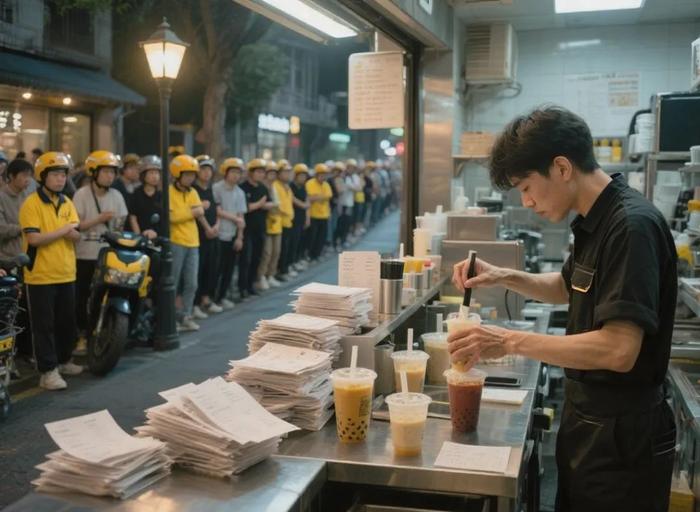
“外卖大战 配送慢”上热搜,“15分钟达”订单最终可能要30多分钟?
第一财经· 2025-08-18 16:23
Core Viewpoint - The article discusses the increasing consumer sensitivity to delivery times and service quality in the food delivery industry, particularly as the "subsidy war" cools down, leading to a focus on service competition among platforms [2][3]. Group 1: Delivery Challenges - There has been a significant increase in the number of delivery riders, with Ele.me reporting a 181% growth in active riders and a 236% increase in crowd-sourced riders as of July [3]. - Despite the increase in rider numbers, the distribution of riders may vary by region and time, complicating the ability to meet delivery demands during peak hours [4]. - The delivery efficiency is also affected by system issues, such as discrepancies between estimated delivery times seen by merchants and those displayed on rider apps, which can delay food preparation and delivery [4]. Group 2: Competitive Landscape - The competition among food delivery platforms is shifting from acquiring new users to maximizing the value of existing users, focusing on user loyalty and market share [6]. - Platforms are now competing to achieve faster delivery times, with Meituan introducing a "15-minute delivery" initiative, although there are reports of delays in actual delivery times [5][6]. - The competition is also extending to local service providers, moving beyond saturated online merchants to include a broader range of offline businesses [6]. Group 3: Future Outlook - The future of the food delivery industry will likely see an increased emphasis on delivery speed and fulfillment capabilities as platforms strive to enhance their service offerings [5][6]. - The ability to maintain and improve delivery systems and rider incentives will be crucial for platforms as they navigate the post-subsidy landscape [3][4].
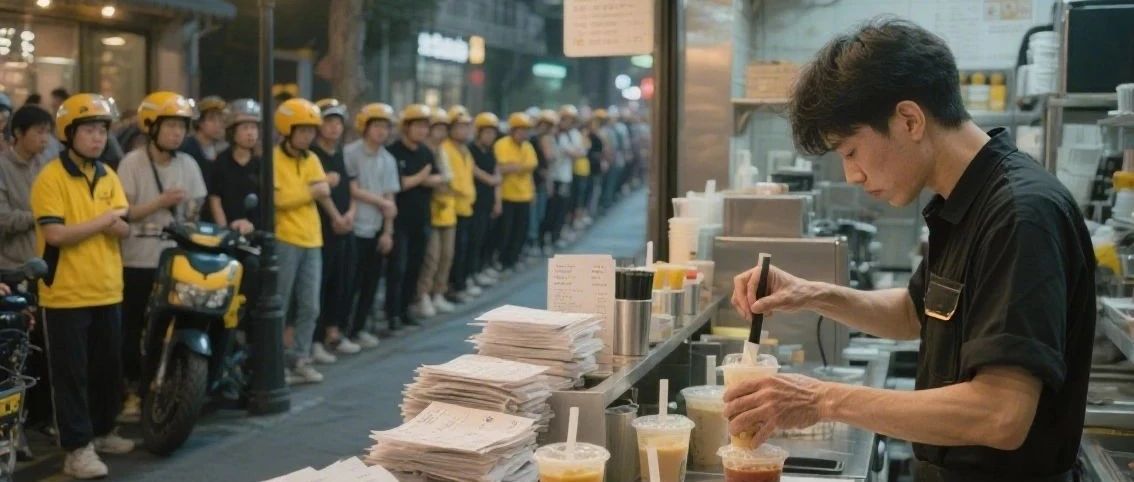
“配送慢”上热搜,外卖战降温配送压力反变大了吗?
Di Yi Cai Jing· 2025-08-18 14:50
Core Insights - The recent rise in complaints about slow food delivery indicates a shift in consumer sensitivity towards service quality as the "subsidy war" cools down [1][2] - The increase in the number of delivery riders has not necessarily translated to improved delivery efficiency, highlighting systemic issues within the platforms [2][3] Group 1: Delivery Challenges - Complaints about slow delivery have surged, with over 90 posts on social media platforms in just one week, indicating growing consumer frustration [1] - The delivery chaos during peak times has become more apparent this summer, with reports of order cancellations and delays due to high demand and low pricing strategies [1][2] Group 2: Rider Statistics - The number of delivery riders has significantly increased, with Ele.me reporting a 181% rise in active riders and a 236% increase in crowd-sourced riders by the end of July [2] - As of August 7, the total number of Ele.me riders reached 3.5 times that of the previous year, while JD reported 25 million daily orders in Q2 with over 150,000 full-time riders [2] Group 3: Systemic Issues - Despite the increase in rider numbers, the distribution of riders across different regions and times remains inconsistent, affecting delivery efficiency [3] - Systemic issues such as discrepancies in delivery time estimates between merchants and riders, as well as inefficient navigation routes, contribute to slow delivery times [3] Group 4: Future Outlook - The competition in the food delivery sector is expected to increasingly focus on delivery efficiency and fulfillment capabilities as the market evolves [4]
