软件

Search documents
从八闽投行“主力军”到区域发展“创新枢纽”——证券行业服务科技创新调研之兴业证券样本
Shang Hai Zheng Quan Bao· 2025-12-09 18:53
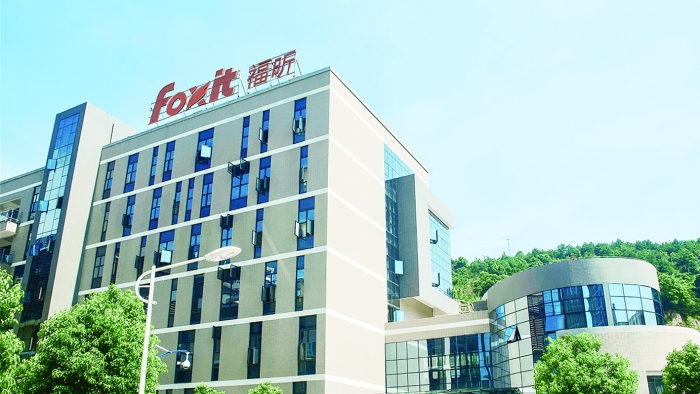
Core Viewpoint - A number of innovative technology companies in Fujian, such as Fuguang Co., Xiamen Tungsten New Energy, and Foxit Software, are gaining recognition in the capital market while facing various challenges. Industrial and financial integration is facilitated by Industrial Securities, which acts as a bridge between technology and capital, supporting regional innovation and development [6][7]. Group 1: Company Developments - Fuguang Co. developed an optical navigation system that successfully identified Mars from millions of kilometers away during the Tianwen-1 mission [6]. - Xiamen Tungsten New Energy produced nearly 100,000 tons of lithium-ion battery materials in 2023, contributing to the 3C digital and new energy vehicle sectors [6]. - Foxit Software is competing with international giants by leveraging its core PDF technology and has made strategic acquisitions to enhance its capabilities [13]. Group 2: Financial Integration and Support - Industrial Securities has established a "Golden Seed" program to nurture regional small and medium-sized enterprises, categorizing clients based on maturity and providing targeted support [8]. - As of Q1 2025, Industrial Securities has invested in over 40 projects in sectors like semiconductors and new energy, with a total investment amount nearing 5 billion [8]. - The company has facilitated the listing of 42 local enterprises on the A-share market, raising over 1.7 trillion in financing [10]. Group 3: Market Impact and Growth - Xiamen Tungsten New Energy's IPO and subsequent financing raised over 5 billion, significantly supporting its capacity expansion and technological innovation [12]. - The company reported a revenue of 13.06 billion with a year-on-year growth of 29.80% and a net profit of 552 million, up 41.54% [12]. - Fuguang Co.'s market valuation increased from 2.8 billion before its IPO to nearly 5 billion, with total assets rising from 940 million to 2.571 billion [11]. Group 4: Regional Economic Development - Fujian's GDP grew by 5.2% in the first three quarters of 2025, with high-tech manufacturing and equipment manufacturing sectors seeing increases of 15.3% and 13.9%, respectively [14]. - The number of A-share listed companies in Fujian reached 172, ranking 9th nationally, indicating potential for further growth in the region's innovative capacity [14]. - Industrial Securities aims to enhance its role as a hub for local technological innovation, supporting the upgrade of regional industrial structures and high-quality economic growth [15].


华尔街顶级分析师最新评级:新思科技获上调、华纳兄弟遭下调
Xin Lang Cai Jing· 2025-12-09 15:10
Core Viewpoint - The report summarizes significant rating changes from Wall Street that are expected to impact the market, highlighting both upgrades and downgrades across various companies and sectors [1][6]. Upgrades - Synopsys (SNPS): Rosenblatt Securities upgraded the rating from "Neutral" to "Buy," lowering the target price from $605 to $560, anticipating that Q4 results will meet market expectations after a disappointing Q3 [5]. - Eaton Corporation (ETN): Wolfe Research upgraded the rating from "In-Line" to "Outperform," setting a target price of $413, expecting benefits from electrical business orders and easing cyclical factors in 2026 [5]. - Colgate-Palmolive (CL): Royal Bank of Canada upgraded the rating from "Sector Perform" to "Outperform," maintaining a target price of $88, noting that earnings expectations are at a reasonable low despite challenges in 2026 [5]. - RPM International (RPM): Royal Bank of Canada upgraded the rating from "Sector Perform" to "Outperform," raising the target price from $121 to $132, indicating that the stock price has "bottomed out" [5]. - Viking Holdings (VIK): Goldman Sachs upgraded the rating from "Neutral" to "Buy," increasing the target price from $66 to $78, citing the company's unique geographic business layout and high-income customer focus [5]. Downgrades - Warner Bros. Discovery (WBD): Harbor Research downgraded the rating from "Buy" to "Neutral" without providing a target price, following a hostile takeover bid from Paramount [5]. - Norwegian Cruise Line (NCLH): Goldman Sachs downgraded the rating from "Buy" to "Neutral," lowering the target price from $23 to $21, citing an unfavorable risk-reward ratio due to market conditions in the Caribbean [5]. - Confluent (CFLT): Royal Bank of Canada downgraded the rating from "Outperform" to "Sector Perform," raising the target price from $30 to $31, following an acquisition agreement with IBM at $31 per share [5]. - SLM Corporation (SLM): Compass Point downgraded the rating from "Buy" to "Sell," reducing the target price from $35 to $23, after revealing updated mid-term outlooks at an investor forum [5]. - Viavi Solutions (VRT): Wolfe Research downgraded the rating from "Outperform" to "In-Line," citing valuation issues as the stock price has increased 14 times since the last upgrade [5]. Initiations - Micron Technology (MU): HSBC initiated coverage with a "Buy" rating and a target price of $330, identifying the company as a core beneficiary of the storage chip supercycle [9]. - United Airlines (UAL): Montreal Bank Capital Markets initiated coverage with an "Outperform" rating and a target price of $125, noting improvements in the industry environment and recovery in business travel [12]. - Thermo Fisher Scientific (TMO): Goldman Sachs initiated coverage with a "Buy" rating and a target price of $685, expecting the market for life science tools to return to historical growth rates [12]. - Affirm (AFRM): Wolfe Research initiated coverage with a "Sector Perform" rating, setting a fair value range of $72-$82 for the end of 2026 [10]. - Urban Outfitters (URBN): Goldman Sachs initiated coverage with a "Neutral" rating and a target price of $83, acknowledging market positioning but cautioning against high valuation risks [10].


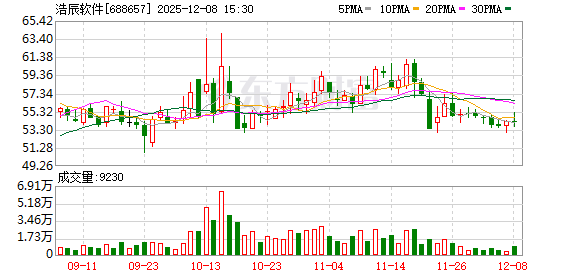
浩辰软件:公司的盈利能力与增长势头得益于战略引领下的主动施策
Zheng Quan Ri Bao Wang· 2025-12-09 13:13
Group 1 - The core viewpoint of the article highlights that Haocen Software is focusing on its main business and actively pursuing growth strategies, leading to positive financial results [1] - For the first three quarters of 2025, the company achieved operating revenue of 230 million yuan, representing a year-on-year increase of 16.34% [1] - The net profit for the same period was 42.22 million yuan, showing a year-on-year growth of 21.60%, with a net profit margin of 18.35% [1]
港股科技板块聚焦流动性改善预期!恒生科技ETF(513130)备受资金青睐,近一月吸金近25亿元
Xin Lang Cai Jing· 2025-12-09 03:41
炒股就看金麒麟分析师研报,权威,专业,及时,全面,助您挖掘潜力主题机会! 尽管昨日(25/12/8)港股市场整体回调,市场情绪偏向谨慎,但综合内外因素,港股科技板块的修复 机遇依然受到关注。 从外部环境看,美联储将于当地时间2025年12月9日至10日举行议息会议。市场普遍认为,面对就业市 场疲软等问题,维持宽松的货币政策基调或仍是重要方向,本次会议进一步降息的可能性较大。此举有 望缓解全球流动性压力,对利率敏感度较高的港股科技类资产或将受益。从内部因素看,南向资金持续 流入、龙头企业盈利改善与板块估值仍处低位区间,或共同构成了对港股科技龙头公司的基本面支撑。 (数据来源:Wind,截至25/12/8) 资金动向显示,资金借道ETF布局港股科技板块的意愿依然较强。伴随近一月以来(25/11/10-25/12/8) 港股科技板块的蓄势调整,A股市场所有跟踪恒生科技指数的ETF合计共获157.13亿元资金净流入,其 中人气产品恒生科技ETF(513130)在此期间的21个交易日中,有16个交易日获资金净流入,累计"吸 金"24.52亿元。在资金持续流入的推动下,产品近一月累计已获32.97亿份净申购,推动最新基金 ...
飞书AI大赛展示实体业务深度融合案例,创业板软件ETF华夏(159256)持仓股奥飞数据大涨超6%
Mei Ri Jing Ji Xin Wen· 2025-12-09 03:08
Group 1 - A-shares experienced a low opening but rallied, with the ChiNext Index rising over 1%, driven by gains in the CPO sector and short-term increases in AI mobile phone stocks [1] - The "Feishu AI Efficiency Pioneer National Competition" finals showcased AI applications in real business scenarios across various industries, highlighting the ease of use of AI tools for non-programmers [1] - The software industry plays a crucial role in the AI industry chain, providing essential technology support and application implementation in both the midstream technology layer and downstream application layer [1] Group 2 - GF Securities analysis indicates that tech giants will continue to increase investments in computing power infrastructure due to clearer monetization paths for AI, maintaining an optimistic capital expenditure outlook [2] - Domestic foundational software has achieved key technological breakthroughs in multi-modal large models and development frameworks, promoting a collaborative development across the entire AI value chain from chips to applications [2] - The overall industry chain's prosperity is expected to continue improving due to dual supply and demand drivers, enhancing the outlook for both computing hardware and software services [2]

速递|IBM拟110亿美元收购Confluent,继345亿美元拿下Red Hat后又一开源豪赌
Z Potentials· 2025-12-09 01:04
Core Viewpoint - IBM is in advanced negotiations to acquire data analytics company Confluent for approximately $11 billion, marking a significant move in its strategy to enhance its software, cloud, and AI capabilities [2][6]. Group 1: Company Overview - Confluent went public in 2021 and currently has a market capitalization of around $8 billion. The company's software is designed for real-time data analysis, making it valuable in applications such as ride-hailing and fraud detection [3]. - Confluent has been promoting its software's ability to provide real-time data for AI models, with OpenAI utilizing its software to analyze customer interactions with ChatGPT and other products [4]. Group 2: Market Dynamics - Confluent's sales growth has been slowing due to increased competition and customers becoming more adept at managing their cloud expenditures. The company has been exploring sale options since receiving acquisition interest two months ago [5]. - Managing the open-source Apache Kafka software, Confluent represents a strategic fit for IBM, which previously acquired Red Hat for $34.5 billion in 2019, the largest software deal in history, and last year acquired cloud management tool provider HashiCorp [5]. Group 3: Strategic Implications - If the acquisition of Confluent is finalized, it will be one of IBM's largest acquisitions in recent years, further solidifying its focus on software, cloud, and AI under CEO Arvind Krishna's leadership [6].


股价大涨29%!IBM拟110亿美元吞下Confluent:一边裁员一边狂买,豪赌AI转型!
美股IPO· 2025-12-09 00:55
Core Viewpoint - IBM announced a $11 billion acquisition of data streaming company Confluent, marking one of the largest mergers in recent years, as the company bets on AI transformation while replacing HR roles with AI technology [1][3]. Group 1: Acquisition Details - The acquisition will be at a price of $31 per share, with an enterprise value of $11 billion including debt, expected to close by mid-2026 [3]. - If the deal fails or is terminated, IBM will pay Confluent a breakup fee of $453.6 million [3]. - Confluent's stock rose approximately 28.5% to $29.74 following the announcement, although it remains over a dollar below the acquisition price [4]. Group 2: Strategic Implications - Analysts suggest that this acquisition could significantly enhance IBM's AI product portfolio and drive sales growth in its software division [4]. - The acquisition aligns with IBM's strategy of restructuring its business to adapt to the AI era, including significant layoffs and a focus on acquiring key technologies [6][8]. - Confluent's technology is crucial for managing real-time data streams necessary for large AI models, reflecting the growing demand for real-time data processing capabilities across various industries [6][8]. Group 3: Market Context - The acquisition is part of a broader trend in the tech industry, where companies are rapidly acquiring firms to enhance their AI capabilities, with significant deals occurring across the ecosystem [9]. - IBM's move contrasts with other recent high-value acquisitions in the AI space, which have primarily focused on data center capabilities and computational power [9]. - IBM is also competing in the quantum computing space, aiming to develop systems that surpass traditional computing capabilities [9].
投资策略专题:当春季躁动遇上估值慢牛
KAIYUAN SECURITIES· 2025-12-08 14:41
Group 1 - The report indicates that the upcoming spring rally is likely to occur earlier than usual due to significant adjustments in November and a late Spring Festival, suggesting a favorable environment for early positioning in December [1][25][39] - Historical data shows that growth-type spring rallies account for nearly 60% of past spring market trends, driven primarily by liquidity easing and technology policy expectations [2][55] - The cyclical spring rally, while less frequent, still holds strong predictive value, with approximately 40% of past rallies characterized by inventory replenishment and inflation expectations [2][60] Group 2 - The report emphasizes that both technology and cyclical sectors can thrive simultaneously, suggesting a dual-driven approach to investment strategies [4][48] - Key sectors for investment include technology (military, media, AI applications) and cyclical industries (solar, chemicals, steel), which are expected to benefit from improving PPI and anti-involution policies [4][60] - The report highlights that the spring rally is not confined to the spring season, as it can be influenced by macroeconomic expectations, liquidity improvements, and institutional behavior [25][34] Group 3 - The report outlines that the spring rally typically features a strong focus on high beta stocks, with significant sector rotation reflecting the market's anticipation of economic trends and policy directions [49][55] - It notes that the performance of growth stocks is particularly sensitive to liquidity conditions and technology policy, making them prime candidates for investment during the spring rally [56][59] - The cyclical rally is characterized by a recovery in resource prices and manufacturing sectors, driven by inventory replenishment and improving economic conditions [60]
格尔软件:12月8日召开董事会会议
Mei Ri Jing Ji Xin Wen· 2025-12-08 13:37
截至发稿,格尔软件市值为57亿元。 每经头条(nbdtoutiao)——处方药变"瘾品":国内首次报告普瑞巴林滥用致成瘾病例,网络平台暴 露"无病历可购药"漏洞,列管与否尚需科学考量 每经AI快讯,格尔软件(SH 603232,收盘价:24.56元)12月8日晚间发布公告称,公司第九届2025年 第一次董事会会议于2025年12月8日以现场结合通讯的方式召开。会议审议了《关于聘任公司董事会秘 书的议案》等文件。 (记者 曾健辉) 2025年1至6月份,格尔软件的营业收入构成为:软件行业占比99.93%,其他业务占比0.07%。 ...

浩辰软件:公司已初步形成涵盖二维CAD、云化CAD、三维CAD的完整产品矩阵
Zheng Quan Ri Bao· 2025-12-08 12:41
Core Viewpoint - Haocen Software is focusing on its core business and accelerating strategic implementation while enhancing market recognition and long-term investment value through various measures such as cash dividends and strengthened market communication [2] Group 1: Business Strategy - The company has successfully acquired Hungarian BIM software company CadLine and established a subsidiary, Haoke Digital Intelligence [2] - Haocen Software is strategically cooperating to layout 3D CAD products, forming a complete product matrix that includes 2D CAD, cloud-based CAD, and 3D CAD [2] Group 2: Market Positioning - The brand value of Haocen Software has significantly increased, further promoting the company's global business layout and sustainable development [2]